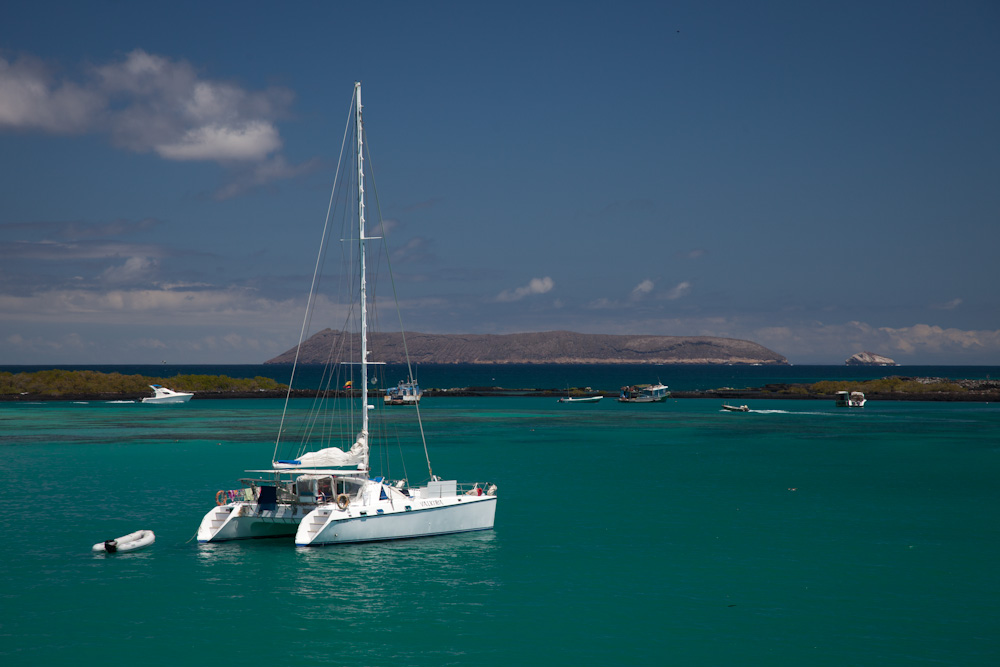
Our yacht travelled for six hours during the night and we awoke on the western side of Isabela at Punta Moreno. There were five volcanos in plain view sharing a common barren topography.
Breakfast was served at 7:00 am after which we headed out for our first excursion. On our way to Punta Moreno we observed the Flightless Cormorant (a bird that cannot fly as its name implies), sea lions, sea turtles, Blue Footed Boobies, and to my personal delight, penguins. The penguins were swimming so we only saw their little heads as they bobbed to the surface now and then.


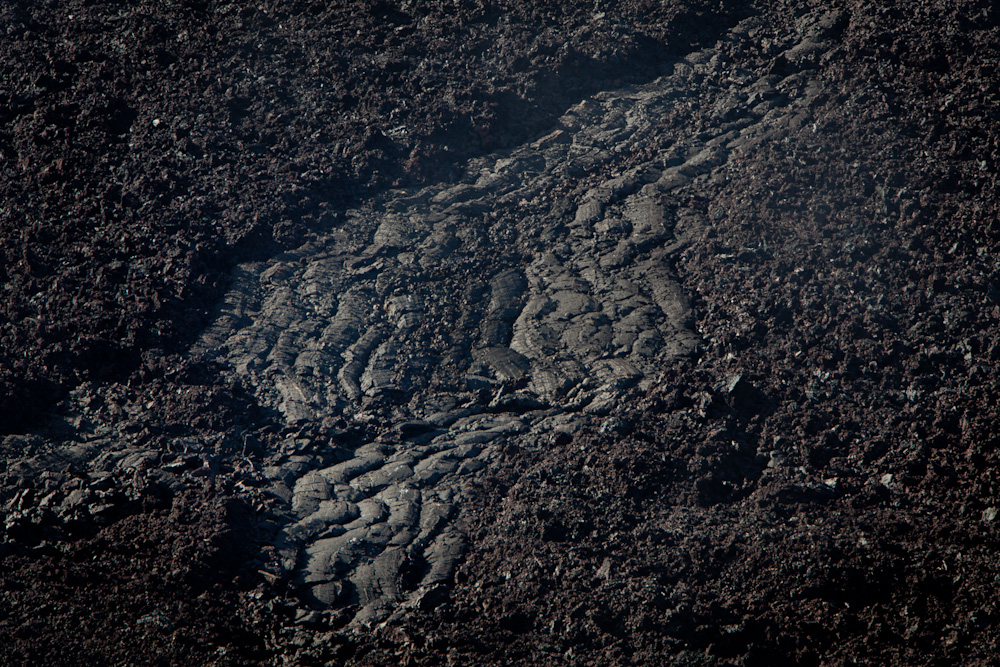
We landed on volcanic rock and went for a walk. The sun beat down on us and the lava rock heated us from below – it was sweltering and it was only 8:15 in the morning. As we traversed the swirling black lava flow, our footsteps crunched loudly over the brittle rocks as if we were walking on broken porcelain dishes. The landscape was beautiful in its desolate starkness.


Three sea turtles were swimming in a natural pond fed by sea water that flowed through volcanic tunnels below us. A few in our group were lucky enough to observe a white tipped shark in the same pond.
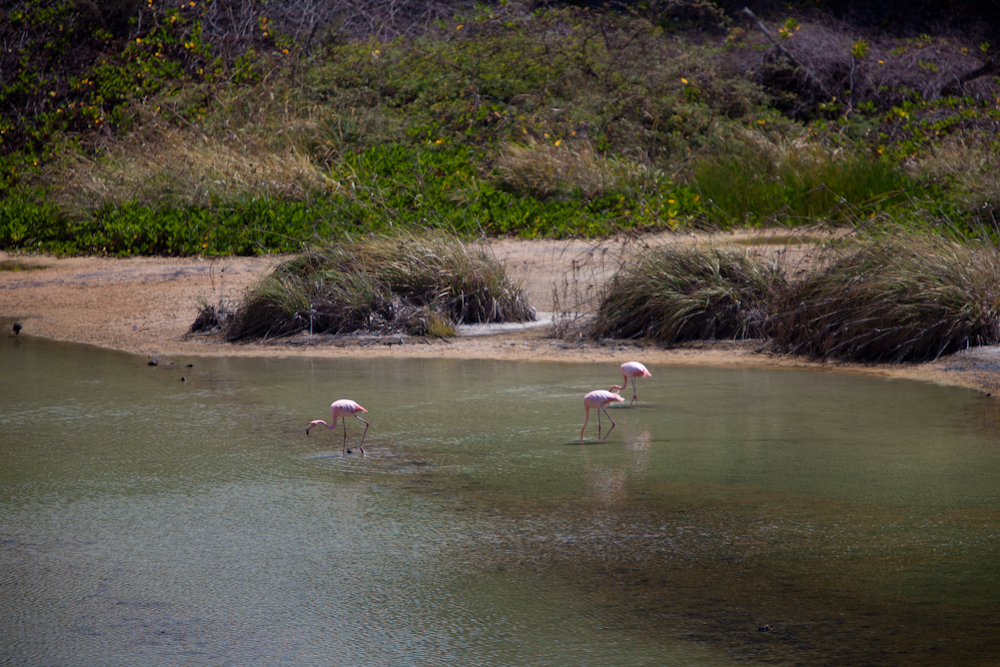
 Near the end of our walk we came across a smaller pond that was a sanctuary for birds. It was a beautiful oasis of vibrant green reeds of grass, contrasting sharply against the barren, blackish brown volcanic rock. Stephanie and Laura got down to the water edge for a closer look.
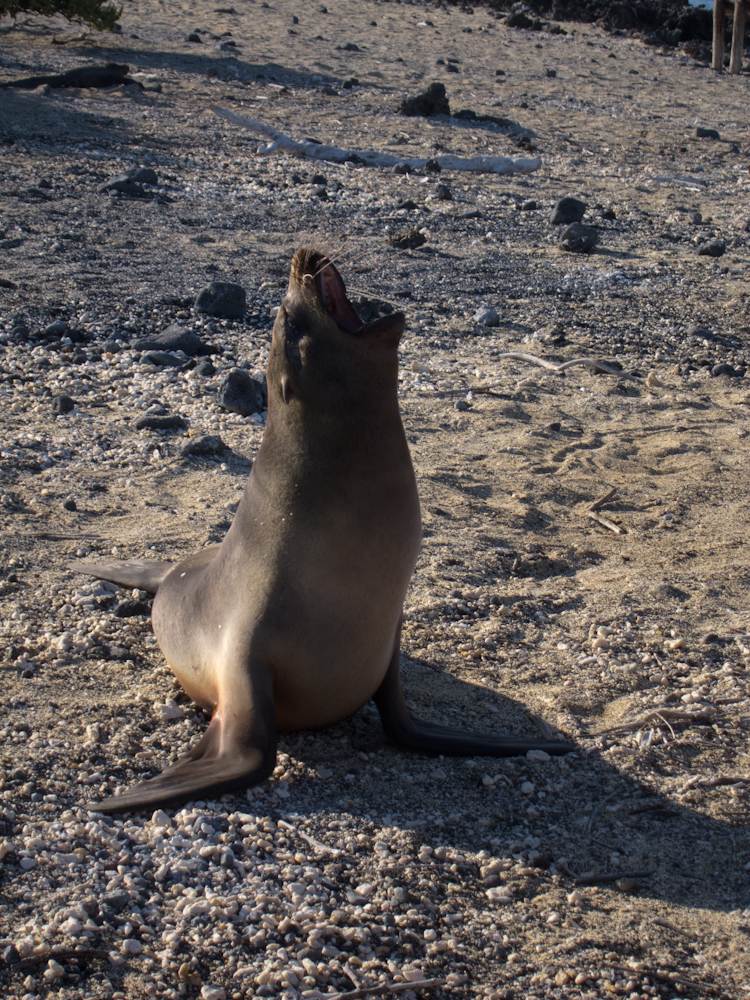
While waiting for the dinghies to arrive, nature entertained us as a sea lion wrestled with a large fish it had caught. A pelican swam close by, perhaps hoping to get a free lunch. Overhead, a frigate swooned back and forth until suddenly he dove towards the sea lion and tried to grab the fish. The sea lion was not prepared to give up his lunch so easily. There was some commotion and splashing and in the end, the frigate left empty handed and the sea lion continued to play with his catch. Undeterred, the tenacious frigate came swooping down, again and again trying to steal the fish, but the equally stubborn sea lion would not let go. The pelican, perhaps wisely, stayed out of the way and watched the competition from a safe distance.

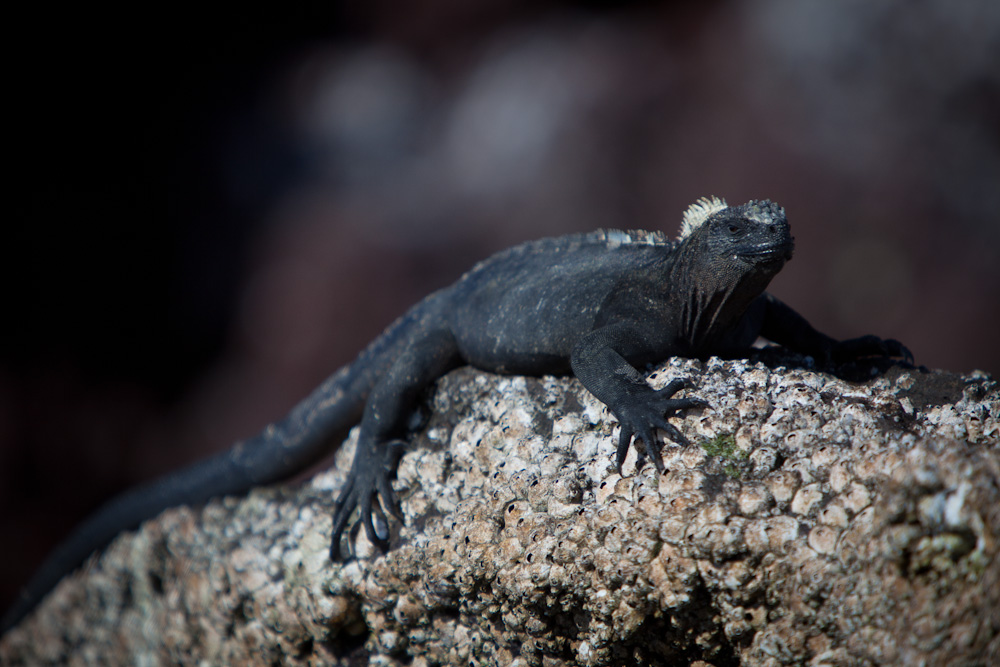
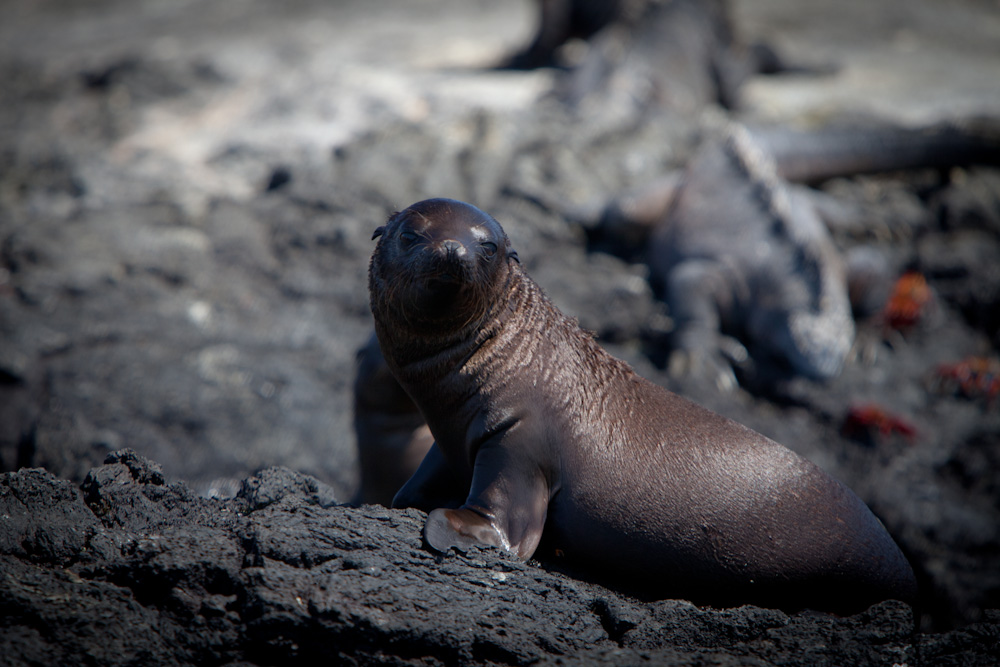
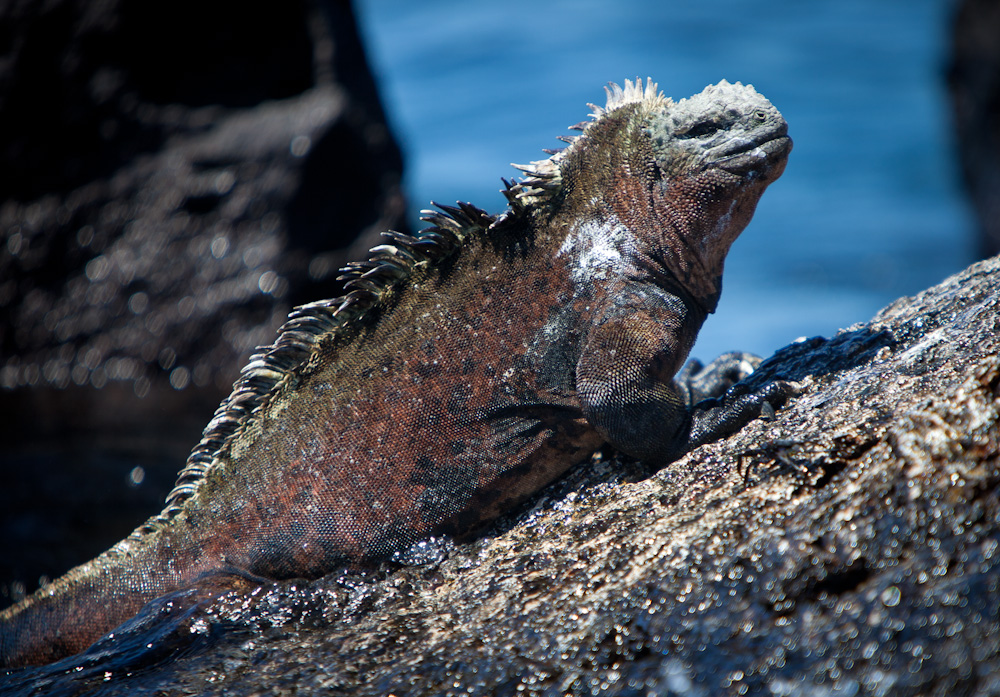
From the dinghy, we toured an outcropping of volcanic rock where penguins, huge marine iguanas (the biggest in the Galapagos Islands), many Blue Footed Boobies, baby seals, and sea lions sun bathed in peaceful harmony. I fell in love with penguins when I first saw their charming antics at the Biodome in Montreal many years ago. The Galapagos Penguin is the only penguin that lives north of the equator in the wild; it can survive due to the cool temperatures resulting from the Humboldt Current and cool waters from great depths brought up by the Cromwell Current.

The average size for the penguins is 49 centimetres (19 in) and 2.5 kilograms (5.5 lb). They have a black head with a white border running from behind the eye, around the black ear-coverts and chin, to join on the throat. They have blackish-grey upper parts and whitish underparts, with two black bands across the breast, the lower band extending down the flanks to the thigh. Juveniles differ in having a wholly dark head, greyer on side and chin, and no breast-band. The female penguins are smaller than the males, but are otherwise quite similar. The Galapagos Penguin is the third smallest species of penguin.


I was thrilled to see penguins in the wild – and felt enormously blessed for having this chance to witness the beauty of nature first hand. Others in our group expressed similar sentiments; I think we all recognized the special place we were in.



We snorkeled today from the dinghy along a string of rocks. The surge was strong, the visibility was low and the water a little cool, but we still saw lots of sea turtles and myriads of schools of fish. Some even saw a penguin swimming in the water, and a commerant diving in to catch a fish.


We had spaghetti for lunch with two salads – our first spaghetti since Canada. The pasta was served with two types of sauces: carbonera and tomato with meat along with freshly grated parmesan cheese. Dessert was a creamy strawberry mousse. The food is plentiful, nourishing and tasty. It is such a treat to have everything taken care of – no decisions to make, no worries if the food is safe to eat, no wondering if the water has been purified.

I feel we are quite pampered on this yacht beyond just the food. For example, when we come back from snorkeling, we put our fins and masks into our designated bags, and our wet suits get dropped into a messy pile on deck. The crew takes care of rinsing them and hanging them to dry as we go off to relax. When we go out snorkeling, clean towels are at our disposal. Every time we leave the boat, the cabin crew pass through our cabins and freshen them up, making beds, opening windows, replacing towels, removing garbage. There is nothing for us to do but eat, follow the excursion schedule, relax, and sleep. This is a life I could easily get used to!


After lunch, we had a few hours to relax as the boat lifted anchor and headed north to Elizabeth Bay which is located at the most narrow point of Isabela Island. Once we reached the bay there was time to swim from the boat and then we were off to explore the coastline in the dinghies. We began at an outcropping of rocks and were treated to myriads of Blue Footed Boobies, a few more penguins, masses of marine iguanas and a multitude of diverse birds. We then traversed the open waters towards the coast.
It was surprising to see the coast open up into a mangrove of small waterways. Out of the wind, this protected area was a haven for sea turtles, sea lions and many birds. We spent a couple of hours, paddling quietly through these streams, listening to our guide tell us all about the animals and vegetation. I was impressed with the depth of his knowledge and his versatility to switch from one subject to the next as we peppered him with questions. He graciously split his time between the two dinghies so all could benefit from his expertise.
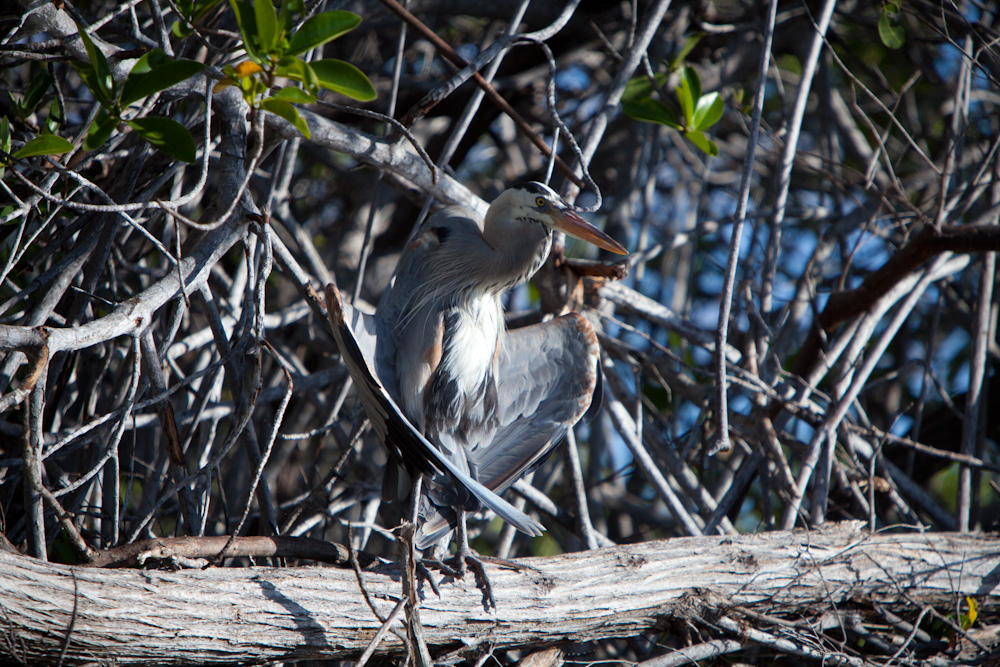
We saw many sea turtles in these shallow waters as well as a variety of birds – finches, warblers, herons, and pelicans.



A gorgeous sunset rewarded us as we returned to the yacht.


We were greeted with juice and snacks to tide us over until dinner which was again served promptly at 7:00. After dinner, we were briefed about our activities planned for the next day and the route that the boat would take while we slept. Such post-dinner briefings were now part of our daily routine.