Ringing in the New Year Thai style

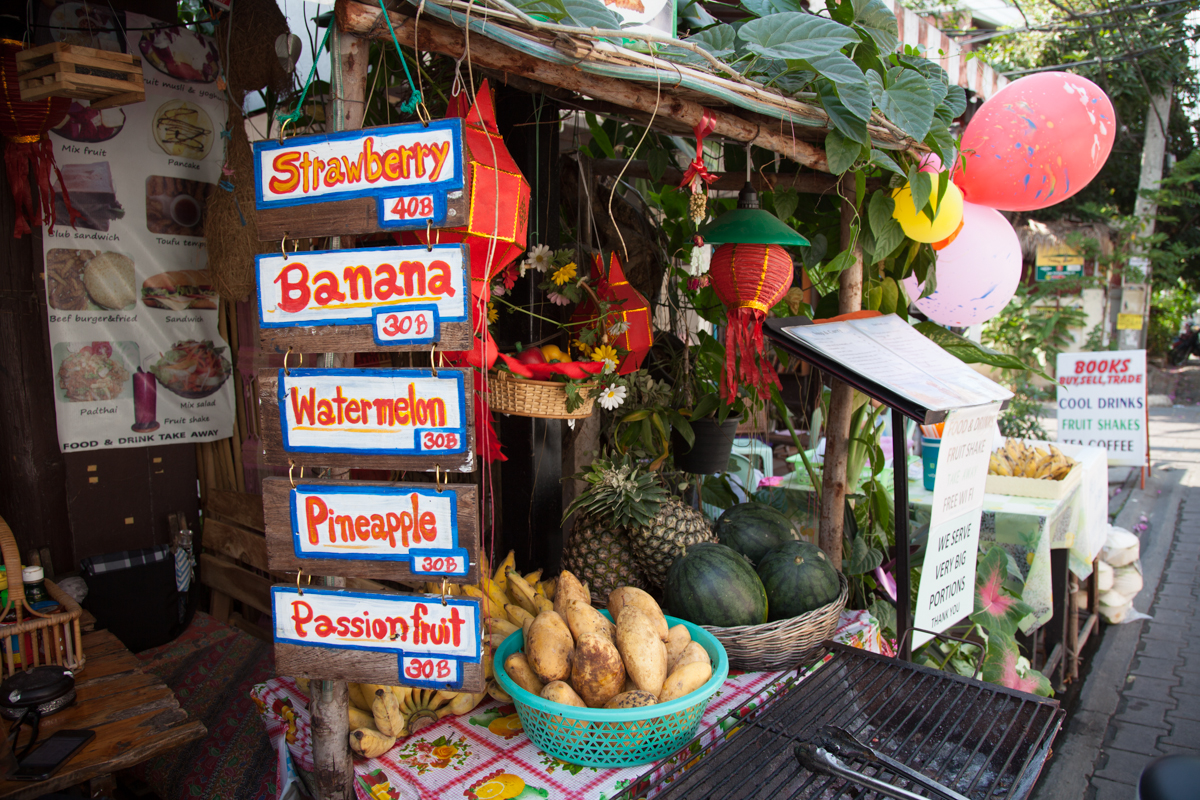
The countdown began a week ago when Thapae Gate was transformed into a temporary night market offering up food for every palate, and a large variety of stalls selling everything from clothing to key chains.  Live music and cultural shows provided nightly entertainment on the large band stand that was set up in the middle of the square.  We went to the market almost every night this past week, enjoying the amazing street food – sushi, dim sum, corn on the cob, grilled fish, pad thai – there was so much to choose from, and everything was delicious and cheap.

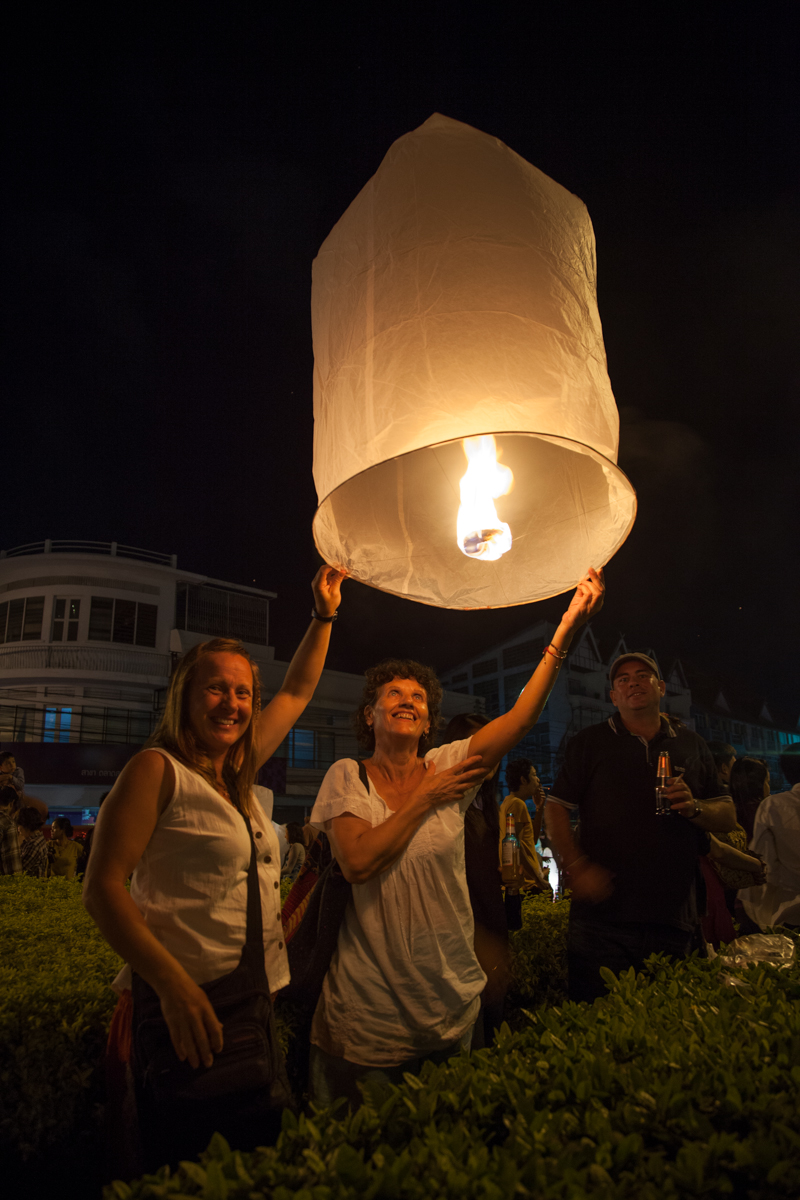
The “Countdown to 2013”  festival culminated on New Year’s Eve where thousands of people congregated around Thapae Gate and the  immediate vicinity.  Closed to traffic, the surrounding streets sprouted even more markets on this final night of festivities.  The atmosphere was charged with happy energy as people released floating lanterns into the night sky as a way to show respect to Buddha, to release bad memories and to make a wish for the future.

These paper lanterns came in a variety of sizes and colours and could be bought from hawkers on the street for 30-50 Baht apiece.  Most were white and quite large, about a metre high and a half a metre in diameter.   At the base of the lantern, held in place by thin wire, was a disk that when lit produced a strong flame.  After a few moments, the heat from the flame created a pocket of hot air trapped within the lantern that caused it to rise and float away much like a hot air balloon.

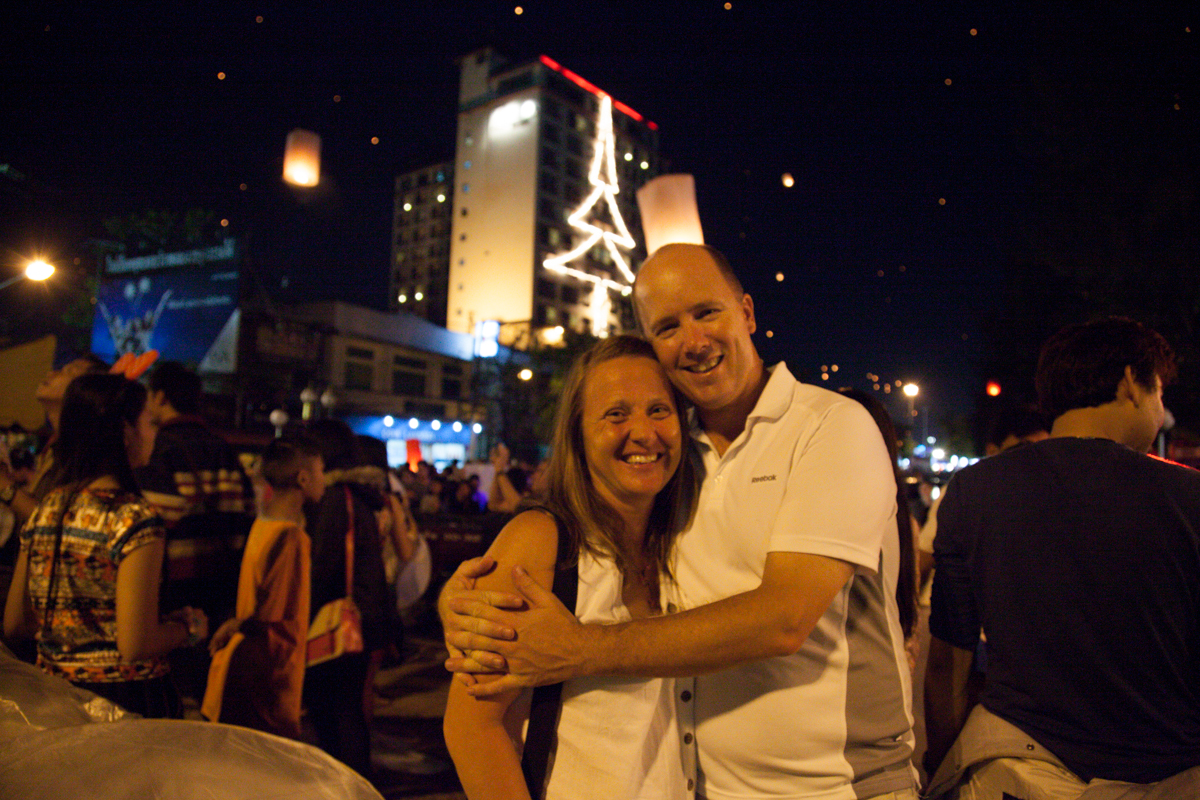
Chris and I set our lantern afloat early in the evening and we both found the experience to be magical as we watched our lantern get swept away high in the sky joining a myriad of lanterns that already dotted the horizon like a new constellation twinkling in the black sky.   Not all lanterns were released successfully – some got caught in tree branches and turned into balls of fire that just burned out quickly, while others were released prematurely and lacking sufficient heat to rise, fell to their demise in the waters of the moat below.  But these were the exception as most were carried up and  away swiftly by a gentle breeze.

Fireworks kept going off all around us, in every direction throughout the evening.  Children shot fireworks from tubes that were sold by street hawkers, creating little pops of light and sparkles.  Others had purchased fireworks earlier and set these off in random places.  The official fireworks went off after the final countdown to midnight, a dazzling, beautiful display that lasted for about ten minutes. Just past midnight, we released another lantern with our new friend Monique who we had befriended earlier in the day.  Monique is staying at our guesthouse too and up until today we have simply exchanged courteous greetings with her each morning at breakfast.

But today was different and for some reason we had an extended chat with her.  One thing led to another, and before I knew it, she was telling me about her recent trip to India where she volunteered at a school for a month.  It turns out she runs a non-profit association, Petit Plus, and she has been searching for a new project to support through her association.  This school has captured her heart and her passion. Her enthusiasm was infectious and when I learned she didn’t have a website for her association, I suggested this was something I could perhaps help her with……and so Monique and I released our lantern wishing great things for this school in India, for her association, and for our new found friendship and collaboration.

Best wishes to all our family and friends, new and old, from Canada and around the world.  We wish you all a new year full of peace, happiness, and prosperity….with a little adventure thrown in for good measure.

 Video:  New Year’s Eve in Chiang Mai, Thailand.


In search of an apartment during high season in Chiang Mai

Thailand is a land of beautiful beaches, tropical forests, magnificent temples, and gentle people. It is also the land of cheap living.  Even now, after a decade of explosive growth in the tourism industry, Thailand is still a bargain for foreigners.  After a week in Chiang Mai, we are amazed at how cheap things are.  A delicious, nutritious meal costs $1-2 CAD in a local restaurant, (street food is even cheaper), a dorm bed starts at $3 CAD, AND a 500 ml bottle of mineral water costs 7 Baht (0.21 CAD) at the local 7/11 corner store.  It’s no wonder so many people come here for longer stays, many ex-pats making this their permanent home away from home.

Apartments are cheap too.  A small studio starts at about 8,000 Baht.  That’s just $240 CAD per month!  Of course, as with everything, you get what you pay for.  Larger 1 bedroom apartments in buildings with amenities like a pool and a gym, cost between 10,000 and 15,000 Baht.  Want a brand new, modern building?  The cost goes up even more.  If you’re willing to go out of town a little, you can rent a large house for about 20,000 Baht per month. Sounds great, doesn’t it?  So why have we found it so hard to find an apartment?  Here’s what we’ve learned so far during our apartment search:

  1. Supply and demand.  Christmas time is peak season with many places being reserved months or even a year in advance.  That means there are fewer units available, and of course, whatever is left is going at a premium.
  2. Short versus long term rental. Most units require a 6-12 month lease which puts them out of our search.  We want a 1-2 month contract for a fully furnished unit.
  3. Serviced apartment versus condominium.  A serviced apartment is very much like a hotel.  You enjoy amenities like daily housekeeping, pool and fitness area.  On the down side, these apartments tend to be quite small and sterile like a hotel room and are much pricier.  These units are very popular amongst foreigners because they are geared to short term stays  from one week or more.  Of course, that means there aren’t many units available this time of year. Condominiums, on the other hand, are usually rented out by the owner and are furnished in a more homier manner.  It takes time to find these one-off units and then it takes time to make enquiries about availability, price, etc.
  4. New versus older buildings:  There’s been a building boom going on in Chiang Mai for a while, resulting in lots of glossy new condos which makes the older buildings look pretty dated and sometimes downright shabby.  Apartments in newer buildings cost significantly more than those in older buildings and generally have better amenities as well as units that boast clean, modern decor and design.
  5. With or without a kitchen:  Kitchens are a novelty here in Thailand, especially a western style kitchen.  A typical kitchen has a small bar fridge, hot plate and microwave.  That’s it.  Moving up a notch on the price scale might yield a two burner stove and a larger fridge and a foot or two of counter space, but not much more.   These minuscule kitchens are quite poorly equipped as well – a single wok, a few dishes and cutlery is all you’re going to find.  Apartments with full kitchens are rare and are accordingly priced at a premium.  We thought we needed a full kitchen, but quickly adjusted our “needs” to meet what was available.  Soon we found ourselves saying things like: look at this kitchen, it even has a cutting board and knife!
  6. Size really does matter: Studio sized apartments with less then 40 sq m of space are a dime a dozen here in Chiang Mai and are the easiest and cheapest places to find on a short term basis.  But these units don’t feel much bigger than a hotel room and typically have the most basic of kitchens if they have a kitchen at all.
  7. Location, Location, Location: We quickly learned that it’s virtually impossible to find a one bedroom unit with a functioning kitchen within walking distance of the Old City.  Larger apartments seem to be located a few kilometres away from the city core, while houses are even further afield, up to 10 km away.

After a thorough two-week search, we had narrowed our options down to two apartments both of which were located a few kilometres away from the city center.

One apartment was in a serviced building with gorgeous amenities.  At 43,000 Baht per month, it was the most expensive apartment we saw and it was only available for the month of January.

The other apartment was in an older building but the unit itself had just been renovated into a modern, spacious, open layout with breathtaking views from the wrap-around 13th floor balcony.  It was priced a little better at 35,0000 Baht plus utilities.

We weren’t over the moon over either property – each had its pros and cons, the biggest con of each being the remote location.

After a lot of debate and oscillating back and forth between the two, we decided to take neither.  We realized that location was the most important factor for us; we love being in the city center where we can walk everywhere.  Even with a scooter, we still prefer to be in a walkable location.

Besides, we are very comfortable in our current location, Kamala’s Guesthouse.  This place is super clean, the rooms are bright and spacious, and the owners are friendly and extremely helpful.  The common areas are inviting, relaxing and comfortable too.  The onsite restaurant serves up great food, as does the little restaurant next door.  And it’s dirt cheap compared to the apartments at a mere $3300 Baht per week.  Best of all is the location.  We are within less than a block from the moat which marks the perimeter of the old city center.  We can walk everywhere and we do, everyday.  I’ve even marked out a nice running route through the twisty, winding lanes and alley ways.

Cat’s restaurant next to Kamala’s – we have at least one meal here a day.
The food is freshly prepared with lots of healthy ingredients and its tasty and cheap too! 

Another restaurant just around the corner from us.

Lots of laundry shops in our neighbourhood.  It costs 30-40 Baht per kg
(about $1 CAD) to have your clothes washed, dried, pressed and folded.  At that
price, it would be foolish to try to do it ourselves!    

In short, we are comfortable where we are, so we’ve signed up for another two weeks.  After that we’ll just play it by ear, like we always do.

8 tips for renting a scooter in Thailand

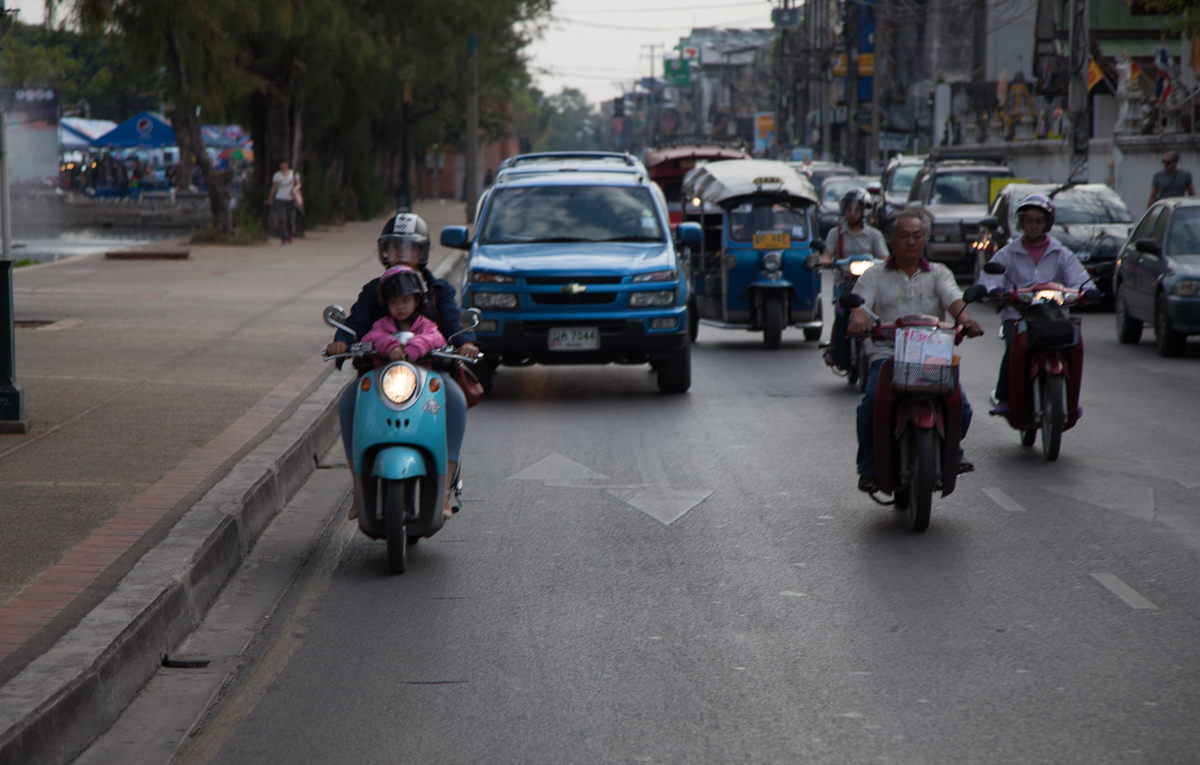
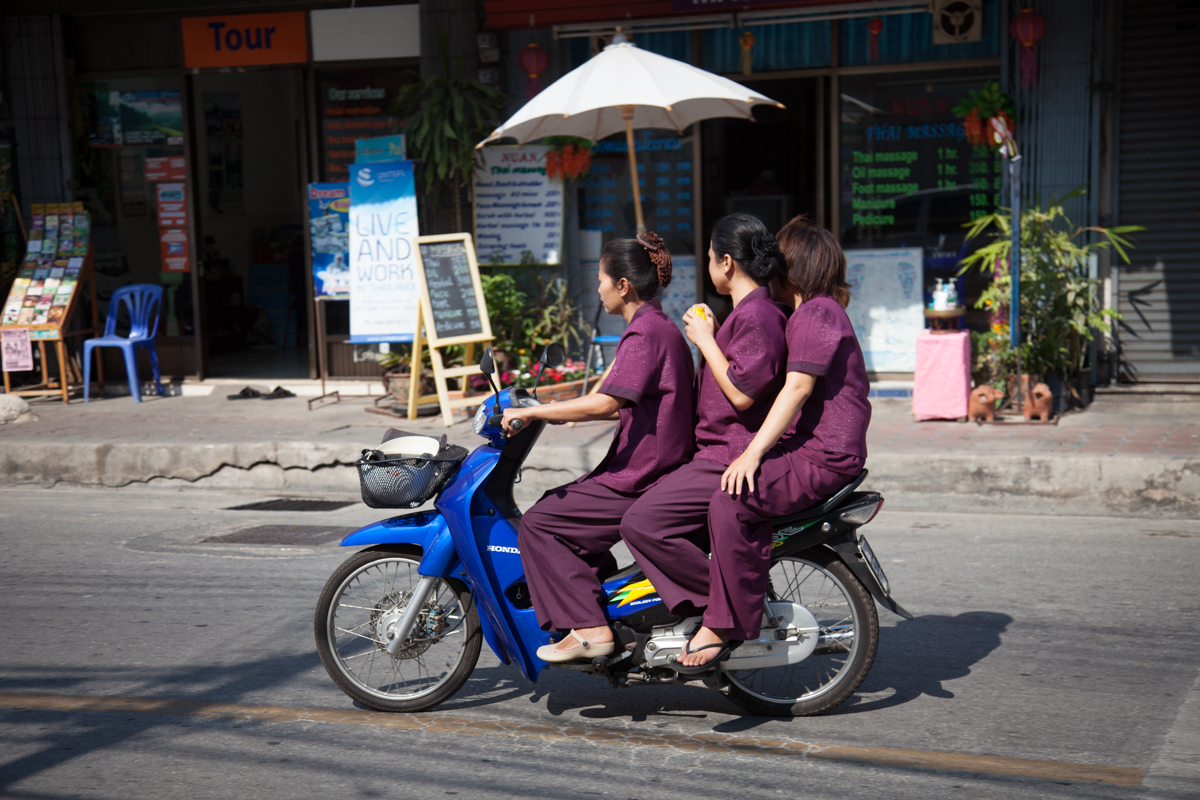
After exhausting all the apartment rental options within the city center, it was time to take our search further afield and to do that we needed some wheels.  Like most Asian cities, scooters are more common than cars here in Chiang Mai, and it’s no surprise when you consider how cheap they are.  A brand new scooter goes for about $1200 CAD, but a one day rental is a mere 200 BAHT (about $6 CAD).   And it’s cheap to run when gasoline costs just over a buck a litre (CAD) and you get about 40 km per litre.

We are scooter newbies – we’ve never even sat on a scooter let alone driven one.   Neither of us are big fans of motorcycles, mainly because we just can’t imagine feeling safe with nothing between us and the road should things go wrong.  But when everyone is driving a scooter, from young kids to grandmothers, we figured we should at least give it a try.  Besides, we needed some mobility to look at apartments within a few kilometre radius of the Old City.
After spending a day on a scooter – Chris drove and I navigated from behind – and surviving to tell the tale, we have a few tips to share in case anyone is thinking about doing the same.

  1. Don’t surrender your passport when you sign the rental contract.  We have heard stories of unscrupulous people who refuse to return your  passport because they have fabricated bogus problems with the scooter and they want you to pay up to fix them.  Even worse, some go so far as to steal the bike while it’s in your possession and then insist you replace it before returning your passport.   It’s better to leave a deposit (3,000 BAHT in our case) which is a lot easier to walk away from should you find yourself in such a situation.
  2. Do wear your helmet even if it looks like it would give you less protection than your bike helmet back home. It’s the law to wear a helmet in Thailand, and I saw more than one ticket being issued to helmet-less people.  Besides, even a lousy helmet is better than no helmet if you have a mishap. Of course, you could carry your helmet in your front basket like most of the locals do if you really want to.
  3. Do take a few spins around the block on quiet streets before venturing out into a busy thoroughfare just to get the feel of the scooter.  It’s a lot harder to balance when you have a passenger on the back, so be sure to practice a bit with your passenger on board too.
  4. Don’t fill the tank.  You receive the scooter with an almost empty tank and you can return it empty as well.  It’s not like a car rental where you’re expected to return the vehicle with a full tank.  Even though the tank only holds a couple of  litres, chances are you won’t be driving that many kilometres especially if you’re staying close to town.
  5. Do follow the crowd.  This is no time to assert your leadership abilities.  The roads in Chiang Mai are chaotic and traffic rules appear to be optional, even red lights.  To make matters worse, they drive on the “wrong” side of the road (from a Canadian perspective that is), so remember to drive on the left hand side.  Things get tricky when you find yourself in a turning lane but you’re going straight.  Where exactly do you need to be to avoid getting crushed by bigger vehicles around you?  We found it helpful to pick a bike ahead of us, and just follow behind them. Chances are the guy in front knows how to navigate better than you do.
  6. Don’t use your horn unless absolutely necessary.  Unlike other countries like Egypt where the horn is used incessantly, drivers in Thailand are far less aggressive and much more yielding to those around them on the road.  Just remember you’re the smallest guy on the road, and quite likely the slowest if you’re a newbie like us, so keep to the side and stay out of harm’s way.
  7. Do drive defensively like your life depends on it, because frankly, it probably does.  Watch the drivers ahead of you, beside you, behind you and don’t forget to watch the road for speed bumps and potholes.  This is no time for speed, besides you probably won’t top 60 km/h on your little bike anyways.  We putted about at an easy 40 km/h most of the day.  I know, we’re not exactly speed demons but we would rather be safe and alive than have a thrill with a mishap.
  8. Do relax and have fun.  Really.  It is possible.  We had a great day touring around and discovering new areas impossible to reach on foot.

We enjoyed our day on the scooter so much that we’ve decide to rent a scooter on a monthly basis once we’ve found an apartment.  Imagine, our own set of wheels for less than $100 CAD per month!  It’s just one of the many bargains here in Chiang Mai, Thailand.

An elephant ride on Christmas Day in Chiang Mai

Merry Christmas and happy holidays to all our friends and family in Canada and around the world.  We hope you all have a wonderful day like we did.  This Christmas was like none other we have celebrated so far.

Christmas in Chiang Mai is not a big celebration, in fact, it was pretty much business as usual here in the city today.  The shops and restaurants were open and the kids went to school.

We spent our day at Ran Tong Elephant Camp, an elephant sanctuary about an hour north of the city where we learned to communicate with the elephants using simple commands. We fed the elephants, played with them, and even bathed them in the river.

Trekking through the jungle on the bare back of an elephant is an experience we won’t easily forget! Somehow we both managed to not fall off during our elephant ride even when we went up and down some pretty steep hills and through a fast moving river. There’s lots more to tell you about our day, but we’re pretty beat. Amazing how tired one can get without walking a single step of the way.

Merry Christmas!

Video:  A day with the elephants at Ran Tong Elephant Camp.
 

Stranded in Penang after a side trip to Singapore

We’re on our way to Thailand, and have been for about a month.  The problem is that we keep getting distracted with other interesting places along the way and our side trip to Singapore was no exception.  With mixed reviews about Singapore – some rave about it while others deplore how Westernized the city has become – we decided to check it out for ourselves and are we ever glad that we did.

With a population of just over 5 million sprawled over 710 square kilometres squeezed onto an island, Singapore is the capital of the country by the same name which is comprised of 63 islands of varying sizes. Singapore is sandwiched between Malaysia to the north and Indonesia to the south. We travelled from Kuching to Singapore by air on a very cheap AirAsia flight (about $60 CAD each). But the savings ended there, as we knew they would, having been forewarned that Singapore is a very expensive city to visit.

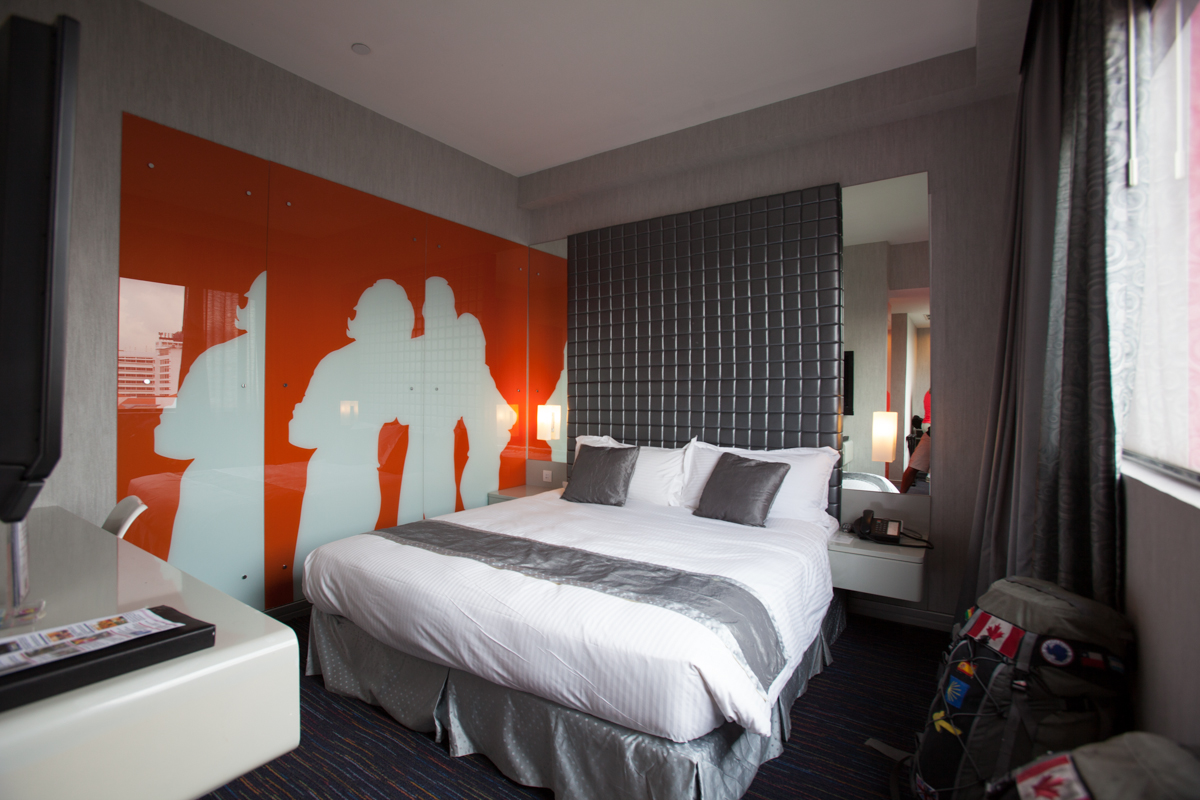
This probably wasn’t the place to decide we have had enough of hostel living, but that’s how we felt so we stepped up our accommodations a notch and we splurged on a room in the Hotel Re, a 4 star boutique hotel decked out in a 70’s retro theme.  For reasons unknown to us, we were upgraded to a deluxe room with city views on the 10th floor.  Our room was large by any standard, but especially so for Singapore, not to mention the modern and spacious ensuite bathroom. Maybe we’ve been living in hostels for too long, but we loved everything about this room and enjoyed every minute of our stay there: the wall-to-wall windows overlooking the city, the complimentary snacks and drinks that were refilled each day, the cotton slippers and robes, a modern 42 inch flat screen TV with English channels, good quality linens and pillows on the beds.  Heck, we even had our own night table and lamp – we were living it up here in Singapore.  Located on the edge of Chinatown, within a ten minute walk to the Metro station, and a two minute walk to the bus stop, it was easy to get around on foot or with public transportation.

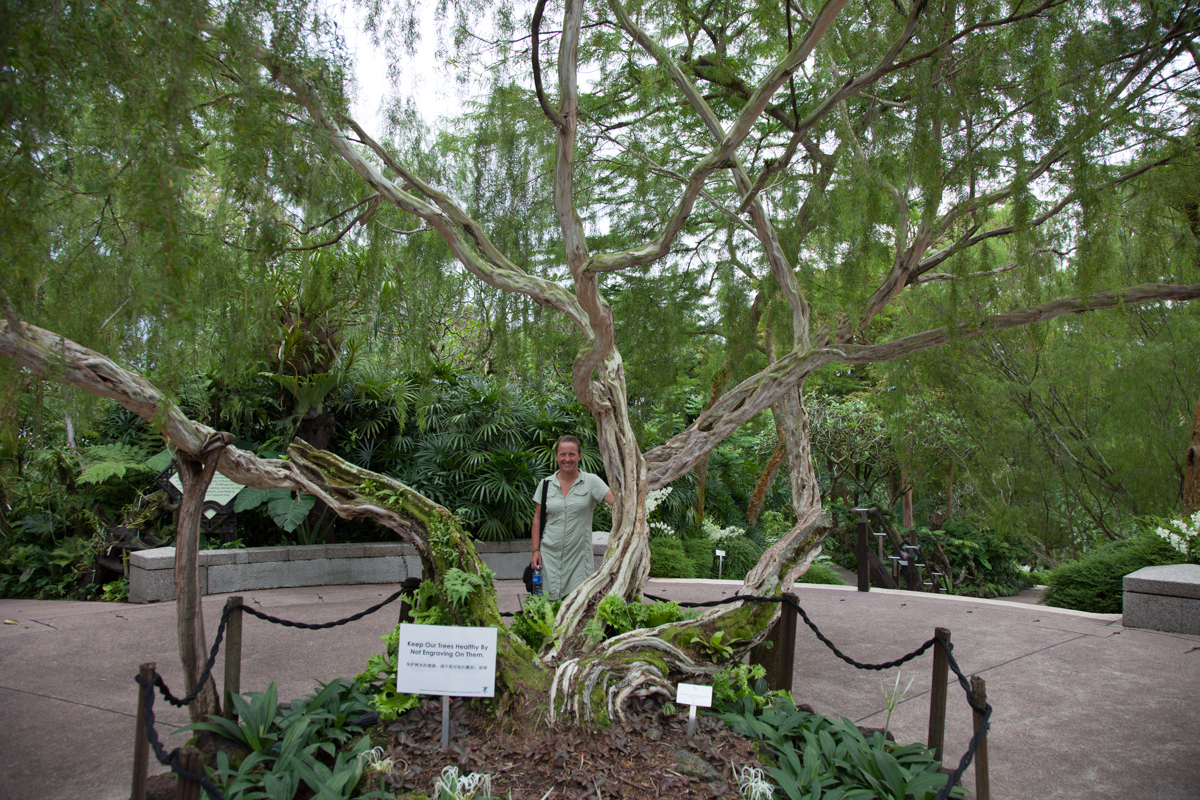
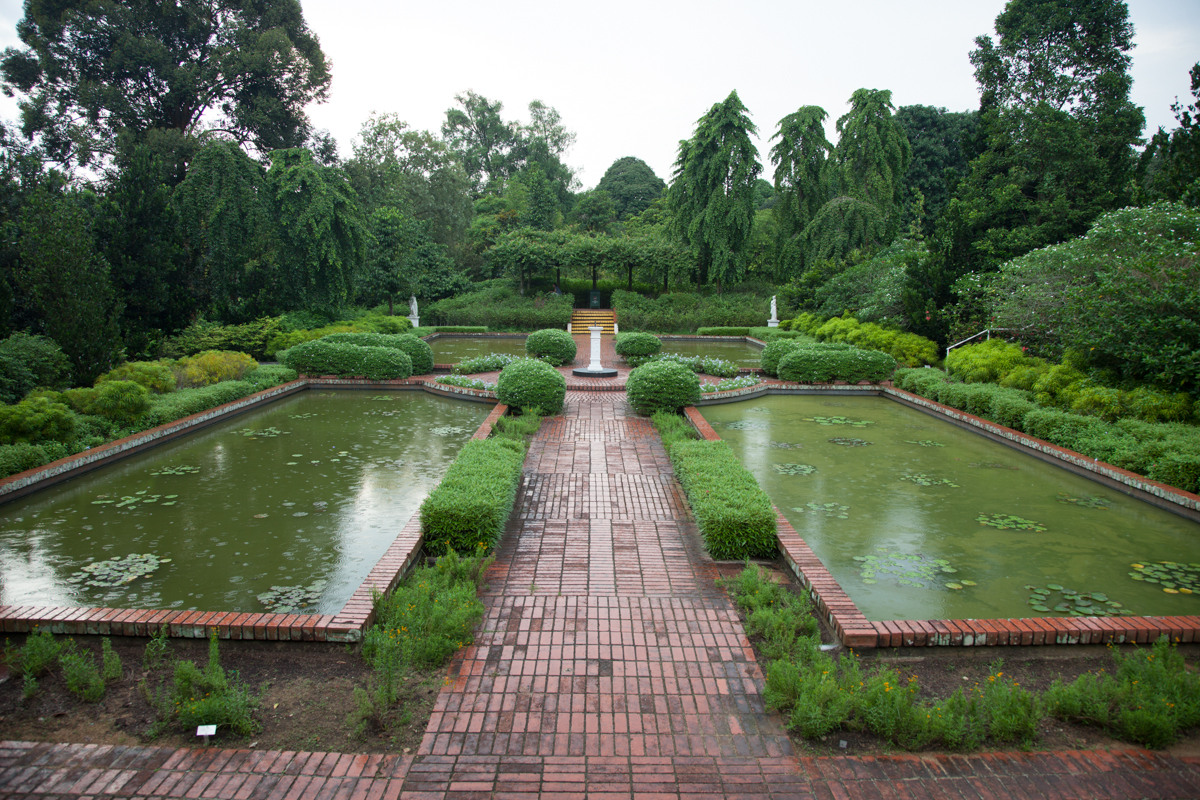
Singapore is renowned for its urban sprawl and is often criticized for the resulting loss of primary rainforest so we were impressed to see so much green space every where we went.  The 183-acre Botanic Garden was a surprising oasis of both manicured gardens and wild rainforest  located in the heart of the city.  Within the Garden, The National Orchid Garden is home to the world’s largest collection of orchids, many of which were in bloom this time of year.  Imagine, we actually saw flowers in bloom for a change!  This free public garden is a popular place to go for a run or just a meander.  The entrance fee to the Orchid Garden is $5 SGD ($1 SGD = $0.80CAD) and is probably the best bargain in town.  If you ever find yourself in Singapore, go visit this garden – you won’t  be disappointed.  Our only regret was that we didn’t have more time to explore. We spent 6-7 hours there, and barely scratched the surface.

During December, Orchard Road, a world renowned shopping Mecca that attracts thousands of visitors each year, is lit up with a dazzling display of Christmas lights.  The street  has been declared to have the “World’s Best Holiday Lights” by Frommer’s, and to be one of  “The Top Ten Christmas Markets of the World” by Lonely Planet, well-deserved accolades in our opinion. It’s best to visit after 7:00 pm when the lights go on!

Throughout our three days, we wandered through the various neighbourhoods like Chinatown and Little India, visited temples and mosques, and learned about the rich cultural history of this fascinating city.  It is indeed very Westernized in many ways, but this was something we enjoyed, feeling more at home here than we have anywhere else in a while.  For example, we stumbled upon a grocery store that reminded us of the Waitrose chain we shopped at in the UK last summer; it even carried that brand of products.  It was just so comforting to see products and food that we recognized for a change. What can I say, we’ve been travelling a long time, and sometimes we miss what is familiar.


The cleanliness throughout the city was notable too and understandable when we later learned there are stiff penalties for littering – $500 SGD – strictly enforced.  Imagine, education and strong deterrents work!  We also noticed there was absolutely no graffiti anywhere, not even in the Metro stations.   The city’s recent prosperity and dense urbanization has resulted in some pretty incredible architecture, yet the city felt spacious and uncrowded, unlike other large urban centres we have been to lately.

In short, we loved Singapore and could even imagine ourselves living there for a while.  It was definitely a worthwhile side trip.

The island of Penang was our final stop before heading to Thailand.  Georgetown had been described as a must-see city with its rich colonial heritage and architecture to match.  Besides, we could get our Thai Visa from the Thai Consulate in Penang so we could kill two birds with one stone (see travel tip below).  We booked a couple of nights at the lovely Hotel Penaga located right on the edge of the historic district and a few nights at the 4 star Flamingo on the Beach hotel which was located close to Feringgi Beach, another popular destination.  Still not in the mood for hostel living, we’re living it up a bit (and enjoying every second I might add) with these nicer hotel choices.

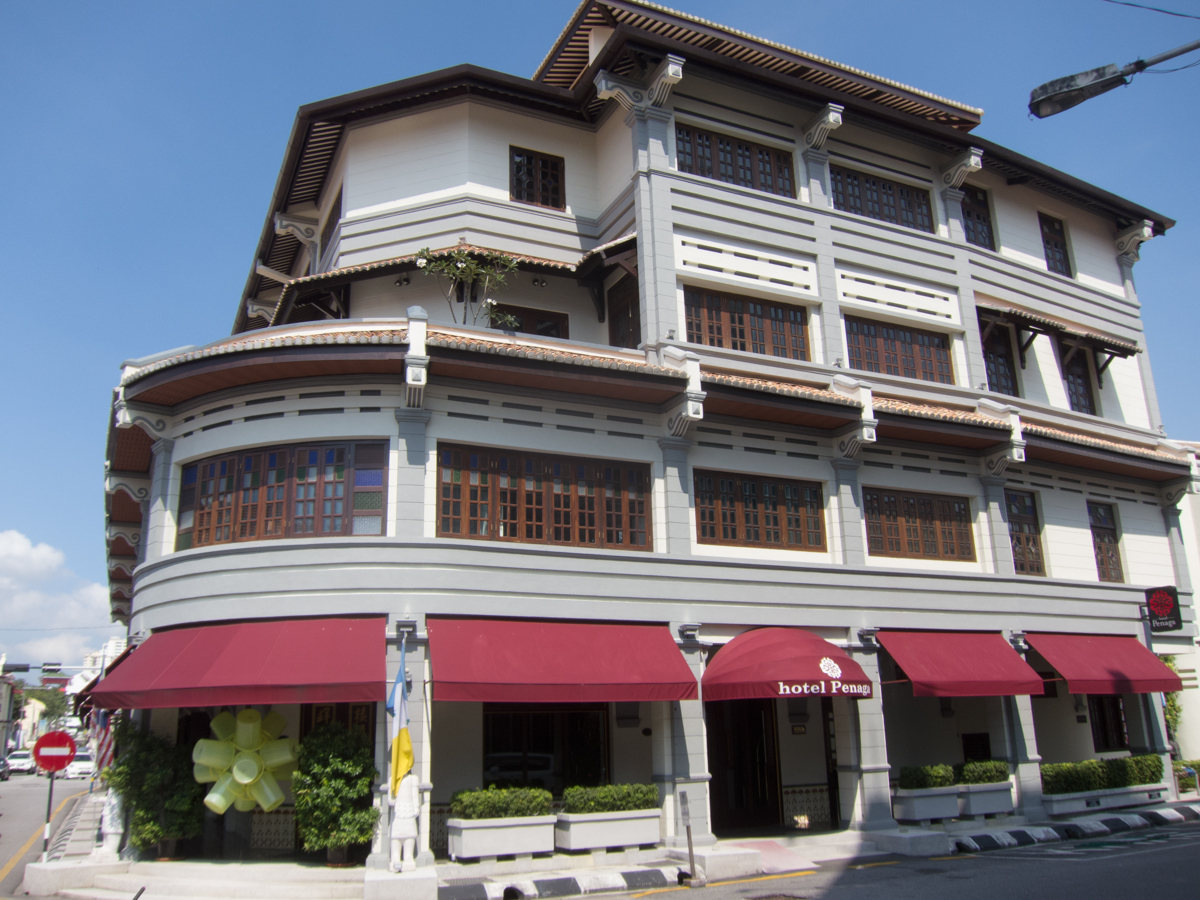
Hotel Penaga – One of the nicest places we’ve stayed in a while!

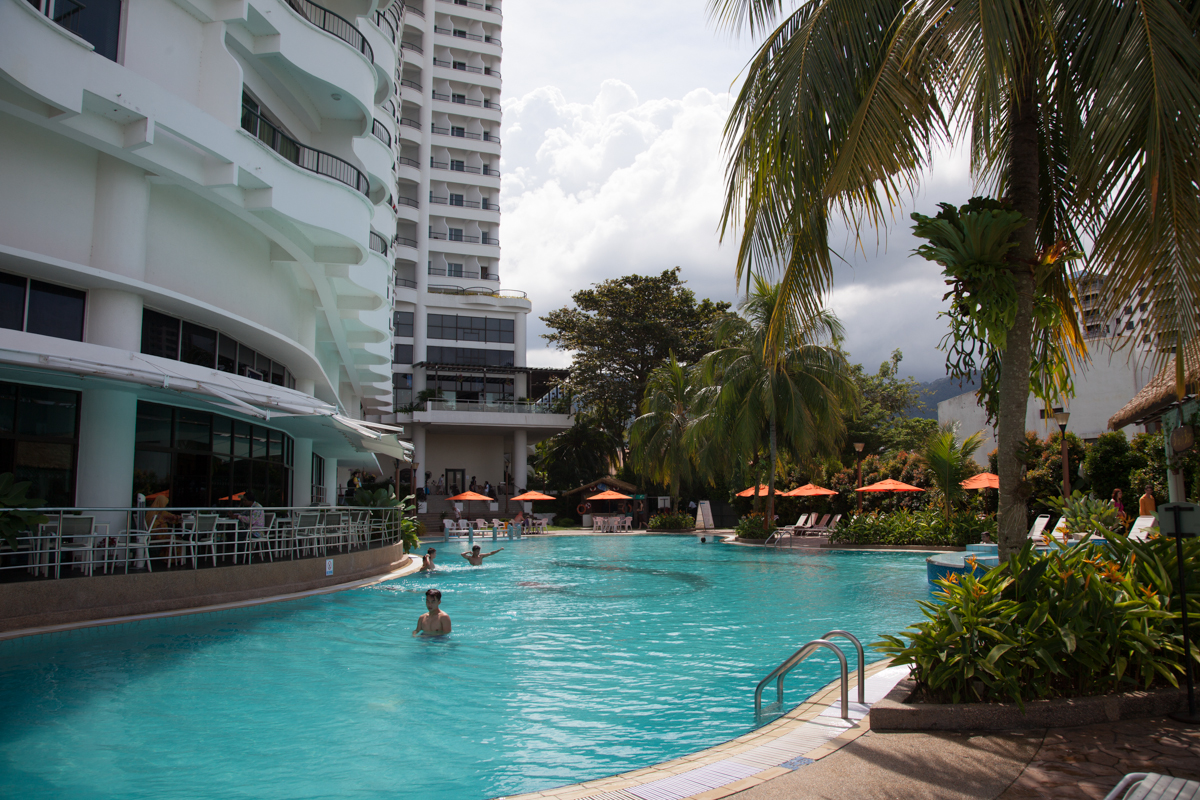
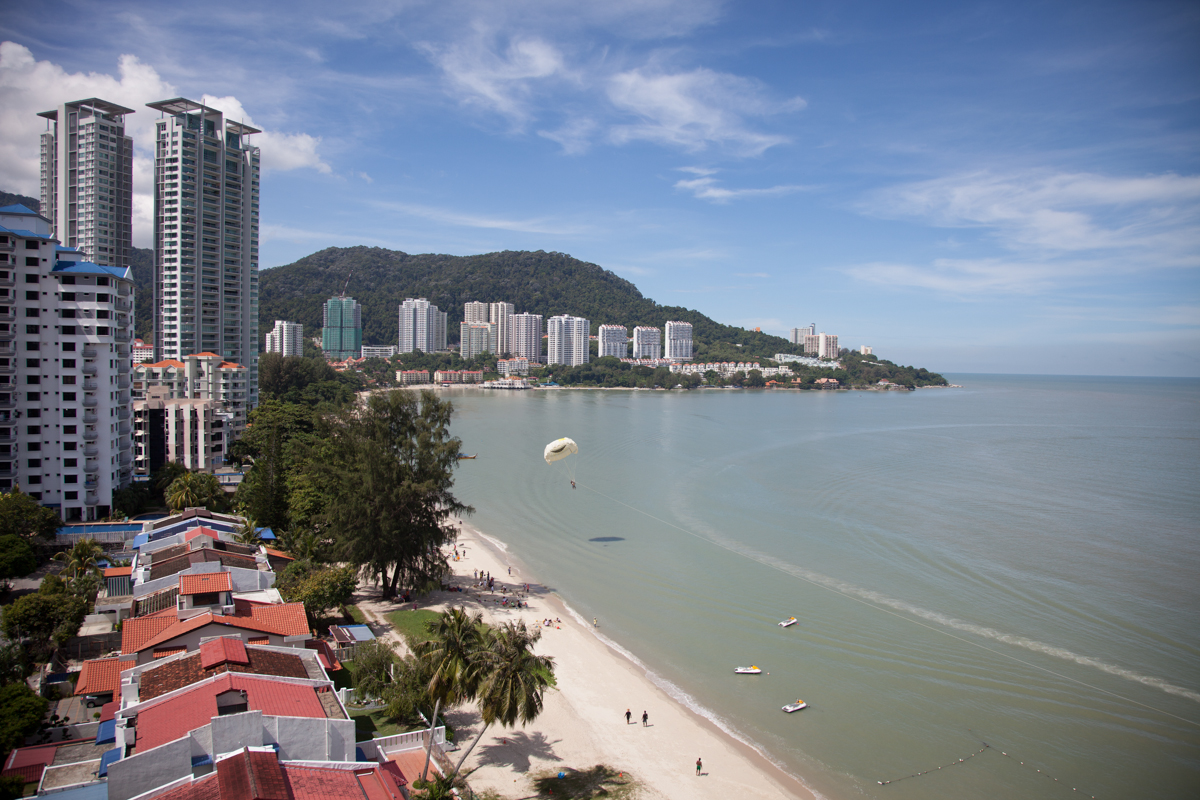
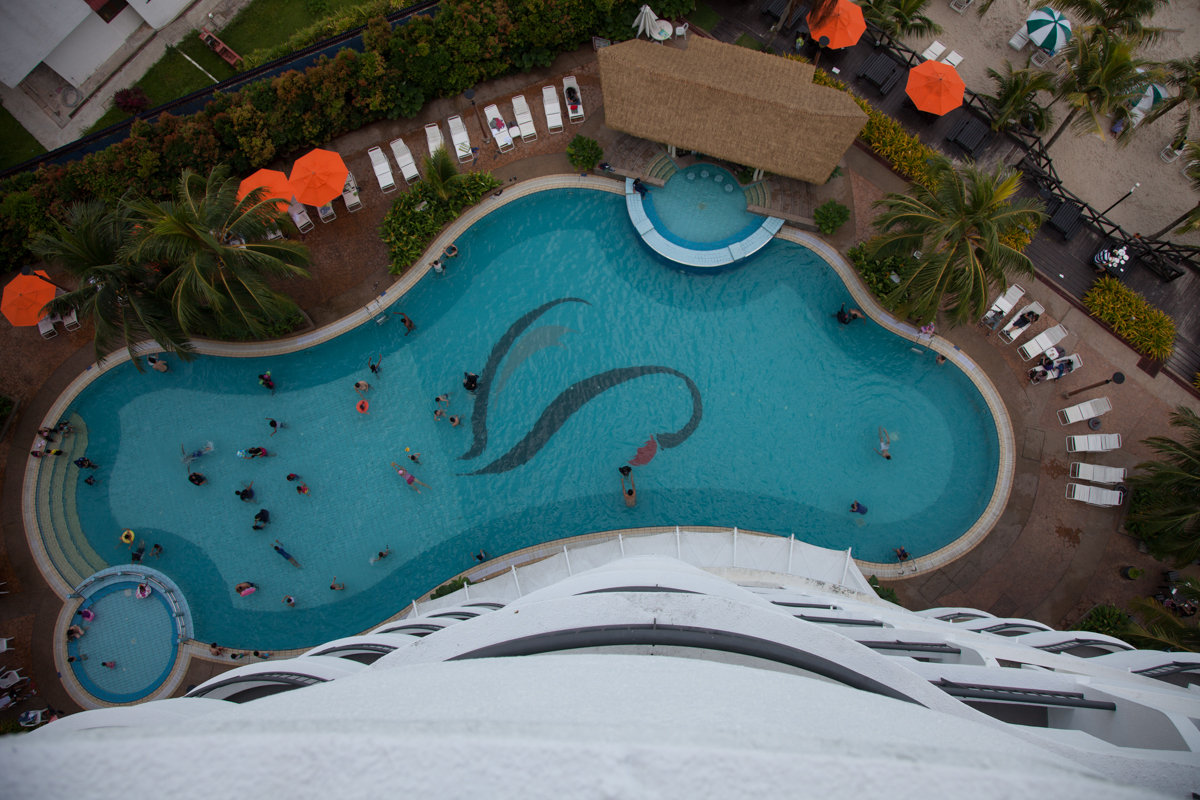
Views from our 8th floor room at the Flamingo on the Beach resort.

Georgetown had its charm but we found ourselves wondering what all the fuss was about.  Maybe we’ve seen too much of Malaysia because honestly, this city didn’t look much different from the other places we’ve seen already.  Every town in Malaysia has a “Little India” and a  “Chinatown” as well as temples, mosques, and colonial buildings, reminders of its past history as a British colony.

Perhaps our enthusiasm for Penang was hampered because we were distracted, and increasingly frustrated trying to figure out where to go in Thailand.  Our plan was to find a nice, cheap little place on a quiet beach where we could sit tight for a month or so.  But it was not to be.  This is high season in Thailand, and Christmas is probably the worse time to visit.  It seemed everything was booked solid, and what was available, was ridiculously overpriced for what you got.  Not to mention how crowded everything was going to be.  Our lovely beach fantasy was quickly swept out to sea!  Now what?

We spent a lot of time researching our options but we kept coming up with nothing.  It turns out this is the most popular time to visit Thailand, and this year in particular, Thailand is experiencing a surge in tourism.  That’s great for Thailand, but not so good for us.  This is definitely one of the down sides of not planning ahead – sometimes, especially during peak times, you can find yourself shit out of luck.  Finally, we decided we would skip the beaches for now and head up to Chiang Mai in the north where we would look for an apartment.  We both want to settle down in one place for a month or two to take a break from travelling and to spend some time focusing on a couple of projects we have in mind.

Once our destination was decided, all we needed to do was book our train tickets to Bangkok and away we could go.  Naively, we thought we could purchase our tickets a day or two ahead which is generally true but not in high season.  When we arrived at the ticket office, the lady practically laughed at us – the train was booked solid for the next two weeks! So how were we going to get to Thailand?  Back to our hotel for more research, and a request to the hotel to stay another day to give us time to sort out our transportation.

We had two options – bus or plane and in the end we opted for both.  The bus trip would take more than two days including two overnight bus rides.  And there were no direct flights either.  The best we could find (and it wasn’t cheap) was with a 10 hour stop-over in Bangkok.  So we decided to fly direct to Bangkok (1.5 hours) and then take the overnight bus from Bangkok (9 hours).  With our transportation figured out, we enjoyed our final day in Penang hanging out by the pool and the beach.  Thailand, here we come!

Travel Tip: Getting a Thai Visa while in Penang is super easy. You will need your passport, two standard passport photos, a photocopy of your passport and 110 ringgits (about $35 CAD).  No need to fill out the Visa application form in advance as they will give you one when to complete when you arrive.  You can even get your passport photos (20 ringgits for 4 photos) and have your passport photocopied (2 ringgits) from the guy working out of his car turned office  just outside the Consulate gates.  Or you can go to the Komtar shopping complex in Georgetown and get your passport photos and photocopy there (12 ringgits for 4 photos).  But be sure to have enough money with you as the Consulate is located in a suburban area where there are no ATM machines.

The Royal Thai Consulate is located in the suburbs at:  1 Jalan Tunku Abdul Rahma which is a little out of the way but it is still easily accessible by bus.  Take bus 101 in either direction (from Georgetown to Feringgi Beach, or vice versa) and get off at the corner of Jalan Burma and Jalan Cantonment.  Tell the bus driver you are going to the Thai Consulate – just about everybody knows where it is.  If you need money, get it from one of the many ATMs in this area as there are no ATMs near the Consulate.

It’s a pleasant 20 minute walk along Jalan Cantonment to Jalan Tunku Abdul Rahma where you turn right and then left at the first street.  The Consulate is on the right hand side of the street, opposite a school.  The roads are well signed, but the Consulate isn’t.  Just follow these directions and you should find it without too much trouble.  Of course, you can just take a taxi which will probably cost about 25 ringgits each way.  But it’s much cheaper by bus – only 1.40 ringgit each way.  Or you might get lucky like we did when we asked a guy how to get to the Consulate from where the bus deposited us on Jalan Burma and he gave us a drive there.

When you arrive at the Consulate, you will be asked to sign in at the guard desk where they check that you have everything you need for your application.  You are then directed to another wicket where you are given the blank application form.  After completing the form, you submit it along with your passport, photos, passport copy and the fee.  You are given a receipt and told to return at 3:30 in the afternoon at which time you simply line up and collect your passport which now has a 60-day single entry Thai Tourist Visa pasted into it.  Note that you cannot get a multiple entry visa from this Consulate.

If you’re applying for anything other than a tourist visa, you may want to  verify that it is possible at this Consulate as our experience is limited to getting a tourist visa only.

Recuperating in Kuching

When we arrived in Kuching, both Chris and I were sick. Chris had just started a head cold and my symptoms were getting worse – sore throat, swollen glands and congested chest with coughing. I had been sick for a week by now with no sign of letup so I, or rather Chris, decided it was time to see a doctor.  Sam, our hostel owner, suggested we go to the Asian Clinic down the road where we would find a doctor who spoke English.  When we arrived, the power was out, so the doctor examined me in the dark, with a  strong light shining in my face.  He didn’t say much, mumbled a few words about infection, and then prescribed antibiotics and some pills for my cough and the pain which was pretty intense.

Much of our week in Kuching was spent resting at our hostel, Marco Polo, although we did manage a few excursions just to prevent us (ok, me) from going stir crazy.  Marco Polo felt more like a home stay, rather than a hostel.  The owners, Sam and Georgette live there and are very hospitable and friendly.  The place is super quiet which was great for us trying to recover.  It really is geared towards couples and families, not the party crowd.  Everyone goes to bed early and gets up early so we fit in nicely.  Staying there gave us a real sense of what life is like for the average Malaysian.  The daily breakfast was varied but you had to be up early if you wanted it hot.  The lady who did the cooking arrived at about 7:00 and cooked up everything – fried eggs or noodles or rice, whatever was the dish for the day – and it was left out all morning for guests to help themselves.   This seems typical in Malaysia – we noticed most street stalls and buffet restaurants cook up their food early and then leave it sitting out in the heat all day.

Everyone who stays at Marco Polo, raves about it.  While we enjoyed the friendliness of the place, I must admit we tired quickly of our windowless room, and the dimly lit, equally windowless common area.  The place is well worn and a little grungy around the edges.  It didn’t help that we were sick, and had to spend so much time in our room.

Our first excursion was an easy one.  A simple bus ride out of town took us to the Semenggoh Wildlife Centre where they have a program similar to the one we visited at Sepilok, but this one is not limited to Orangutans.  Since it began in the early 70’s, this Centre has cared for almost 1,000 endangered mammals, birds and reptiles from dozens of different species.   Of course we were visiting to see more Orangutans.  When we arrived, we were warned before buying our entrance tickets (10 RM each) that no Orangutans had visited the feeding platforms for days because this was high fruit season giving the apes had easy access to fruit in the jungle. We figured we were there, so we may as well enter the park and see if this would be our lucky day.  Nope.  There was not a single ape to be found during our visit.  It was a complete bust.  Oh well, at least it got us out of the house for a few hours.

Each day we went out for a little while, mainly to get food, but it also gave us a chance to see something of Kuching.  This is a very pretty city, with a population close to a million, spread out over a large area, about 1,800 km².  There is a well maintained pedestrian promenade that snakes along the river through the downtown core.  This was a great place to people watch, especially on Sunday afternoon.  We were staying in the middle of China Town, which was easy walking distance to the downtown waterfront.


Our next excursion out of town was in search of some caves.  We travelled again by bus, but this time it wasn’t on a comfortable, modern, air-conditioned bus.  No, the bus that day had seen better days.  It was old, dirty, and quite uncomfortable, especially for us.  Even my short little legs couldn’t squeeze into the space between the seats!  But it got us safely to the town of Bau from where we hired a taxi to take us out to the Fairy and Wind caves, two local attractions that were well worth the visit.

We saved our best excursion for the end of the week, when we were both feeling much better, although still a little weak and low on energy.  Bako National Park  is one of the smallest parks in the area, yet it offers abundant wildlife, beautiful rainforest,  jungle streams and waterfalls, secluded beaches and well marked trekking trails.  Accessible only by boat, after taking a 45-minute bus ride from Kuching to Bako, it’s remoteness helps to protect the natural habitat.

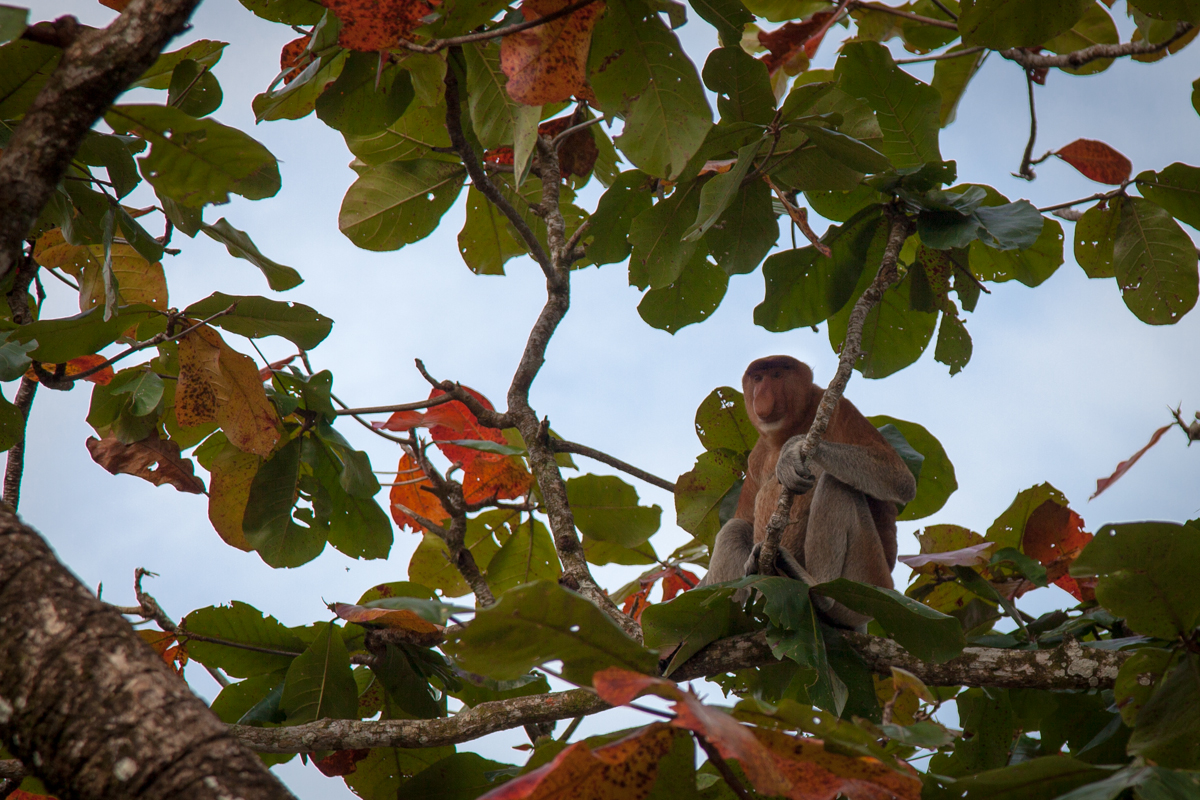
Immediately after getting off the boat, we were greeted by a large Proboscis monkey sitting in a tree at the entrance to the park.  He didn’t seem to mind us gawking at him and taking a few pictures.  Just 15 feet away, it was the closest we had been to a Proboscis monkey yet.  After deciding on our trekking route – the two easiest and shortest trails – we saw a female Bornean bearded pig with five piglets tagging behind her.

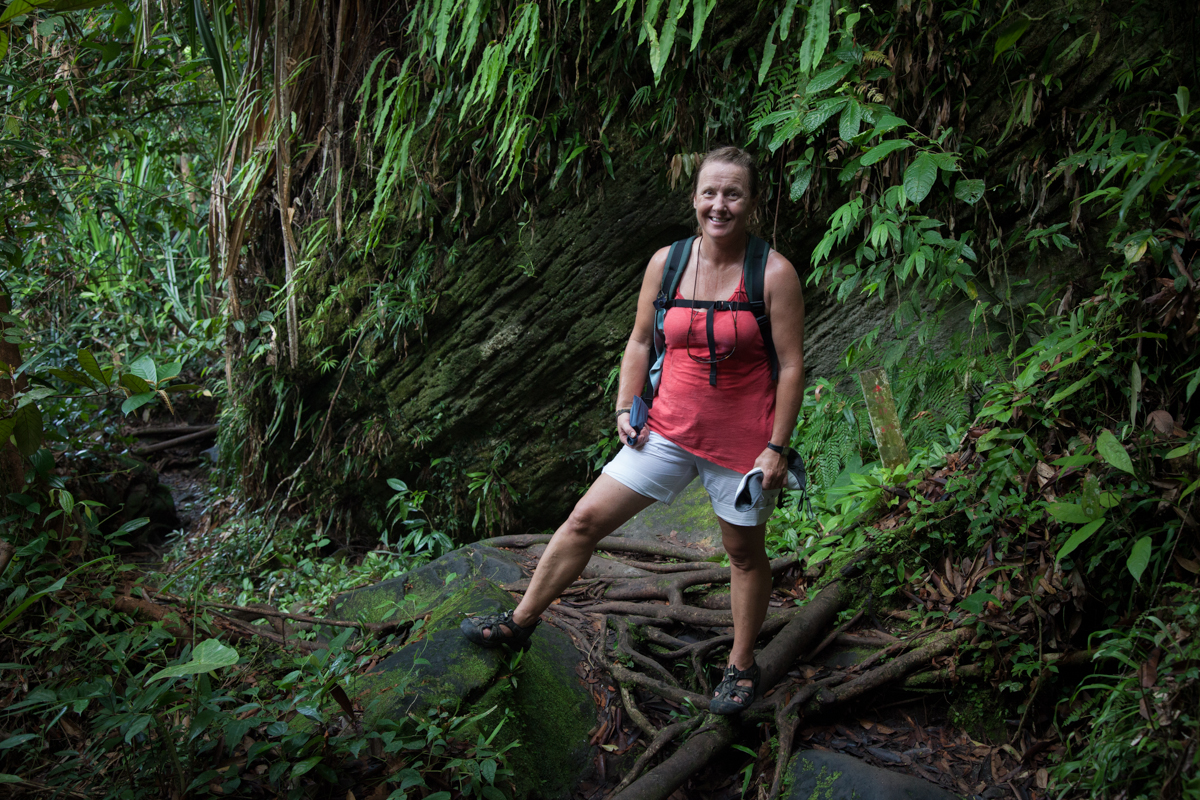
The first trail was more challenging than we expected – up and down over tree roots and rocks through dense jungle.  Soaked to the skin from sweat within minutes, we huffed and puffed slowly to the end reward, a crescent shaped beach and a troop of Proboscis monkeys high in the surrounding trees.  Back at the park headquarters, we had some lunch, carefully guarding our food from the thieving long-tailed macaques who boldly jumped on our table and snatched food right from our plates.  Later we followed a troop of smaller monkeys onto the beach at low tide and watched as they fished for shellfish in the crevices of the exposed rocks.  The heat, humidity and our low energy made us rethink our plans for a second hike, and instead we just stayed near the beach for the afternoon, enjoying the cool sea breeze and beautiful surroundings.  Just before we left, we saw the family of pigs again, but this time there were only four piglets with their mother.  Something happened to one of the little guys during the day, a stark reminder that we were in the wild jungle, not a zoo.
During the week, we spent some time working on our website and you may have noticed a few changes.  Most notably, we have added some click through advertisements where we get paid a small amount each time someone clicks on an ad displayed on our site regardless if the user buys anything at the other end.  We’ve also added some ads for iPage which is the hosting provider we use for this website.  This is a referral ad which means we get a small commission if someone clicks through and purchases one or more services from iPage.  I hope the ads aren’t too invasive and if they are, please let us know.

Chris has also spent some time getting photos listed on a few stock photography sites.  When someone purchases one of Chris’ photos from these sites, he receives a small commission.

So, is it possible to earn money on line from blogs and stock photography?  Given our limited experience with this, the answer is yes, as we have both already made a few dollars.  However, to make any real money, I think the secret is in volume: volume traffic on your website, which we don’t have on this site, and a volume of photos on the stock photography sites.  It takes a lot of hard work and dedication to achieve the kind of volume needed to earn good income.  It’s safe to say we aren’t going to get rich off either of these endeavours in the short term.  We might be able to buy a cup of coffee with our earning each month, if we’re lucky!

A pseudo jungle experience in Borneo

After spending five days in the Peruvian jungle a few years ago, we thought we were prepared for the jungles of Borneo.  With visions of wild orangutans, herds of pygmy elephants and troops of proboscis monkeys dancing in our heads, we made our way to the Kinabatangan Nature Lodge where we planned to spend 3 days and 2 nights exploring this natural wonderland. The area has been touted as a must see attraction so understandably our expectations were set quite high.  We were prepared to suffer through unbearable heat and humidity, attacks of tenacious mosquitoes and whatever other discomforts nature sent our way with hopes of being rewarded with seeing some amazing wildlife in their natural habitat.

The first thing we noticed when we took the small motor boat across the river to the Lodge was how close it was to other homes and lodges. It was anything but remote. The Lodge itself was very comfortable, in fact far more comfortable than we had expected. Our private cabin with ensuite bathroom would put many of our recent hostel stays to shame.Tasty meals were served up in the communal dining room; they even had wifi available although it was pretty slow. We were definitely not roughing it on this jungle journey.

Our program included four river boat excursions, two night walks and one three hour trek through the jungle.  It was a full schedule, and I found it a challenge to keep up as I was still sick with what I was sure was another throat infection.  On each outing we saw lots of monkeys, mainly long tailed macaques and proboscis monkeys.  It didn’t take us long to spot the monkeys as we cruised down the river.  The rustling of leaves in the branches was a sure indication monkeys were about.  I loved watching them leap through the trees fearlessly as they raced from one tree to the next.  Often they just sat quietly in the tree branches, grooming each other meticulously.

Long tailed macaque staring at us from the riverbank.

Proboscis mother and child getting ready to leap to another tree.

During one of our outings, we saw a mother/offspring pair of wild Orangutans chomping away on fruit in a tree high above us.  But the highlight for me was seeing a newborn long tailed macaque; it was still wet from its birth.  We witnessed its tentative first steps along the branches, with mama watching close by.

Wild Orangutan “toddler”.

Newborn long tailed macaque.

Baby long tailed macaque with its mother.

Typical pose of a proboscis monkey.

There were a few bird sightings along the river, the most impressive being the Hornbill.  There were lots of eagles, colourful kingfishers, and we even saw an owl at the start of one of our night walks.  The night walks were rather disappointing as there wasn’t much to see in spite of our best efforts to walk quietly.  We saw a few birds sleeping on low branches which was something I had never seen before, a few insects and a frog.  That’s it.  During our three hour jungle trek where we traipsed through mud as high as our rubber boots, we saw nothing, not a single form a life.  It was a complete bust.    And no, we did not see the pygmy elephants either.  Apparently they were somewhere upstream, about 70 km away.  All in all, it was a rather disappointing experience in terms of the minimal wildlife we saw.

Male Hornbill eating berries in a tree.

Male and female Hornbills.  Can you see the difference?

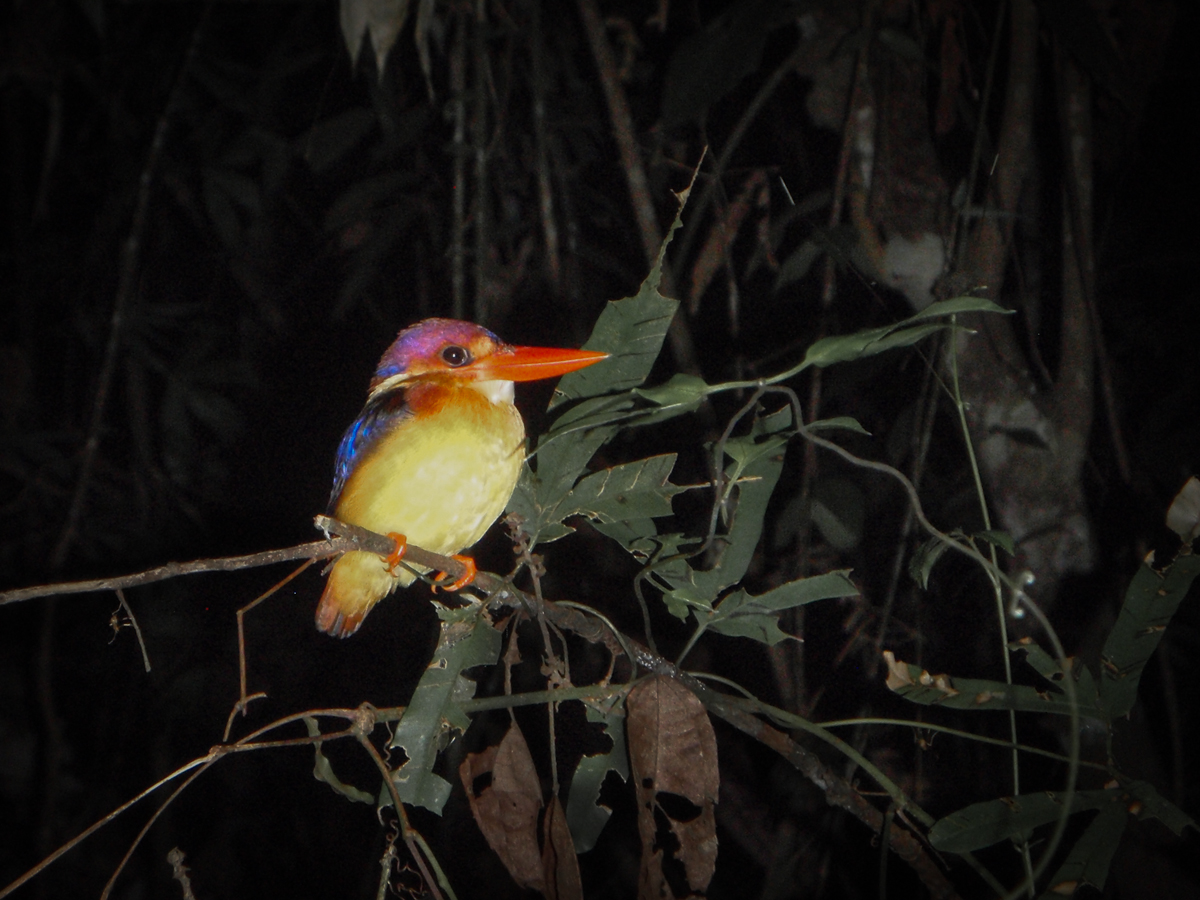
Kingfisher seen during our night walk.

Both the rainforest and its inhabitants have been severely affected by human activity.  The rainforest itself is second generation meaning it had previously been razed by humans. There are signs of Palm Oil plantations everywhere, encroaching more and more on this natural habitat.  What was once a vast forested region, is now a forest corridor along the Kinabatangan River, connecting the coastal mangrove swamps with the upland forests.  At least the area is now protected under the Wildlife Conservation Enactment which went into effect in 1997.  Hopefully as the forest regenerates itself, its inhabitants will have the chance to flourish once again.

Video:  Monkeying around in Borneo
 

Meeting the man of the forest in Borneo

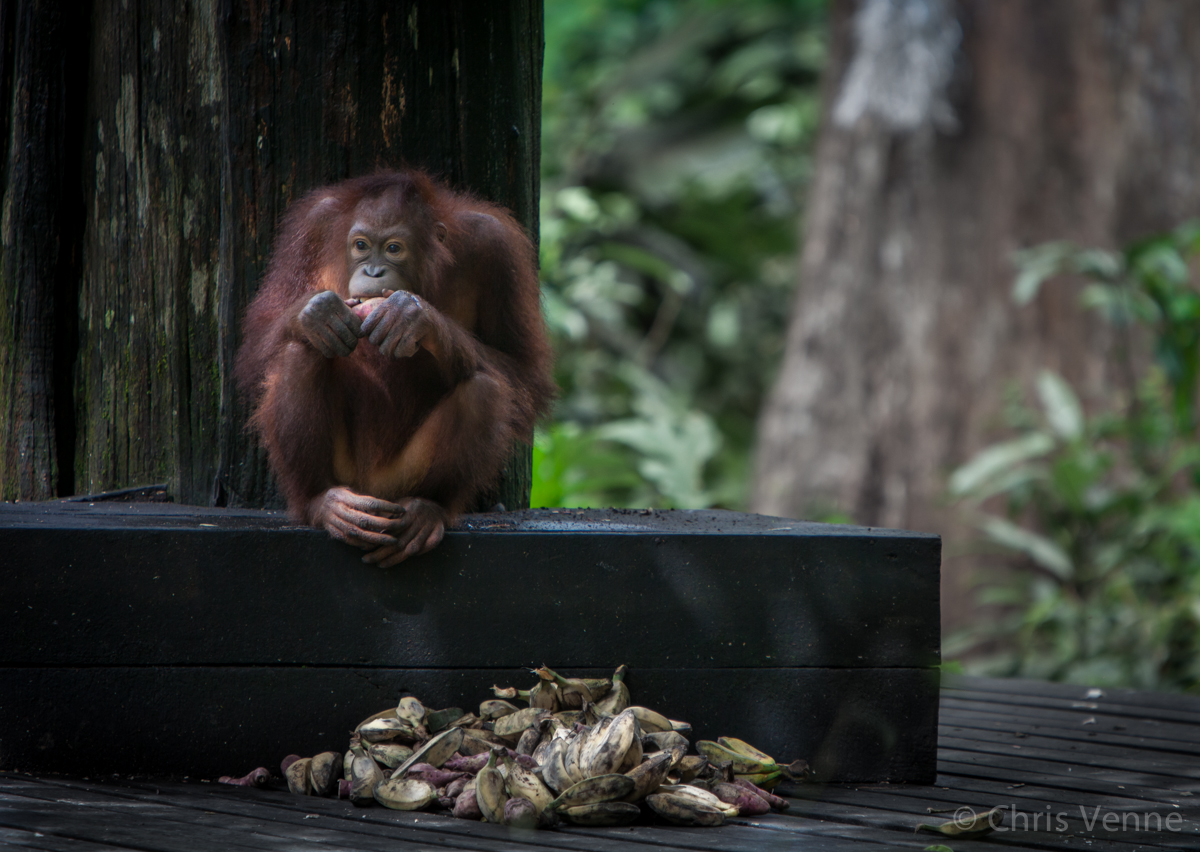
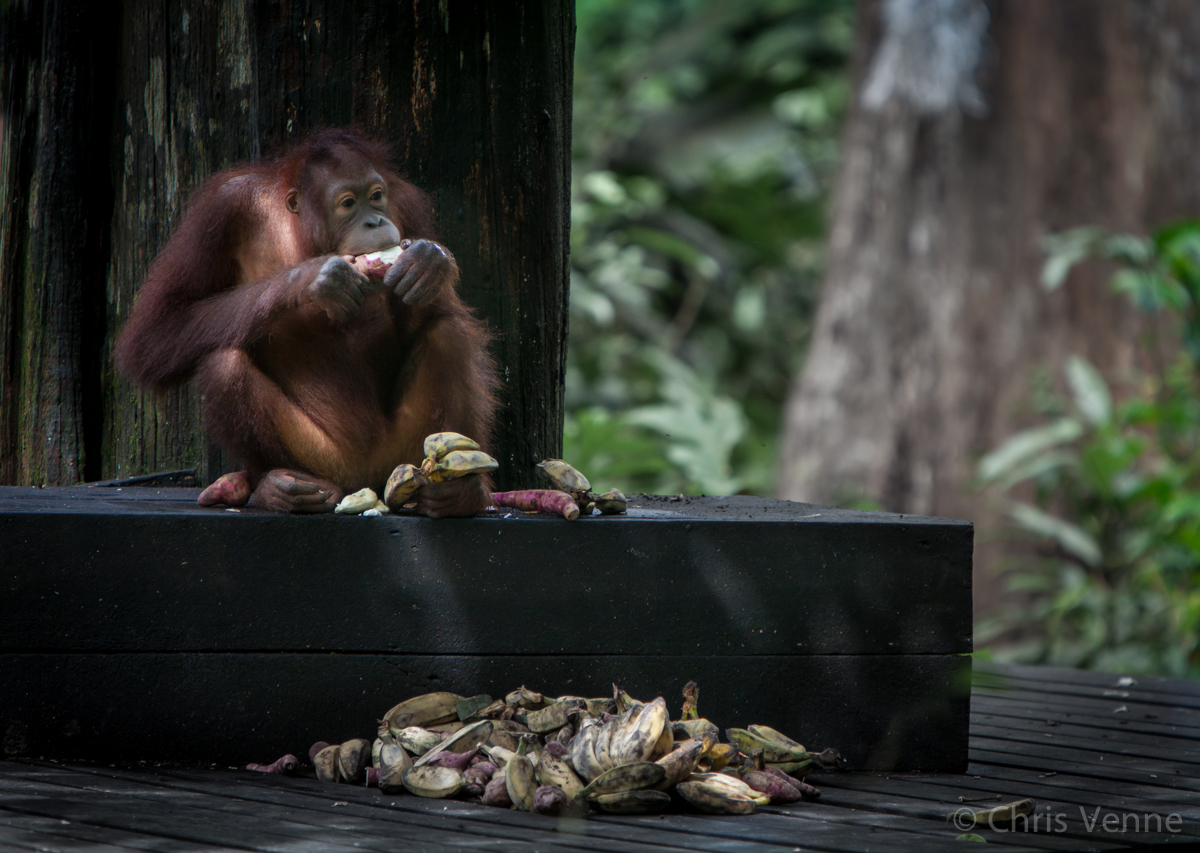
After exploring the underwater world off the coast of Borneo for three days, we were ready to discover the natural wonders of the jungle.  Our first stop was the Sepilok Rehabilitation Centre where orphaned Orangutans are rescued and then nurtured to maturity in a 23 sq km protected area at the edge of the Kabili Sepilok Forest Reserve.  Each year many adult organ utans are killed because of illegal logging and deforestation activities, leaving their young offspring to die.  Others have been illegally caught and kept as pets.  Today, there are about 25 young orphaned oOrangutans living at the centre in addition to those living freely in the reserve. The centre is open to tourists who visit during the twice daily feeding times in order to catch a glimpse of these adorable creatures.

It was an easy 4.5 hour bus ride from Semporna to Sepilok Junction where the bus deposited us on the side of the road, in the middle of nowhere. We had been told it was a 3 km walk to our hostel (Sepilok Jungle Resort) which was next to the Centre, but if we were lucky, a car might offer us a lift for a few ringgits.  Luck was definitely on our side that morning.  Not only did the torrential rain stop as soon as we were dropped off, but a car approached us within minutes to offer us a ride.

We had two nights booked at the Sepilok Jungle Resort which allowed us a full day to visit the Centre and the nearby Rainforest Discovery Centre.  After reading mixed reviews about this resort, we were pleasantly surprised with our very spacious, comfortable room tucked amidst a lovely, tropical garden setting.  It turns out we were staying at the more posh end of the resort with prices to match.  The other end offers up basic, hostel-like accommodations at more reasonable rates.  At $50 CAD per night for a large double room with ensuite, we were paying about double the rate of our other accommodations in Malaysia.  But it was worth every penny!  The hotel restaurant served up tasty, reasonably priced meals too.  There was a very inviting pool which unfortunately we didn’t have time to use.

By the time we arrived at the resort, I was feeling sick again.  My sore throat had returned with a vengeance and my energy was very low.  I pushed myself since we only had the one day to visit the Orangutans and I didn’t want to miss it because of a stupid cold.  The Centre cannot guarantee that visitors will see Orangutans because they really are living in the wild and may or may not choose to visit the feeding platform for some free bananas.  The day of our visit, they were out in full force, including a huge male who rarely comes to the platform.  Apparently, he’s looking for a mate, so he has been showing up about once a month lately.  In the afternoon, another male, much smaller than the one we saw in the morning, found himself a female to his liking, and mated her right there and then as we all watched in amazement.

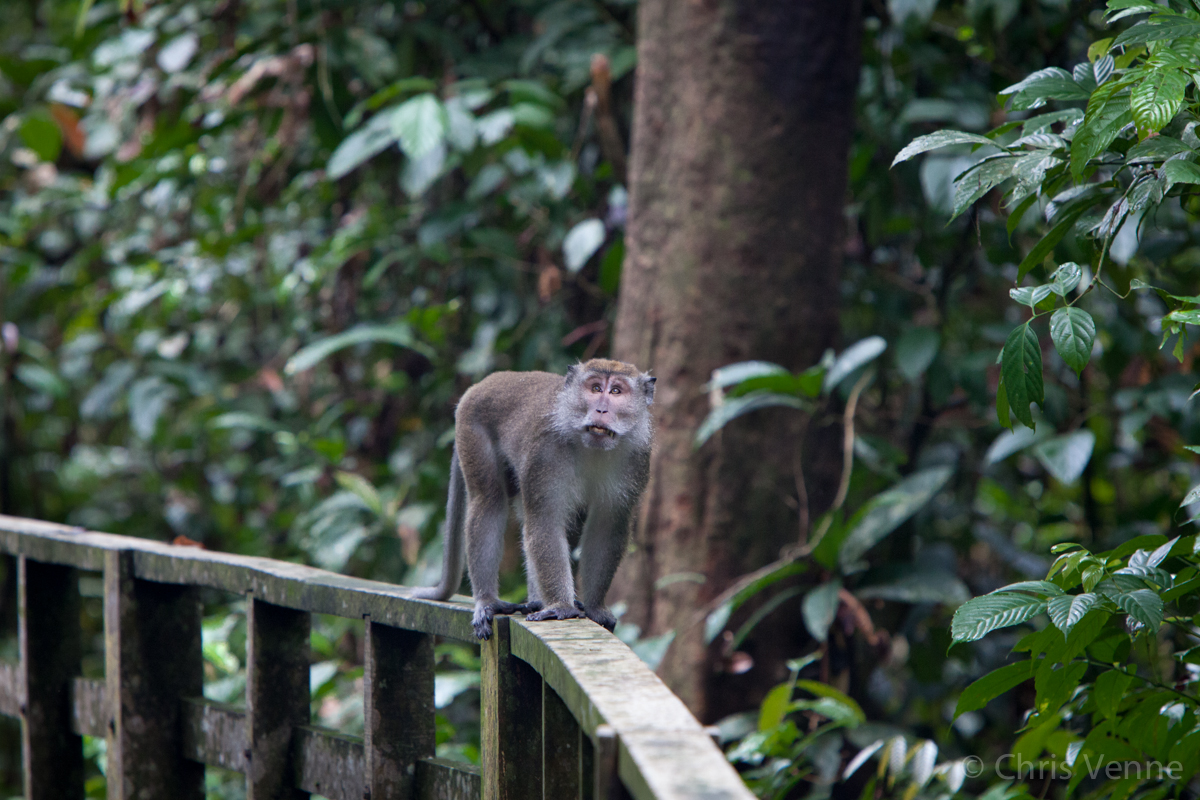
Before the feedings began, I had a close encounter with a group of long tailed macaque monkeys.  After walking ahead beyond the feeding platform towards the exit, a dozen or so monkeys appeared on the railings about a hundred feet away from me.  I was alone and to my astonishment, they all started walking towards me, pausing and staring at me with as much curiosity towards me as I had for them.  I got a little nervous when a large male stopped beside me and glared with piercing eyes, baring his teeth like he meant business.  There was really nowhere for me to go because I was surrounded by them, so I carefully avoided eye contact and stood still to let him pass; after all, these monkeys are wild and have been known to be aggressive, especially if they feel threatened.  I got some great video footage which you can see at the end of this post.

In between feedings, we walked to the Rainforest Discovery Centre  about a kilometre away. While this environmental education centre is geared towards teachers and students, it is open to everyone. Their mission is to create public awareness and appreciation for the importance of conserving forests, as well as the sustainable use of forest resources. Arriving in the middle of the day, when it was stinking hot guaranteed we would see no animals.  They were all taking a siesta which we should have done too.  The only animal we saw was a long tailed squirrel, which looked exactly like a squirrel in Canada, except it had a long tail.  Even though we didn’t see any wildlife or birds or flowers for that matter, we did enjoy the 300 m long canopy walkway, which was 25 m above the forest floor, giving us a great perspective of the rainforest from above. There is a vast network of many kilometres of well kept trails throughout the rainforest too. The dense forest canopy kept us surprisingly dry when it poured rain a few times during our visit.

The highlight of our day were the Orangutans, which we saw again at the afternoon feeding back at the Rehabilitation Centre.  These endangered apes only live in Borneo and Sumatra so it was a real thrill to see them up close like we did.  Their numbers are declining because their habitat has decreased rapidly, mainly because of the conversion of large areas of the tropical forest to palm oil plantations.  Everywhere we went, we saw miles and miles of these plantations, visible reminders of the shrinking forest.  Sharing 96.4 % of our DNA, it’s not surprising that these apes act so human-like and are so endearing to us.  These gentle primates are highly intelligent and have the ability to reason and think.  In Malay, Orangutan means “man of the forest”, a fitting name, don’t you think?

Our next stop is at a jungle lodge on the Kinitabangan River where we will spend three days and 2 nights exploring the wildlife along the river banks and into the jungle interior.  We hope to see Orangutans in the wild as well as the funny looking proboscis monkeys. If we’re lucky, we might even spot a pygmy elephant.

Video:  The Man of the Jungle and a Troop of Macaques
 

Playing with sharks and turtles in the Celebes Sea

Sipadan Island is reputed to be one of the best diving spots in the world, some even say it is one of the top three, but as we found out, it can be hit or miss during monsoon season.  When we learned that Sipadan Island is in the center of the richest marine habitat in the world, the heart of the Indo-Pacific basin, teaming with more than 3000 species of fish and hundreds of coral species, we weren’t going to let a little rain get in the way of our fun. Besides, people usually book months in advance to secure a diving spot because there is a strictly enforced daily diving limit of 120 people on Sipadan Island. This government imposed regulation is in place to protect this fragile eco-system.  When we managed to snag a couple of dive spots at the last minute, we decided to go for it.

But first we had to get there. Sipadan Island is the only oceanic island in Malaysia, rising 600 metres (2,000 ft) from the seabed, located in the Celebes Sea off the east coast of Sabah, about 600 km from Kota Kinabalu. There are two ways to get there – by road or by air.  Almost immediately, I regretted our decision to travel by bus.  We thought the bus would give us a chance to see some of the countryside. I didn’t anticipate getting car sick as the bus rocked from side to side as we twisted our way through the mountains. It took 11 hours to reach Semporna during which time I slept most of the way thanks to Gravol. Again, our trusty medicine bag to the rescue.

We stayed overnight in Semporna at the Sipadan Inn, a very comfortable and clean hotel with excellent air conditioning.  Early the next morning, as we were kitted up with our dive gear, we met Denise, a fellow Canadian who had booked the same package as us: 1 day diving at Sipadan Island and a 2 day/2 night diving package at Mabul Island for a total of 9 dives in 3 days – a lot for us.  We  booked our package through Sipidan.com and we think we got good value for our money.

It takes one hour by boat to reach Sipadan Island.  The island itself is very much what you would imagine a remote, tropical island to be – powder white sandy beach, turquoise waters, palm trees swaying ever so gently in the breeze.  Simply stunning.  After each dive, we had a break on the island, but we were restricted to one specific area, no exploring allowed.

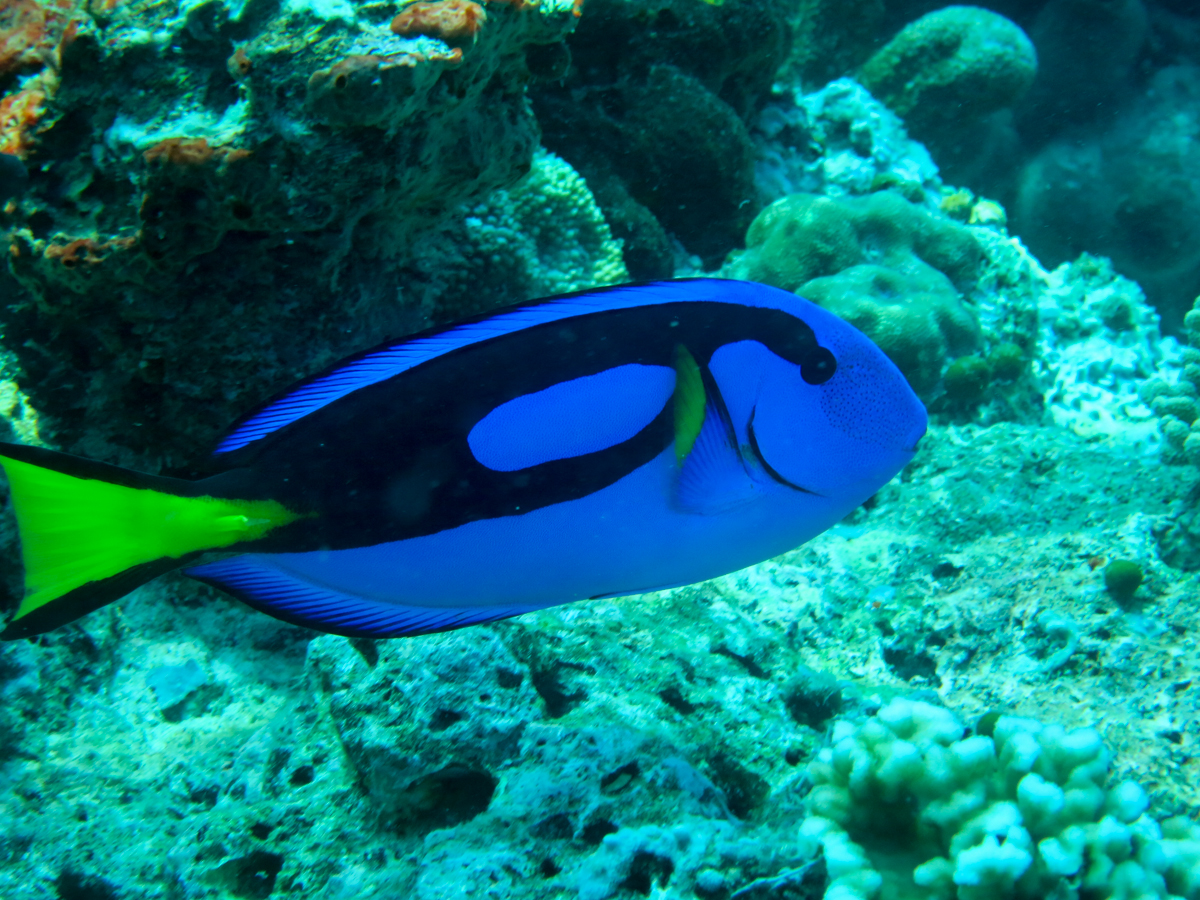
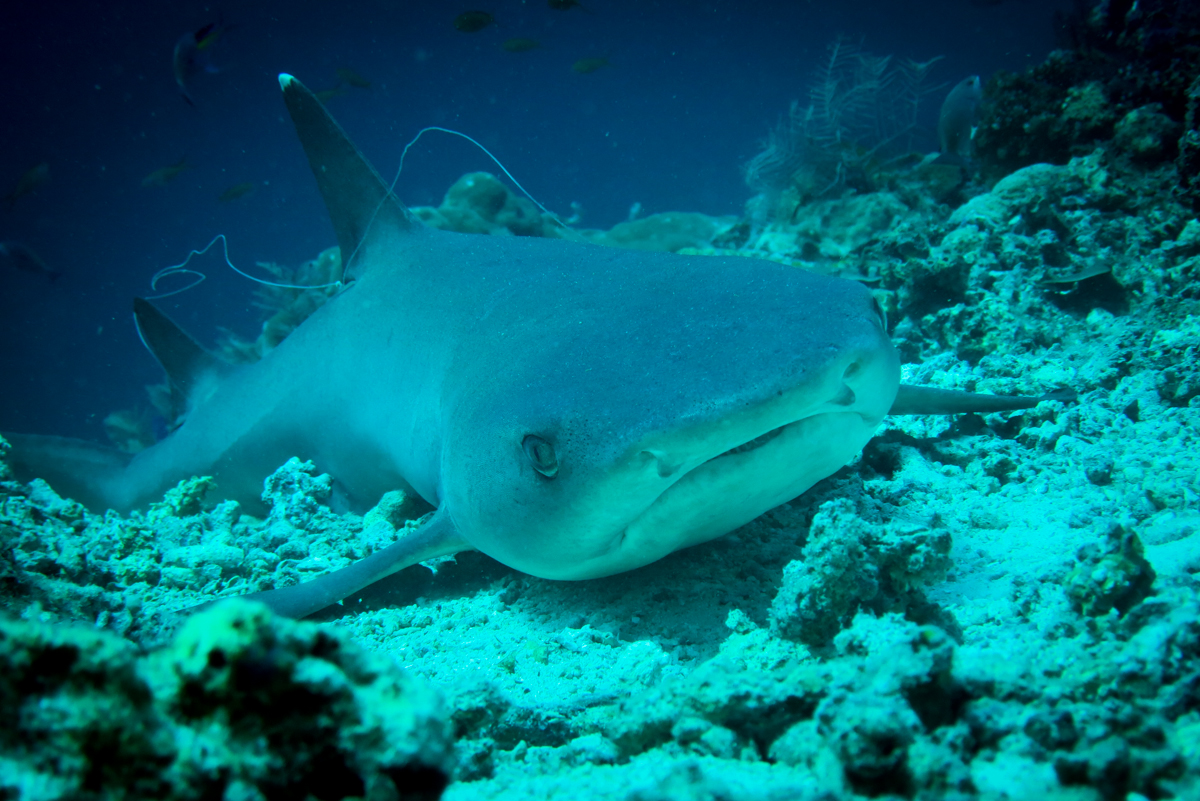
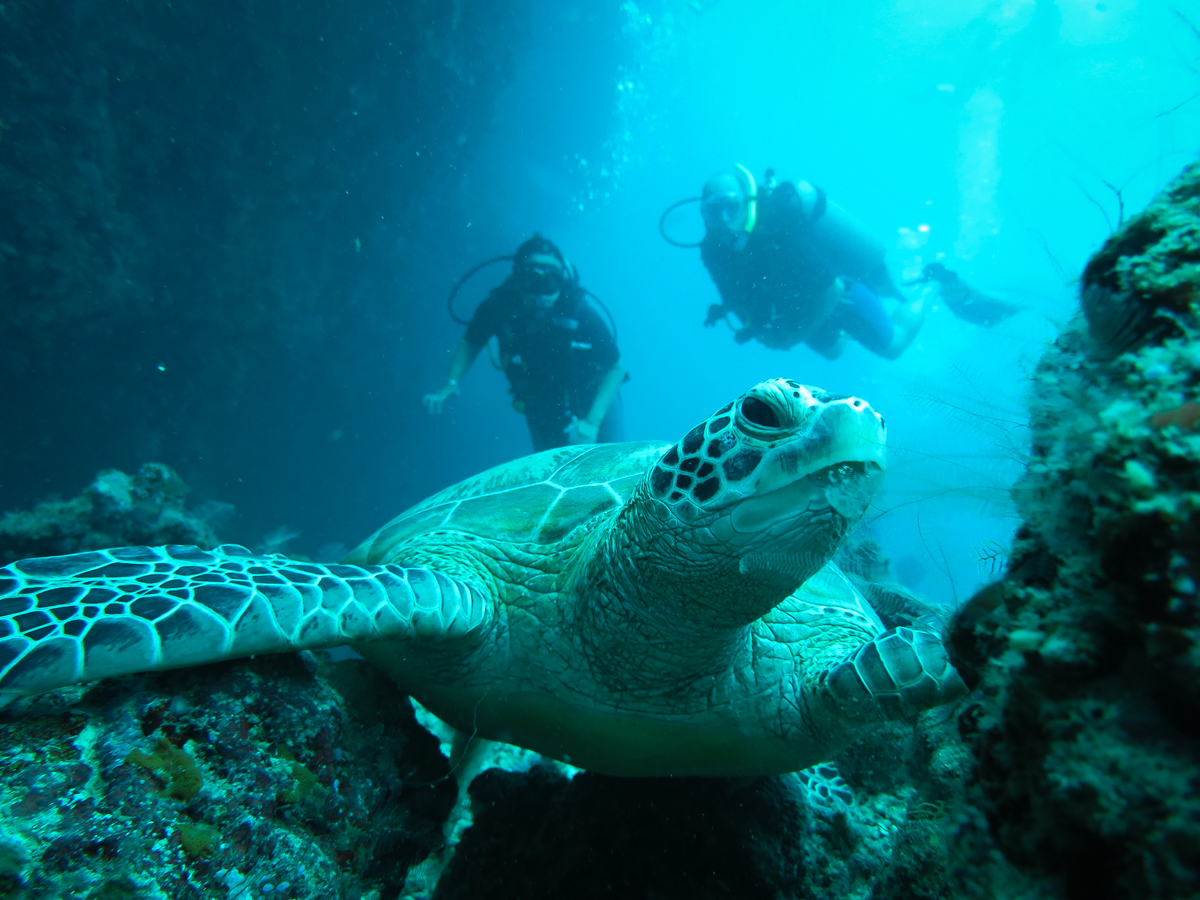
In spite of the poor visibility, the sea served up a vast array of strange and wonderful looking creatures and plants. There were lots of white tipped sharks, huge green and hawksbill turtles, and loads of other colourful fish we had never seen before.  The corals were spectacular, not so much in their colours, but in their size and shapes.

For me the most amazing experience happened near the end of the second dive when we came across a massive school of Jackfish; there must have been thousands of them.  As I casually swam along side them, they would shift their patterns to encircle me and before I knew it, I was in the middle of them, everywhere I looked there was a thick wall of Jackfish. Simply amazing.  The most unusual fish we saw were the Bumphead parrotfish which  is the largest species of parrotfish.   These fish were big, about 4 feet long, and up to 100 pounds in weight.  Their large, protruding  teeth gave them a rather menacing appearance which kept me at a safe distance.

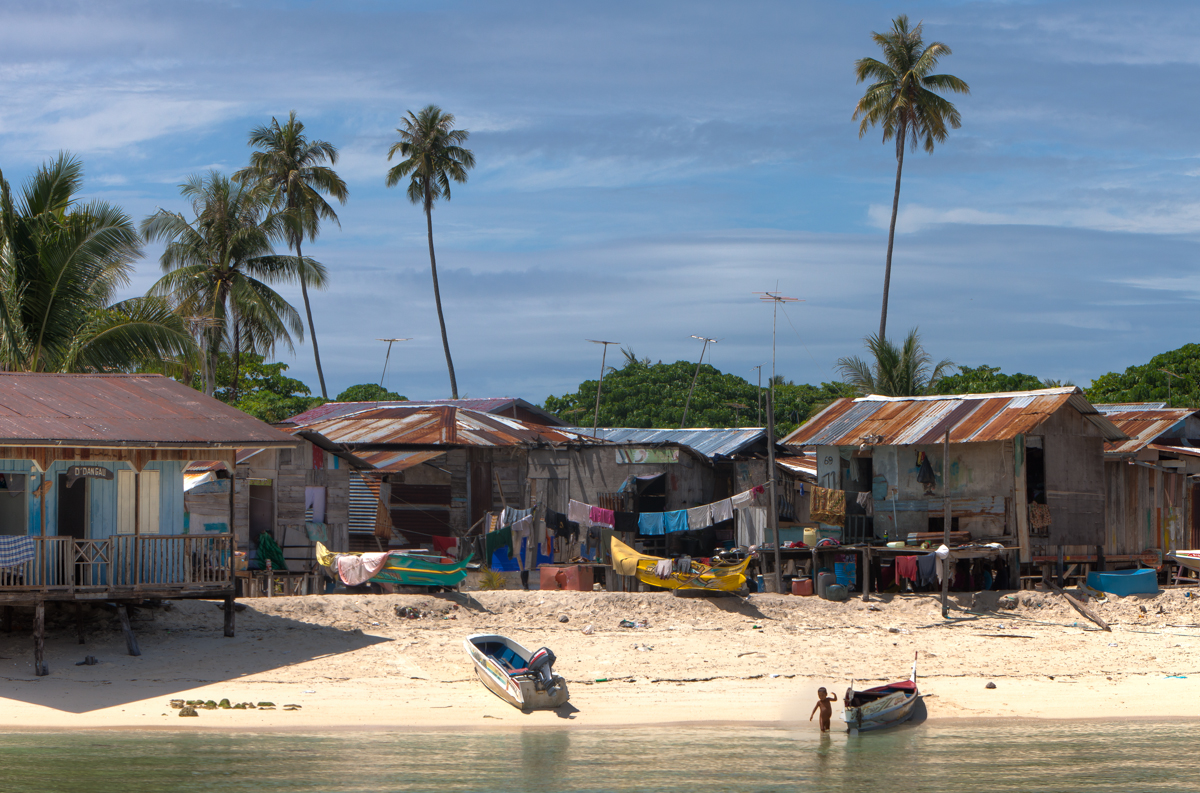
After our three dives at Sipadan, we were dropped off at Mabul Island, 20 km away, where we would spend the next two nights at our “resort”.  This small island has been a fishing village since the 1970s, but more recently it has become popular to divers, mainly because of its proximity to Sipadan.  Several resorts, ranging from bare bone to luxury, along with a large village of locals are all crammed onto this 20-hectare piece of land that sits just 2–3 meters above sea level.

My heart sank as we climbed out of our boat onto the deck of our resort.  I knew we had opted for budget accommodations, but this was really basic, and frankly, quite grim.  Our resort was really nothing more than a long, rectangular wooden structure on stilts overhanging the water.  At one end was three long tables with plastic patio chairs where we ate all our meals and hung out, and at the other end was the kitchen, shared bathroom and staff quarters.  In between, about 10 small rooms lined both sides of the building.  Each room had a window and was equipped with a bed, a table and a fan.  This really did give us an opportunity to see what it was like to live as the locals live.  It was okay for a couple of nights, but I wouldn’t have wanted to live here for a few months like the instructors do.

Entrance to our resort from the island.

Inside view of the resort looking towards the kitchen. 

Island living:  It was common to see young children, under five years of age,
butt naked, paddling around in little dugout canoes.  The sea was their playground.

At over $1,000 p/p per night, these luxury bungalows
on the water were way out of our league.
What a sharp contrast to how the locals live.

Beautiful sunsets were free for all to enjoy!

As we have discovered, it is often the people that make the experience and this place was no exception.  We met the dive instructors – Ann and Gary, a couple originally from the UK, and Matt who was from Slovenia.  All three had just arrived a few days earlier and were still getting oriented.  Mohammed was the resident dive master who knew the outlying waters like the back of his hand.  Alex was another instructor who was on his way out after doing a three month stint.  There was only one other guest, Jenny, an older Asian woman from Spain.  And of course, there was the staff who worked hard to keep the place spotlessly clean, and to prepare our meals and snacks.

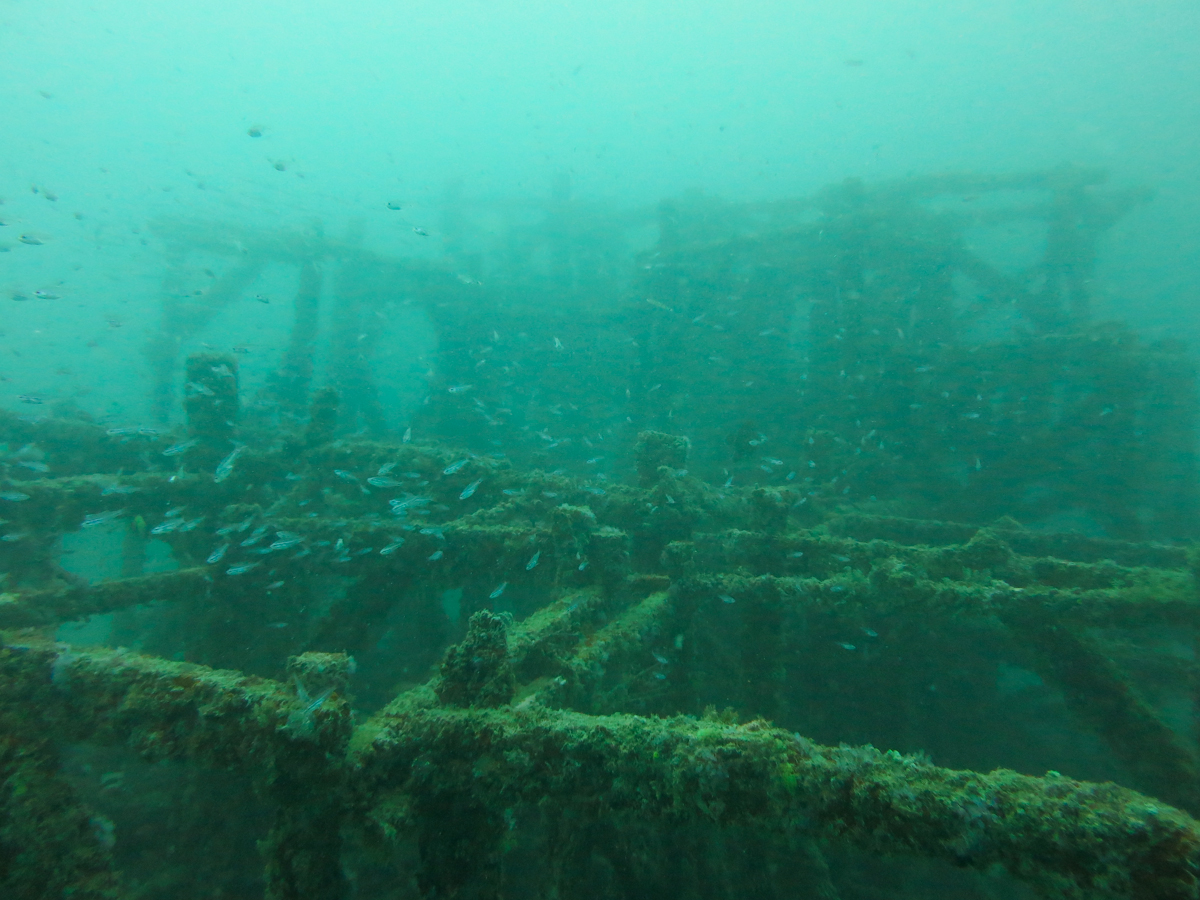
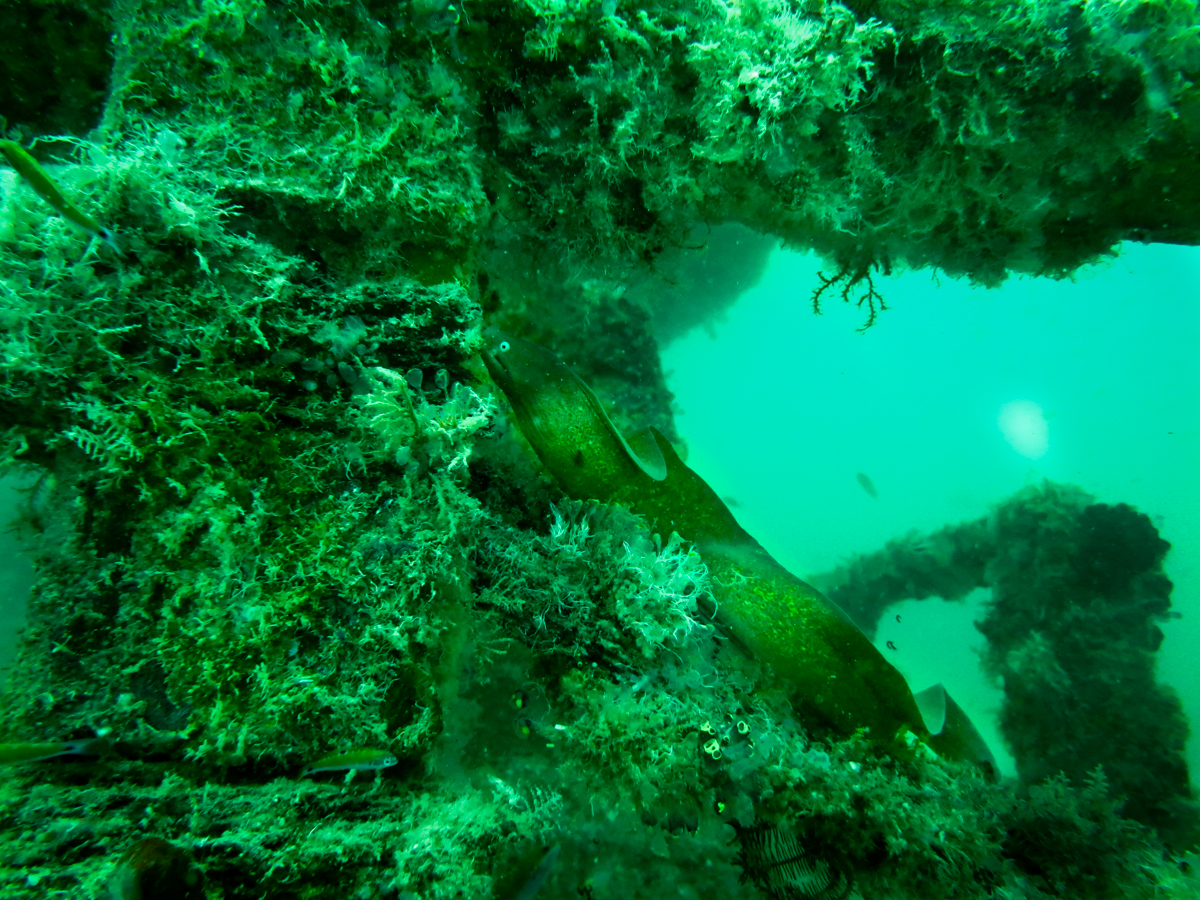
Our dives were varied, but most were shallow, less than 20 metres.  I saw underwater wrecks for the first time as well as some man made reefs which are underwater structures that are made out of wood, rope, tires, and whatever else is available, and which over time become transformed into lovely reefs with lots of plants and fish.  Most of this diving was macro, where we saw smaller things.  Up until now, it was the big things that excited me, like sharks and turtles, but soon I was appreciating the smaller things too.  The visibility was quite poor most of the time, around 10 metres, which made some of the wreck diving downright eerie.

Each day it rained, often really hard, and usually when we were heading out for a dive which was rather miserable and not much fun at all.  But it never lasted very long and soon the seas would calm down and the sun would be shining again.  The rain cooled things off a bit which was quite welcome in the unbearable heat and humidity.  We practically lived in our swim suits so it didn’t really matter if we got wet from the rain.  I think the worst part of diving in the rainy season was the low visibility. Other than that, it was great.

Video:  Diving in Borneo

We ended our diving excursion back on land with a final night at the Sipadan Inn where Denise was staying as well.  Ann and Gary had a couple of days off, so they came back with us. As we were getting ourselves organized to go out for dinner in the hotel lobby, a man approached us to tell us about his menu that night.  His makeshift kitchen was set up in front of a bar a couple of doors down. We had already decided to eat Indian food, but this guy was pretty convincing, and it didn’t take more than a taste of his home fries, to capture my vote. Besides, the bar where we would eat his dinner served beer and the Indian restaurant didn’t, so it was seafood for us that night, and what a feast we had.  A couple of plates of complimentary sushi were served as starters, followed by a set menu that included the best grilled squid I have ever had, delectable scampi, and several fillets of fish, all nicely de-boned and grilled to perfection.  It was a fitting end to a fun diving excursion.

Before dinner, Denise (center) and Ann (right) were finishing up the final
review of material for the Advanced course that Denise
successfully completed while on Mabul Island.  Way to go Denise! 

The next morning we were up bright and early to catch the 7:30 am bus to Sandakan where a jungle adventure awaited us.

Shopping and eating our way through Malaysia

It took us 24 hours to travel from the Middle East to Malaysia which included a 7 hour stop over in Jeddeh, Saudi Arabia  one of the dirtiest airports we have been in.  However, our carrier, Saudi Arabia Airlines, was top notch and provided service we don’t see in Canadian airlines these days, including plenty of free food and drink, cozy fleece blankets, pillows with soft cotton covers, and toiletry packs which even included a pair of socks.

We haven’t had the best start here in South East Asia as it took us a couple of days to get over our jet lag even though it was just a six hour time difference and then we both got sick with some sort of throat infection that knocked us off our feet for another few days.  A round of antibiotics from our trusty medicine bag came to our rescue.

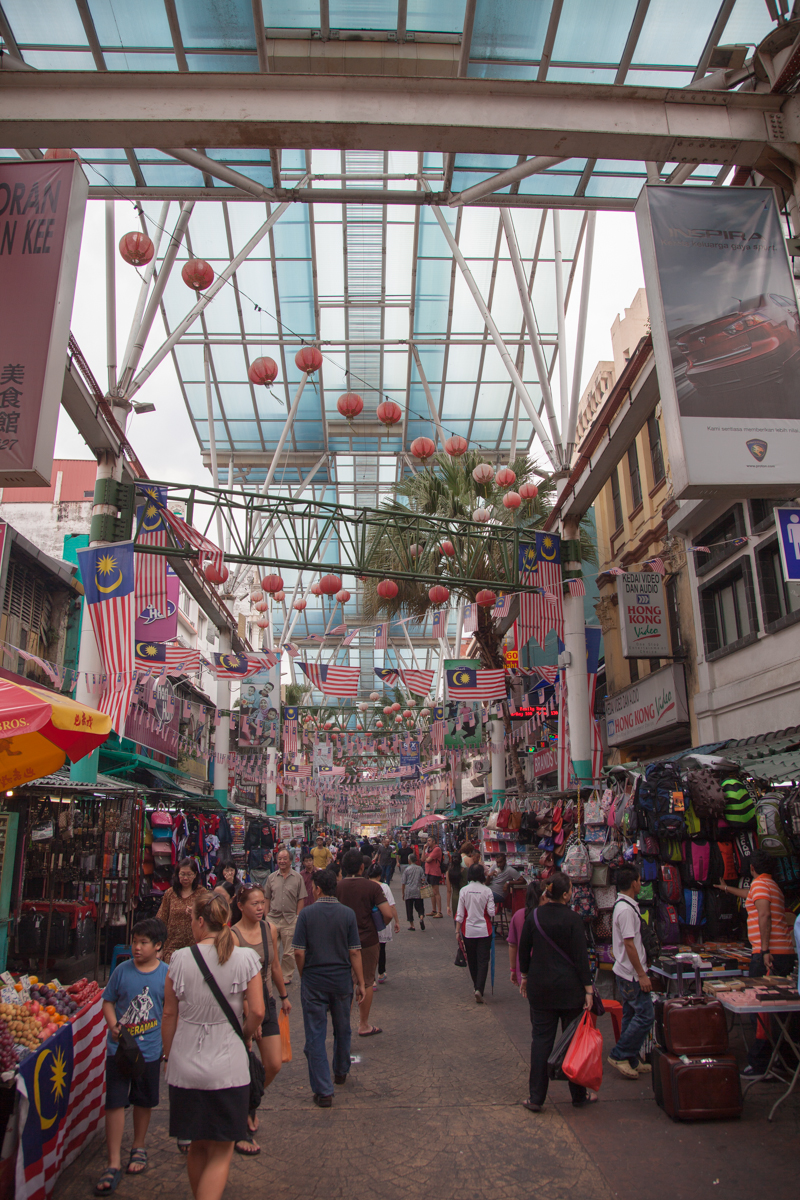
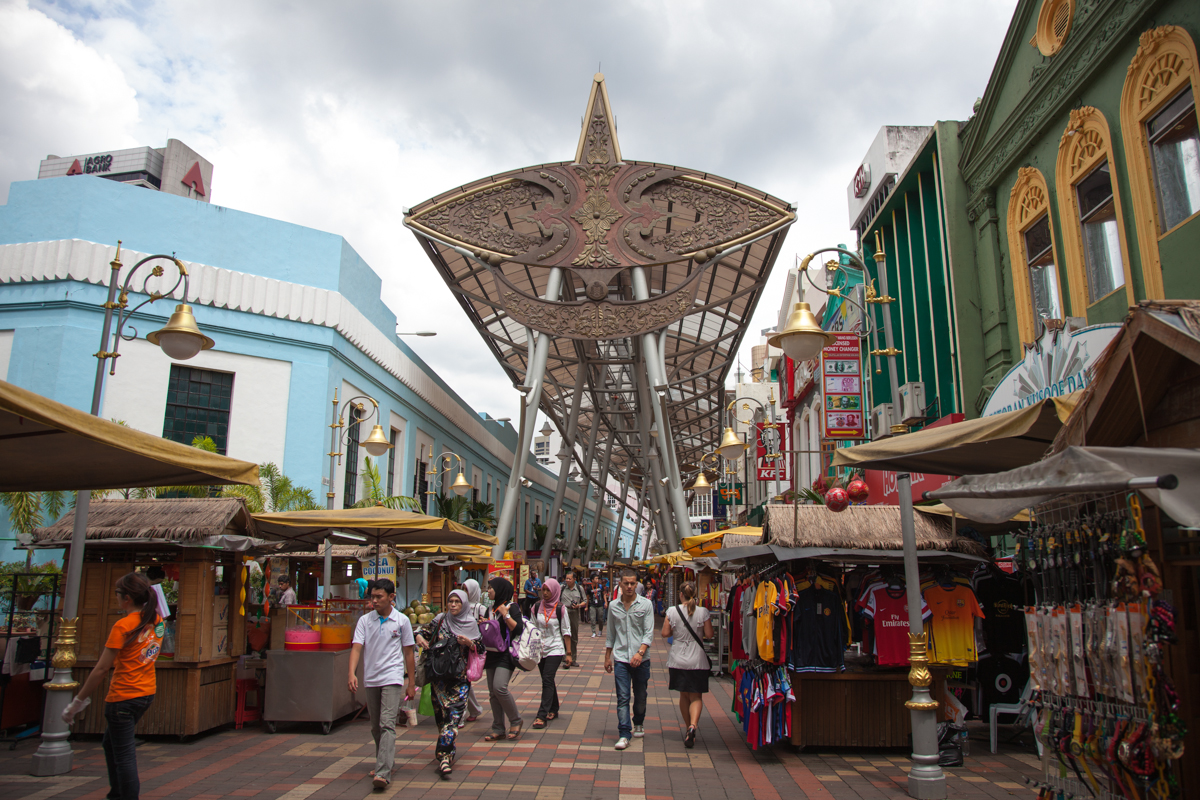
There isn’t much to see culturally or historically in Kuala Lumpur (KL) although architecturally there are many beautiful, modern buildings to admire.  While most people just spend a few days here in transit to other destinations, we spent almost a week here.  It wasn’t the worse place to slow down and recover.  It seems the main things to do in KL are shopping and eating.  There are 66 malls in KL alone, many of which were within walking distance of our hostel, The Nest Guest House, which is located in the area known as the Golden Triangle.  Our hostel was very clean, well located, and our room was quite spacious.  But we both found the bed to be rather uncomfortable and the breakfast dismal – white toast with jam, tea/instant coffee, and bananas, but I think it is the standard in this part of the world. It was still pretty good value at 99 RM ($33 CAD) per night.

The malls vary in size but most are huge mega-complexes up to ten or twelve stories high which made the Eaton Centre in Toronto look pale in comparison.   The shops range from cheap discount stores to high end designer labels and everything in between with some noticeable exceptions.  For instance, we searched high and low for hiking sandals but came up empty handed.  Turns out Malaysians aren’t big on outdoorsy type activities. The sizing and styles are quite different from North America too.  It was a challenge to find anything that fit us, and neither of us are overly large, at least not by North American standards.  We looked like giants amongst the majority of the Asian population!  No matter the time of day, the malls were jam packed with people, tourists and locals alike.  Shopping is big business and contributes billions of dollars to the local economy each year.

Entrance to Times Square Plaza overlooking the
Deepavali 2012 greeting made of coloured rice.

Entrance to China Town.

Entrance to Central Park – another shopping plaza with
both outdoor and indoor stalls.

There is a plethora of food options on offer throughout the city including Indian, Malaysian, Chinese, and Thai.  Street stalls are everywhere – outdoor restaurants with tables and chairs under umbrellas or other makeshift shelters.  We cautiously ate most of our meals at these street stalls.  If you haven’t noticed by now, Chris and I are not the most adventurous when it comes to food.  We like to eat where the locals eat, but we’re ever conscious of the health dangers, and we are reluctant to eat anything we don’t readily recognize, especially meat.  Most of our meals cost about $5 CAD each which is pretty expensive by Asian standards.  We’ve been told Thailand is much cheaper, but we’ll see when we get there.  As much as I enjoy Asian cuisine, after a few days, I was already tired of it.  Indian food was a nice alternative and we ate some mighty tasty dishes in KL.  But when we got sick, I craved homey, recognizable food and was quite content to eat a bowl of chili from Wendy’s and a burger from MacDonald’s.

On a whim, we decided to make a detour to Borneo, which was a quick, cheap flight away (just a hundred bucks a piece).  Borneo is home to the Orang Utan along with lush jungles and rain forests and some of the best diving in the world, especially at the island of Sipadan off the north east coast.  We are now in Borneo, in a place called Kota Kinabalu, a large city on the north west coast.  It’s taking a little longer than expected to organize our itinerary which will hopefully include a day or two of diving, some jungle trekking and a visit to an Orang Utan Rehabilitation Centre.   We’re anxious to get out of the city and into nature, but when we do, we’ll probably be off line frequently. We’ll be sure to share our adventure whenever we can.

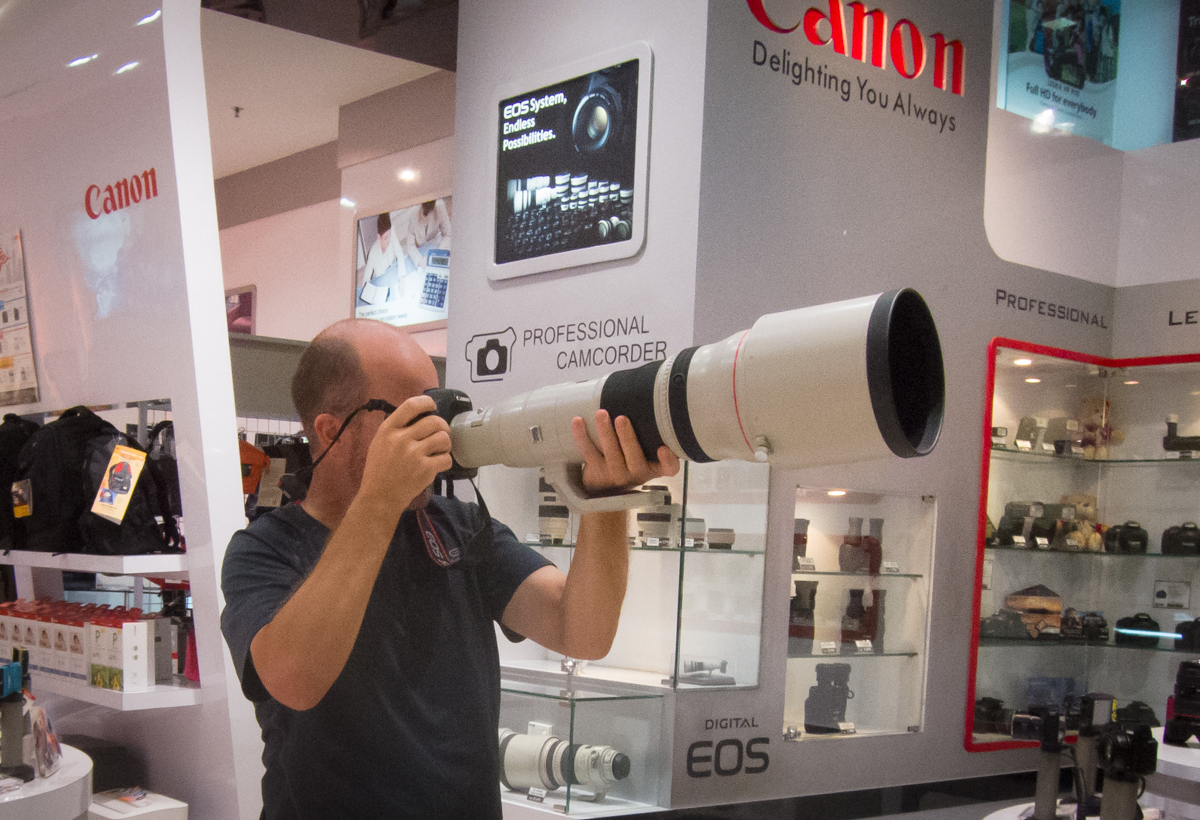
Chris’ Xmas wishlist – at almost 45,000 RM, that’s a whopping $15,000 CAD
and  weighing in over 5 kg, I’m not sure what would hurt more, the budget
or Chris’ back as he lugged it around the world.