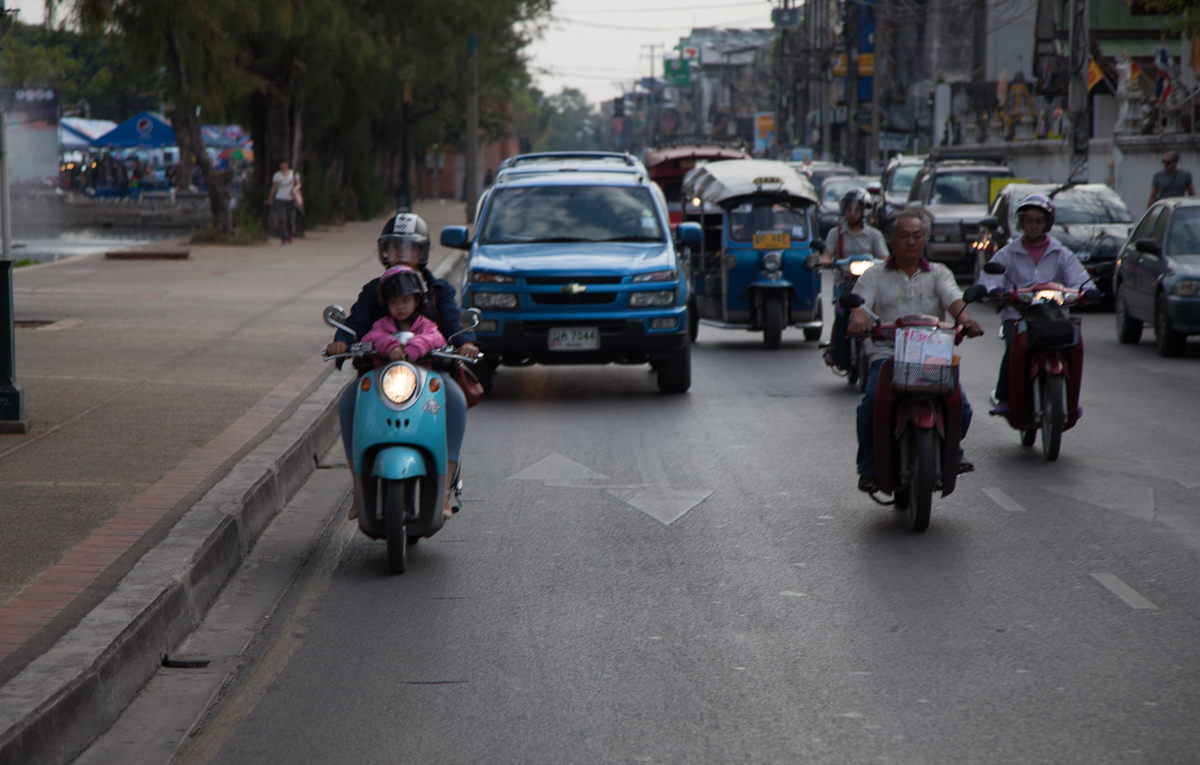
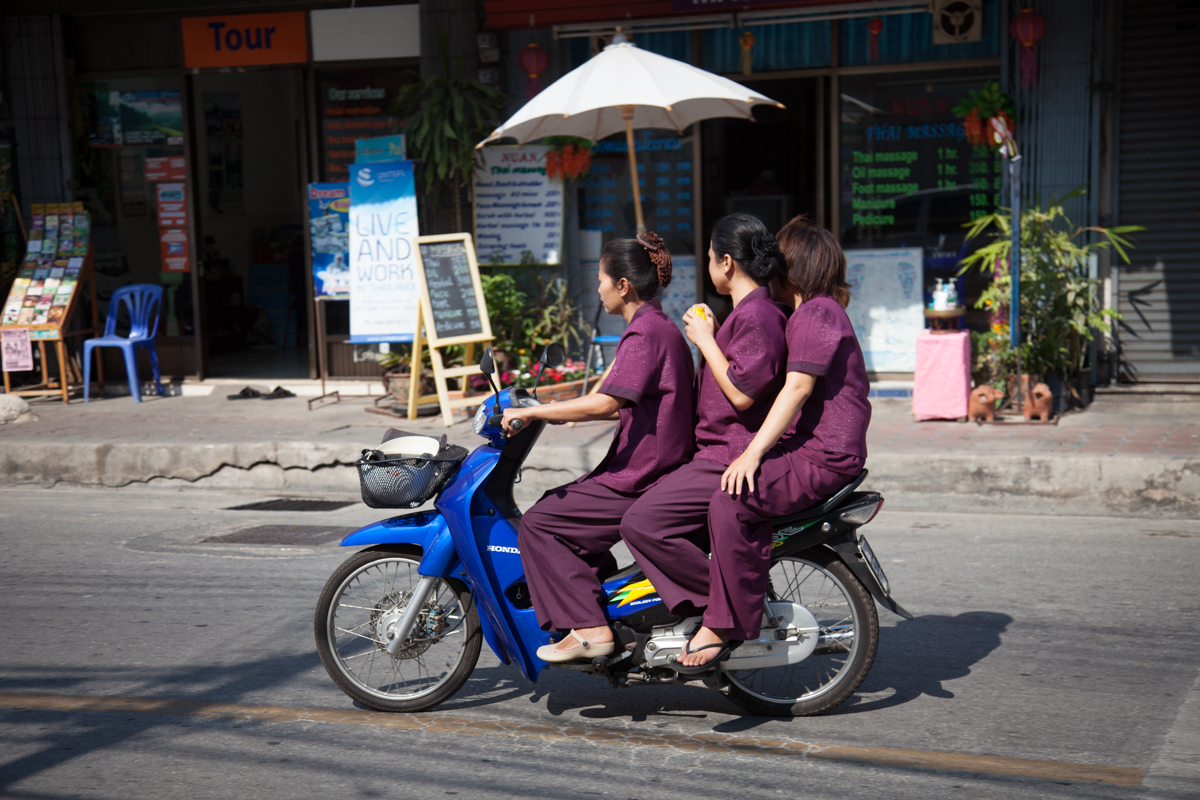
Thailand

Enjoying hospitality in Bangkok

As our 60-day tourist visa comes to an end, we spent our last week in Thailand’s capital city, Bangkok.  I must admit that by now, we are “templed out” and a little tired of sightseeing.  Luckily for us, in spite of it’s size there wasn’t a plethora of tourist attractions to tempt us.  Even better for us, we enjoyed the hospitality of a few people who made us feel quite at home.

We rationalized our splurge on a four star hotel for our week long stay in Bangkok with the knowledge that the next two months will be rather hectic and definitely low budget as we set out to explore Laos, Cambodia and Vietnam.  This might be our last chance at a decent bed, or so we told ourselves.  Unfortunately it was busy during this week so we had to split our time between two hotels: Centre Point Sukhumvit 10 and the Best Western Premier on Sukhumvit 1, the former being our favourite.  Both hotels offered great amenities of which we availed ourselves almost daily – pool, steam room, gym.  At the Centre Point Hotel, we were upgraded to a 1 bedroom suite complete with kitchen, dining room, living room and of course a bedroom.  We even had a washing machine in the kitchen, something I took full advantage of by washing every piece of clothing in our packs.  Fresh, clean clothes, ahhh, the simple things that give us pleasure!

Our sightseeing excursions were limited to the Grand Palace, Wat Pho – Temple of the Reclining Buddha, Jim Thompson House along with a few markets around town.  Bangkok is a city of contrasts where old and new merge into a bustling, noisy metropolis.  It is more modern than I expected and far more Westernised too.  Yet there are still glimpses of the past, like the guy who set up shop on the street with his old foot powered Singer sewing machine, working away in the open air, under the glare of the sun.

The Grand Palace

The Grand Palace is a complex of buildings in the heart of Bangkok. The palace has been the official residence of the Kings of Siam (and later Thailand) since 1782. The king, his court and his royal government were based on the grounds of the palace until 1925. The present monarch, King Bhumibol Adulyadej (Rama IX), currently resides at Chitralada Palace, but the Grand Palace is still used for official events. Several royal ceremonies and state functions are held within the walls of the palace every year.

Wat Pho

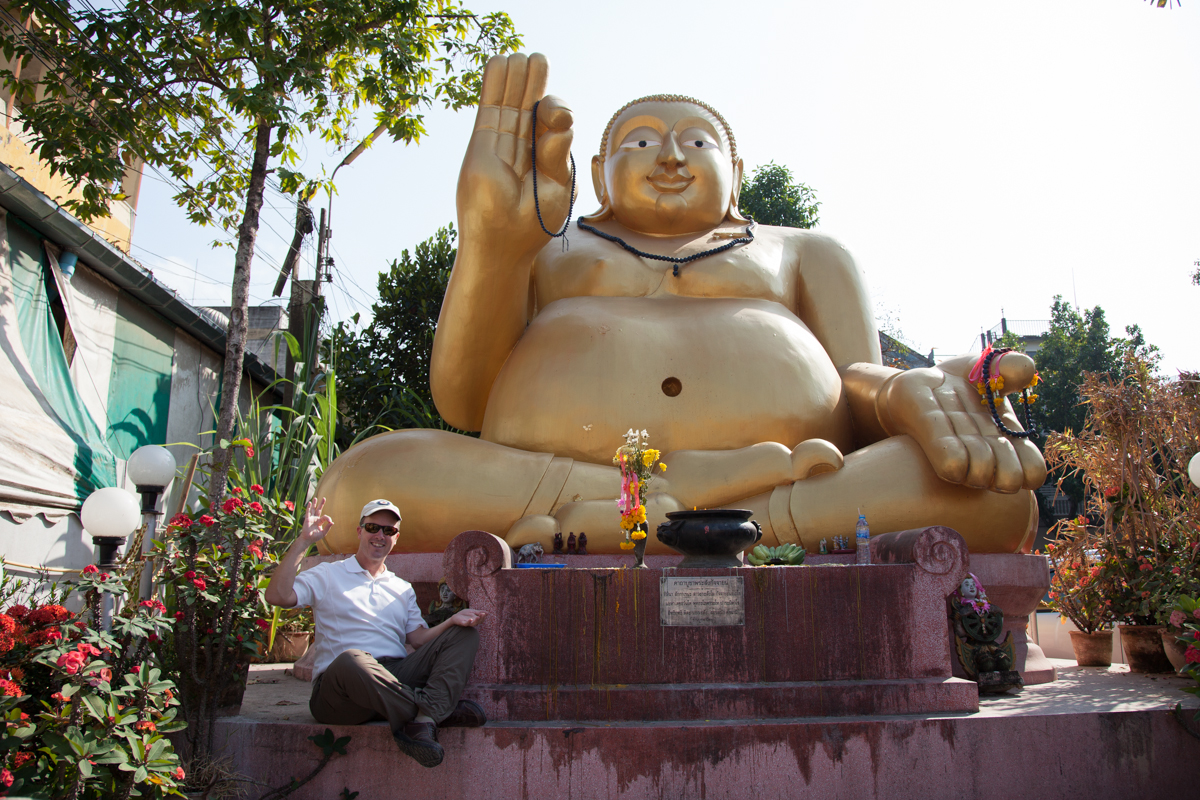
Wat Pho is one of the largest and oldest wats in Bangkok and is home to more than one thousand Buddha images, as well as one of the largest single Buddha images, the Reclining Buddha, which is 160 feet long.

Jim Thompson House

This is the residence of an American named Jim Thompson who settled in Bangkok after the second world war, during which he was a CIA agent.  Trained as an architect, he became an active advocate for the Thai silk industry, gaining worldwide recognition for his success in rebuilding the industry, for generating international demand for Thai silk and for contributing to the growth of the silk industry.  Mystery shrouds his disappearance in 1967 at the age of 61 while visiting the Cameron Highlands in Malaysia.  He vanished without a trace and to this day there is no explanation for what happened to him.
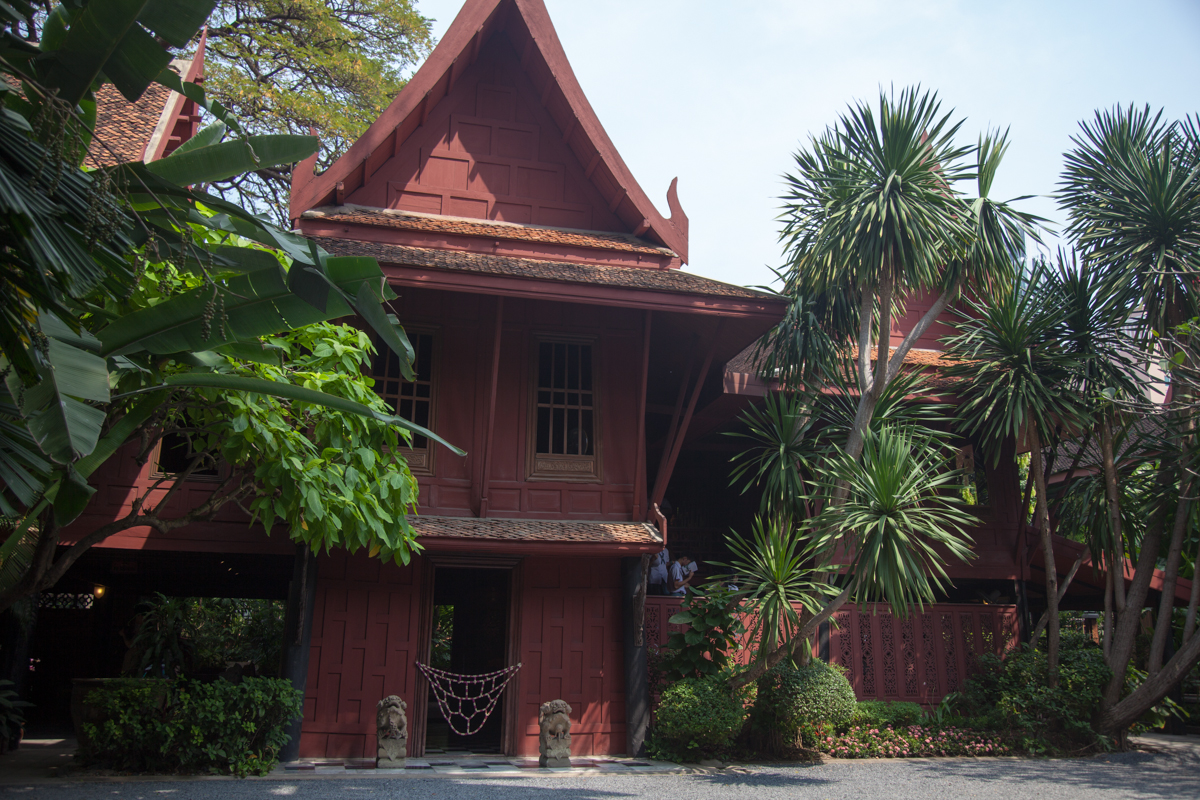
Today, the house is a popular tourist attraction, showcasing the unique house he built for himself blending Thai and western styles, along with his vast art collection.

The best part of the week was having the chance to meet up with some family of friends.  Dan is married to Laurel, a high school friend of Chris’.  Dan works in Singapore but was on a business trip to Bangkok this week, staying at a hotel within spitting distance of ours.  We enjoyed one of the best steak dinners we’ve ever had at an Argentinian restaurant (El Gaucho) – even better than any steak we had in Argentina.  It was a fun evening with good conversation and lots of laughs.  Dan took charge of the wine list and the menu and astounded us with his generosity in treating us to such a memorable meal.  Thanks again Dan!

We met Mike and his wife Nat the night before – Mike is the brother of my friend Sylvia in Ottawa.  He has been in Thailand for ten years.  Sylvia introduced us via email, and Mike then invited us to his home where we met his lovely wife Nat and his three dogs, beautiful Doberman’s.  We enjoyed cocktails and hors d’oeuvres at their place before heading out for dinner.  It was such a pleasant treat for us to visit with them in their home, and again a complete surprise when Mike treated us to a lovely Thai dinner.  Mind you, we were all slightly aghast to discover we closed the joint down past 2:00 am, way beyond our normal bedtime.  At least we didn’t have to get up in the morning like Mike and Nat.

We met up with Mike and Nat again later in the week, for a repeat of the first night only this time we called it a night at a more sensible hour (midnight).  These late nights really did us in and we were grateful we could just take it easy the next day.

And so concludes our visit to Thailand.  We have fallen in love with this country and vow to return again in the future.  We can easily envision ourselves spending winter months here like many ex-pats do.

Tomorrow we head to Laos by plane (to Chiang Rai) and bus (to Chiang Khong) where we will spend two weeks.  After that it will be Cambodia for two weeks and then Vietnam where we will spend our final month before heading home on April 8th.

Great diving in the Andaman Sea

Rated amongst the world’s top dive sites, the Similan and Surin Islands offer an escape from the overcrowded beaches of Phuket.  Both groups of islands are part of a large archipelago about 90 km west of the mainland in the middle of the Andaman Sea extending north into Myanmar.

The Similan Islands are comprised of nine distinct islands all within close range of each other, and another island, Koh Bon that lies 17 nautical miles north of the main cluster. The entire area is protected under the Similan National Park.  The islands are  easily accessible by speed boat from Khao Lak.

The Surin Islands are further north and are comprised of five distinct islands.  Protected under the Mu Ko Surin National Park, these islands are also a popular destination for divers and snorkellers often travelling by boat from Khao Lak.  The closest town from which to reach the islands is Khuraburi, a tiny fishing port that has not yet been hit by the tourism bug.  The park is home to one of the most famous dive sites in the world, Richelieu Rock.

While it is possible to visit these islands on a day trip, live-aboard tours are very popular.  I was somewhat reluctant to do a live-aboard because I am prone to sea sickness; just the idea of being trapped on a boat for more than a day made me queasy.  Finally I agreed to a 2 day, 1 night diving excursion with six dives included.  We were staying at the Poseidon Bungalows and they kindly arranged the tour for us with Similan Seven Sea Club.  We had no idea what to expect but felt some reassurance by the good reviews this company received on Trip Advisor.

A speedboat took us from Khao Lak to Koh Bon, the site for our first two dives.  The waters were pretty rough and I was surprised that Chris was suffering from some mild sea sickness while my stomach was fine.  At Koh Bon, we transferred to the main boat which would be home for the next 36 hours.  The boat was anchored in a sheltered bay, but it still pitched rather wrecklessly to and fro.  Chris’ seasickness worsened, and for some reason I continued to be immune to the restless sea.

Once on the main boat, we got kitted up with our gear.  I was surprised that everything fit perfectly even though we hadn’t tried anything on ahead of time and the equipment was of very good quality.  Even though there was a large group of divers on board, we were organized into small groups of four to a dive master.  We did two dives at Koh Bon each of which had a lot of current that prevented us from fully exploring the site.  We didn’t see the infamous manta rays that frequent this area nor did we see any sharks.  But there were lots of beautiful coral and smaller fish to keep us entertained.  Our final dive of the day was at Hin Yao on Island #8.  Again we faced tremendous current that formed a wall around us, limiting where we could go.  In the fading afternoon light, we didn’t see anything remarkable on that dive.

Day and night, there was no respite from the heaving and  pitching of the boat.  Even within the protection of the bay, we were tossed around a lot. In between dives, I found refuge on the top deck where I lay on a mat, with my eyes closed, rocking side to side with the rhythm of the boat. Remarkably, I didn’t feel any seasickness during the entire time on board.  Chris was mildly seasick, but nothing that hampered his fun.  As a precaution, we both took gravol before going to bed and slept like babies all through the night.

The food on board was typical Thai food, cooked to perfection.  We ate well for every meal and snack in between dives.  There were three bathrooms with showers on board, sufficient for the size of the group.  Our room was very tiny, with two sets of bunk beds.  I can’t imagine four people sharing the room, we found it squishy for just the two of us.  But the beds were comfortable, the linensclean and cozy.

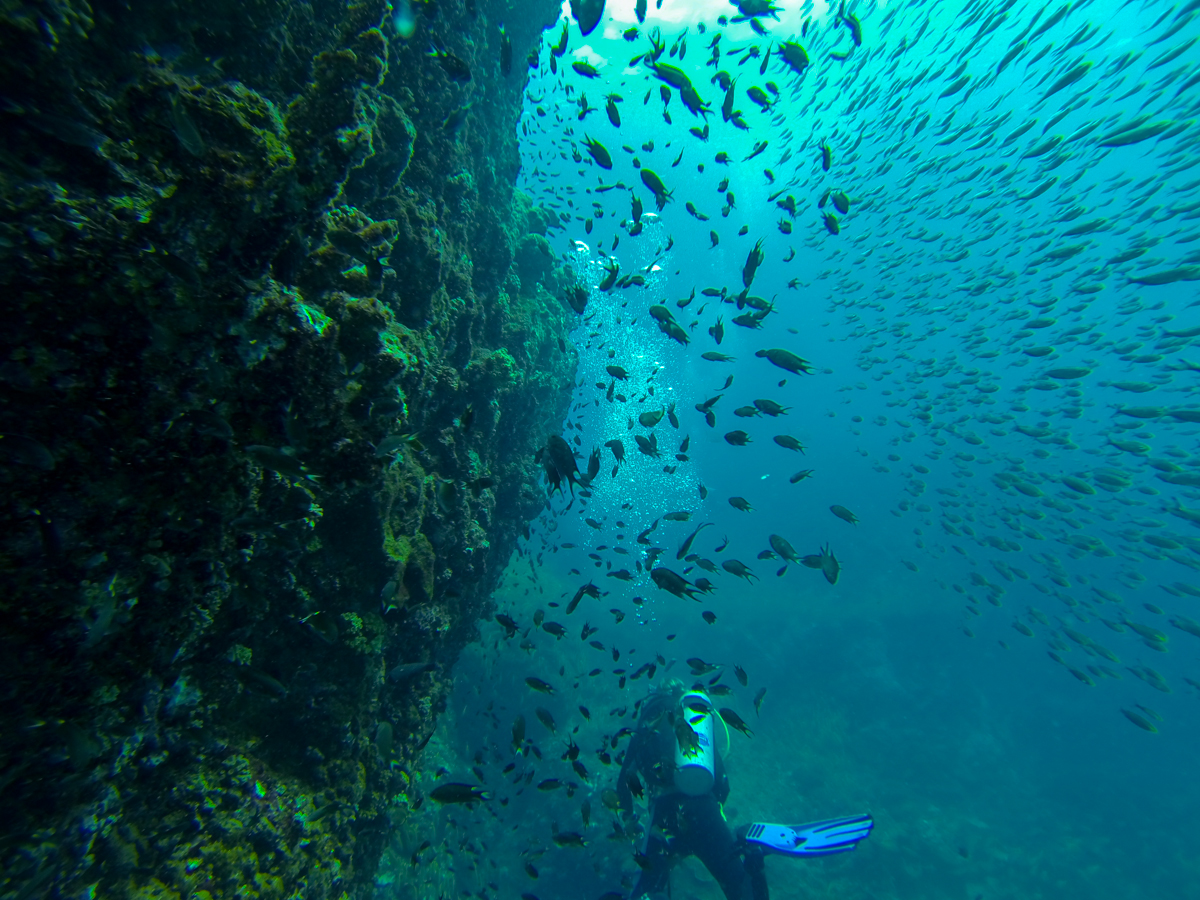
On the second day, we dove at Beacon Reef  (Island #8), Christmas Point (Island #9) and Breakfast Bend (Island #8).  Chris considered Christmas Point to be one of his most favourite dive sites of all time.  The site was comprised of huge rocks covered in colorful coral.  Large schools of fish were everywhere.  Sunlight filtered through the water casting beautiful light on the rocks.  It was a very unusual site and simply stunning in its natural beauty.

All too quickly our tour was over and we were whisked back to shore by speed boat.  This was the first time I really enjoyed diving and  I think it was because I was feeling so well.  What a difference it makes when you aren’t throwing up, or dealing with a throbbing headache.

Scorpion Fish – well camouflaged amidst the rocks!

Lots of clown fish (Little Nemo) clean themselves amongst the anemone.

Sunrise at the Similan Islands.

Two days later, we travelled by bus from Khao Lak to Khuraburi where we launched our second diving excursion – 2 days / 1 night at the Surin Islands, with Blue Guru Diving.  This time we would sleep in a bungalow on one of the islands rather than on board.  Little did we know how thankful we would be for that arrangement.  I was in really good spirits for this trip after such an enjoyable and successful diving trip earlier in the week.  Such enthusiasm was short-lived.

Right from the start, things seemed to go wrong on this trip.  From the low tide that delayed us almost an hour when some debris got tangled in the propellor, to the violent seas that wreaked havoc on board.  There were several near misses when the hot water container came crashing down just inches from one of the dive master’s head, Chris was thrown from his seat on a large cooler as both Chris and the cooler were pitched across the deck when one wave hit particularly hard.  During our first briefing, I was literally knocked to the ground when the boat jerked wildly in the pitching sea.  I was okay all the way out to the dive site, keeping my eyes focused on the distant horizon, and almost willing my stomach into submission.  But everything changed when we stopped at Richelieu Rocks, our first dive site.

As we got kitted up at the back of the boat, it was hard to maintain your balance, the seas were so rough and turbulent.  We were all stumbling around trying to get our gear on.  All of a sudden I broke out in a sweat, overcome with a powerful wave of nausea.  I knew as soon as we got underwater, it would be better, I just had to keep it together for a little while longer.  But it was taking everyone a while to get themselves organized – it was the first dive of the day, with unfamiliar equipment, and under strenuous conditions.  To make matters worse, we had to swim to a buoy where we would descend following a line because the current was strong at this site.  I must admit I was a little fearful about jumping into such large waves – I’ve never seen such waves before – and then having to swim against surge and waves and current.  But there was no turning back, in I jumped, and just focused on getting myself to the buoy which was actually a lot easier than expected.  But once at the buoy, we again had to wait for everyone to get there before descending. My stomach was turning violently as the waves crashed over me and tossed me around mercilessly,  I hung onto that rope like my life depended on it.

Finally we descended and I felt almost immediate relief as the waters calmed down around me.  But my stomach didn’t settle and within minutes I started to vomit into my regulator, and vomit, and vomit.  We had just started the dive and I didn’t want to ruin it for everybody by ending it prematurely, so I just coped the best I could, clearing my reg every now and then.  To add to my discomfort, we faced very strong current to the point that we were pinned against the rock, unable to go around at either end because of the fierce current.  So we simply went back and forth at different depths exploring the one side of the rock.  At one time, I’m sure this experience would have totally freaked me out….I was amazed at how calm I was and how I handled all these obstacles during that dive.   I was relieved when the dive was over, but reluctant to ascend to the stormy waters above.

Sure enough, as soon as I got on board, I continued to vomit. To my surprise, Chris was vomiting when he got on board too.  What a pair we were, lying on the benches, with a garbage bin between us.  No one else was suffering like us, but the dive masters acknowledged these were the worst seas of the season.  We were rendered immobile for a few hours and had to forfeit the next dive which was also at Richelieu Rocks.  Turns out that dive had no current and was the best dive of the day.  Figures.  By the end of the day, we headed to Pad Haad just off the coast of the Surin Islands for our last dive.   By then, the seas had calmed down and we were feeling well enough to dive again.  We enjoyed a very relaxing dive with very little current along a beautiful coral reef.

Chris and I were so glad we were staying on shore that night in a very comfortable wooden bungalow with private bath, but no hot water.  Food was served in a large dining area.  We were starving at this point as we had both missed lunch and hadn’t eaten since breakfast many hours earlier.  The food was adequate, but nothing really great.  It was an early night for us as we were both exhausted.

We opted to pay a little more to stay in a bungalow, rather than a tent.  A wise decision!

The next day gave us grey skies but calm seas, such a difference from the day before.  After one dive off the coast of the Surin Island, we went back to Richelieu Rocks where we enjoyed two beautiful dives in calm waters with very little current.  We couldn’t believe this was the same site where we had been incapacitated just 24 hours earlier.  Aside from the the few hours of severe seasickness, we ended up having a great time doing the rest of our dives.  Richelieu Rock is truly a spectacular dive site with the most beautiful soft purple coral imaginable.

When I think back to the difficulties I faced getting my open water certification before the start of our trip – the two rounds of  swimming lessons I took in advance to help me overcome my fear of and anxiety in the water, the failure on my first attempt at the course, the difficulties I had mastering some of the basic skills – I find it hard to believe that I have completed 33 dives at some of the most amazing dive sites in the world.   Even after I was certified, it took a lot of persistence and determination to conquer my fears, to control my anxiety and to cope with the physical discomforts that plagued me in the sea.  I feel particularly proud of this accomplishment and while I know I will never be more than a recreational diver, I am confident that there are many more dives ahead of me in the years to come.

Note:  We did not have an underwater camera during these diving excursions.  The underwater photos in this post were generously provided by fellow divers.  Thanks!

The best and the worst beaches in Thailand

After three weeks travelling along the south west coast of Thailand, we have been dazzled by endless days of sunshine, miles upon miles of golden beaches and warm aquamarine water. We started in Koh Lanta and worked our way north, visiting enough beaches along the way to form our opinion of which ones we liked the best and which we thought were the worst.

We know our friends and family back home in Canada are suffering through a fierce winter this year with temperatures often below -20C and with plenty of snow to contend with as well so we’ll try not to go on too much about how idyllic conditions have been for us. Besides, it hasn’t all been a bed of roses during these past three weeks. Immediately upon arrival in Koh Lanta, I came down with a cold which in itself wasn’t too bad, but coupled with a pinched nerve in my neck that was triggered a week previously in Chiang Mai, I was not in very good shape during our first week on the coast. All I could do was relax, read, and take it easy. I know, I know, it’s a tough life we’re living right now.

By the time we had reached Phuket, I was feeling much better, but we were both quickly sidelined again with a horrific sunburn after lying on the beach under an umbrella for just a few hours. It was so bad, we couldn’t venture outdoors for a couple of days. Almost two weeks later we’re still peeling like snakes. Oh well, more relaxing and reading as we let our bodies heal.

These minor setbacks meant pushing out our diving so we ended up spending three weeks on the coast instead of two – I’m sure I’ve solicited all our reader’s sympathies by now. This past week, we spent 4 days diving split evenly between the Similan and Surin Islands. I’ll write about that separately.

In Thailand, there is a beach for every taste – from the noisy and crowded that cater to the party set, to the remote and quiet getaways that are havens for nature lovers. We prefer the isolated beaches away from the crowds where you can walk for miles along the shoreline. So keep that in mind as I share with you the best and worst beaches we visited in Thailand.

Our Favourite Beaches:

Khao Lak South Beach:

Poseidon Bungalows, located about 5 km south of Khao Lak, came highly recommended by a couple we met in our guest house in Chiang Mai. These rustic bungalows are situated amidst a jungle like setting, on a hill overlooking the Andaman Sea; miles of beautiful, uncrowded beach was just a few moments walk from our doorstep. There are no other resorts nearby.  At night, the sound of the surf lulled us to sleep. In total we spent four nights at the bungalows, two nights on each end of a diving trip to the Similan Islands.

These affordable bungalows offered basic but adequate accommodation, each with private bath.Each cabin had a cottagey feel and were anything but luxurious.  They didn’t have air conditioning, or wi-fi, or TV, or anything else for that matter.   I certainly wouldn’t go so far as to call this place a resort as they did not offer much in terms of amenities.  Other than an onsite restaurant where you could get wifi, and an office that arranged local tours, there wasn’t much else on offer.  If you wanted a beach chair, you could rent one from a handful of enterprising Thais who set up shop along the beach, offering beach chairs, umbrellas, food and drink and massages of course  – everything you needed for an enjoyable day at the beach.   If you like privacy, seclusion, peace and quiet surrounded by nature, then this is the place for you.

Massage anybody?

The beach stretched out for miles in both directions and was quite deserted. At the opposite end of the beach, there was a cluster of more luxurious resorts, one of which served up a delicious buffet breakfast.  What better way to start each morning than with a lovely stroll along the beach followed by a sumptuous meal that held us till late in the day.

Banana Beach, Phuket

Phuket is probably the most visited island in Thailand hosting millions of visitors each year so we felt we should at least spend a few days here even though we knew it would be touristy and busy especially given that we are in high season. Sure enough, the beaches of Phuket were ridiculously crowded and overrun with mainly Russian tourists who are so common here that many business signs and menus are written in that language!

We hired a scooter for a couple of days to explore the many beaches along the coast of this island and we were delighted to discover Banana Beach, a tiny little bay that was accessible from a steep pathway from the highway. It was located just south of Naithon Beach which was another beautiful beach we enjoyed. In fact, most of the beaches north of Surin were lovely, long stretches of undeveloped sandy shoreline that reminded us what the southern beaches of Phuket probably looked like 20 or 30 years ago.

Banana Beach is about as close as you’ll get to a hidden beach in Phuket – I doubt it’s on a map, and we didn’t find any mention of it on the internet either, so hopefully it will remain a hidden gem for others to discover like we did. If you’re planning to go, take the coastal road north towards Naithon Beach. You’ll see a handmade sign and a dozen or so scooters parked along the left side of the road just a couple of kilometers before Naithon Beach. There’s a fairly steep path down to the beach so if you have mobility issues, you’ll probably want to avoid this beach.

Long Beach, Koh Lanta

It took us 22 hours to travel from Chiang Mai to Koh Lanta via overnight bus to Bangkok, a flight from Bangkok to Trang, a mini bus to the pier, and then a 2.5 hour ferry to Koh Lanta. A long journey that was well worth the hassle to land in paradise.

Koh Lanta is a quiet, laid back island that attracts an older crowd who prefer to walk along the beach and watch sunsets rather than to party, just our style.

Again we stayed at a place recommended by our friends Sue and Andy who we met and hung out with in Chaing Mai. They are seasoned travellers on a 6 month trip in South East Asia. Sue is very thorough in her research and was happy to share with us the details of where they have stayed and places they have visited thus far in their adventure. Based on their recommendation, we stayed at Freedom Estate, a set of 6 bungalows on the hillside overlooking the Andaman Sea. The beach and a small village were just a five minute walk away. Each unit is a self contained studio-size apartment, with a balcony from which we enjoyed spectacular sunsets each night. At just under 1400 Baht per night, it was a bargain compared to the resort on the beach which was charging 5,000 Baht per night. Sure, we weren’t right on the beach, but we had the million dollar view and easy access to the beach.

Every night we were treated to a beautiful sunset over the Andaman Sea.

View from our balcony at night – we puzzled over those green lights in the distance until
someone explained they were fishing boats. 

Breakfast in Koh Lanta.

The island is small enough to explore by scooter in a day. It was sobering to see all the Tsunami warning and evacuation route signs that have been posted in low lying regions, sombre reminders of the tragedy that occurred here in 2004 when a tsunami hit this coast.

This is how gasoline is sold on the islands – in litre sized
bottles for 40-50 Baht each.

A rubber tree being tapped.  Rubber tree plantations grew
in abundance along the coastal regions.   It’s hard to believe
that much of the world’s rubber is harvested manually. 

The worst beaches

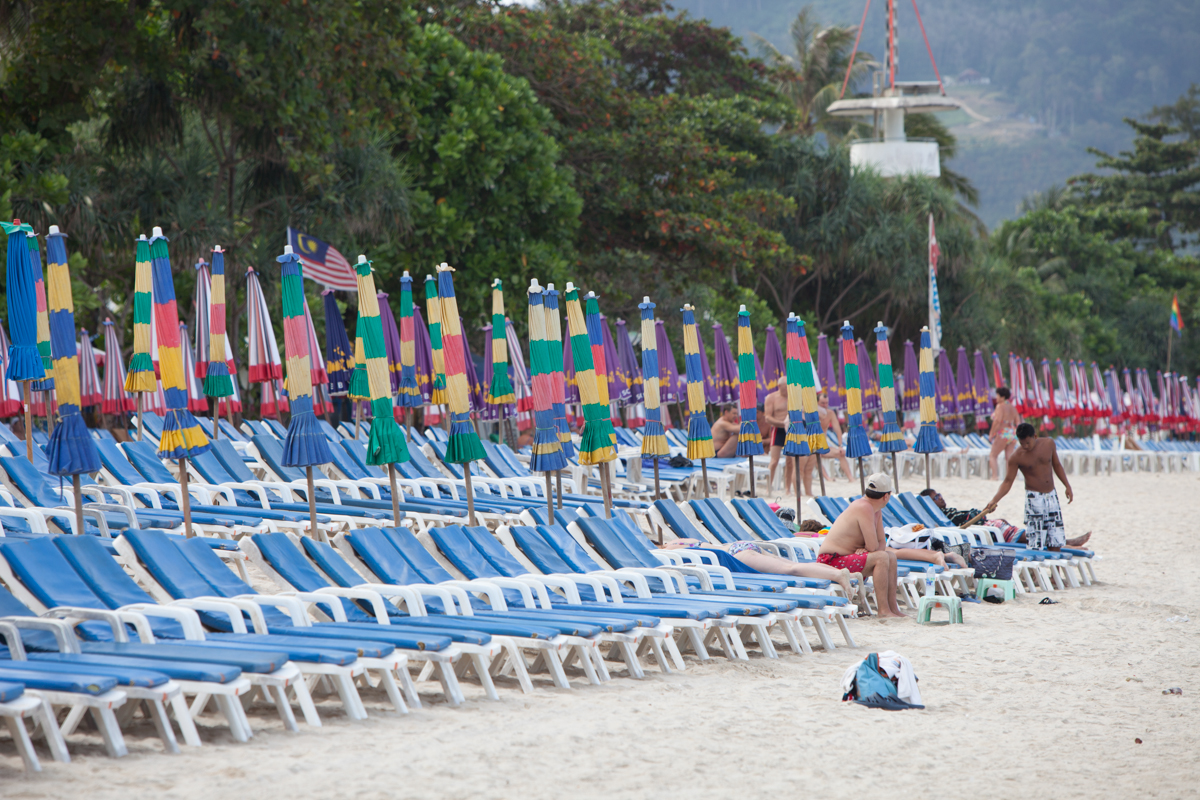
As for our least favourite beaches, Patong takes the prize because it was so overcrowded with tourists and very much a party town. The entire length of the beach is lined with multiple rows of beach chairs, sometimes up to nine rows thick. We spent three days in a small, comfortable and spotlessly clean guest house in Patong called Minotel. It was well situated just a few blocks from the beach.  The town of Patong was much larger than we expected, and noisier, smellier and dirtier too.


Patong Beach in the early morning before the crowds.

Kamala Beach, located between Patong and Surin beaches.

It didn’t take us long to decide this was not the place for us, so we headed just a few kilometres north to Surin beach, a much smaller and quieter beach town still on the island of Phuket.  We stayed at a place called “Be My Guest” hotel, a rather modern building tucked away on a side street about a 10 minute walk from the beach.  We loved it – the high ceilings, floor to ceiling windows, high end finishes and the most comfortable bed we have had in Thailand – all for a bargain price of 1,000 Baht per night.   Just down the street, we discovered another little gem – a restaurant called “Flavours” .  Here we enjoyed delicious breakfasts each morning and we had one fabulous seafood dinner, cooked to perfection.

The most comfortable bed in Thailand was at Be My Guest Hotel.

Laundry service on the beach, right next to the massage service.

Our final destination was a little town called Khuraburi whose fishing port serves as a popular launch for diving excursions to the Surin Islands.  From here, it’s about two hours north to Ranong, another popular diving centre. I look forward to exploring this area more fully when we return to Thailand in the future.

Travel Tips:

  1. If you prefer quiet, secluded beaches, avoid Phuket and Phi Phi at all costs. In fact, most of the beaches in the south are very crowded and noisy and quite overrun with Russian tourists. It seems the further north you go, beyond Khao Lak, the quieter and less touristy it gets. And it’s cheaper too!
  2. If you’re island hopping, avoid the public ferry, especially between Koh Lanta and Phuket.  The ferry from Koh Lanta to Phi Phi was quite comfortable, but the one from Phi Phi to Phuket was an accident just waiting to happen.  Slow, dirty and terribly overcrowded, we were lucky to find a corner of a box to sit on for the 2 hour voyage.  We really wished we had opted for one of the high speed boats that are readily available and don’t cost all that much more.

Cooking up a storm, Thai style

Massages, custom-tailored suits, night markets, elephant camps, temple sightseeing and Thai cooking classes sums up the itinerary of most visitors when they come to Chiang Mai, and I must admit that we were no exception.  One Thai massage was more than enough for both of us; it took days for us to recover from the after effects of being pummelled and kneaded and bent in ways our bodies had never experienced before.  Chris splurged on a couple of tailored suits and custom shirts while I decided to forego the experience for myself.

At the regular night market, open every evening of the week, you can find everything imaginable, including lots of delicious street food.  As you know, we’re not doing much shopping on this trip, but I must admit I have been collecting badges of flags of the countries we have visited and have sewn these onto our large packs.  It makes for a great conversation starter and makes our bags easily recognizable which is a good thing from a security perspective.  I was thrilled to find a lady selling flags from most countries and stocked up on all the countries we were missing.

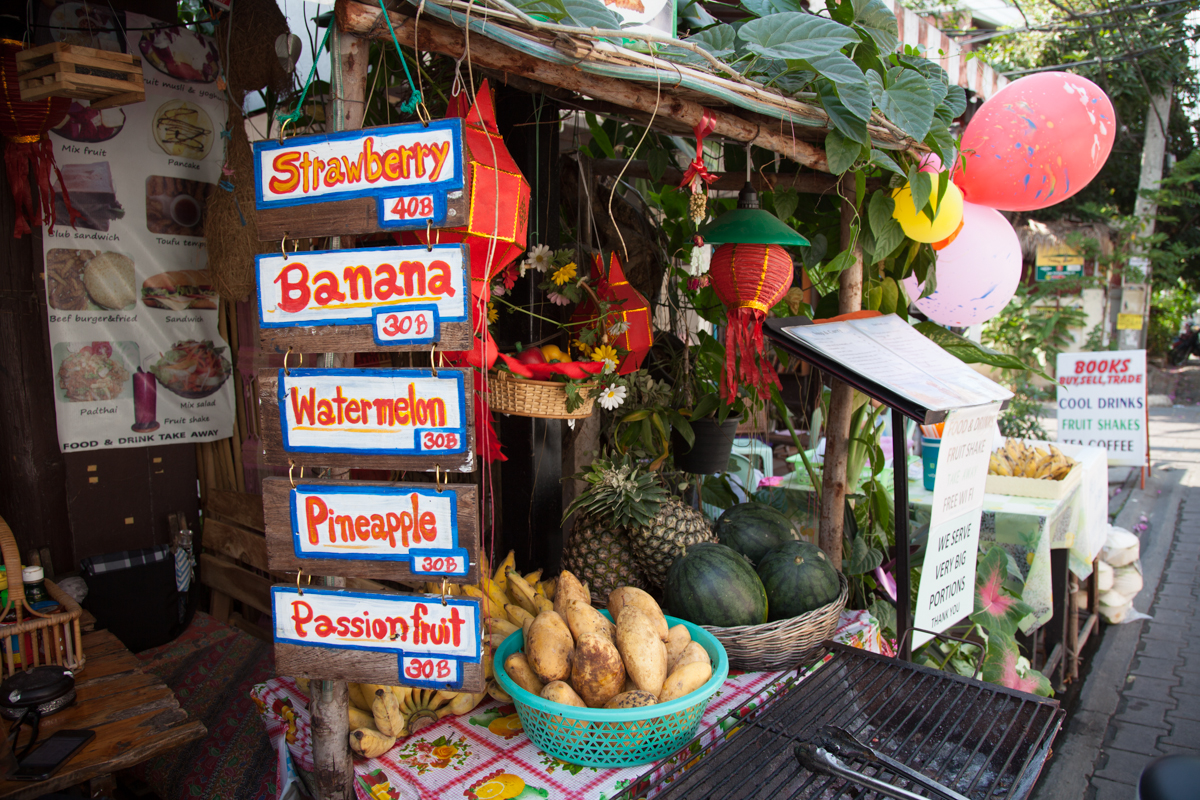
Our favourite night market has been the Sunday night market, which attracts both locals and tourists.  You need to get there early because by 9:00, you can barely move along the street that has been closed to traffic so that vendors can fill the sidewalks with their wares.  The best part of this market is the street food.  Contrary to our usual cautious approach to food, we made a point of trying different foods each week, and we’ve enjoyed most of what we’ve sampled.  Prices are ridiculously cheap, ranging from 60 cents for a snack to a buck or two for a full meal.

Speaking of food, after spending almost a month eating Thai cuisine, we thought we should learn how to cook it ourselves and so we spent a day at a farm about a half hour outside of the city, cooking up an array of dishes in the company of 10 other tourists and under the careful direction of Huey, our talented and patient instructor.  We each prepared five dishes: a main dish, an appetizer, a curry, a soup and a dessert.

Of course, we ate everything we cooked.  The class was very hands on, and was a great way to learn about Thai seasonings, cooking techniques and other unique ingredients that we had never seen before.  My favourite dish was a chicken panang curry, which quite frankly, was the best panang curry I have ever eaten.  The other dishes were made with varied success, some better than others.

Chris and I look forward to practising our new culinary skills on our friends and family when we return to Canada in the springtime.  But for now, we’ve got more exploring to do.  Today marks the end of our sojourn in Chiang Mai; we’re heading south tonight by overnight bus to Bangkok where we’ll catch a flight, bus and ferry to Koh Lanta, an island off the west coast of Thailand.  We plan to island hop over the next few weeks, making our way back to Bangkok by the end of the month.

With our return date to Canada looming in the not so distant future, we’re planning to get a few more countries in under our belt.  Coming up, we plan to visit Cambodia, Vietnam and Laos and if we can squeeze it in, Myanmar (Burma).  I may even get to India if I’m lucky.  So don’t give up on us now, we’ve got more adventures ahead to share with you.

Banned by Adsense

I don’t know where we went wrong, but we have been banned for life from using Adsense ads!  As you know, last month we initiated an experiment with advertising on this site to see if it was possible to earn income from a travel blog.  We incorporated Adsense ads as well as Affiliate ads into our site.

The application and approval process used by Adsense is particularly rigorous.  I guess they need to make sure the sites that host the ads of their paying advertisers will comply with their equally stringent rules and policies.  After getting approved, it then took some effort to incorporate the ads into our site, although, admittedly, this was quite easily achieved through the use of a very user-friendly plug-in for WordPress.

We spent the month of December monitoring our Adsense account, watching our earnings grow almost daily.  Daily earnings ranged between a few cents at the low end and a little over a dollar on a good day.  We had no idea how this compared to the average site, although these numbers were much higher than we expected.  By the end of the month, we had earned a whopping $28.82. This got us thinking about the possibilities of setting up multiple sites on niche subjects that we could write about.  It seemed a simple matter of economies of scale, the more sites we hosted, the higher our earnings.  Could we be onto something here?  Or was this too good to be true?  You know what they say…….

Concurrent with our Adsense ads, we set up a few affiliate ads for companies that we have personally done business with and would recommend them to our friends, namely: iPage our website hosting provider, World Nomads our travel insurance provider, and CheapoAir where we get the best prices on airfare.  The pricing model for affiliate ads is quite different from Adsense where you get paid based on users clicking on your ads.  With affiliate ads, you get paid a percentage or flat fee when someone makes a purchase through the link on your site.  Our one month of affiliate ads yielded a big fat zero in earnings.

As we prepared to settle down in Chiang Mai for a while, our creative juices were flowing  as visions of dollar signs danced in our heads.  We spent time researching ideas and playing with the technology.  Our enthusiasm ebbed and flowed as we got excited with each new idea, only to be crushed when we poked holes into it or realized it had already been done before.  While we were doing all of this work – and it really did feel like work, at least from what we remember work feels like – I met Monique, the lady with the non-profit Association who I mentioned in an earlier post, for whom I offered to create a website.  My efforts at finding a money-making venture were put on hold, as this altruistic project consumed far more time than I had planned.

Suddenly, out of the blue, we received an email from Google Adsense, telling us that our ad account was permanently disabled because we were in violation of their policies.  No explanation.  All appeals for an explanation, for more information, for some direction on how to correct our mysterious violations, were flatly refused now that  we were allegedly guilty of invalid click activity.  Not to mention any names, but we strongly suspect some of our readers may have been a little over-zealous in helping our coffee fund.  Obviously, Big Brother is watching!

To add insult to injury, we can’t even get paid our measly $28.82 because they locked us out of our account before we received our PIN number which we needed for security reasons.  They really aren’t kidding when they say we are banned from their program.  In reality, our Adsense earnings for the month was another big fat zero.  Good thing we didn’t quit our day jobs…..wait a minute, we did quit our day jobs….guess that’s why we’re heading home in April.  

Thanks guys.


The temples of Chiang Mai

Chiang Mai is home to over 300 Buddhist temples designed in a mixture of architectural styles that reflect the varied heritage of Northern Thailand.  Each temple is extravagently decorated with intricate woodcarvings, serpent staircases, gold trim, glass and mirror mosaic, elephants, gilded umbrellas, and buddhas in all shapes, sizes and materials.  Unlike the temples in Bangkok which are rarely more than 200 years old, many of the temples in Chiang Mai date back to the founding of the city itself, over 700 years ago.  

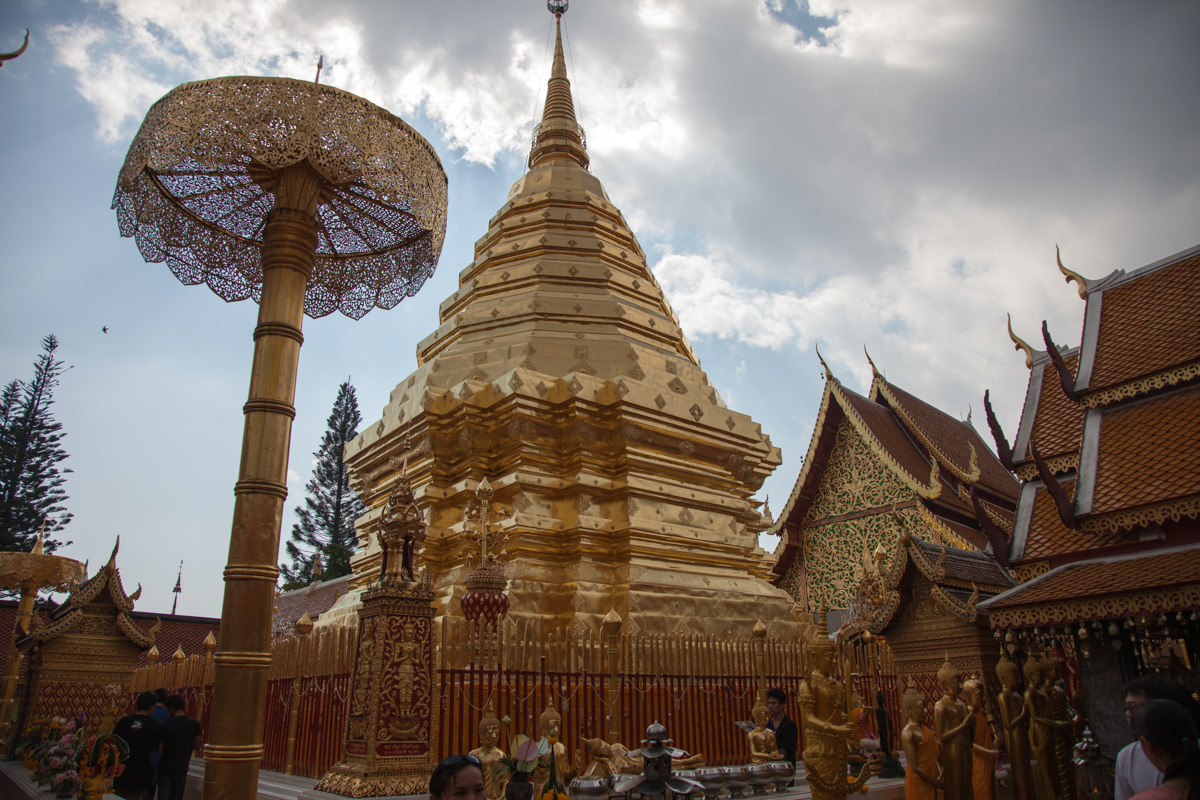
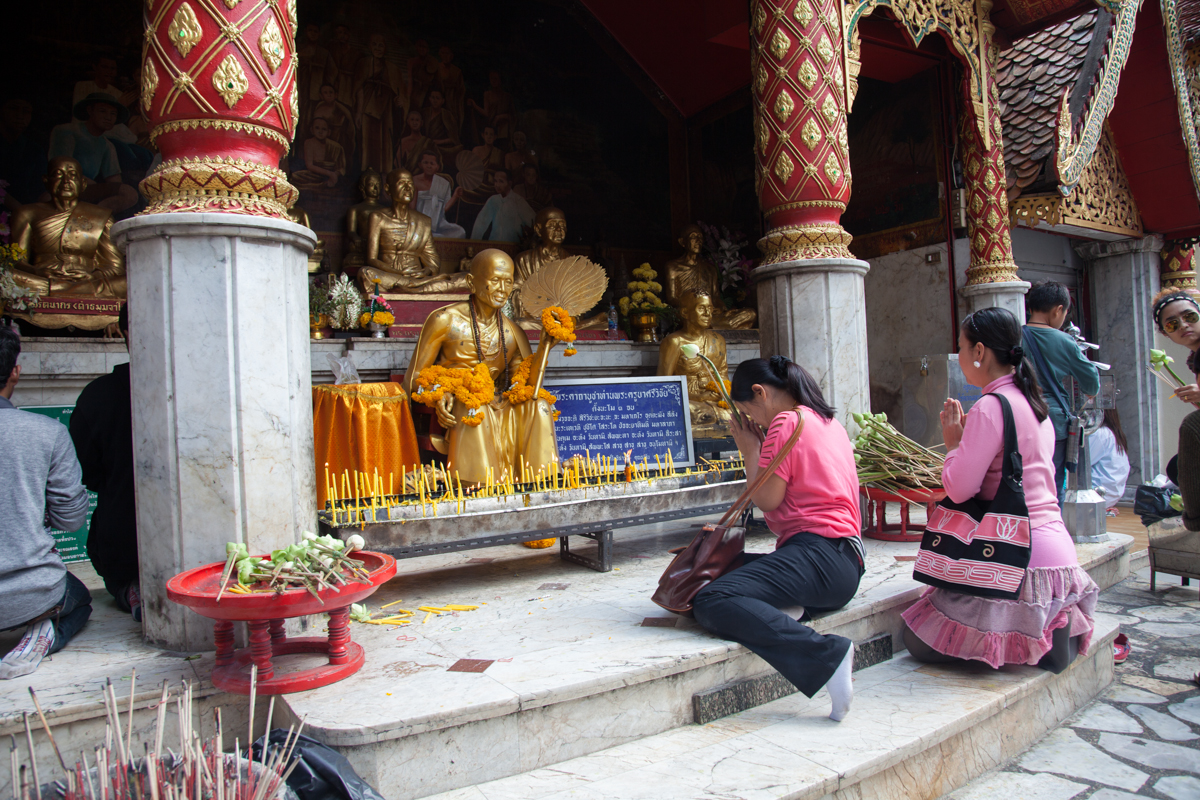
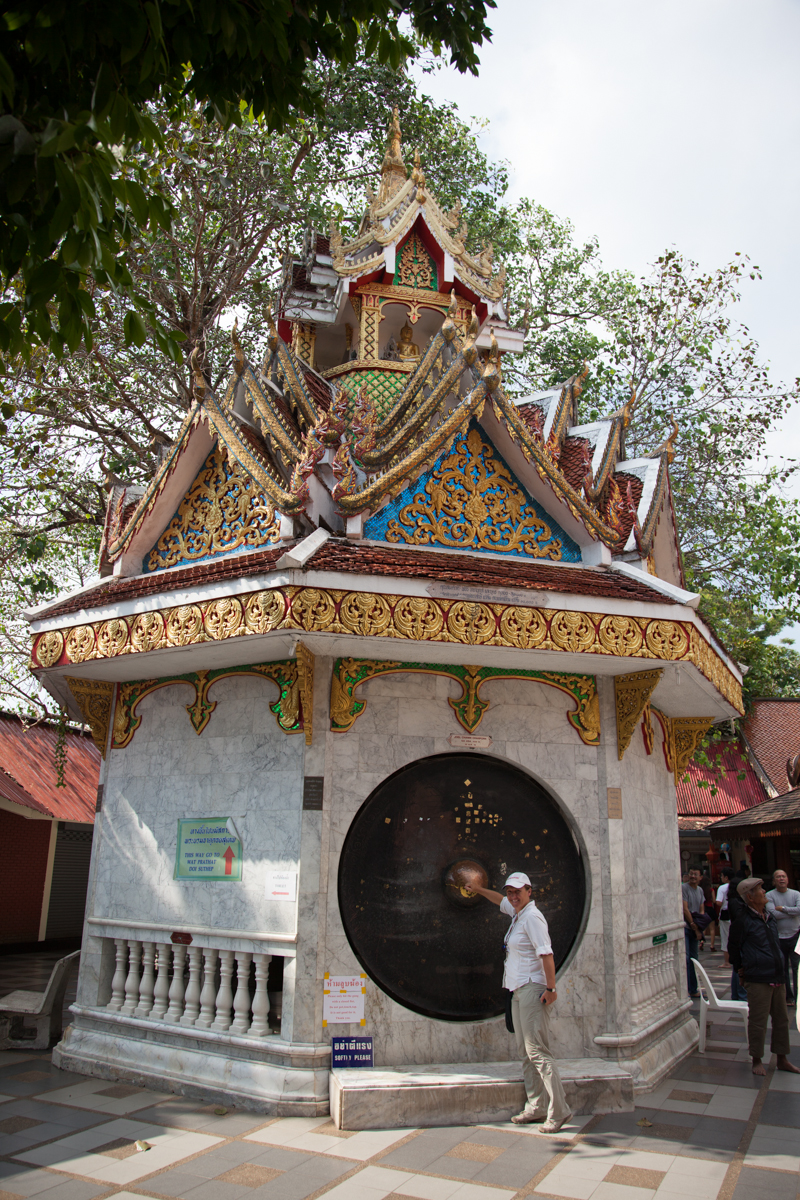
Outside the city, temples flank the hillsides like shiny beacons of light, including one of the most important temples in the area, Wat Phrathat Doi Suthep.  Located about 20 km west of the city, this pilgrimage temple is also a popular tourist attraction.  According to legend, a Buddha relic magically replicated itself just before it was about to be enshrined in the big chedi at Wat Suan Dok. The “cloned” relic was placed on the back of a sacred white elephant, which was allowed to roam whereever it wanted. The elephant eventually climbed to the top of Suthep Mountain, trumpeted three times, turned around three times, knelt down and died. This was taken as a sign that this was the spot where the relic wanted to be, so King Ku Na built the original of the chedi on Doi Suthep at the end of 14th century.  

We visited this temple with a couple, Andy and Sue from the UK, who we met at our guest house. They invited us to join them on a day trip up the mountain and we were happy to tag along.  Leading the way on their motorbike, we putt putted behind them on our rented scooter, up the winding road to the top of the mountain where the temple was located.  Once we got the hang of it, navigating the turns turned into a lot of fun and I felt the carefree, exhilaration that motorcycle enthusiasts rave about.  

The temple sat at the top of almost 400 steps which were flanked by two green dragons that extend along the full length of the staircase.  It is said that every Thai must visit this temple at least once in their lifetime which may explain why there were so many locals and monks praying and making offerings.  The temple was beautiful, but I was a little put off by the crowds of tourists which gave the site a Disney-like appearance. 

On the way to Wat Phrathat Doi Suthep,  our new friends
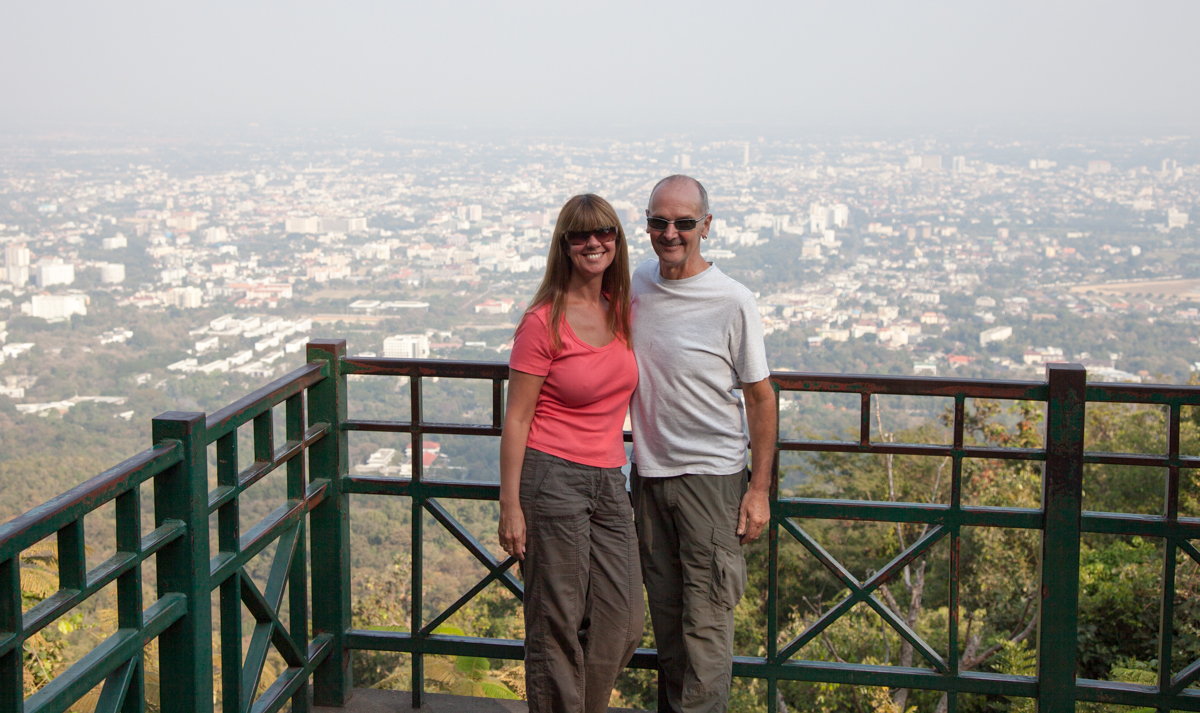
Sue and Andy pose with a view of Chiang Mai in the background.

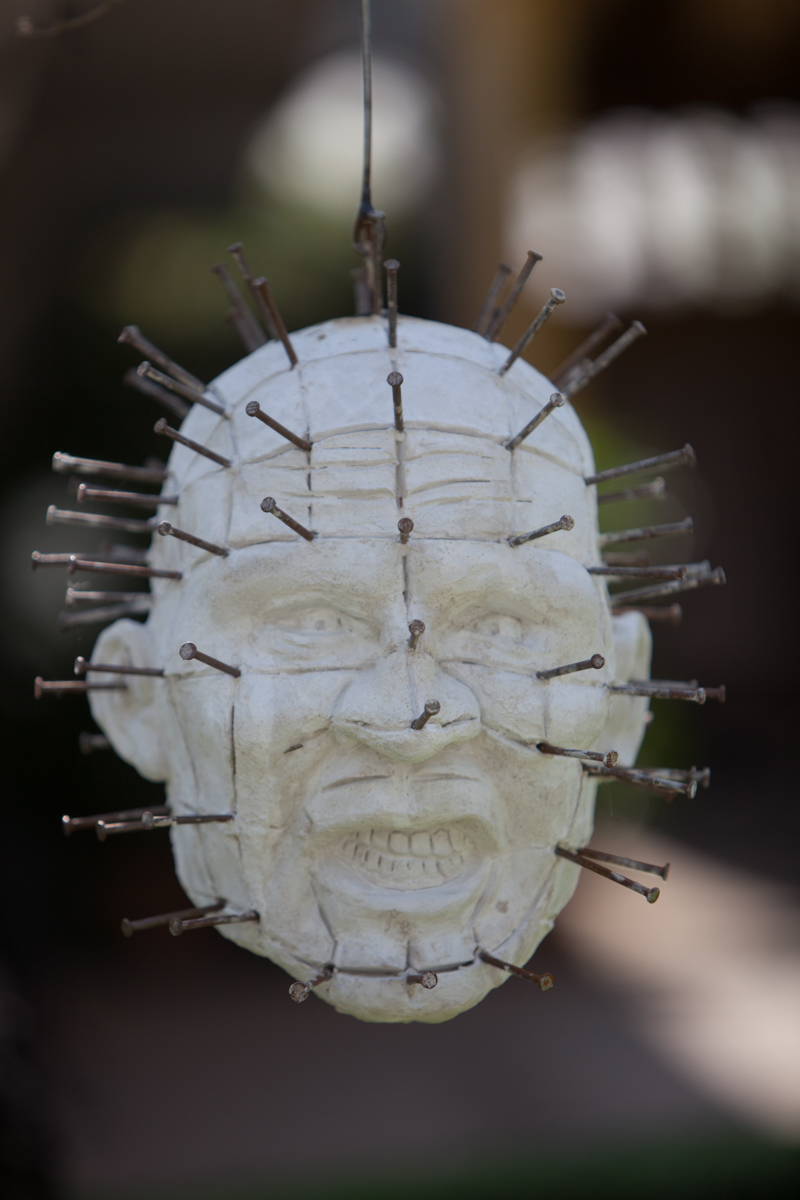
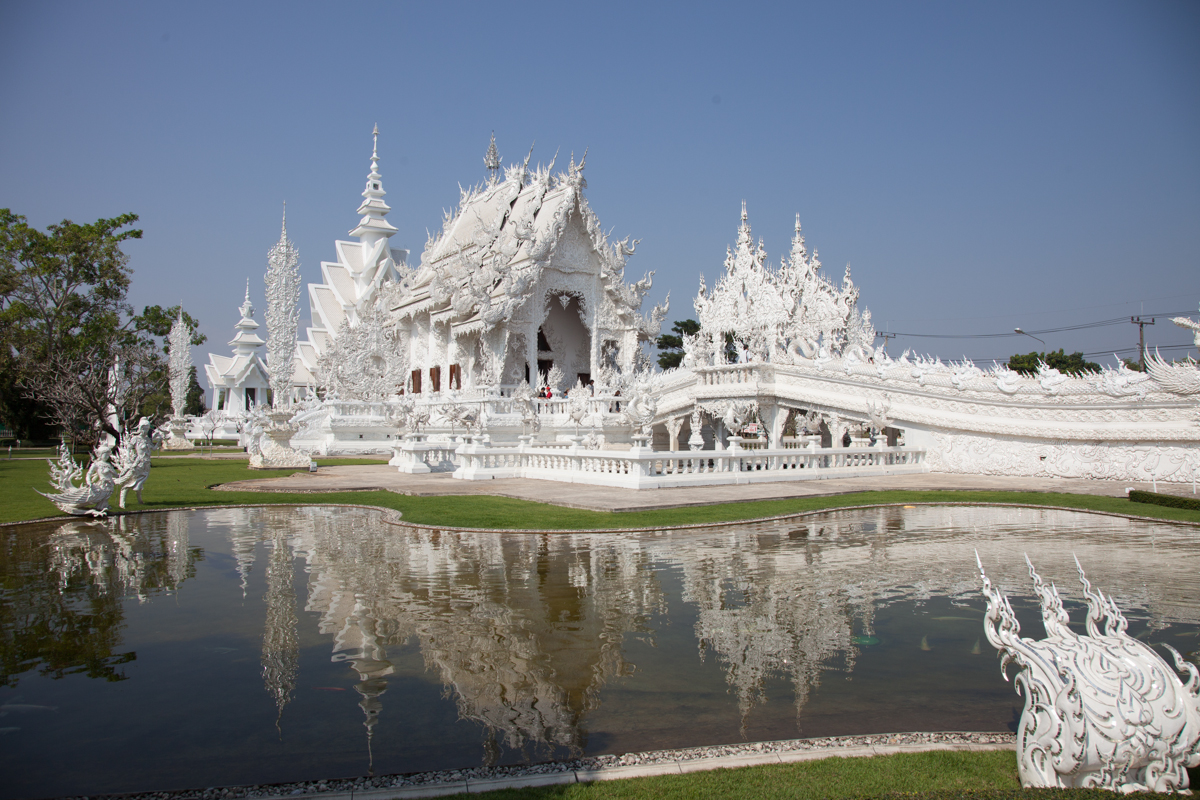
The White Temple was our first stop on our way to Chiang Rai during a day trip in a rented car accompanied by Monique, our friend from our guest house, and Momo, a young man from Taiwan who we met a couple of days earlier in our Thai cooking class.  This temple was perhaps the most unusual temple we have seen thus far.  Parts of it were downright weird, like the sculpted heads hanging from the tree branches. It was beyond me what these represented.

It is a contemporary, unconventional Buddhist temple that is still a work in progress. The architect who began this project in 1996 asserts he doesn’t expect it to be completed until 90 years after his death.  True to its name, all the buildings in the temple complex are white, sparkling with mirrored mosaic tiles that are embedded in intricate patterns covering every square inch of surface.  In contrast, the building housing the toilets was made of gold.  I’m not sure if there was any significance to that.


There were plenty of other temples on the way to Chiang Rai, but it was impossible to stop for each one of them.  Our final destination on that trip was the Golden Triangle, where three countries – Thailand, Myanmar (Burma) and Laos – intersect at the confluence of the Mekong and Ruak Rivers.  Today this destination is popular amongst tourists, especially those needing to exit the country to renew their Thai visa (known as a “visa run”), but in the past, this area was the centre of one of the largest illicit opium growing regions in the world.

Monique at the entrance to a temple on the way to the Golden Triangle.

Posing with Momo, our young Taiwanese friend who we met
at the cooking class we attended. 

Ringing in the New Year Thai style

The countdown began a week ago when Thapae Gate was transformed into a temporary night market offering up food for every palate, and a large variety of stalls selling everything from clothing to key chains.  Live music and cultural shows provided nightly entertainment on the large band stand that was set up in the middle of the square.  We went to the market almost every night this past week, enjoying the amazing street food – sushi, dim sum, corn on the cob, grilled fish, pad thai – there was so much to choose from, and everything was delicious and cheap.

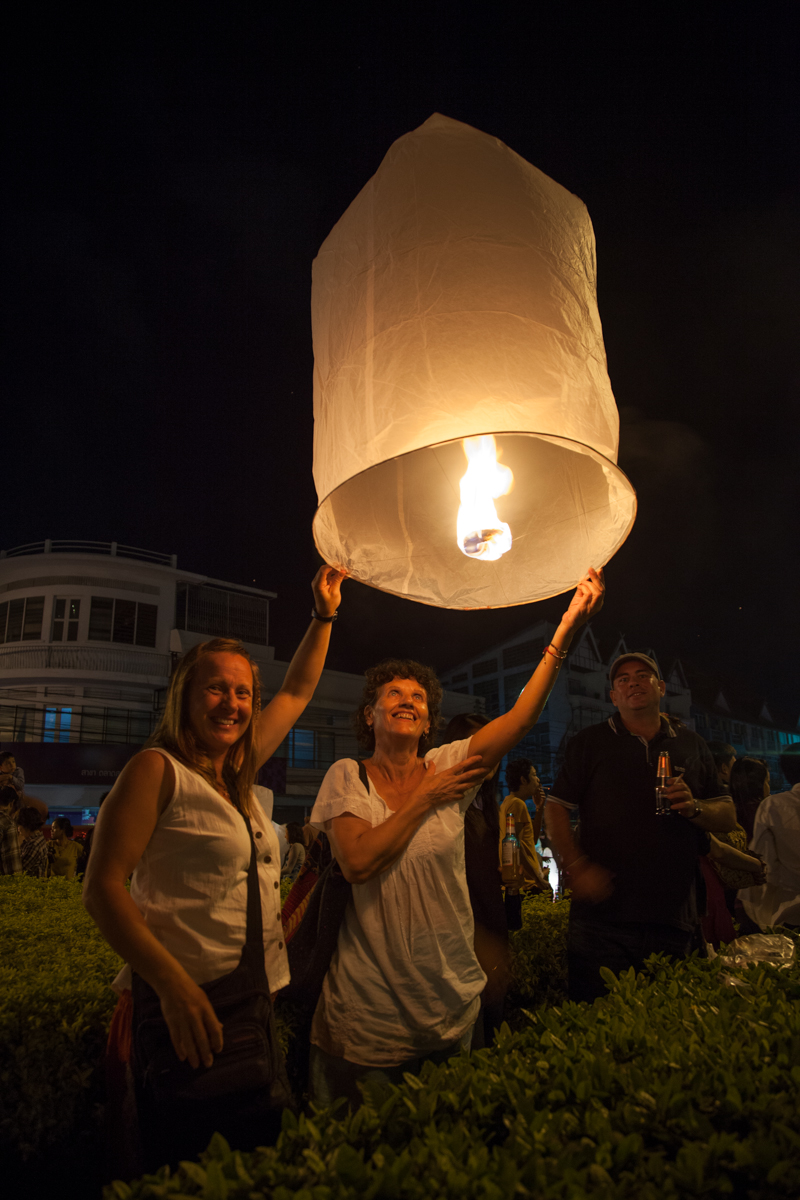
The “Countdown to 2013”  festival culminated on New Year’s Eve where thousands of people congregated around Thapae Gate and the  immediate vicinity.  Closed to traffic, the surrounding streets sprouted even more markets on this final night of festivities.  The atmosphere was charged with happy energy as people released floating lanterns into the night sky as a way to show respect to Buddha, to release bad memories and to make a wish for the future.

These paper lanterns came in a variety of sizes and colours and could be bought from hawkers on the street for 30-50 Baht apiece.  Most were white and quite large, about a metre high and a half a metre in diameter.   At the base of the lantern, held in place by thin wire, was a disk that when lit produced a strong flame.  After a few moments, the heat from the flame created a pocket of hot air trapped within the lantern that caused it to rise and float away much like a hot air balloon.

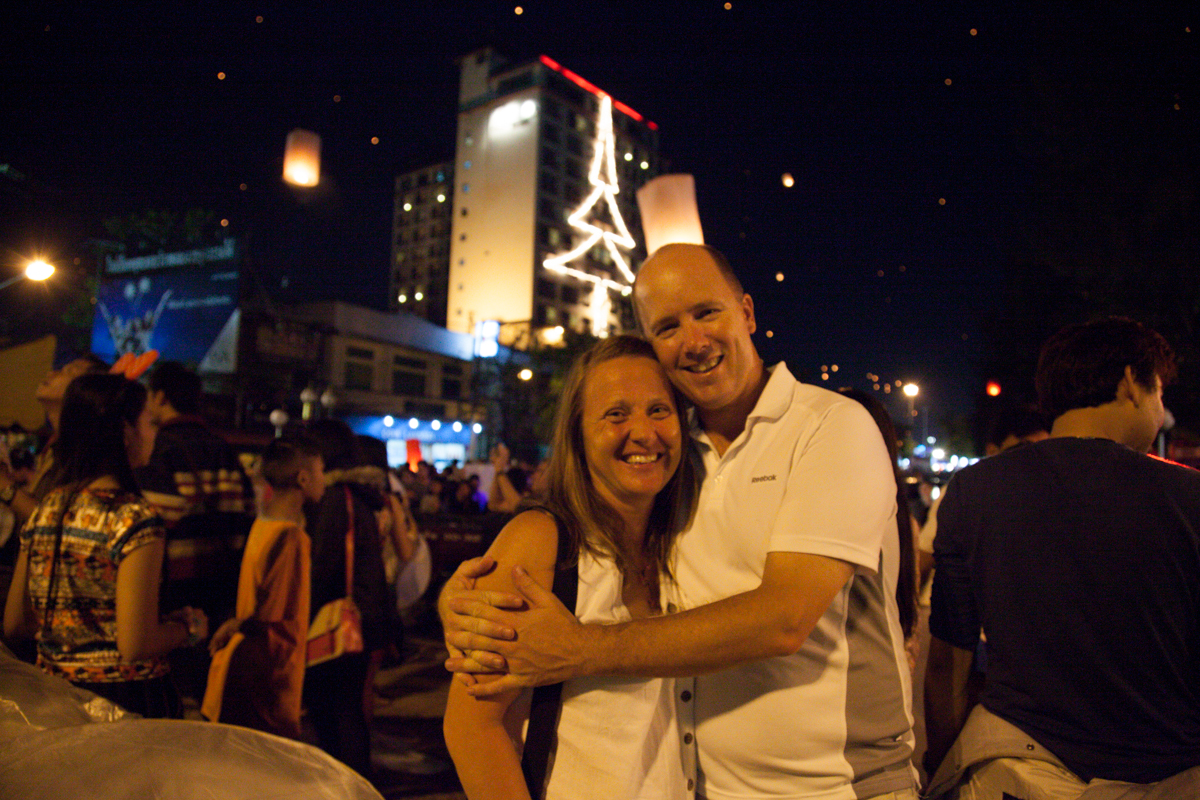
Chris and I set our lantern afloat early in the evening and we both found the experience to be magical as we watched our lantern get swept away high in the sky joining a myriad of lanterns that already dotted the horizon like a new constellation twinkling in the black sky.   Not all lanterns were released successfully – some got caught in tree branches and turned into balls of fire that just burned out quickly, while others were released prematurely and lacking sufficient heat to rise, fell to their demise in the waters of the moat below.  But these were the exception as most were carried up and  away swiftly by a gentle breeze.

Fireworks kept going off all around us, in every direction throughout the evening.  Children shot fireworks from tubes that were sold by street hawkers, creating little pops of light and sparkles.  Others had purchased fireworks earlier and set these off in random places.  The official fireworks went off after the final countdown to midnight, a dazzling, beautiful display that lasted for about ten minutes. Just past midnight, we released another lantern with our new friend Monique who we had befriended earlier in the day.  Monique is staying at our guesthouse too and up until today we have simply exchanged courteous greetings with her each morning at breakfast.

But today was different and for some reason we had an extended chat with her.  One thing led to another, and before I knew it, she was telling me about her recent trip to India where she volunteered at a school for a month.  It turns out she runs a non-profit association, Petit Plus, and she has been searching for a new project to support through her association.  This school has captured her heart and her passion. Her enthusiasm was infectious and when I learned she didn’t have a website for her association, I suggested this was something I could perhaps help her with……and so Monique and I released our lantern wishing great things for this school in India, for her association, and for our new found friendship and collaboration.

Best wishes to all our family and friends, new and old, from Canada and around the world.  We wish you all a new year full of peace, happiness, and prosperity….with a little adventure thrown in for good measure.

 Video:  New Year’s Eve in Chiang Mai, Thailand.


In search of an apartment during high season in Chiang Mai

Thailand is a land of beautiful beaches, tropical forests, magnificent temples, and gentle people. It is also the land of cheap living.  Even now, after a decade of explosive growth in the tourism industry, Thailand is still a bargain for foreigners.  After a week in Chiang Mai, we are amazed at how cheap things are.  A delicious, nutritious meal costs $1-2 CAD in a local restaurant, (street food is even cheaper), a dorm bed starts at $3 CAD, AND a 500 ml bottle of mineral water costs 7 Baht (0.21 CAD) at the local 7/11 corner store.  It’s no wonder so many people come here for longer stays, many ex-pats making this their permanent home away from home.

Apartments are cheap too.  A small studio starts at about 8,000 Baht.  That’s just $240 CAD per month!  Of course, as with everything, you get what you pay for.  Larger 1 bedroom apartments in buildings with amenities like a pool and a gym, cost between 10,000 and 15,000 Baht.  Want a brand new, modern building?  The cost goes up even more.  If you’re willing to go out of town a little, you can rent a large house for about 20,000 Baht per month. Sounds great, doesn’t it?  So why have we found it so hard to find an apartment?  Here’s what we’ve learned so far during our apartment search:

  1. Supply and demand.  Christmas time is peak season with many places being reserved months or even a year in advance.  That means there are fewer units available, and of course, whatever is left is going at a premium.
  2. Short versus long term rental. Most units require a 6-12 month lease which puts them out of our search.  We want a 1-2 month contract for a fully furnished unit.
  3. Serviced apartment versus condominium.  A serviced apartment is very much like a hotel.  You enjoy amenities like daily housekeeping, pool and fitness area.  On the down side, these apartments tend to be quite small and sterile like a hotel room and are much pricier.  These units are very popular amongst foreigners because they are geared to short term stays  from one week or more.  Of course, that means there aren’t many units available this time of year. Condominiums, on the other hand, are usually rented out by the owner and are furnished in a more homier manner.  It takes time to find these one-off units and then it takes time to make enquiries about availability, price, etc.
  4. New versus older buildings:  There’s been a building boom going on in Chiang Mai for a while, resulting in lots of glossy new condos which makes the older buildings look pretty dated and sometimes downright shabby.  Apartments in newer buildings cost significantly more than those in older buildings and generally have better amenities as well as units that boast clean, modern decor and design.
  5. With or without a kitchen:  Kitchens are a novelty here in Thailand, especially a western style kitchen.  A typical kitchen has a small bar fridge, hot plate and microwave.  That’s it.  Moving up a notch on the price scale might yield a two burner stove and a larger fridge and a foot or two of counter space, but not much more.   These minuscule kitchens are quite poorly equipped as well – a single wok, a few dishes and cutlery is all you’re going to find.  Apartments with full kitchens are rare and are accordingly priced at a premium.  We thought we needed a full kitchen, but quickly adjusted our “needs” to meet what was available.  Soon we found ourselves saying things like: look at this kitchen, it even has a cutting board and knife!
  6. Size really does matter: Studio sized apartments with less then 40 sq m of space are a dime a dozen here in Chiang Mai and are the easiest and cheapest places to find on a short term basis.  But these units don’t feel much bigger than a hotel room and typically have the most basic of kitchens if they have a kitchen at all.
  7. Location, Location, Location: We quickly learned that it’s virtually impossible to find a one bedroom unit with a functioning kitchen within walking distance of the Old City.  Larger apartments seem to be located a few kilometres away from the city core, while houses are even further afield, up to 10 km away.

After a thorough two-week search, we had narrowed our options down to two apartments both of which were located a few kilometres away from the city center.

One apartment was in a serviced building with gorgeous amenities.  At 43,000 Baht per month, it was the most expensive apartment we saw and it was only available for the month of January.

The other apartment was in an older building but the unit itself had just been renovated into a modern, spacious, open layout with breathtaking views from the wrap-around 13th floor balcony.  It was priced a little better at 35,0000 Baht plus utilities.

We weren’t over the moon over either property – each had its pros and cons, the biggest con of each being the remote location.

After a lot of debate and oscillating back and forth between the two, we decided to take neither.  We realized that location was the most important factor for us; we love being in the city center where we can walk everywhere.  Even with a scooter, we still prefer to be in a walkable location.

Besides, we are very comfortable in our current location, Kamala’s Guesthouse.  This place is super clean, the rooms are bright and spacious, and the owners are friendly and extremely helpful.  The common areas are inviting, relaxing and comfortable too.  The onsite restaurant serves up great food, as does the little restaurant next door.  And it’s dirt cheap compared to the apartments at a mere $3300 Baht per week.  Best of all is the location.  We are within less than a block from the moat which marks the perimeter of the old city center.  We can walk everywhere and we do, everyday.  I’ve even marked out a nice running route through the twisty, winding lanes and alley ways.
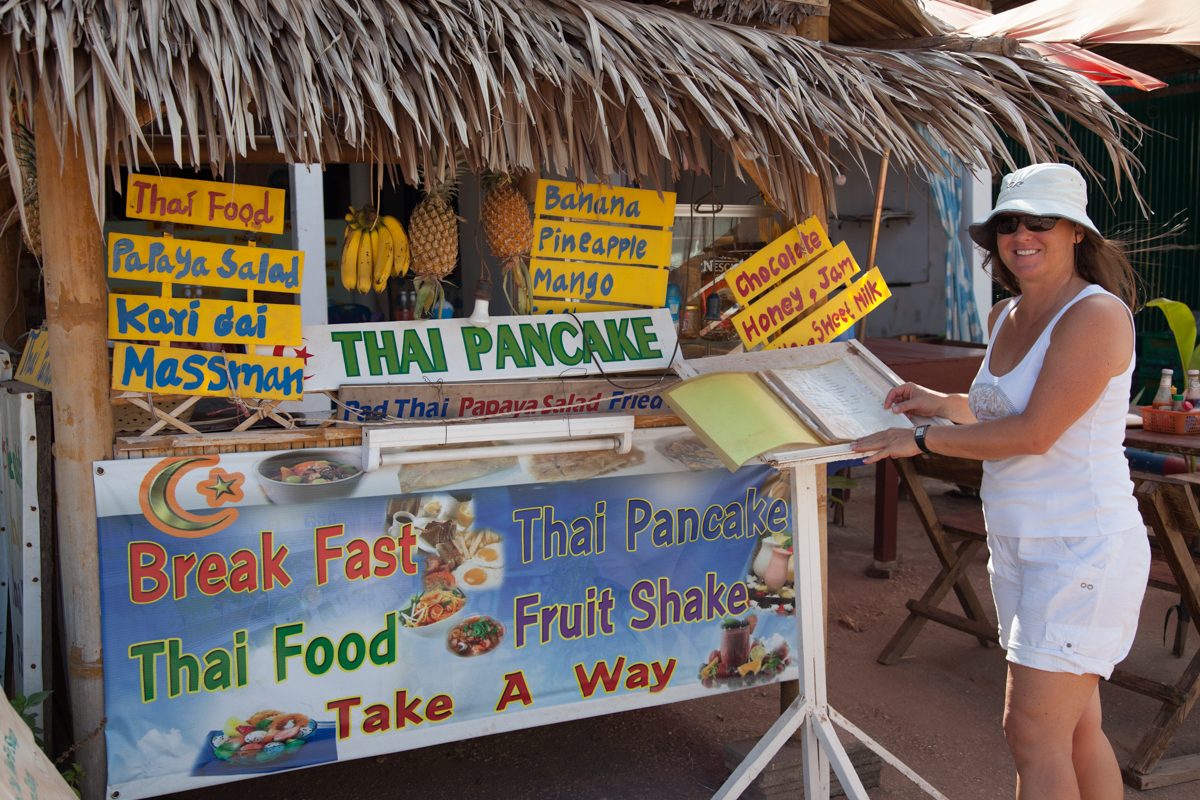
Cat’s restaurant next to Kamala’s – we have at least one meal here a day.
The food is freshly prepared with lots of healthy ingredients and its tasty and cheap too! 

Another restaurant just around the corner from us.

Lots of laundry shops in our neighbourhood.  It costs 30-40 Baht per kg
(about $1 CAD) to have your clothes washed, dried, pressed and folded.  At that
price, it would be foolish to try to do it ourselves!    

In short, we are comfortable where we are, so we’ve signed up for another two weeks.  After that we’ll just play it by ear, like we always do.

8 tips for renting a scooter in Thailand

After exhausting all the apartment rental options within the city center, it was time to take our search further afield and to do that we needed some wheels.  Like most Asian cities, scooters are more common than cars here in Chiang Mai, and it’s no surprise when you consider how cheap they are.  A brand new scooter goes for about $1200 CAD, but a one day rental is a mere 200 BAHT (about $6 CAD).   And it’s cheap to run when gasoline costs just over a buck a litre (CAD) and you get about 40 km per litre.

We are scooter newbies – we’ve never even sat on a scooter let alone driven one.   Neither of us are big fans of motorcycles, mainly because we just can’t imagine feeling safe with nothing between us and the road should things go wrong.  But when everyone is driving a scooter, from young kids to grandmothers, we figured we should at least give it a try.  Besides, we needed some mobility to look at apartments within a few kilometre radius of the Old City.
After spending a day on a scooter – Chris drove and I navigated from behind – and surviving to tell the tale, we have a few tips to share in case anyone is thinking about doing the same.

  1. Don’t surrender your passport when you sign the rental contract.  We have heard stories of unscrupulous people who refuse to return your  passport because they have fabricated bogus problems with the scooter and they want you to pay up to fix them.  Even worse, some go so far as to steal the bike while it’s in your possession and then insist you replace it before returning your passport.   It’s better to leave a deposit (3,000 BAHT in our case) which is a lot easier to walk away from should you find yourself in such a situation.
  2. Do wear your helmet even if it looks like it would give you less protection than your bike helmet back home. It’s the law to wear a helmet in Thailand, and I saw more than one ticket being issued to helmet-less people.  Besides, even a lousy helmet is better than no helmet if you have a mishap. Of course, you could carry your helmet in your front basket like most of the locals do if you really want to.
  3. Do take a few spins around the block on quiet streets before venturing out into a busy thoroughfare just to get the feel of the scooter.  It’s a lot harder to balance when you have a passenger on the back, so be sure to practice a bit with your passenger on board too.
  4. Don’t fill the tank.  You receive the scooter with an almost empty tank and you can return it empty as well.  It’s not like a car rental where you’re expected to return the vehicle with a full tank.  Even though the tank only holds a couple of  litres, chances are you won’t be driving that many kilometres especially if you’re staying close to town.
  5. Do follow the crowd.  This is no time to assert your leadership abilities.  The roads in Chiang Mai are chaotic and traffic rules appear to be optional, even red lights.  To make matters worse, they drive on the “wrong” side of the road (from a Canadian perspective that is), so remember to drive on the left hand side.  Things get tricky when you find yourself in a turning lane but you’re going straight.  Where exactly do you need to be to avoid getting crushed by bigger vehicles around you?  We found it helpful to pick a bike ahead of us, and just follow behind them. Chances are the guy in front knows how to navigate better than you do.
  6. Don’t use your horn unless absolutely necessary.  Unlike other countries like Egypt where the horn is used incessantly, drivers in Thailand are far less aggressive and much more yielding to those around them on the road.  Just remember you’re the smallest guy on the road, and quite likely the slowest if you’re a newbie like us, so keep to the side and stay out of harm’s way.
  7. Do drive defensively like your life depends on it, because frankly, it probably does.  Watch the drivers ahead of you, beside you, behind you and don’t forget to watch the road for speed bumps and potholes.  This is no time for speed, besides you probably won’t top 60 km/h on your little bike anyways.  We putted about at an easy 40 km/h most of the day.  I know, we’re not exactly speed demons but we would rather be safe and alive than have a thrill with a mishap.
  8. Do relax and have fun.  Really.  It is possible.  We had a great day touring around and discovering new areas impossible to reach on foot.

We enjoyed our day on the scooter so much that we’ve decide to rent a scooter on a monthly basis once we’ve found an apartment.  Imagine, our own set of wheels for less than $100 CAD per month!  It’s just one of the many bargains here in Chiang Mai, Thailand.

An elephant ride on Christmas Day in Chiang Mai

Merry Christmas and happy holidays to all our friends and family in Canada and around the world.  We hope you all have a wonderful day like we did.  This Christmas was like none other we have celebrated so far.

Christmas in Chiang Mai is not a big celebration, in fact, it was pretty much business as usual here in the city today.  The shops and restaurants were open and the kids went to school.

We spent our day at Ran Tong Elephant Camp, an elephant sanctuary about an hour north of the city where we learned to communicate with the elephants using simple commands. We fed the elephants, played with them, and even bathed them in the river.

Trekking through the jungle on the bare back of an elephant is an experience we won’t easily forget! Somehow we both managed to not fall off during our elephant ride even when we went up and down some pretty steep hills and through a fast moving river. There’s lots more to tell you about our day, but we’re pretty beat. Amazing how tired one can get without walking a single step of the way.

Merry Christmas!

Video:  A day with the elephants at Ran Tong Elephant Camp.