Argentina

Getting to Iguazú Falls in style

Much to my great dismay we arrived in Iguazú Falls a full hour ahead of schedule.  This meant one hour less on the most luxurious bus I’ve ever been on.  Perhaps I’m being a little facetious, but I’m not kidding about our very enjoyable 17 hour bus ride from Buenos Aires to Puerto Iguazú (Bus company: Via Bariloche, Full Cama Service, if anybody is planning a trip).

Each pair of seats was ensconced in its own cubicle, complete with individual television monitors that offered a range of videos and music to entertain, and plush red leather seats that were more comfortable than our Lazy-Boy recliners at home and these seats fully reclined into a perfectly horizontal position.  We were issued cozy fleece blankets and pillows.  The only thing missing was a remote control which really would have been handy when you were fully reclined, but my toes provided a suitable alternative, much to Chris’ amusement.

I’m not sure what you call the guy tending to all our needs; I’ll call him our butler although he looked more like an airline pilot in his smart uniform, but he acted in a very suave manner much like I would imagine a butler would act.  (Maybe I’ve been reading too much fiction lately.)   We knew we were in for a treat when our butler offered us an array of candies as soon as we sat down.  They don’t do that on the buses in Ecuador!

Once we were on the road, dinner was served – salad, bread, and a delicious hot meal (beef casserole with mashed potatoes), and of course dessert.  We had our choice of refreshments including wine.  Coffee and biscuits were served after dinner, followed by a shot of Irish whiskey.  We all slept like babies throughout the night. The next morning we were greeted by our ever friendly and obliging butler who served us coffee and a typical South American breakfast of croissants along with white bread and jam. Doesn’t this sound like a civilized way to travel?  Now do you understand why I didn’t want to get off the bus, especially an hour earlier than scheduled?  I’m sure we are ruined for all future bus travel.  It’s just as well we’re leaving South America soon.

The first thing we noticed about Puerto Iguazú was the heat.  The relentless sun beat down on us without a hint of a breeze to offer any relief.  It was almost unbearable.  We were drenched in sweat when we arrived at our hostel, just a short three block walk from the bus station.  But what a delight to discover our hostel (Garden Stone in case you’re looking for a place in Puerto Iguazú ) had a pool – something that saved us each day.  A funny thing about our hostel:  our room was very small and right next to the office so rather noisy, the bed was terribly uncomfortable, the breakfast was mediocre at best – yet we loved our time there and wished we had booked an extra night or two.

Our hostel felt like a mini resort or a friend’s back yard.
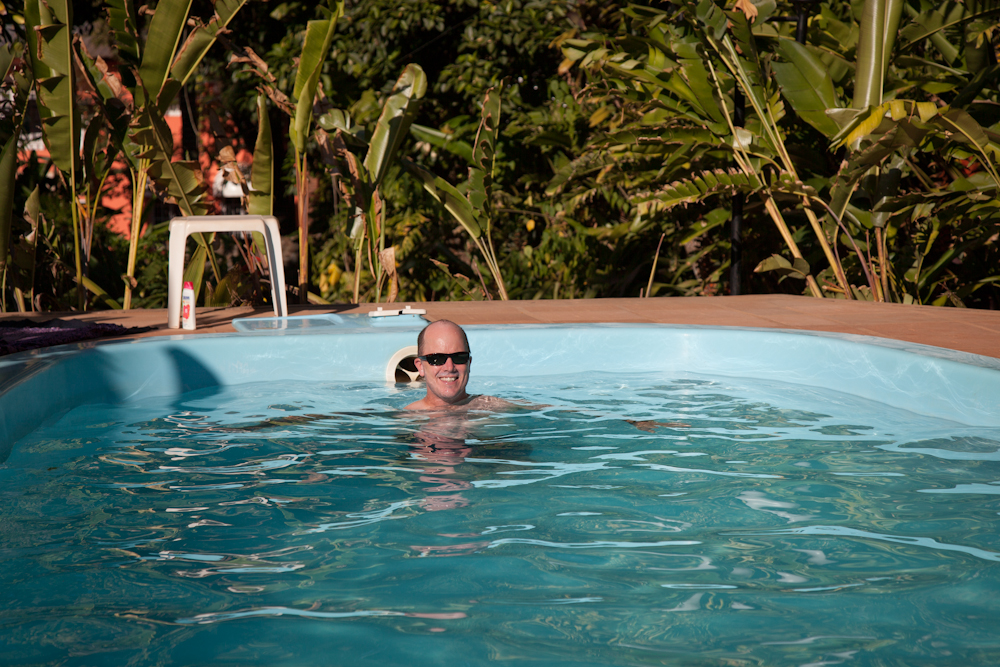
Behind the hostel was a lush, tropical garden, complete with hammocks in the shade, garden chairs, the pool, and a lovely open air, common kitchen and dining area. At the end of each day, guests would hang out around the pool, getting to know each other, sharing where they’ve travelled and where they’re going next. It was here we met Russ who was one year into a two year journey.  He had walked the Camino de Santiago last June – something we are planning to do this June. I had never met anyone who had done this walk before so naturally I peppered him with questions about his experience and am now even keener than ever to do this pilgrimage.  Yet, I still can’t answer the simple question, why?  I just feel I want to, maybe even need to do it.

I digress from the main purpose of our trip to Puerto Iguazú which was, of course, to visit Iguazú Falls, the second largest waterfalls in the world (Victoria Falls in South Africa are the largest and Niagara Falls in Canada are a very distant third).  Declared a Natural World Heritage Site by UNESCO in the early 1980’s, these falls are comprised of 275 individual falls spanning three kilometres. cascading up to 70 m into a giant gorge amidst a lush, subtropical rainforest.   Its normal flow is about 1.3 million litres per second.  The falls straddle both Argentina and Brazil; catwalks are built on both sides providing closer (often times mistier and wetter) views of this impressive waterfall. On November 11 of 2011, Iguazú Falls was declared to be one of the seven winners of the New7Wonders of Nature by the New Seven Wonders of the World Foundation.

Igauzu Falls MapMap of the walking trails and boat routes (red dots) on the both sides of the falls.
The island in the middle, San Martin, was closed to the public the day we were
there because a film crew was shooting a movie at that location. 
We spent one day on the Argentine side and one day on the Brazilian side.  We were relieved that our Brazilian Visas passed the scrutiny of the immigration officials.  These were the visas we had obtained in La Paz, Bolivia (doesn’t that seem like ages ago?) and we always wondered, and maybe worried a little if we would have any problems with them since they had been produced so quickly, and in a third world country no less.

Lookout from the Brazilian side of the falls.

Close up of the falls.

Rainbow at Devil’s Throat (La Garganta del Diablo)
as seen from the Argentine side.

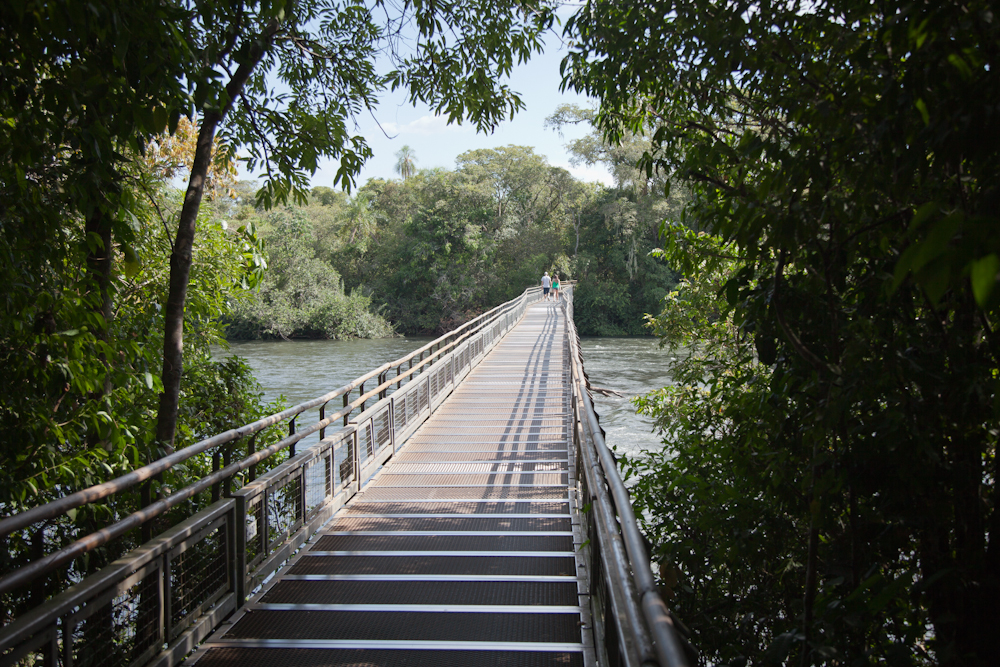
An impressive network of walkways often passed right over
the water as it spilled over the very edge of the waterfall. 

The view from the Brazilian side – note that these are just
some of the falls.  It was impossible to capture it all
in a single photo! 

Contrary to what most people say, I think the Brazilian side of the falls was just as stunning as the view from the Argentine side, it just offered a different perpsective.  The Brazilian side offered a panoramic view that helped you appreciate how large these falls were.  From the Argentine side, one feels and hears the thunderous power of the falls more intimately.
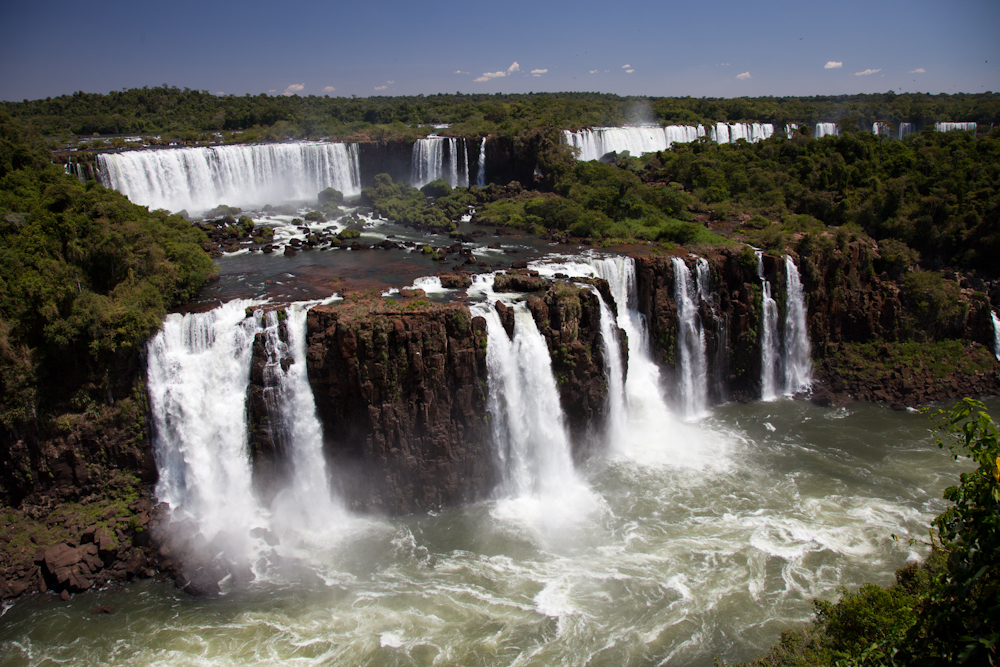
Another view from the Brazilian side.

My favourite lookout on the Argentine side.  I felt very small
next to these powerful falls – and I was only standing at the
mid-point – half the falls were still below me. 

Chris and I at the same lookout as above.  Can you believe
we had the lookout to ourselves – well, at least for about
thirty seconds! 

View from the Argentine side from the upper walkway.

A great view from the Brazilian side.  
Devil’s Throat is in the background. 

My favourite view from the Brazilian side plus we got
soaked from the spray which cooled us off nicely. 

Another shot from the Brazilian side.

We succumbed to the lure of a tour offering a grand adventure under the falls.  Very much like the “Maid of the Mist” tour in Niagara Falls, this tour brings you by boat very close to the falls, even dunking you under a few times just for the thrill of it.  This was followed by a quick ride down the river through some fast moving water that they called “exciting rapids” (hardly!) after which we were transported by open truck through eight kilometres of rainforest during which we saw absolutely no wild life, not even a bird (contrary to the brochure’s promises of encounters with exotic wildlife like orangutans).  It was all over in less than an hour.  I think the best part was getting completely drenched and thoroughly cooled off; otherwise, it was really just another cheesy tourist attraction that we got suckered into. When are we going to learn?
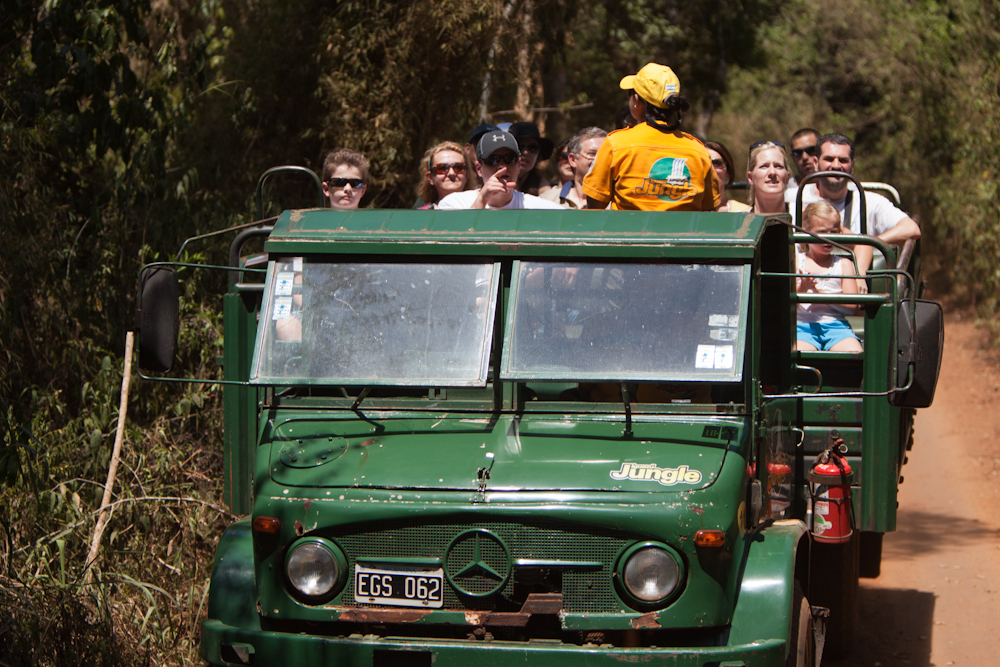
No animals on this “jungle tour” which was quite ridiculous
when we encountered wildlife just walking through the park.
A few samples are below.

Video:  Experience the power and force of Iguazú falls with us.


The sights and sounds of Buenos Aires

Our time in Buenos Aires has passed by far too quickly.  We are spending our days wandering around the various neighbourhoods and visiting some of the tourist sites, walking endlessly. I discovered the Reserva Ecologica which is a beautiful ecological park about 2km from our apartment and a perfect place to go for a run.

Speaking of our apartment, we are staying in a 2 bedroom walk up (3rd floor) in San Telmo, the oldest, most historical district in Buenos Aires.  Our apartment could best be described as shabby chic, with a bohemian twist, very reflective of this neighbourhood.  I must admit that as each day passes, both the apartment and neighbourhood look a little more shabby than chic, but that’s the real Buenos Aires experience. One of the best features of the apartment is its location; not only is it in a trendy, hip neighbourhood, but it is within walking distance to most tourist attractions and other equally trendy and interesting neighbourhoods like La Boca and Micro-centro.  While a bit of a hike, Ricoleta and Palermo are also within walking distance, although much easier and faster to reach by subway (when it is running that is – it was closed at least once because of striking workers).

Hanging out in the apartment. We’ve really enjoyed the space
and the location.  Aside from an infestation of ants in the kitchen
(gross!) and a roof that leaks like a sieve when it rains,
it’s been a great place from which to explore the city. 

The Paris of South America

Buenos Aires is aptly nicknamed the Paris of South America with its large, tree-lined boulevards, European style architecture, elite shopping districts and a rich cultural heritage.  This city reminded us of Havana, Cuba, the French District in New Orleans as well as New York City.  Home to hundreds of bookstores (one such gem in our neighbourhood, Walrus Bookstore, is devoted entirely to English literature), public libraries and cultural associations (it is sometimes called “the city of books”), as well as the largest concentration of active theatres in Latin America. I was disappointed to learn that the new season of the Teatro Colón, an internationally rated opera house, was beginning on March 8th, the day after we leave.  The theatre district was reminiscent on a small scale of Times Square and the theatre district in New York City.

Typical city  bus – rather vintage looking!

The Obelisk in the centre of Avenido 9 de Julio – a busy, 20 lane
boulevard (I counted) that was tricky to get across. 

Avenido 9 de Julio, near the Obelisk.

To the side of the Plaza de Mayo, where people gather to demonstrate about
anything and everything.  Since being the scene of the 25 May 1810
revolution that led to independence, the plaza has been a hub of
political life in Argentina. 

Typical architecture.

The Obelisk near the end of the day.

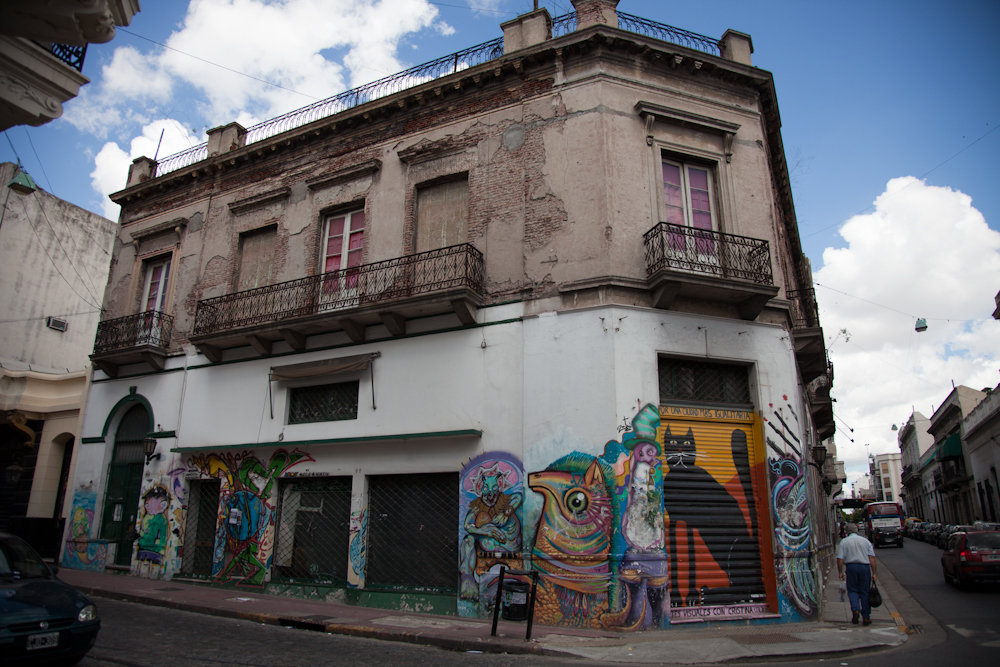
Grafitti is common place.  We actually saw a guy on our
street walking along with a can of black spray paint.
Every now and then he stopped and tagged a wall. 

San Telmo neighbourhood where crumbling old buildings
stood alongside newer ones.  This is the area we stayed in.

The old architecture and tree lined streets and plazas
made walking around the city a real delight. 

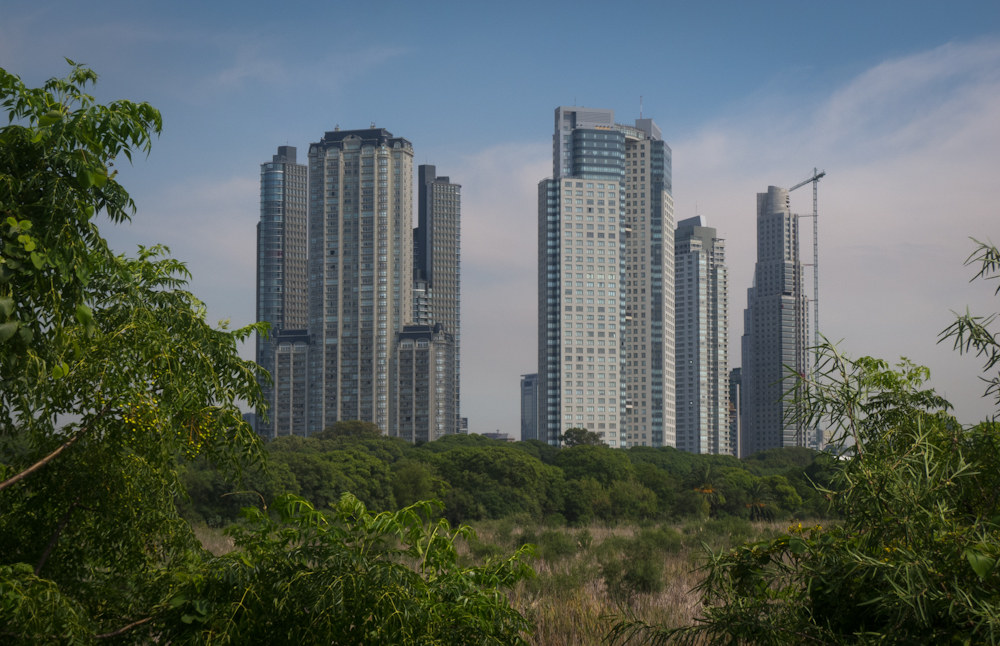
View of modern buildings from La Reserva Ecologica.

Waste management and recycling are handled rather
strangely here.  Garbage is put out on the street, and people
rummage through looking for recyclable materials (plastic,
 cardboard, glass).  The garbage is then left in a messy pile as shown above. 

An art exhibit at The Recoleta Cultural Centre.

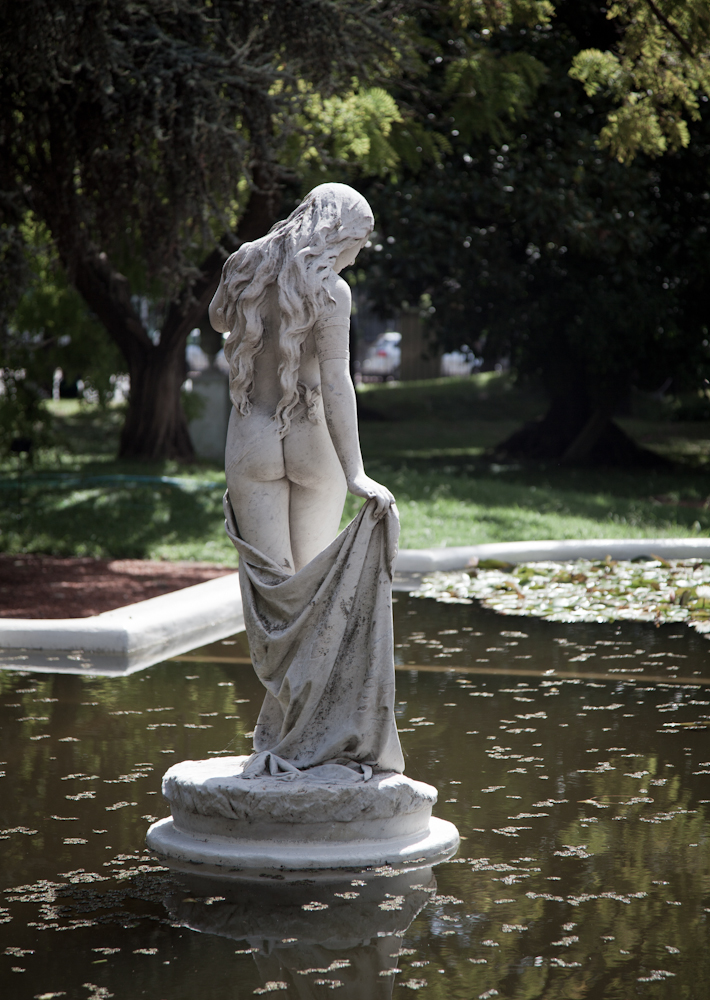
One of many statues in the Botanical Gardens.

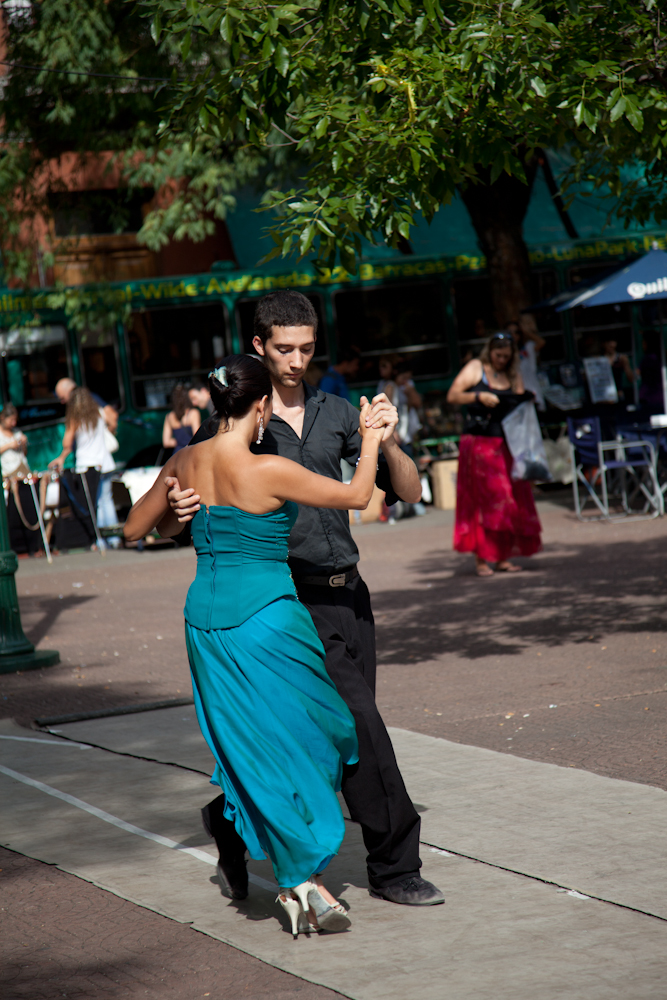
Tango music’s birthplace is in Argentina and reminders of this are everywhere, from the artwork sold in the markets, to the tango dancers on the street corners.

There was no shortage of things to do each day. Perhaps because we had two weeks to explore, or maybe we’ve just become used to a slower pace, we explored the city leisurely. We shifted our clocks to more closely align with the Argentine lifestyle, getting up late and going to bed equally late. A typical day began with us waking up around 10:00 am (unheard of for us!), followed by some coffee and breakfast at the apartment. We lounged around each morning, reading, surfing the net, researching and making bookings for upcoming journeys. We headed out in the early afternoon and usually stopped into a cafe for lunch around 2:30 or 3:00 (very typical time for lunch).  One day, we wandered into a restaurant which we were lucky to find open at 5:00 pm and were welcomed for lunch without question.  That’s damn near dinner time in Canada! Restaurants are usually closed between 4:00 and 8:00 pm when they re-open their doors for the dinner crowd which doesn’t really get going until 10:00 or 11:00 at night. Our usual bedtime was around 1 or 2 in the morning.  Quite remarkable for us!

The local beer on the counter at the apartment. Refreshing!

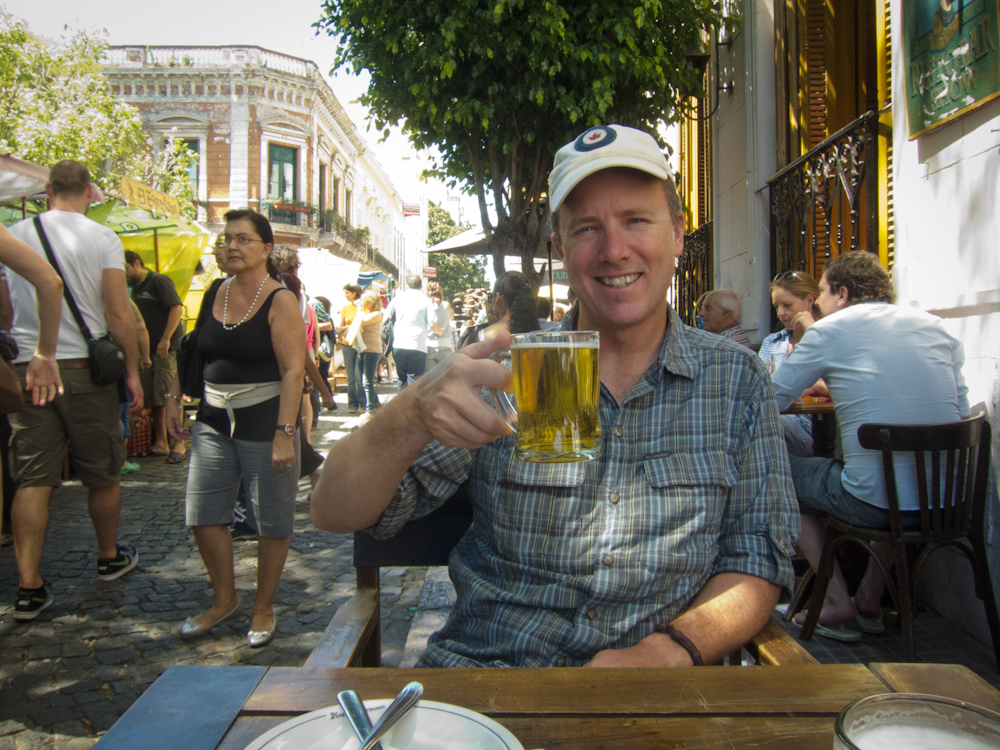
Enjoying a pint of “chopp” (draft) on a patio in San Telmo.

Eating out on patios reminded us of summertime in the
market in Ottawa. 

Wouldn’t we look good in this little darling?

San Telmo Market:  Every Sunday, just two blocks from the
apartment, La Defensa is closed to traffic and is transformed
into one great, big outdoor market full of antiques,
tacky souvenirs, artwork, jewellery, clothes, etc. 

Soda bottles for sale at the San Telmo market.


The market in La Boca was so touristy,
it looked more like a set for a movie rather than
an authentic neighbourhood.

More of La Boca.  We hated how contrived this neighbourhood was
and didn’t spend much time there as a result.

 Fruterias were on practically every corner and offered
a great selection of fresh fruits and vegetables
at reasonable prices.

Florida street, a popular outdoor pedestrian mall.
This place was bustling during the week but
on the weekend it was dead (reminded me of
Sparks Street in Ottawa).

Professional dog walkers were a common sight.  This
crew sat quietly waiting for the walker to return. 

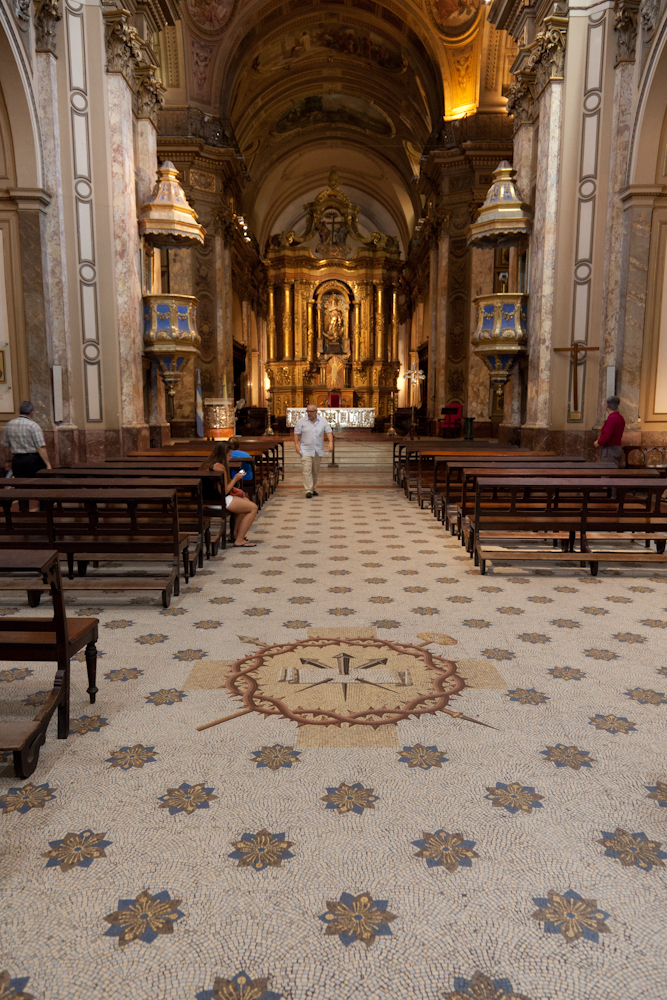
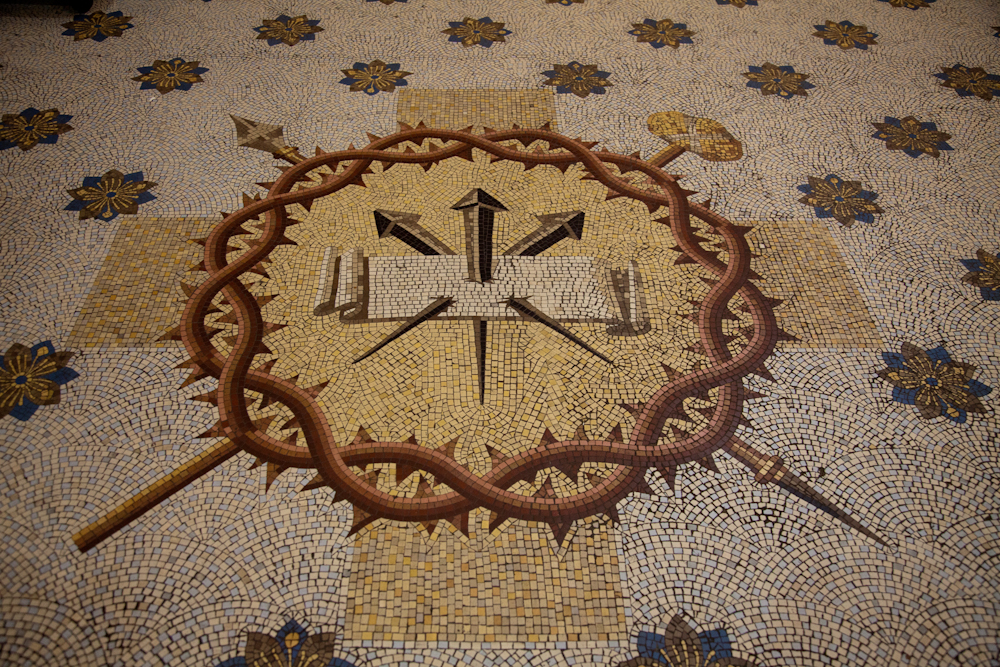
The entire floor of the Metropolitan Cathedral was done 
in mosaic tiles.  It was absolutely stunning.

La Recoleta Cemetery contains the graves of notable people, including 
Eva Perón, Raúl Alfonsín, and several presidents of Argentina.

Set in 5.5 hectares (14 acres), the cemetery contains 4691 vaults, all above ground,
of which 94 have been declared National Historical Monuments
by the Argentine government and are protected by the state.

Evita’s family tomb.  Her body was finally laid to rest here
after many years of controversy and a period of interment in Spain. 

View inside one of the vaults at the cemetery.

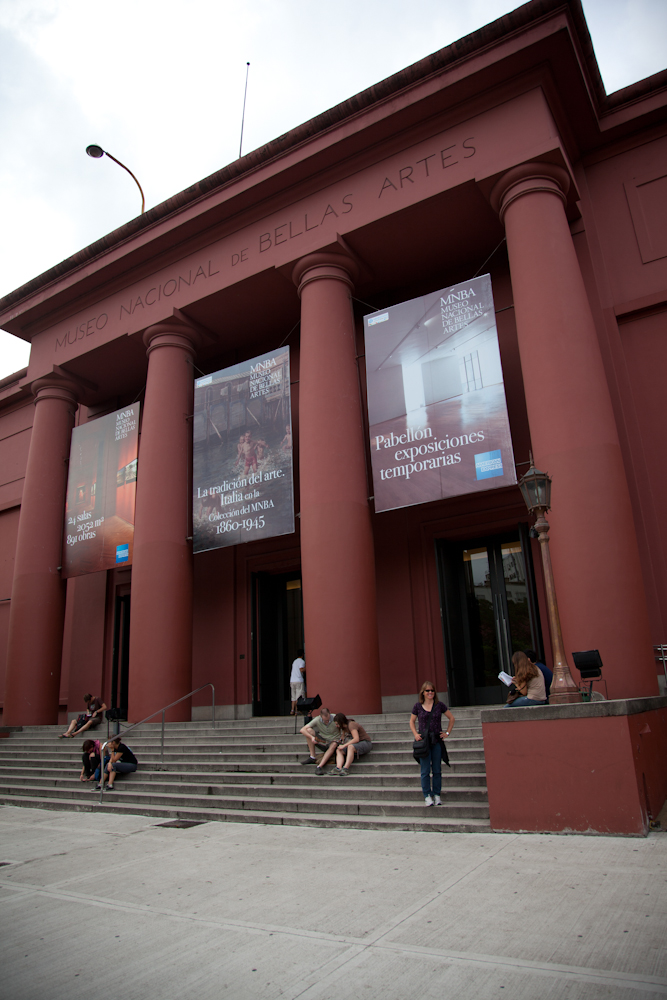
The Museo Nacional de Bellas Artes is home to  a permanent collection
that includes 688 major works and over 12,000 sketches,
fragments, potteries and other minor works.  

A little bit of history

The Casa Rosada (Pink House) is the building from which Eva Peron made her emotional speeches to her adoring fans in the 40’s and early 50’s. Today, it is home to the offices of the current president, Cristina Fernández de Kirchner, who arrives by helicopter each morning during the week.  I must admit, I had a foggy recollection of who Eva Peron was and felt it worthwhile to research  this iconic figure in more detail.

The President’s Office. It seemed strange that they opened up
her office to the public each weekend even allowing us to take pictures.

Changing of the guard in front of La Casa Rosada.

A visit to the Eva Peron Museum offered a fairly accurate picture of this remarkable and controversial woman’s life story – a modern day rags to riches fairy tale.  In her short life (she died of cancer at the age of 33), she was a successful entertainer (radio, theatre and film) who then met and married a rising political figure, Juan Perón. When her husband became president shortly after their marriage, she decided not to assume the traditional role of a president’s wife. It was at this time that she began to call herself Evita.  She became a tireless advocate for the poor and disadvantaged classes.  A woman ahead of her time, she worked alongside her husband the President, rather than in a more submissive, supporting role.  It was largely due to her efforts that women won the right to vote.  She is an iconic figure in Argentine history and was adored by the masses, and hated by the elite.  Even after her death, controversy continued, and it took many years before her embalmed body was finally put to rest in her family’s vault in Recoleta Cemetery here in Buenos Aires.

Interesting art on the side of an apartment building – a tribute to Evita.

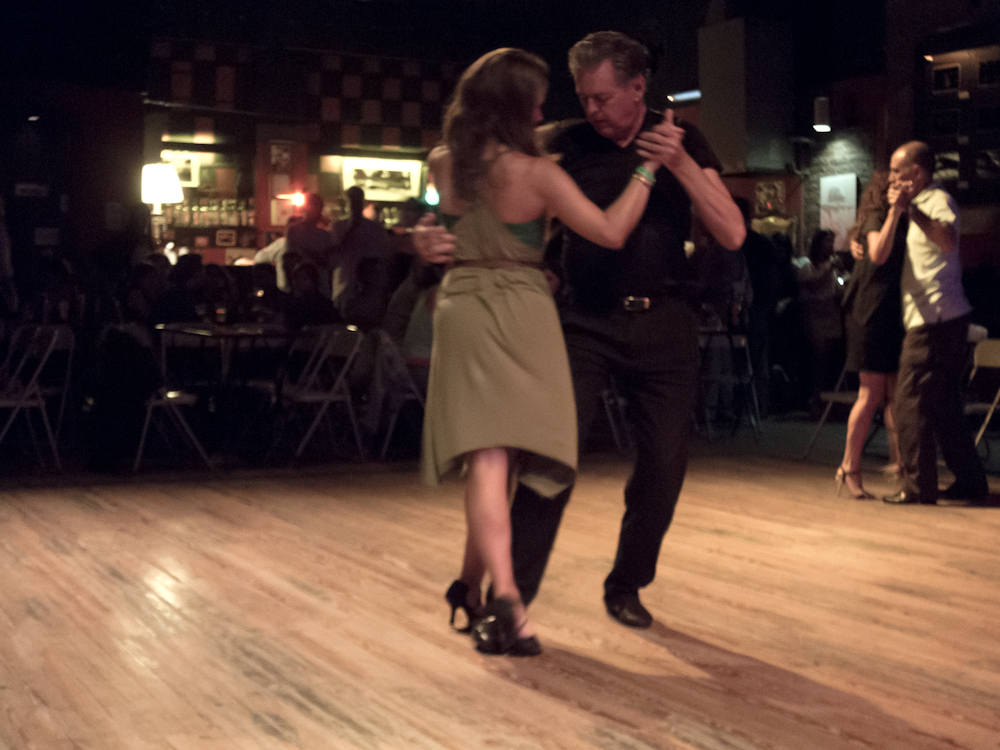
A local milonga just around the corner 

It was midnight last Wednesday night and things were just heating up as the sultry sounds of the live band enticed couples onto the dance floor to tango. Those dancing were of all ages and abilities, a blend of locals and tourists.  It was mesmerizing to watch the language of tango expressed by some of the better dancers, the nuances and subtlety of their moves, the fancy footwork, and the perfect harmony between dancers and the music.  As we sipped our wine, careful not to make eye contact with anyone lest someone might think we wanted to dance (such are the rules of a milonga), I felt transported back in time and place and was completely lost in the magic of the evening.

Video: Professional tango dancers

Video: Amateur tango dancers at a local milonga.

This milonga, a term for a place or an event where tango is danced, was the Argentine experience we were looking for in contrast to the contrived tango shows advertised on the streets and targeted to tourists. Throughout the evening and well into the early morning hours, we listened to the band play several genres of music, in the typical milonga format of four songs in a row followed by a short break. We shared our table with Grisela who had arranged the evening and another couple, Stuart and Vanessa who were from Australia/New Zealand.  And no, in case you were wondering, we did not take to the dance floor.  Porteños, as locals are called, take their tango dancing quite seriously and while dancers of all abilities are welcome on the dance floor, it is definitely not the place for beginners or non-dancers such as ourselves.

Video: The Milonga Band.

Something a little louder and hipper

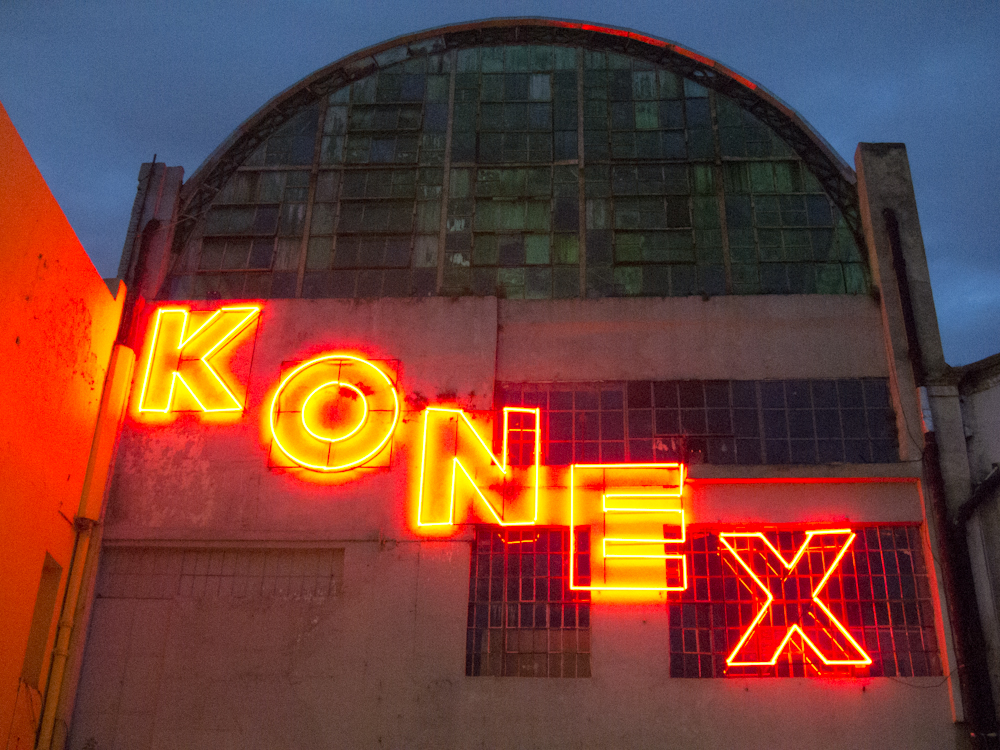
What a contrast the above-mentioned Milonga was to the show we enjoyed on Monday night at the Ciudad Cultural Konex, which hosts a weekly percussion extravaganza called La Bomba del Tiempo in an old oil factory. In the summer months, the show is held outside except if it rains, as was the case last Monday night, when they quickly reorganize everything onto a stage indoors.  The pre-show (a group of energetic, lively drummers) begins just after 7:00 pm, the main band takes the stage around 8:00 and it all wraps up around 10:00, just in time for dinner, Argentine style.

Although surrounded by a much younger, hipper crowd of both tourists and locals, we had a lot of fun listening to and watching this band perform.  The band’s leader directs the group through a series of intricate hand signals that was quite fascinating to watch.  Somehow we ended up near the front and centre, right in the middle of the party where the wildest dancing was taking place.  This was the closest I had ever come to being in a mosh pit – just crazy!

Videos:  La Bomba de Tiempo

Dining delights

Beef is a mainstay of Argentine cuisine and we were determined to get our fill.  Reputed to be some of the most tender beef in the world, probably because of the grass based diet versus grain based, we ate several steak dinners with varying degrees of success. Without a doubt, the beef is very good, but we find the cuisine in general is quite bland. We had some wonderful meals and some mediocre ones. We generally ate in mid-priced restaurants, with the odd splurge now and then, and the odd cheap dinner of empanadas or pizza to help even things out.  We made a few simple meals in our apartment, but with a kitchen infested with ants, we preferred to eat out most of the time.

On Thursday night we had dinner at an underground supper club, our first such experience, but apparently a movement that is growing in popularity in many countries worldwide, including Canada. Jueves a la mesa promised and delivered a lovely plant based meal void of refined flour and sugar.  An enterprising young American, Meghan opens up her apartment every Thursday night where she cooks a tasty vegetarian meal for 13 paying guests using local, easily available ingredients.  We shared the table last night with a large group of young American university students, and a German flight attendant, Beatrice who lives in the Thuringen area in Germany, just a stone’s throw from where my cousin Detlev lives in Jena. Interestingly, Beatrice’s mother who is now 83 was originally from Königsberg, East Prussia, the same area where my mother is from.   It appears that both our mothers had similar wartime experiences where they fled from their homes, losing everything, and then found refuge in western Germany via ship passage in the Baltic Sea.

We have a couple of more days left in Buenos Aires after which we head north to Iguazu Falls, a 20 hour bus ride away.  Yes, we’re taking the bus, our longest bus ride yet, but we secured top notch seats on a first class bus, so we’re thinking (hoping) it will be bearable.  We’ll be sure to tell you all about it when we get there.

Have you noticed the change I made to our website? I have reorganized some of the information in the left hand column and added a new section called:  My travel diary.  This is where I will share my thoughts about our travels, as opposed to the blog that describes where we have been and what we have done. I have moved the “journey before the journey” pages to this area under the heading “Getting Ready” and I have added some new material about my thoughts on the last six months on the road (Checking in after 6 months).  Enjoy!


Roughing it at Cerro Fitz Roy

Camping means different things to different people.  For some, it means driving the luxury trailer complete with all the conveniences from home to a nice camp ground where setting up is a simple matter of hooking up your electricity and sewer.  For others, you load your car with all your camping gear which may include a few conveniences and comforts from home, drive to your camp ground where you then pitch your tent, unload your gear and crack open an ice cold bottle of beer as you sit back in your comfy lawn chairs.  Our usual camping style is the latter although once we loaded all our gear into a canoe in Algonquin Park and paddled our way to our camp site.  We thought we were really roughing it that time, especially when Chris inadvertently (that’s his story to this day) tipped the canoe while I was in it waiting for him to get in….but that’s a story for another day.

We have just returned from our latest camping/trekking trip in Patagonia, which again was 5 days/4 nights in duration. Our starting point was El Chaltén, a small village located at the base of Cerro Torre and Cerro Fitz Roy, both popular for climbing as well as trekking and camping. El Chaltén is the youngest town in Argentina, built in 1985 to help secure the disputed border with Chile. Today the sole reason for its existence is tourism. It is 220 km north of El Calafate.

We arrived in El Chaltén around noon last Friday and immediately headed out into the mountains to our first camp site, only a couple of hours away at the base of Cerro Fitz Roy where we set up camp and stayed for 2 nights.  We spent the next 2 nights in a camp ground at the base of Cerro Torre.  Spending a couple of nights at each site allowed us the opportunity to do day hikes without our packs, making the trekking much more enjoyable.
The trails in this area were much easier than those at Torres del Paine (perhaps with the exception of the trail to the lookout at Fitz Roy which was pretty tough going) and are very popular as they can be done as day hikes directly from El Chaltén.  So during the day, the trails got a little busy, but early morning and evening we had them virtually to ourselves.  Even so, the number of tourists was far less than those encountered in Torres del Paine.  The camp grounds were pretty sparsely populated with about a dozen or so tents set up each night.

The weather throughout the five days was absolutely perfect for trekking.  With the exception of one day when it was cloudy, we enjoyed clear, sunny skies, comfortable daytime temperatures around 15C along with no wind and no rain. The nights got a little cool, around 5C, except for the last night when there was frost on the ground. And the early mornings were downright chilly, giving us good reason to sleep in each morning.

Typical weather enjoyed each day.

Cerro Torre obscured by clouds on our only cloudy day.

The weather cleared the next day, giving us great 
visibility to Cerro Torre.

While conditions were absolutely perfect for this trek, we took roughing it to a new level, at least for us. Our camping gear was similar to our previous trek in Torres del Paine which included:

  • 1 three-man tent that provided barely enough space for each of us and our packs (I have no idea how three people, especially men, would actually fit into the tent);
  • 2 foam sleeping mats that provided some insulation from the cold ground but absolutely no comfort value;
  • 1 inflatable sleeping mat that we shared – well, actually, Chris used it for the first three nights since he was still complaining about his sore ribs (wasn’t that nice of me) but then damn his ribs, my bruised hips couldn’t take another night on the hard ground so I got the mat on the last night;
  • kitchen gear consisting of one pot, one metal spoon that we borrowed from our hostel (and returned I might add), 2 metal cups, 2 bowls and 2 “sporks” (combination spoon, fork and knife); and,
  • 1 ultra light burner with 2 cannisters of fuel.
We didn’t bring any heavy camera equipment (shocking, I know, but Chris decided the point and shoot camera would be sufficient this time around) and we kept our personal belongings and clothes to the absolute minimum.  Of course, Chris regretted not having his camera with him, and I regretted not bringing my binoculars.  Oh, and a deck of UNO would have helped pass the time away but without our steerage companions from Antarctica around to remind us of the rules, maybe it was just as well not to have the cards.  We had lots of time on our hands, so besides hiking and bird watching, we spent a lot of time talking and reflecting on the past six months and what’s coming ahead.  When we got really desperate to amuse ourselves, we played Rock, Paper, Scissors and a few rounds of hang man in the dirt.  I bet you didn’t know that limiting your words to just 4 characters makes it a rather challenging game?
All our gear and food for 5 days of camping
fit into our packs with lots of room to spare.
There were absolutely no services in this park.  Zero.  Well, unless you count the disgusting (and therefore unusable) outhouse which was basically a shelter around a pit in the ground, conveniently located in each camp ground.  No refugios, no kitchen shelters to protect against the elements. No running water, no sinks,  no toilets.   Nothing. Just us and the great outdoors.  Did I mention how grateful we were that we had perfect weather?  We washed our dishes in the mountain streams using sand to scrub them clean – something I remember doing on canoe trips with my dad when I was a kid. We washed ourselves in the same icy cold streams, careful not to rinse any soap into the clear, glacial waters as these were the same streams we were drinking from.
The first campsite – not too crowded here!
Eating in the “dining room”.
Each night we put all our food in a sack and
hung it from a tree.  The absence of wildlife in the
park was noteworthy, although we had been warned
that mice ran rampant and were a camper’s worse nightmare
as they would chew through anything if they detected food. 
The chef at work:  food was basic, after all we only had one pot and spoon.
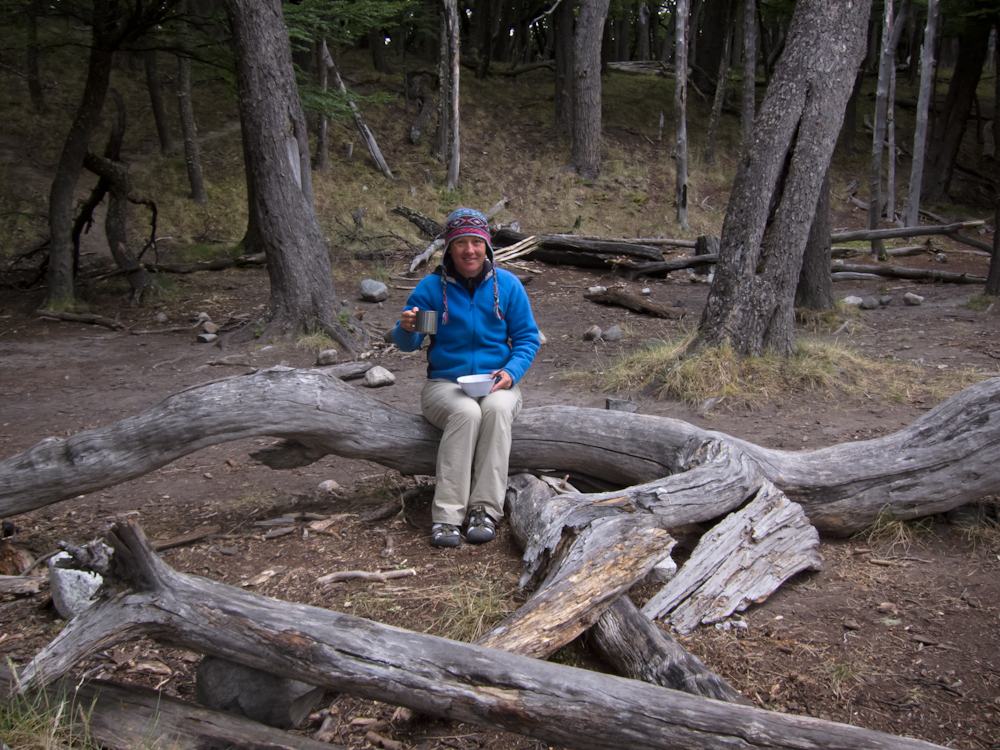
Enjoying a hot drink to keep warm.
Dead logs on rocks made a great table.
And so we camped and trekked for 5 glorious days enjoying spectacular scenery, basking in the warmth of the sun, restoring ourselves amidst the serenity and beauty of our surroundings.  It was one of the best camping trips we’ve had, and definitely the roughest camping yet.  Would we do it again? Definitely!
Climbing over boulders to get a better view of a glacier.
The view on the other side of the boulders.
The trails took us through forests such as this one as well
as through marshes and meadows (below)
and up and down rocky hills 
and mountains. 
Of the many birds we saw, this tiny Austral Pygmy Owl
(at least that’s what I think it is) was the most unusual.
We arrived back in El Chaltén on Tuesday morning at 11:00 am with two hours to spare before our bus returned us to El Calafate.  After making a few enquiries at some of the trekking shops in town, we successfully sold all our camping gear (excluding the ultra light burner) for about $80 US.  Considering we paid $110 US for the gear and camped for a total of 8 nights, I think we did quite well.

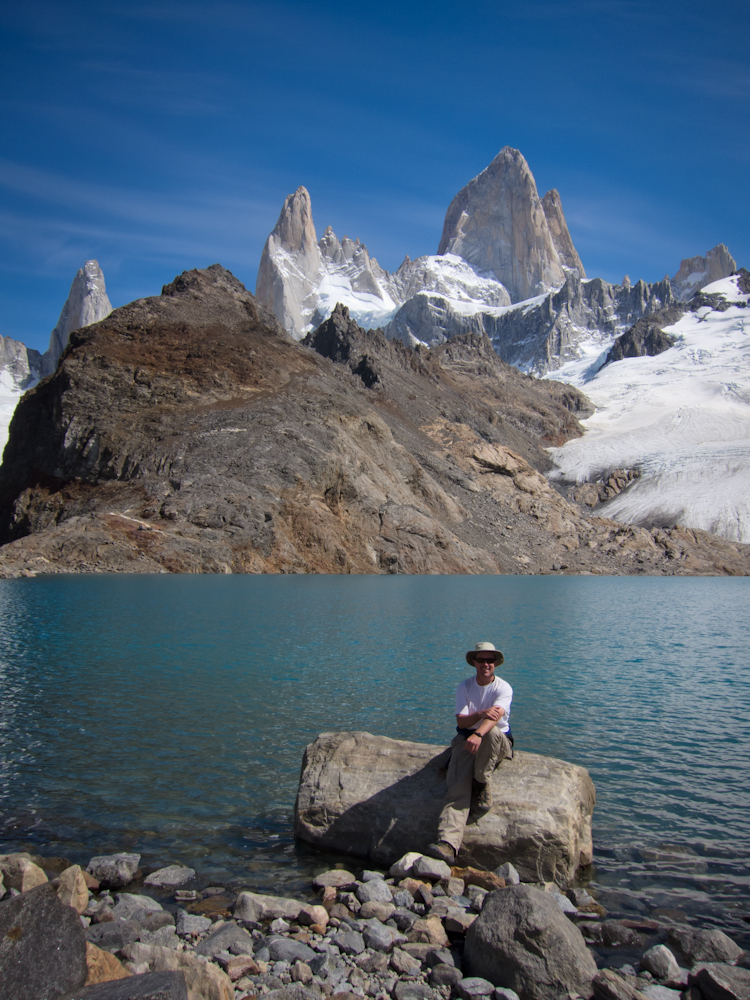
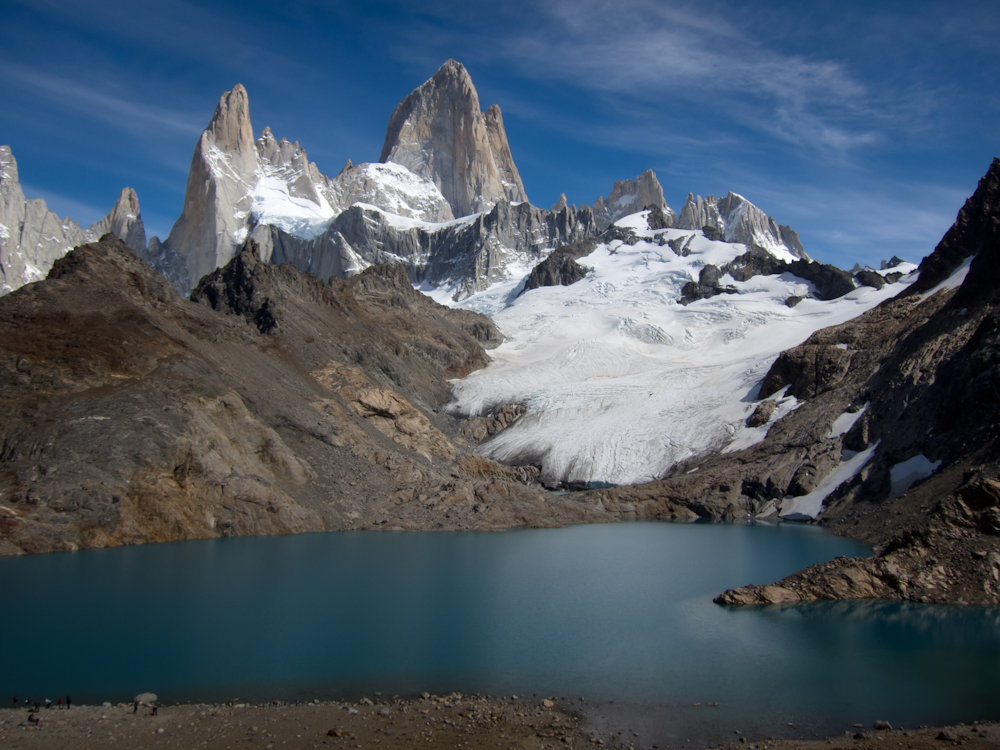
View of Cerro Fitz Roy from the lookout.  Well worth
the difficult one hour climb to the top. 

View of Cerro Torre as we were leaving on the last day, just before
the camera’s battery died.  How’s that for timing! 

Patagonia here we come

At the end of our Antarctica cruise last Wednesday, we flew to El Calafate because this was the fastest, most direct way to get to Puerto Natales which is where we would get ourselves organized for our big trek in Torres del Paine.  We were pretty tired after our cruise and needed a few days to just chill and get caught up on our blog.

We spent four nights at Hosteria Patagonia which was the most inhospitable accommodations we have endured thus far.  The establishment was quite new and the rooms were spacious and comfortable enough, and the place was absolutely spotless (just trying to be fair). The problem was in the way they ran the place – more like a prison camp than a hostel – rules for everything, such as forbidden to open the fridge without authorization.  I was chastised repeatedly (in Spanish of course) for all my transgressions – going into the kitchen to clean my dirty dishes (I know, the nerve of me), for putting a sweater on a railing to dry, for using the microwave without permission, etc. etc.  Ah well, the town was booked solid, so moving wasn’t an option.  We sucked it up, what else can you do?

Hosteria Patagonia looked good on the outside,
and even the inside too; too bad it was so unwelcoming.
Notice the two beautiful lavender bushes in front of me –
lavender grows prolifically here in this inhospitable climate. 

During the four days we spent in El Calafate we did a couple of interesting activities, namely, a “mini trekking” tour to Perito Moreno Glacier and a visit to the recently opened Glaciarium, a museum about glaciers.  We just couldn’t resist visiting the world’s largest reserve of fresh water!

The mini-trekking tour included transportation to Perito Moreno Glacier which is located in Los Glaciares National Park. We learned that this was one of a very few number of glaciers in the world that maintained its size over the years – it extends and contracts but remains a fairly constant size. The terminus of the Perito Moreno Glacier is 5 kilometres (3 mi) wide, with an average height of 74 m (240 ft) above the surface of the water of Lake Argentino. It has a total ice depth of 170 metres (558 ft).  This glacier is renowned for the rupture that occurs every few years.  It is due for another rupture at any time.  Click here if you’re curious about what the rupture is all about.
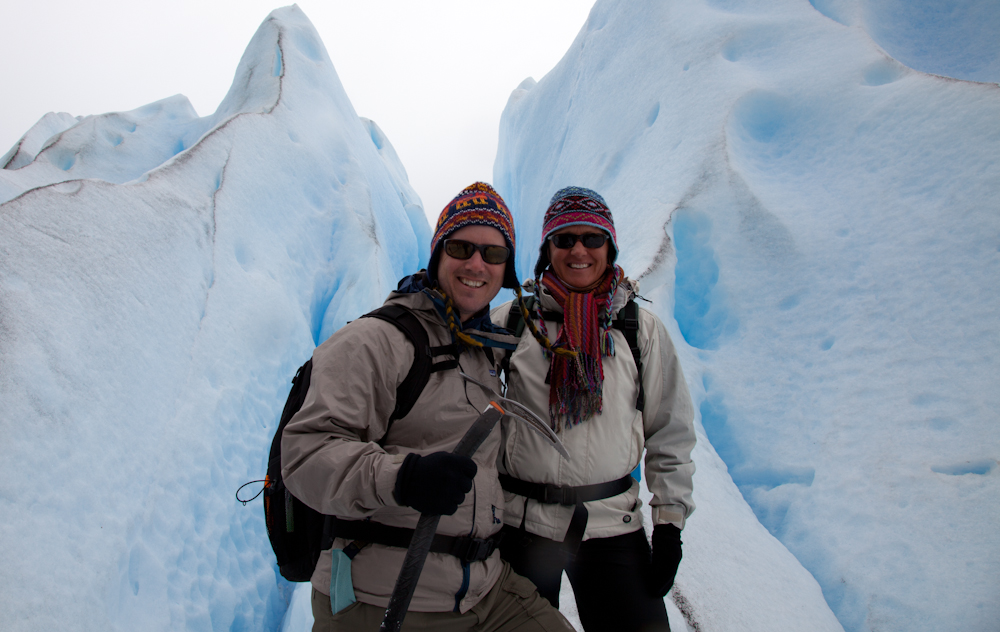
In the morning we walked along the walkways to observe the north end of the glacier. Every now and then we would hear an explosion as the glacier calved and huge chunks of ice cascaded to the lake below.  In the afternoon, we took a boat ride along the south face and then, after lunch, hiked with crampons for a couple of hours on the glacier itself. We continued to hear the glacier and see it calve several more times.  It was an amazing experience.

(Coming Soon) Video:  Walking on a glacier with crampons.

The Glaciarium Museum was very modern and the exhibits were well presented.  Since all exhibits and videos were offered in both Spanish and English, we learned a lot more about glaciers during the couple of hours we spent there. Located in an open field a few kilometres outside of town, the building rattled and shook under the force of the Patagonian wind – I thought the whole thing was sure to collapse at any moment.

We arrived in Puerto Natales on Sunday afternoon by bus, passing through the Argentina/Chile border once again without any problems.  We lucked in on our accommodations this time; a lovely B&B called Pire Mapu Cottage.  It is a little two bedroom guest house with two bathrooms, common kitchen and living area.  The owner, Brendon (an ex-Brit) and his wife, Fabiana (who is Chilean), have completely and lovingly renovated this house and just opened it up for business this season.  It is a charming home, with so much attention to detail that you feel like you’re visiting a friend’s cottage.  They have thought of everything to make their guests feel comfortable and at home, such as a well equipped kitchen, flat screen tv’s (with english stations) hanging on the walls of each bedroom, the fluffiest towels in South America, home baked cookies and tea to greet you. I could go on and on.  As soon as we stepped into the house, we booked a third night on the spot.  And we were tempted to stay even longer.

The service they offer is impeccable.  They picked us up at the bus station and bent over backwards making sure all our needs were taken care of throughout our three night stay.  For example, when Chris asked where he could find a barber in town, they insisted on driving us to the hair salon and Fabiana served as translator to explain the new hairdo Chris wanted.  I think he looks awfully cute in his new “do”.

Our cottage mates on the first night were a couple of ladies from the US (Deb and Lisa) who were heading out early in the morning to go trekking in Torres del Paine for two nights.  We really hit it off with them and decided to collaborate on dinner that night.  Well, actually they did all the grocery shopping and pretty much most of the cooking; Chris did the clean up.  I didn’t do a heck of a lot, but nobody seemed to mind.  We had a wonderful meal – those girls know how to cook – and great conversation over three bottles of Chilean wine.  We talked into the wee hours of the morning.  They were so relaxed about their trek; this was their fourth week of trekking in various parts of Patagonia so I guess they were pretty organized (unlike us).

Breaking bread (and drinking wine) with new friends.

The next night we had the cottage to ourselves, with the owners popping in now and then to check if we needed anything.  One more comment about the cottage – they served one of the best breakfasts we’ve enjoyed thus far in South America.  Home made bread, eggs, ham, cheese, juice, two types of brewed coffee, and toast.  It kept us going til late in the afternoon.

Typical breakfast at Pire Mapu with the
hosts at work in the kitchen behind me.

We have spent the last couple of days still working on the blog (I hate it when we get behind because it is so much work to get caught up) and getting ourselves organized for our big trek.  We have decided to do the “Circuit” which is an 8-day trek – on our own, no guide or group.  Not only did we not have any camping equipment with us, we have never done this kind of camping before.  We’ve camped a lot, but always car camping.  I have to admit, I’m a little nervous – especially with a very bad weather forecast for the next few days (blizzards and very high winds – yikes!).  I’m most perplexed about the food we need to bring.  With regards to the camping equipment, we had planned on renting it all here in town until we ran into a couple of Finnish lads who were selling all of their equipment on a street corner. They had bought it all two weeks earlier in Ushuaia and were now finished with their camping trip.  We bought the whole kit and caboodle – tent, sleeping bags and sleeping mats – for $100.  All we needed was the kitchen equipment. Now we’ll be able to do a couple of more hiking/camping trips in El Chalten and Bariloche before heading to Buenos Aires – that assumes, of course, we survive this one.

Busy blogging, and organizing the trek,
while enjoying home made beef stew.

This afternoon we heard the weather forecast for the next few days:  Bad.  Very bad.  And late this afternoon guess who showed up at the cottage?  Deb and Lisa returned one day early because the weather was so bad.  So who knows, we may be back sooner than we planned.

Optimistically, we’ll be off-line again for the next 8-9 days.  Wish us luck – I’m sure we’re going to need it!  Before I sign off, just a heads up that we’re almost finished Part 3 of the Antarctica post but I’m afraid we ran out of time and it will have to wait until we get back.  Chao!

Eight days of trekking food.
It was a challenge finding the right food for a trek here
so you just had to be creative when you don’t find things
like protein bars or healthy granola bars.  Chris loved
the improvisation with the snickers bars 🙂 


We’re at the end of the world in Ushuaia

Last Sunday we arrived in Ushuaia, the southern most city of South America nicknamed “the end of the world”.  This slogan is well used throughout the city, appearing on clothing, menus, tourist attractions, road signs, etc.

It took about ten hours by bus to travel from Punta Arenas.  While it was a long trip to take on a bus with regular seats (no camas or semi-camas), the scenery made the daytime trip worthwhile.  For many miles, the land was as flat as a pancake, with not a single tree in sight.  Large sheep ranches called “estancias” occupied the land, making me think that this might be what the Australian outback looks like (I’ll let you know if this is true next year when we travel there 🙂

As we approached Ushuaia, the landscape changed quite abruptly; the flat plains in Chile turned into rolling hills which then became snow-capped mountains. This was our first up-close glimpse of the Patagonia mountain range and we were duly impressed.  We passed through the Chile – Argentinian border easily; our bus driver collected our passports and we waited while he got them all stamped, both the exit stamp from Chile and the entry stamp into Argentina.  Not much in the way of security as the immigration/customs officials didn’t even see our faces or our baggage.

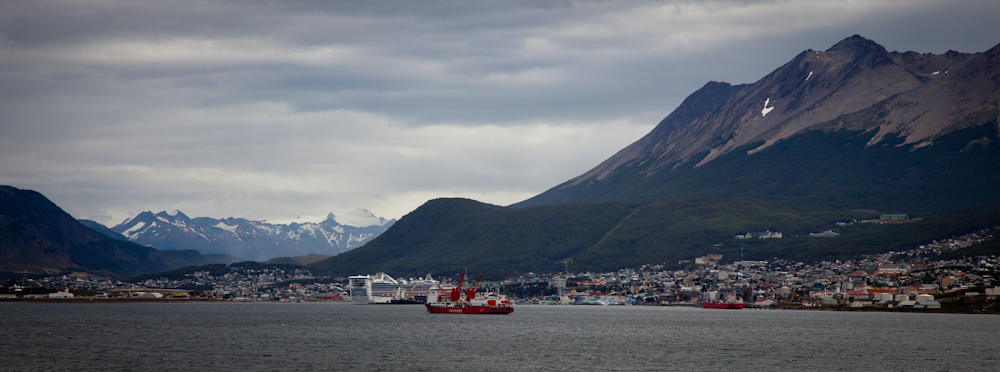
Ushuaia, a former penal colony, is a sizeable city with a population close to 60,000. The main economic activities of this region are fishing, natural gas and oil extraction, sheep farming and eco-tourism.  It has a very busy port servicing both shipping vessels and cruises.  This is summer time in Ushuaia and the peak of the tourist season and everything was priced accordingly, much to our dismay. The streets were crowded with tourists, and accommodations were filled to capacity, making it very difficult to secure a bed to sleep in. This city reminded us of Banff, especially the main street with lots of expensive clothing stores, souvenir shops, and restaurants.  It had a vacation resort feel to the place.

The town with Martial Glacier in the background.

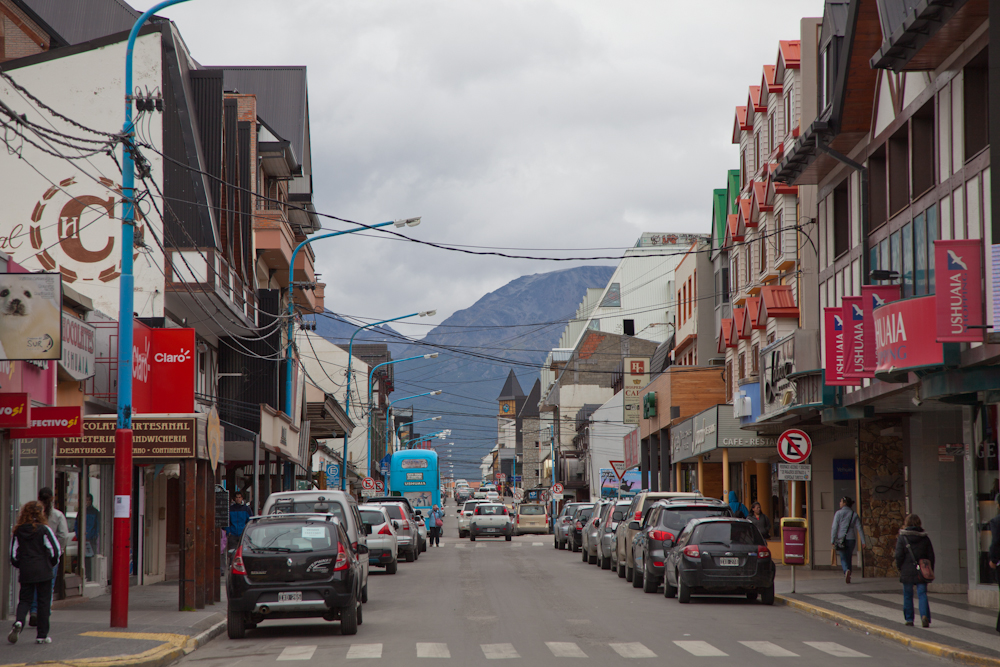
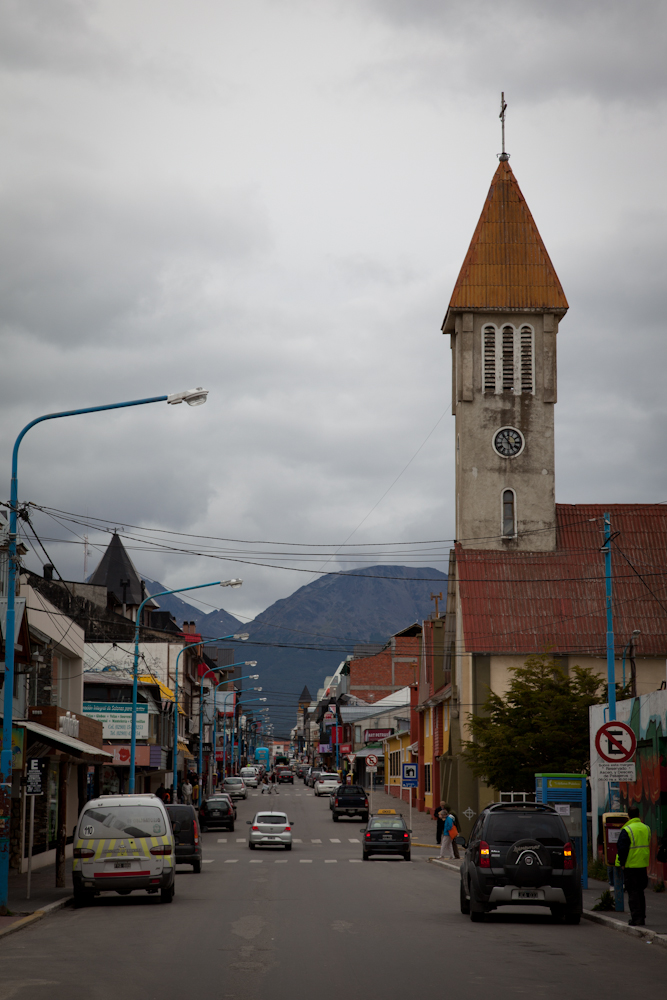
Downtown Ushuaia

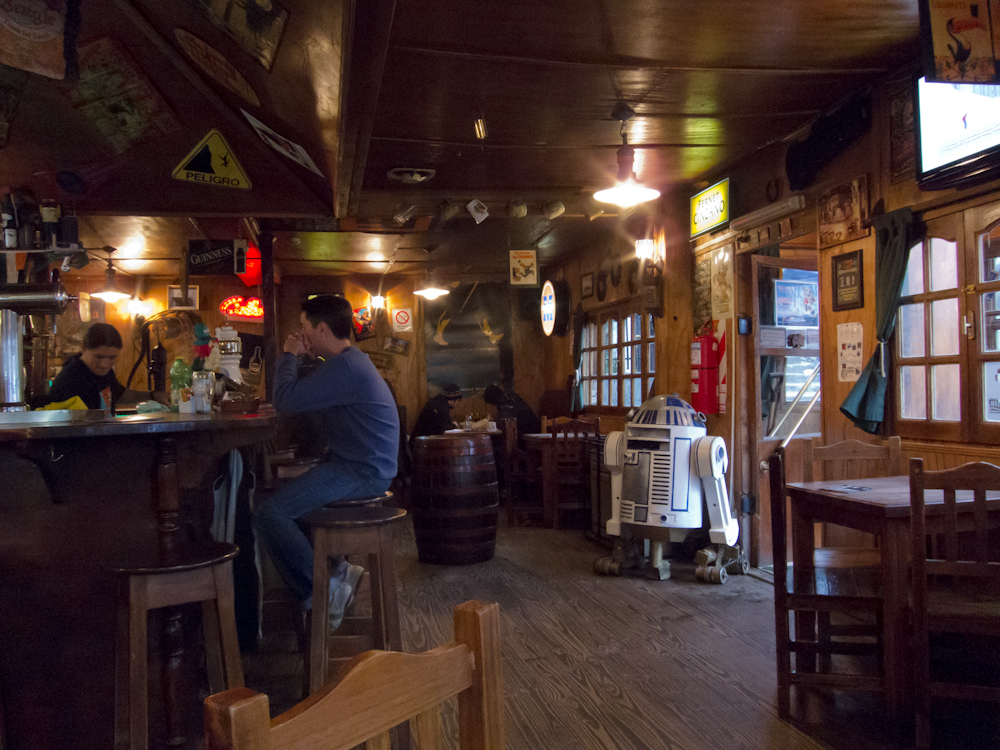
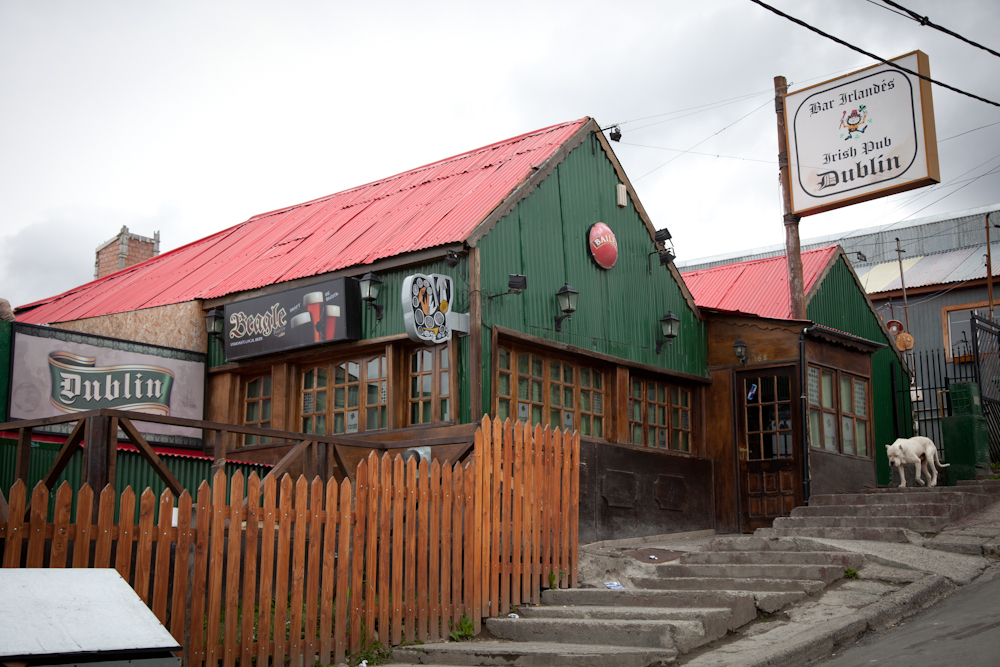
The Dubliln Irish Pub that did not serve Guinness – blasphemy!

Outside view of the Dublin Pub – one of the few
restaurants with reasonable prices.  The homemade
draft was hit or miss too. 

Argentinians love their meat.  A BBQ spit was a common
sight in the front window of restaurants.  We sampled
this type of cuisine at an all you can eat buffet at
La Estancia one night.  The meat was  good (lamb and beef) 
but the rest of the food was mediocre. 

Throughout the week, we stayed in three different places out of necessity. First we stayed at the Drake Hostel which didn’t overly impress us, especially the fact that there was no housekeeping during the three days we were there.  Next was a night in a private home, a neighbour of the bed and breakfast, La Maison de Ushaia, where we spent our last two nights. The private home gave us a bed to sleep in, but the home reminded me of someone who had a serious hoarding issue.  I was glad it was only one night.  The bed and breakfast was lovely although the entire household (4 generations of women) was getting over nasty colds which we hope we don’t catch.  We’re not big fans of bed and breakfasts mainly because of the lack of privacy and this one was no exception.  Still, the owner’s daughter, Soulange, went out of her way to make us feel comfortable, and to give information about things to do and where to eat.  She even satisfied Chris’ curiosity about ritual of matte when she showed us how this peculiar tea is prepared and then how the communal cup is passed around the table.  It’s a very common Argentinian ritual, reminding me of the British and their afternoon tea.

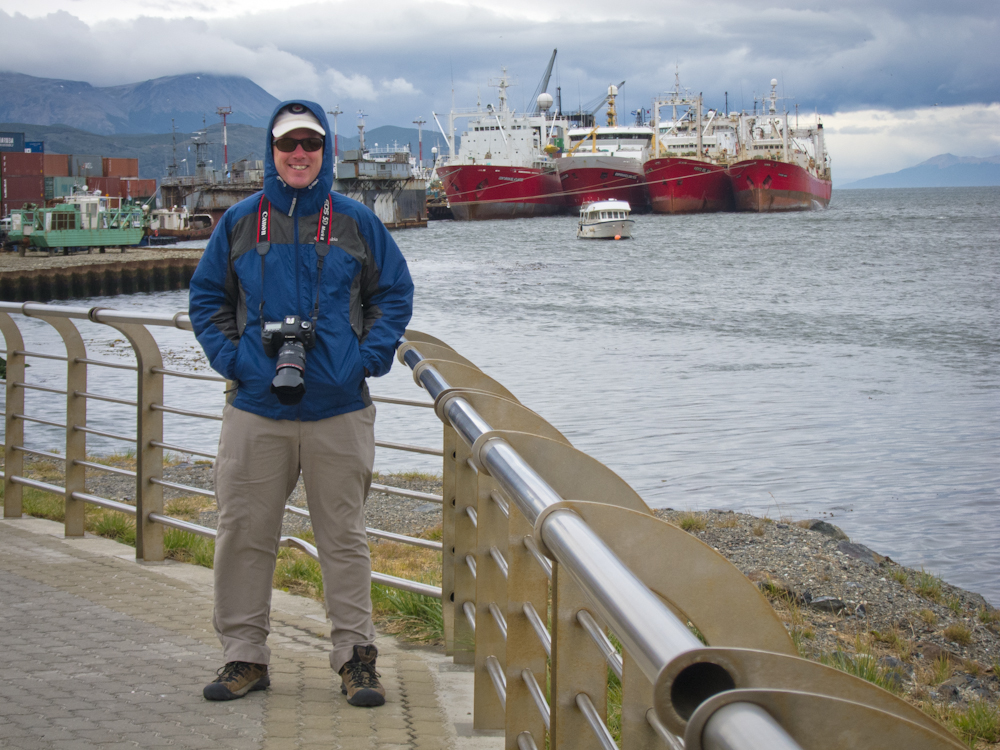
Bundled up down at the port.  It was interesting watching the ships come
and go each day – both the large cruise ships making a port of call in Ushuaia and
the much smaller Antarctica expedition ships beginning their cruises from here. 

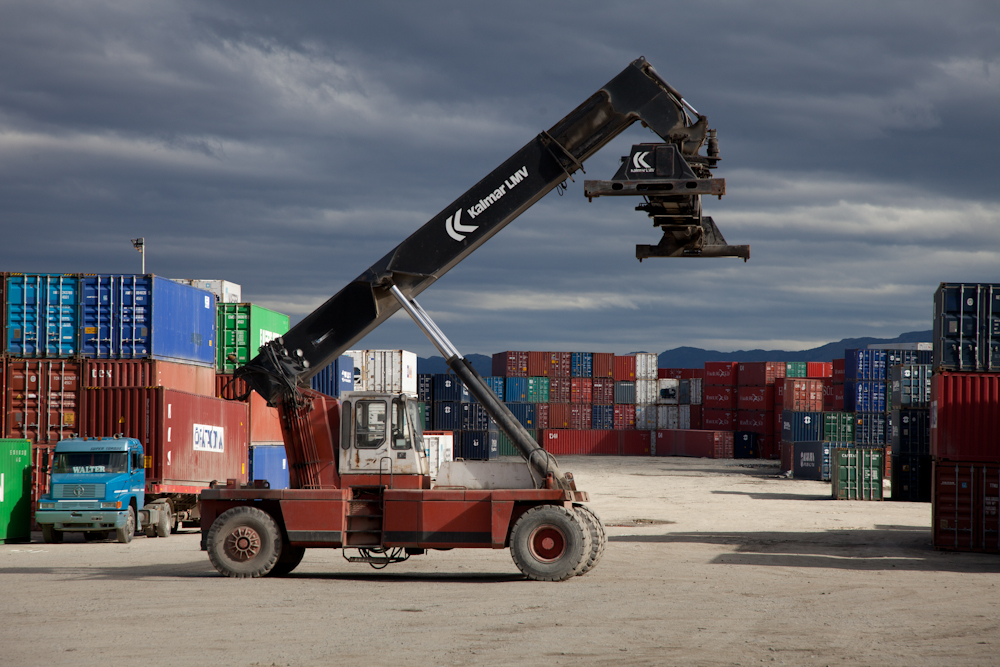
So many shipping containers.

We were quite taken aback by the ridiculous prices being extorted from tourists. Here’s some examples: $25US for two small loads of laundry; $45US per person to hike in the Tierra del Fuego National Park (transportation and park entrance fee), $4US for a thimble full of coffee, $12US for breakfast (coffee, juice and toast) , $12US for half a ham and cheese sandwich, $75US and up for a hostel room (double with shared bathroom).  Just for the fun of it, Chris priced his camera in a local store and was appalled to see it going for just shy of twice the Canadian retail price.

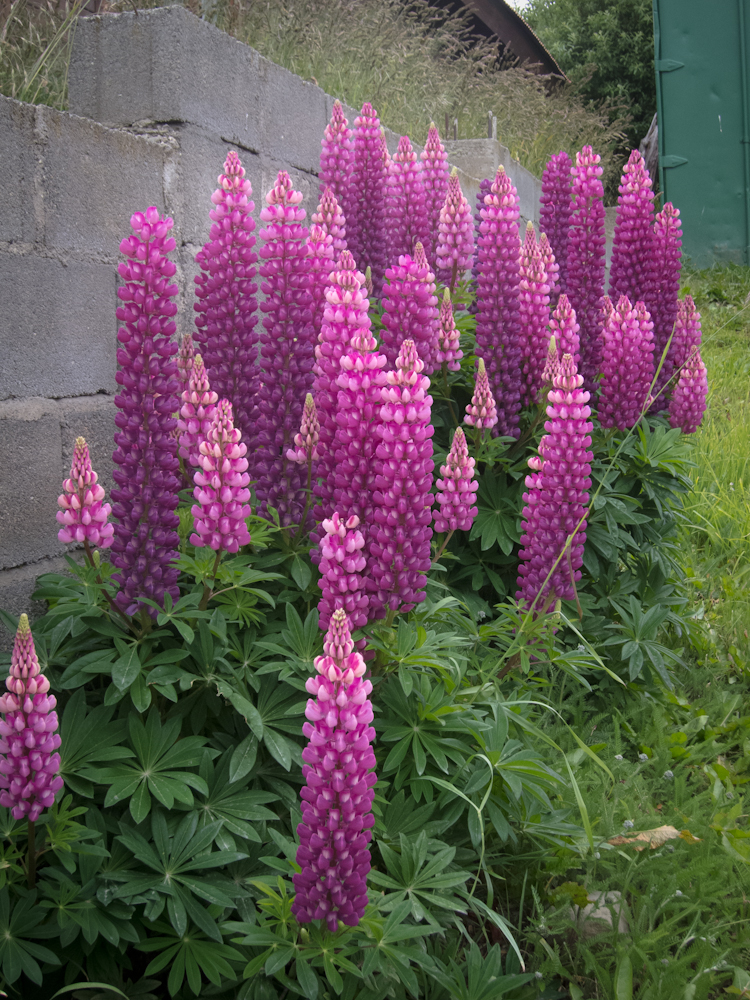
Brilliant lupins of every imaginable colour grow in abundance.

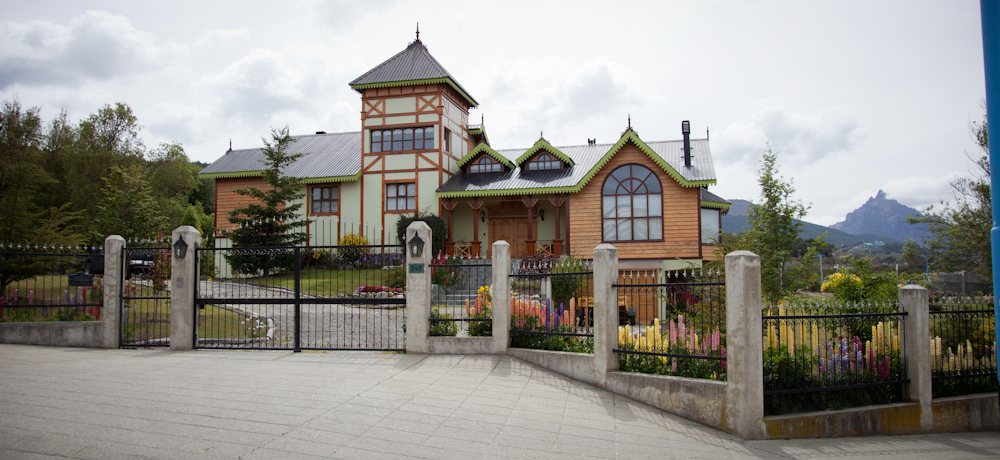
One of the prettiest houses and gardens we saw in town,
just a few houses down from our B&B. 

We came to Ushuaia with the desire to find a last minute deal on a 10 or 11 day cruise to Antarctica. These cruises are ridiculously priced and even the last minute prices are outrageous in our view.  But, we rationalized the expense thinking that it was unlikely we would ever be here again, and we both really wanted to see Antarctica.  So when we arrived, the first order of business was to find a cruise.  I had already sent out about a dozen or so emails a few days earlier to tour agencies in Ushuaia enquiring about availability on upcoming ships.  We were discouraged to learn that all the 10-11 day cruises for the next three weeks were completely filled and most tour companies had waiting lists of 5-6 people for each of these ships. It wasn’t looking good.

We then learned that there were some deals on two ships leaving this week but they had longer itineraries (19 days) which included stops on the Falkland Islands, Georgia Islands and Antarctica.  Of course, longer cruises means larger price tags.  We debated our options – long cruise leaving this week, short cruise leaving in 3 weeks, or no cruise at all.  In the end, we booked ourselves on the 112-passenger Sea Spirit with Quark Expeditions for a 19 day cruise.  All week, I’ve been giddy with anticipation for this cruise. We leave tomorrow – hopefully we have some internet access so I can keep the blog up to date – otherwise you’ll hear from us in about 3 weeks.


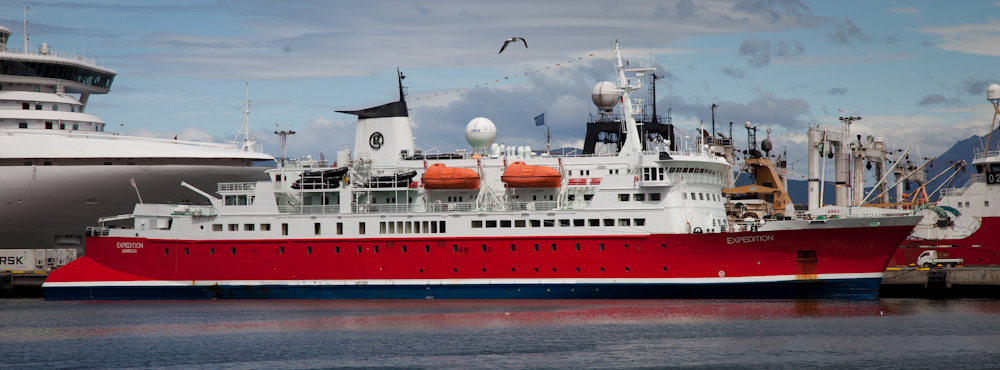
This Gap cruise left yesterday – this was the other 
19 day cruise available this week.  Hope we made the right choice. 

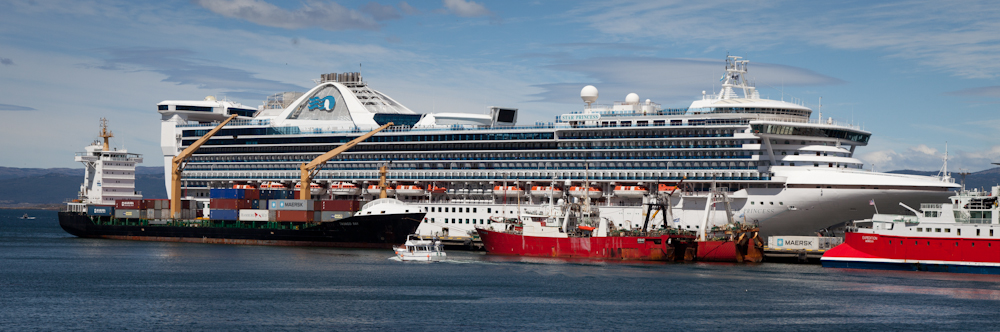
The Star Princess cruise ship – look at the size difference
compared to the Gap expedition ship to the right.  The
large cruise ships don’t stop in Antarctica for
environmental reasons – they just pass by it.

It’s a busy shipping port too. 

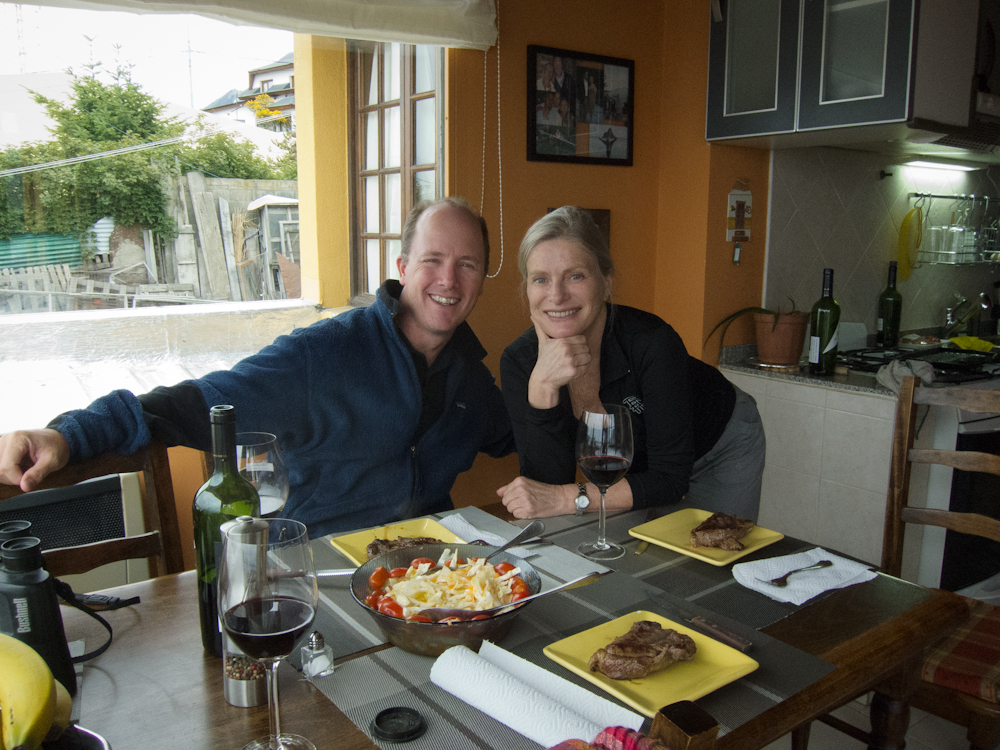
We again experienced the kindness of strangers here in Ushuaia.  Alicia was the agent through whom we negotiated our cruise.  When we met her at her home mid-week to finalize the paperwork, we got to know her story a little over a bottle of Argentinian wine.  We were immediately impressed with how she came to Ushuaia ten years ago and built up her business and her reputation from scratch. She’s a real go-getter, very genuine, modest and down to earth. We found her to be inspiring.  I think she was equally impressed with our story.  It’s funny how you just hit it off with some people.  Well, after completing the paperwork, and the first bottle of wine, she spontaneously invited us to stay for dinner. As she prepared the steak, and I made a salad, Chris cracked open the second bottle of wine.  It was our first home made dinner, in somebody’s home since we left Canada. We really appreciated her hospitality.

Chris and Alicia in her kitchen at dinner time.

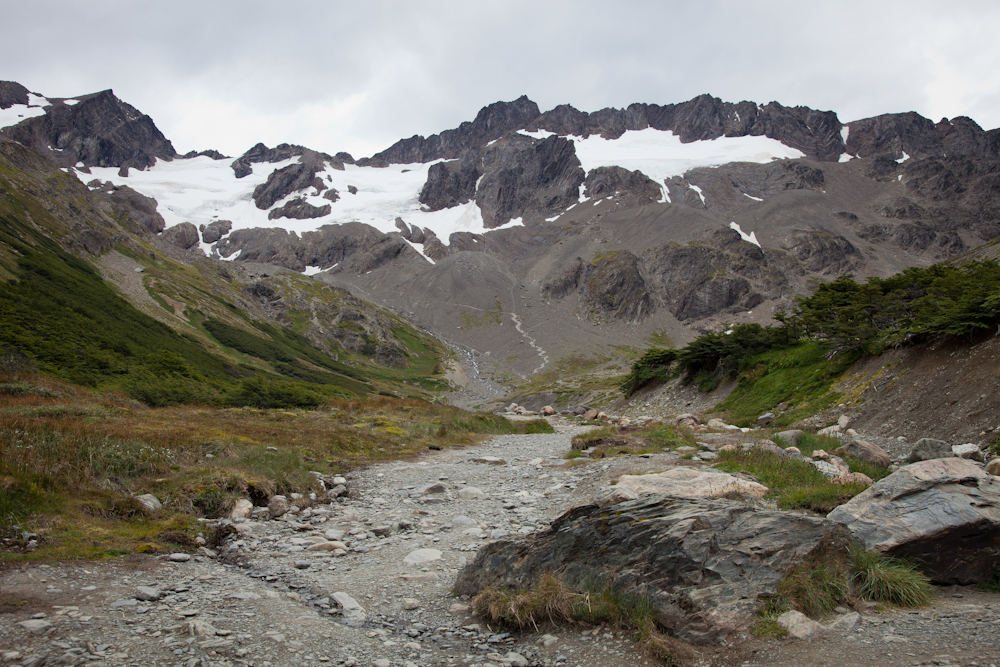
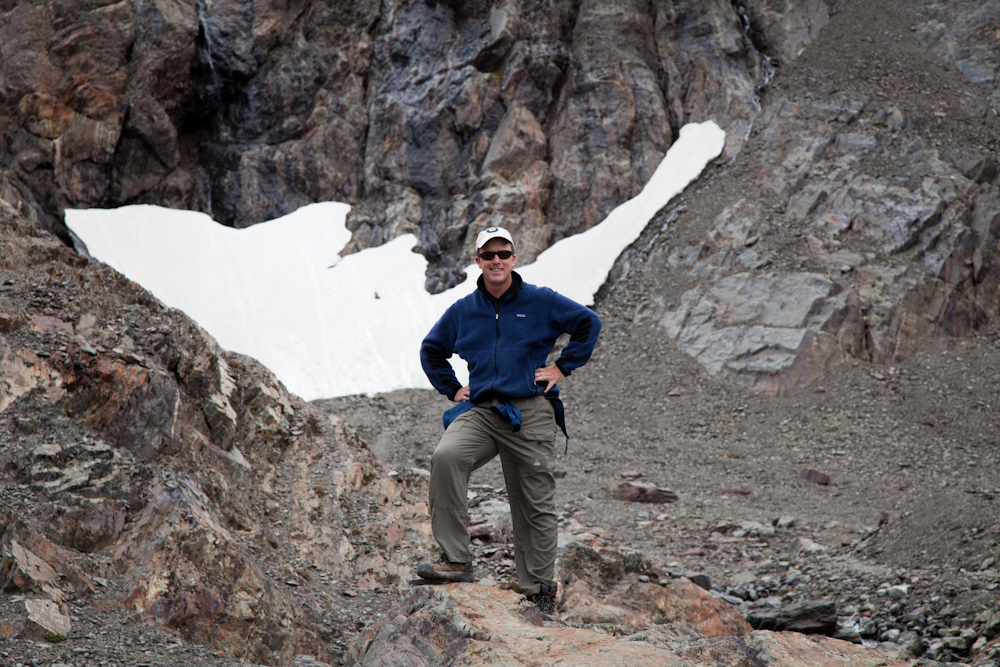
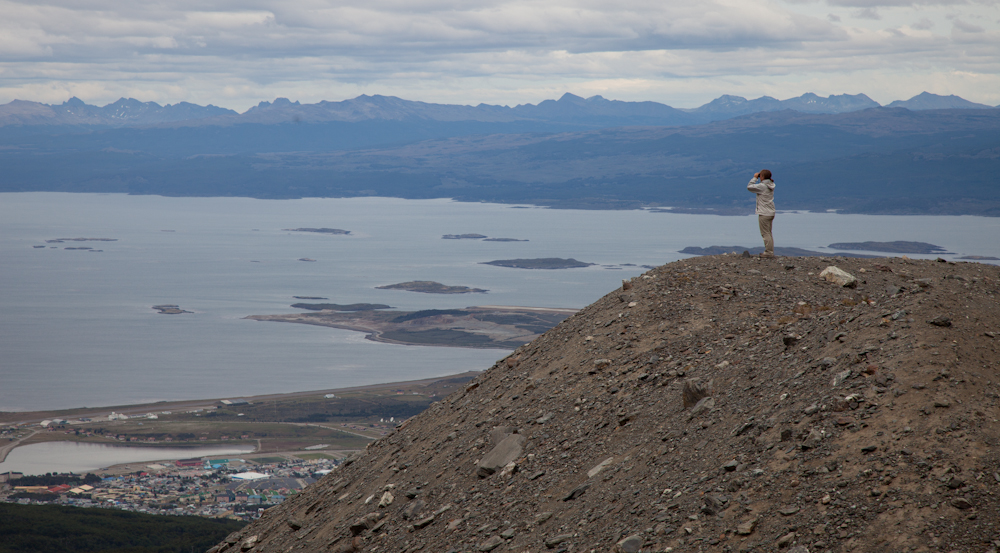
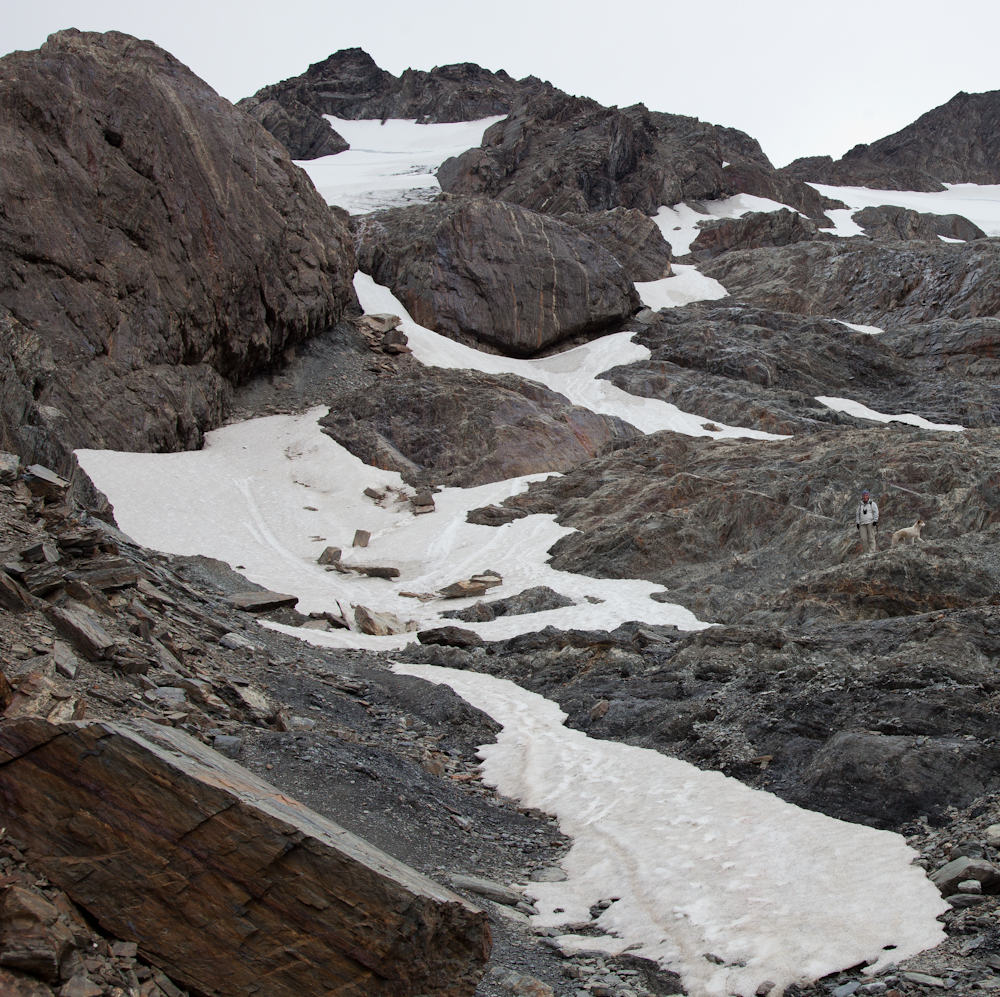
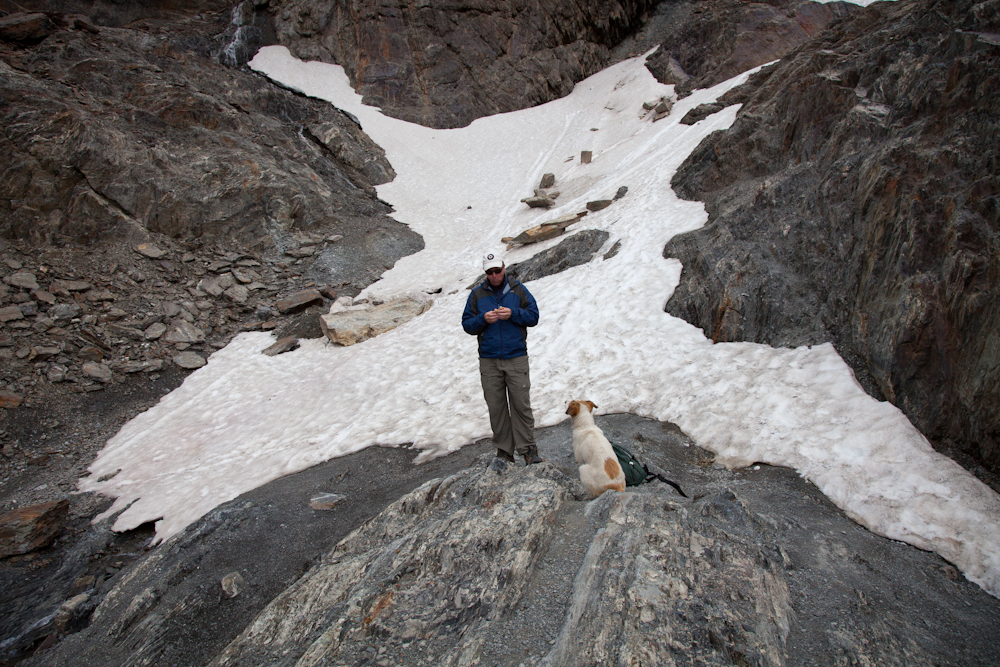
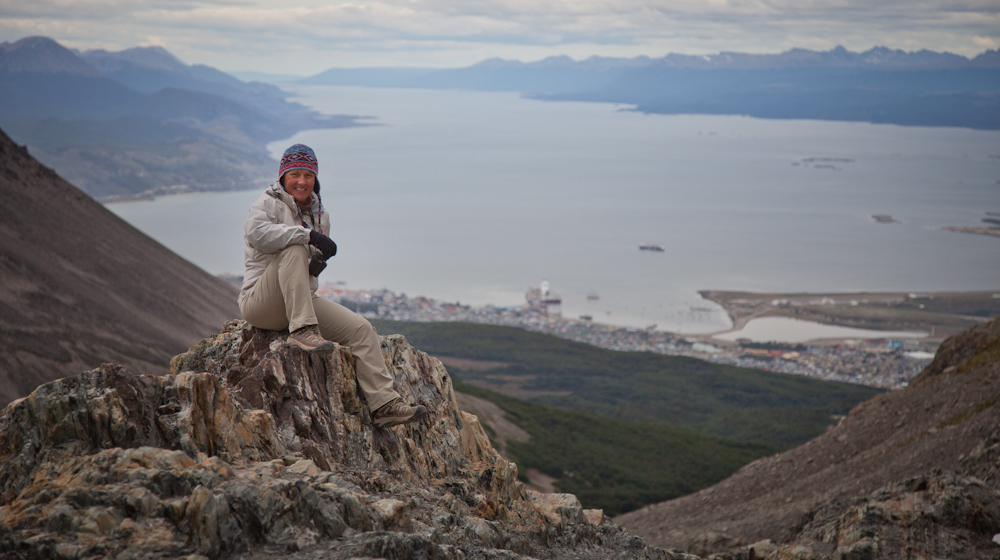
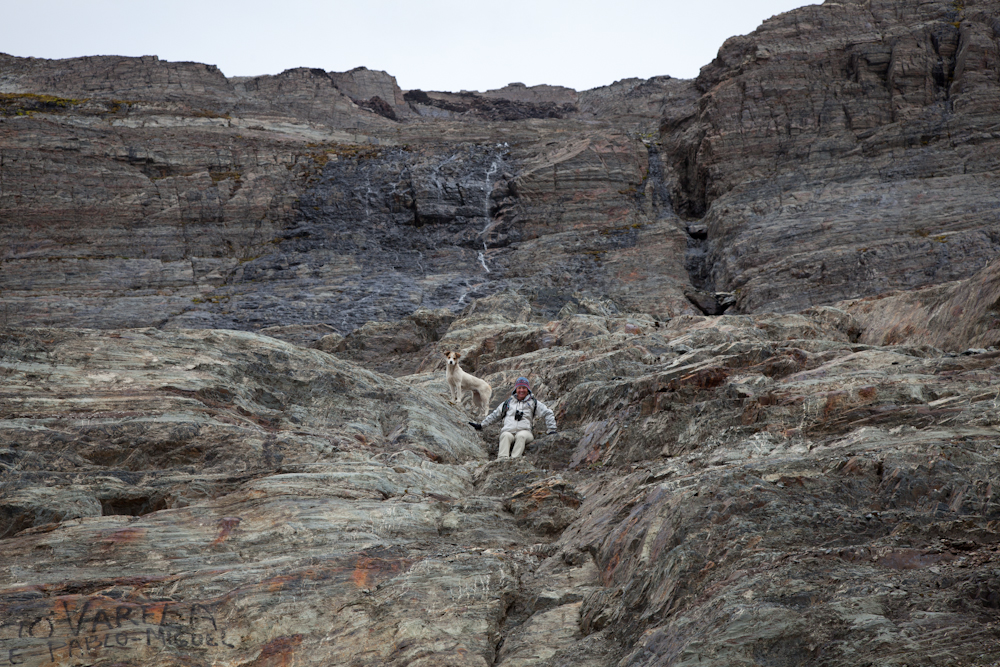
Besides securing the cruise, and draining our bank account, we’ve just been hanging around in Ushuaia this week, taking it easy and getting to know the town and area a little bit. One day we hiked to Martial Glacier which gave us another good work out.  The hike wasn’t particularly challenging or strenuous, but it was all up hill and then down hill as we were climbing yet another mountain.  We felt our legs for a few days afterwards.  At the glacier, we were rewarded with spectacular views of Ushuaia and the Beagle Channel far below as well as the surrounding rugged mountains.  Once again, we had a canine companion all the way up and all the way down….he was a cute mutt that reminded me of a dog my brother David once had. I don’t know what it is, but we seem to attract dogs when we go hiking. There were plenty of other people on the trail, but this dog singled us out and remained with us for our entire hike.  Of course, we shared our lunch with him – so maybe he just knew how to pick ’em.

On the way up to the glacier, in the distance.

Still not there….the hard part was yet to come.

We reached the snow, but the glacier was still above us.

Checking out the view of the Beagle Channel and Ushuaia below.

Where’s Christina?  At the glacier, with our new canine friend.

Having a bite to eat.  How could we resist sharing our lunch
with our polite and patient friend? 

Can you believe this view?

Our faithful guide leading the way up.

Typical mountain flora clinging to the rocks.

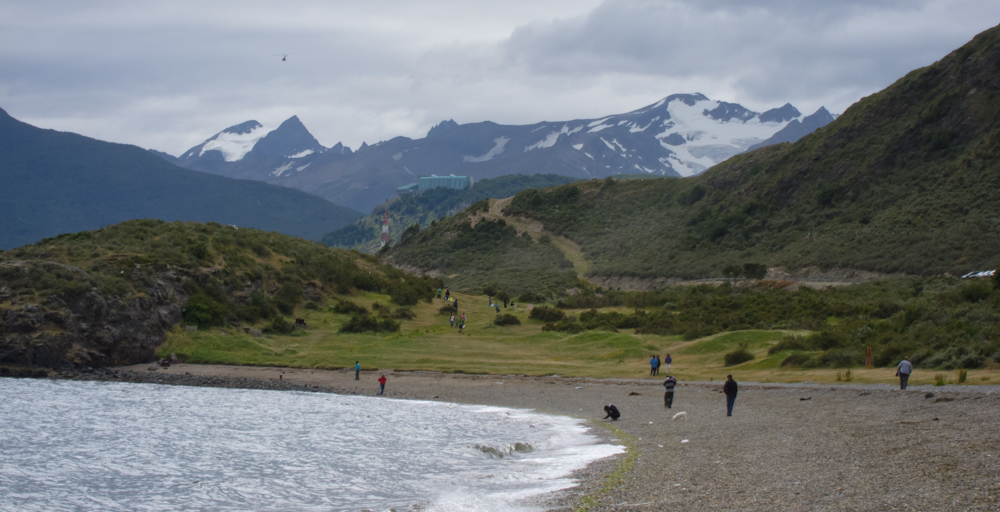
Another day, we went to Playa Larga, a lovely beach  along the Beagle Channel about 4 km east of town. We took the local bus there, but since we didn’t think to ask about getting back, we couldn’t figure out where the bus stop was and had to walk most of the way back into town (after already hiking for 3 hours) until we were able to flag down a taxi.  Mental note:  ask for directions for both ways next time!

Playa Larga – can you see the helicopter that passed by?

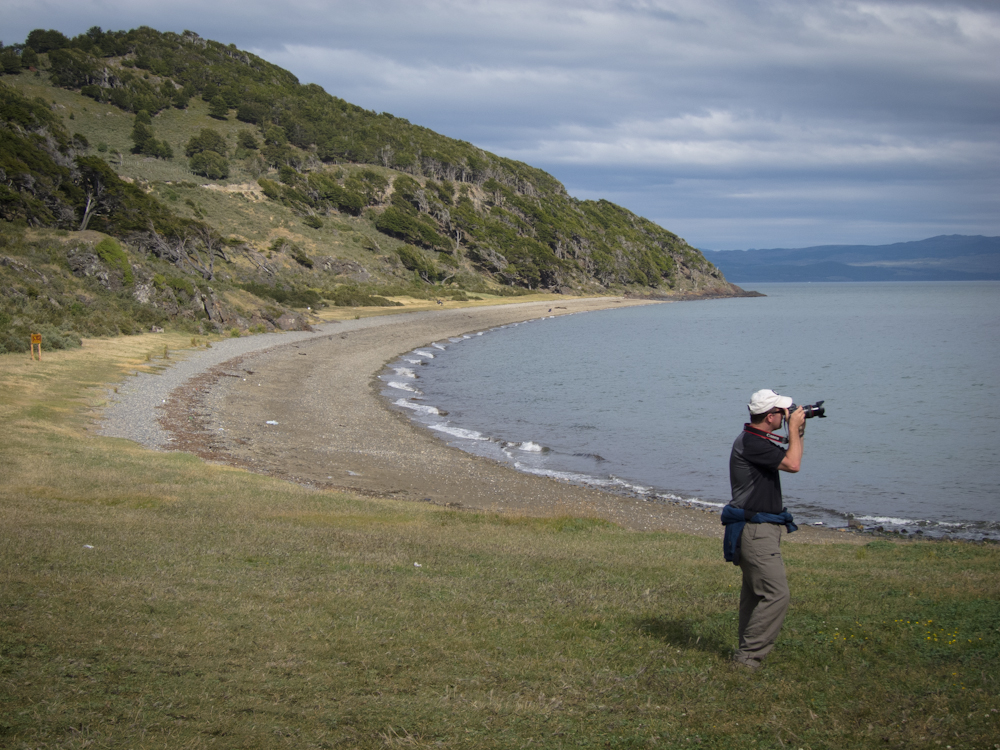
Chris taking a photo of a gray fox (below).

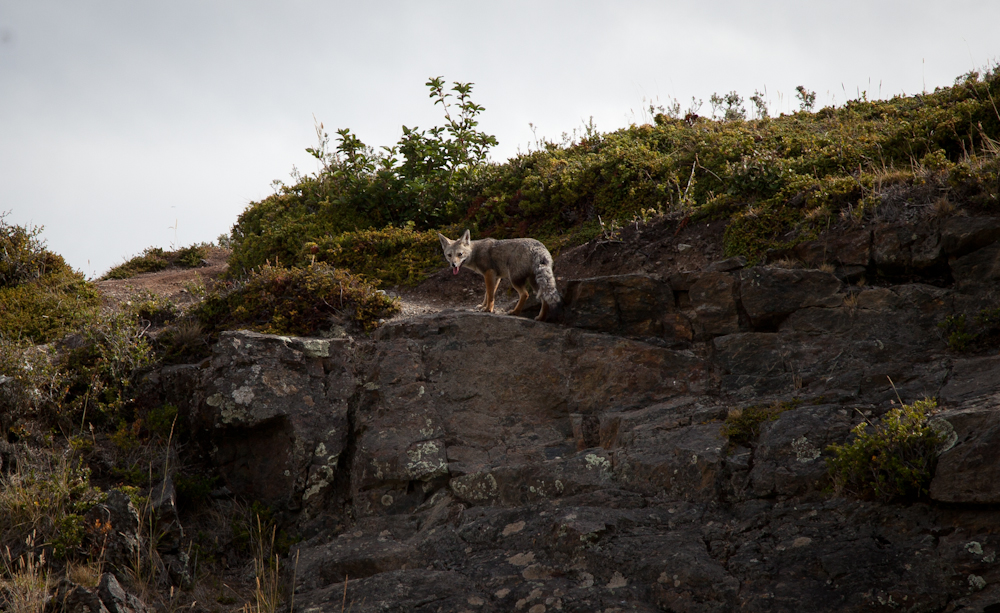
This gray fox was the only animal we saw on all our hikes.

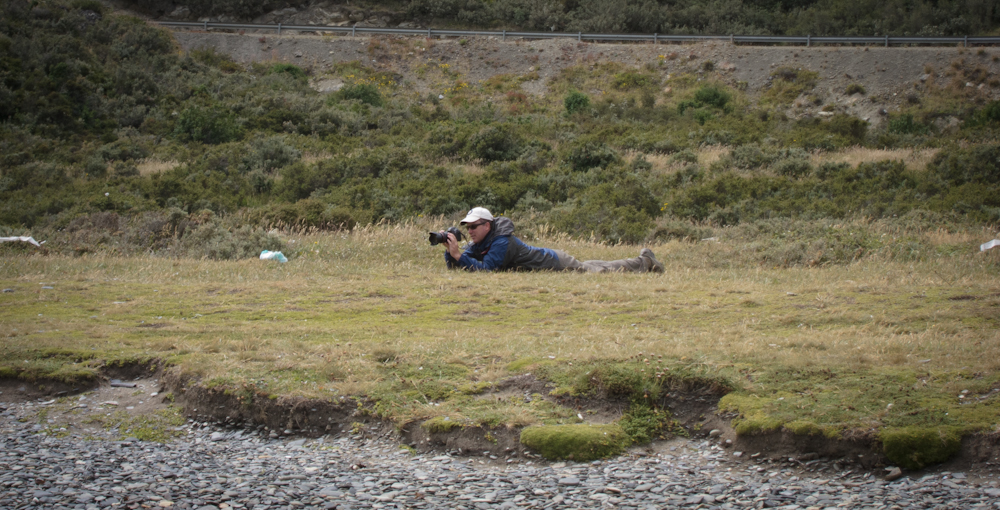
Photographer at work but what has captured his rapt attention?
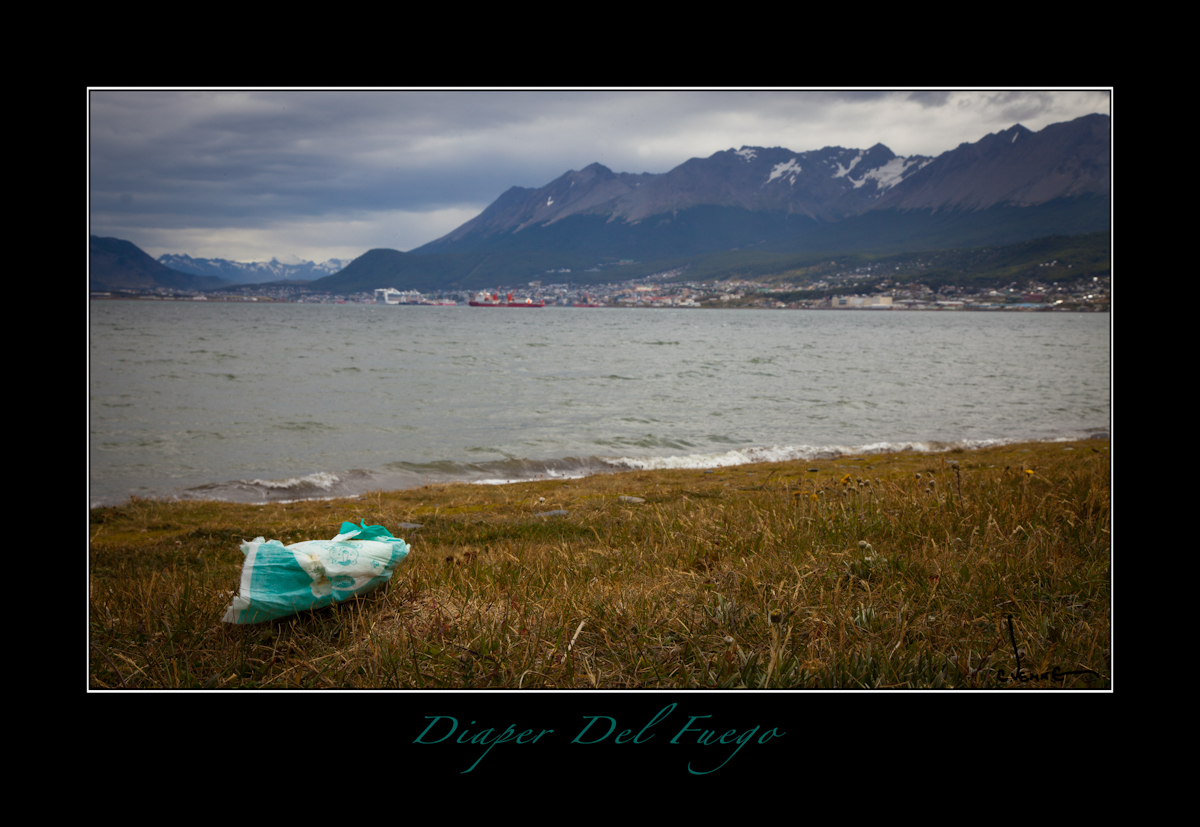
Before I answer I must tell you a story.  A few years ago, we were having dinner with our old neighbours Chris and Nancy when my Chris shared a pet peeve with us:  why do people leave dirty diapers lying around all over the place? All three of us looked at Chris like he was nuts. We had no idea what he was talking about. But then, the next time we got together, Nancy and her Chris both remarked how they too were now seeing dirty diapers everywhere.  And even I have to admit, I too have seen many dirty diapers discarded in the strangest of places every since Chris alerted me to this phenomenon. Throughout South America, we have seen plenty of dirty diapers but I think the weirdest place was in Quito, Ecuador where we noticed a dirty diaper wedged in a tree. Who does that?? Of course, Chris now takes a picture every time he sees a dirty diaper in a weird place and sends it to our friends. Sure enough, while walking along this beach, we saw yet another dirty diaper on the ground.  There was no other garbage anywhere on the beach – just a single, dirty diaper.

 Chris takes his dirty diaper pictures quite seriously as you can see.  Who knows, maybe Chris will compile a coffee table book on the subject – anyone have any suggestions for a title?

View of Ushuaia from the beach.

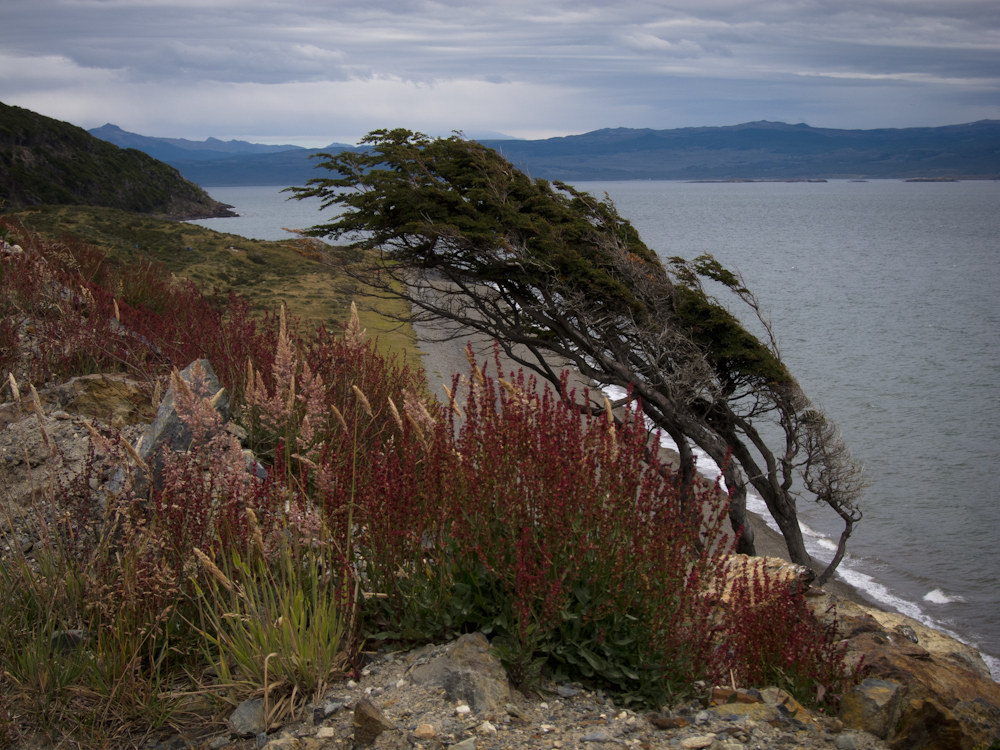
Which direction does the wind blow?

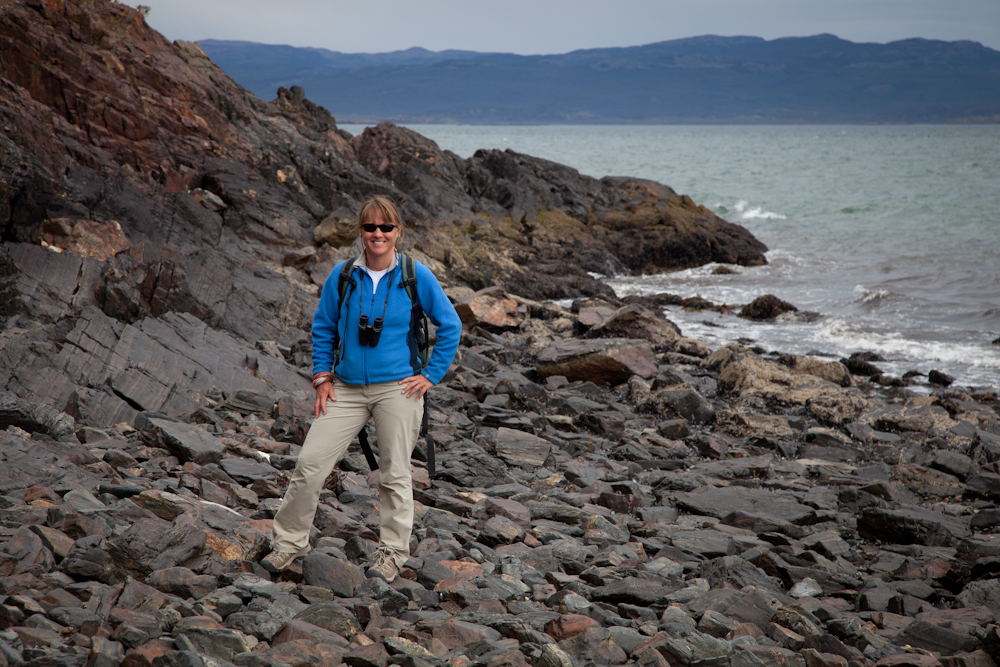
Hiking along the shores of the Beagle Channel, one of
three navigable passages around South America between
the Pacific and the Atlantic oceans.  The other two are
the Straits of Magellan and the Drake Passage.

 Enjoying the moment, and the view!

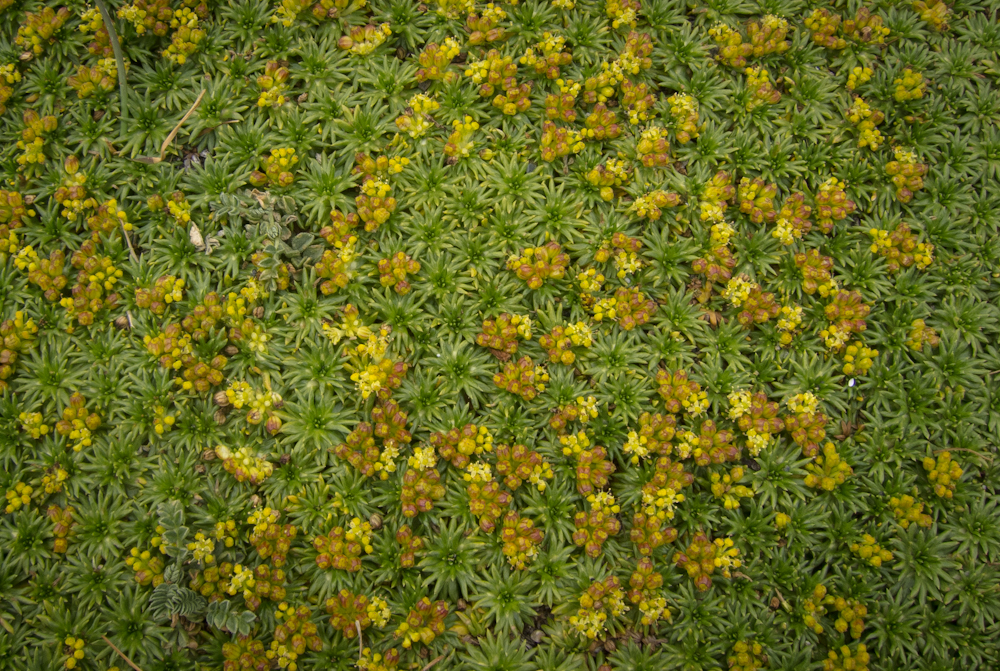
Moss-like plant growing on the rocks near the shore.

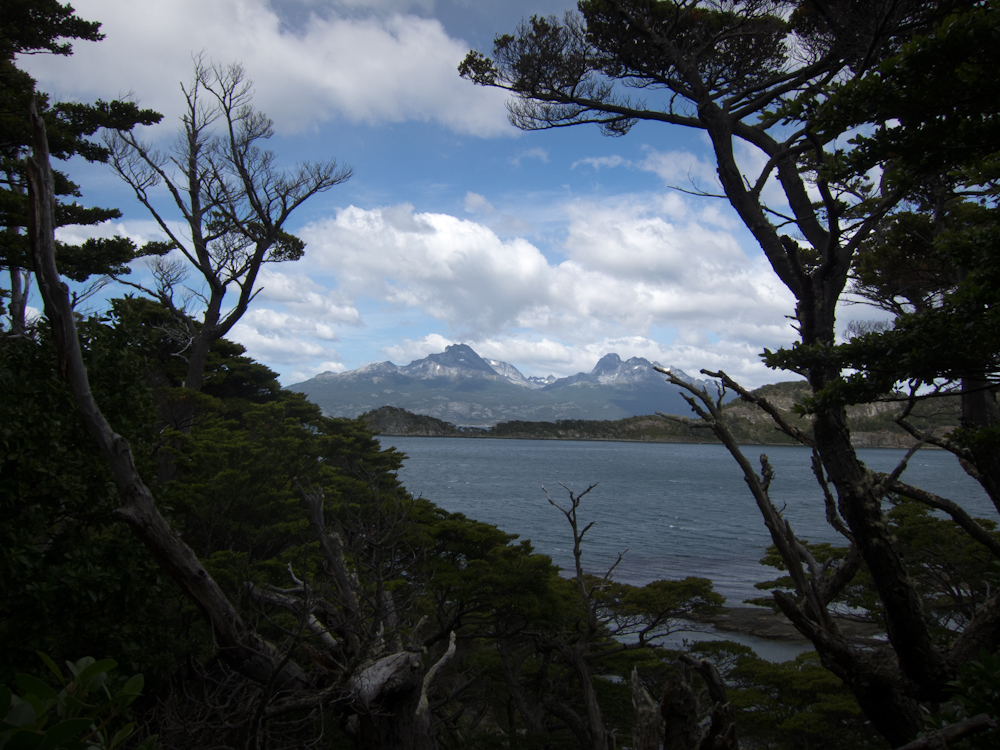
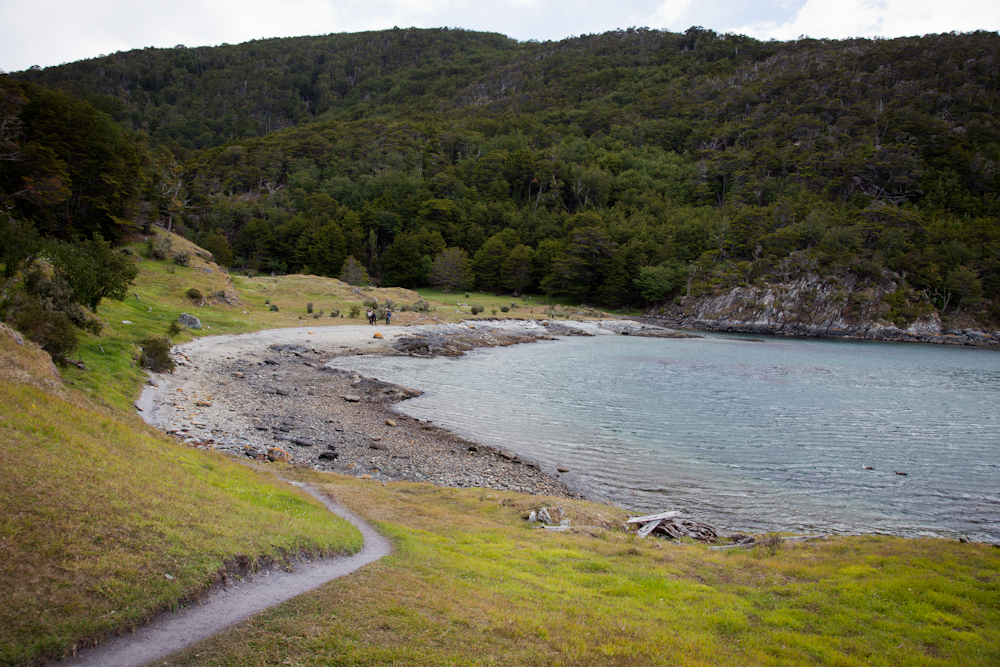
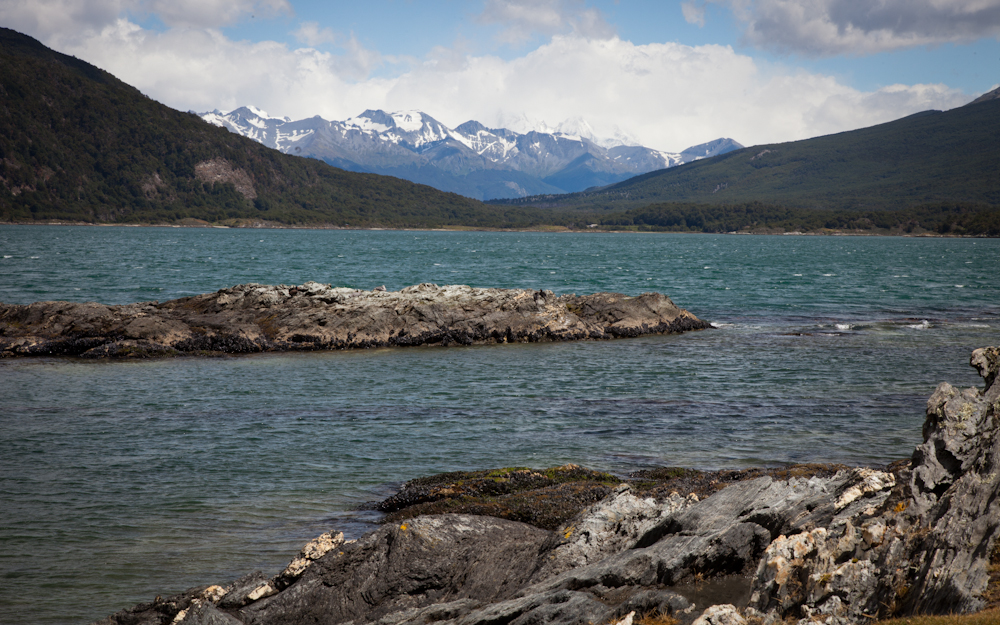
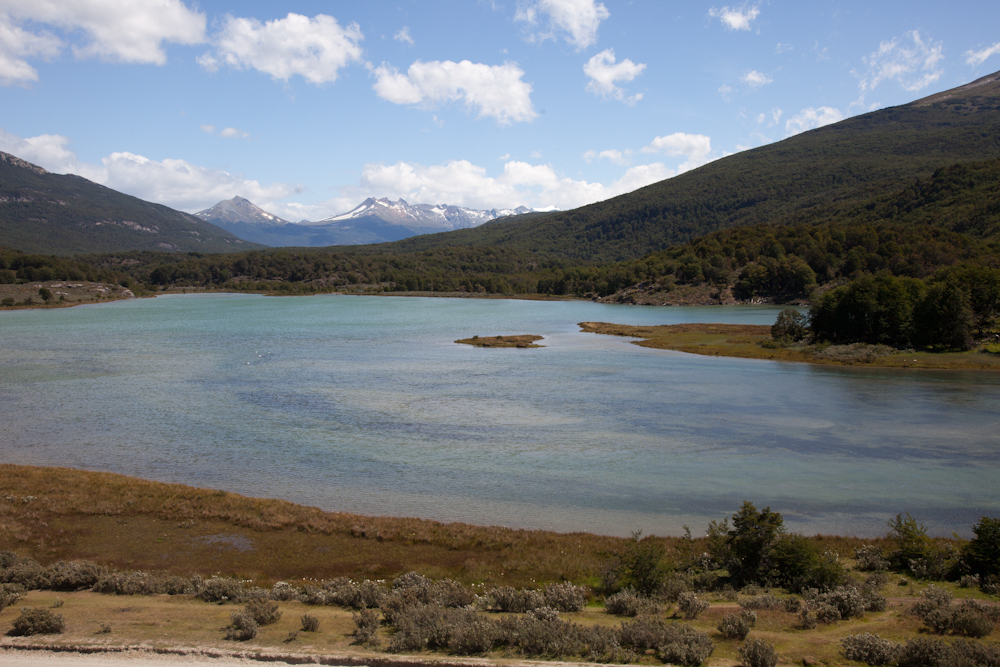
Finally, we spent an afternoon hiking in Tierra del Fuego National Park, the southern most national park in the world.  Once we recovered from the shock of the cost of getting there (85 pesos each, about $21.25US) and the daily park entrance fee (also 85 pesos each), we did enjoy hiking the Costera trail that followed the coastline of the Beagle Channel for about 8 km.  We saw some beautiful and varied scenery of majestic, snow-capped mountains, dense forest, pretty meadows and rugged beaches.

The weather in Ushuaia is quite unpredictable.  We were surprised with the mild temperatures when we arrived, probably mid-teens during the day.  Most days have been a mix of sun and cloud, some days more windy than others.  The air is cool so when the sun is not out and the wind picks up, it’s time to put on the wooly hat and mitts, and add a layer or two.  When hiking, we were always prepared for any type of weather and it was not uncommon to strip down to our t-shirts only to bundle ourselves up with fleece, windbreaker, hats and gloves all within a couple of hours.  It rained hard one night, and we’ve had some very slight, barely noticeable sprinklings of rain during the day.  Again, we’ve been lucky as far as the weather is concerned.  We’re also enjoying the long days.  As I finish off this post at 10:45 pm, the sun is just starting to set.  It seems our bodies have adjusted accordingly and we are going to bed much later and sleeping in each morning until around 9:00 which is quite late for us.  It’s strange how daylight affects your natural rhythms.  We’re even eating dinner later, 9:00 or later each night.  But that may just be because we’re in Argentina where many restaurants close after lunch and don’t even open until 8:00 at night.

Tomorrow we board the Sea Spirit and we’re off to sea for 19 days of adventure.  I hope we have calm seas – well maybe one storm just to see what it’s like – and clear weather.

Sea SpiritSea Spirit with Quark Expeditions
http://www.quarkexpeditions.com/sea-spirit