christina

Beginner’s luck

On Sunday, Chris and I went on a diving excursion to Isla de la Plata, also known as “Poor Man’s Galapagos”.  This was the primary reason why we came to Puerto Lopez.  We wanted to get a couple of dives under our belt before we went to the Galapagos.  After talking to the various diving operators in town, we settled on Exlporamar, a PADI certified shop that had good reviews online.  Luckily for us, they already had a dive scheduled for Sunday with space available.

We arrived at the dive shop before 9:00 Sunday morning to get sized up for our gear.  We were really happy to see all the gear was in top notch, nearly new condition.  And we met our guide who spoke excellent English.  We were still feeling a little nervous about this dive since this was going to be our first dives after getting our open water certification, and our first dives in the ocean.  We were joined by four Ecuadorians – Eduardo and Paola, and Eustava and Naty who were doing the last two open dives for their certification.  They all spoke excellent English which really helped us get to know each other.  We learned that Paola had just found out she was pregnant with their first child and so could not complete her open water dives this weekend.

As we made our way to the boat in the bay, we passed by the local fishermen who were hauling in their early morning catch which included a hammerhead shark, sword fish, and a few other sharks.  In the photo to the left, Paola is in the foreground not looking too impressed at the sight of the dead hammerhead shark at her feet; in the background her husband Eduardo is taking a photo of another shark, and Eustava and Naty are looking on.

Once on the boat, we all settled in for the one hour trip to Isla de la Plata which is a small island off the coast of Manabí, and is part of Parque Nacional Machalilla.  There is a large diversity of animal species here; for example, several species of booby, including the Blue-footed booby, Red-footed booby, and the Nazca booby.  Another species found here is the South American sea lion. Dolphins, like the Pantropical spotted dolphin can be found in the water close by.

As we approached the island, we were required to stop at the park office to pay the park entrance fee: $2.00 per person.  If we were landing on the island, the fee would have been $15.00 per person.  I must admit, the island wasn’t much to look at from this vantage point – very similar to the coast line, dry forest everywhere.

We had two dives planned for the day.  Our diving instructor, Juam Manuel, gave us the orientation for the first dive and then we suited up and got into the water.  This was my first time doing a backward roll off the side of a boat and I managed it with no problem.  However, once in the water, I felt a little anxious and needed a few moments to relax my breathing.  We then descended to a depth of about 20 feet.  We stayed close to our guide, who pointed out interesting fish that often were well camouflaged on the ocean floor.   Suddenly, right in front of us loomed a huge creature – we later learned it was a Manta Ray, approximately 5.5 metres in size!  Juam also saw a hammerhead shark in the distance – the first he has seen in this location.  Unfortunately, we did not see the shark.  We were very lucky to see the Manta Ray – Juam said he made over 300 dives before he saw one.  Beginner’s luck.  Check out this Youtube video that someone took while diving in the same location – it’ll give you an appreciation of the size and beauty of a Manta Ray.

We were amazed by the sea life as we continued to a depth of 60 feet – the maximum depth allowed with our diving certification.  At that depth, we passed through a thermocline – a distinct change in water temperature.  The water became much clearer and felt frigid even though it was only 3 degrees colder.  During this dive, I struggled with my buoyancy which is a skill I really need to work on.  It comes with experience I’ve been told.  We depleted our air supply in less than 30 minutes – typical for new divers.

Between dives, we snacked on fruit and muffins, along with water and hot cinnamon tea.  The tea was very soothing and restorative as I was feeling a little nauseous after the first dive. 


We then headed to the second dive site, had the site orientation, suited up and got back into the water.  This time I felt much more confident, no nervousness at all.  The second dive followed a coral reef which presented a different variety of sea life.  We saw huge sea turtles on this dive, and swam through large schools of colorful fish.  It was quite amazing.  I had much better buoyancy control on this dive which was a good thing as I was very careful not to inadvertently touch any of the fragile coral reef.  Again, we depleted our air supply within a half hour, but by then we were ready to surface.  There was some current and surge on this dive, and we found it to be a little tiring as we swam hard against it trying to keep up with Juam who made it look so easy.

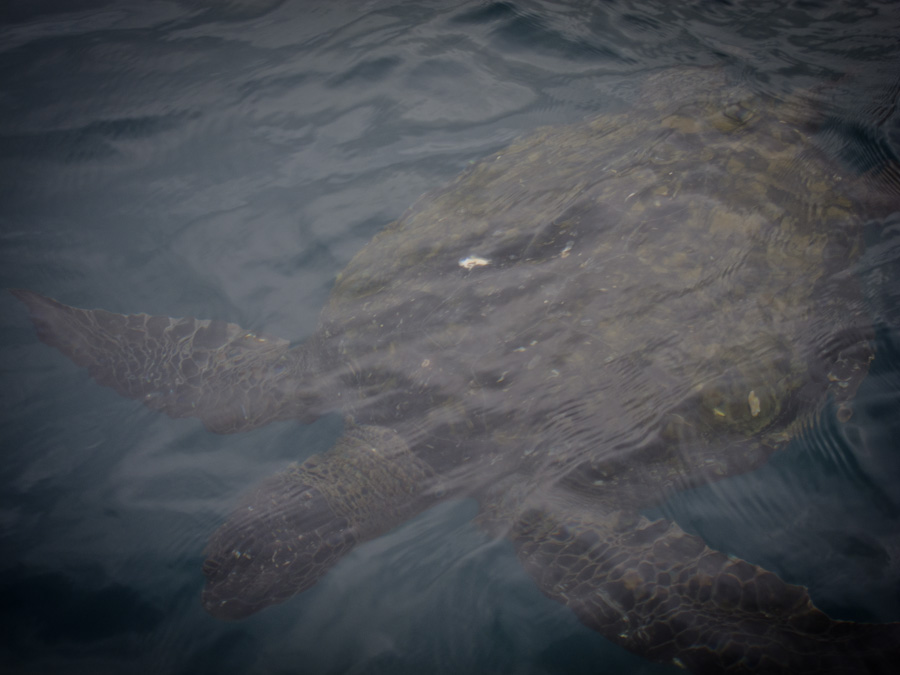
Back on board, we enjoyed a simple lunch of tuna sandwiches and coke.  We were entertained by several sea turtles that swam alongside the boat.  Our new friends completed their second dive and we congratulated them on their success.  They were now certified open water divers like us.
We were all pretty subdued on the trip back to the mainland.  Chris and I were really happy that we successfully completed these dives in preparation for the Galapagos Islands.  As we left the boat, Eduardo and Paola invited us out for dinner with their friends and the diving instructors.

At dinner, we were the first to arrive at the restaurant and ordered a beer.  The restaurant owner came out and said something to us that we did not understand.  He gestured strongly, trying to help us to understand.  We nodded our heads agreeably and he returned with our beer and two glasses.  He poured our beer and took the bottle away.  We didn’t really think too much about this.  When our friends arrived, they were surprised to see us drinking beer and reminded us of the Ecuadorian law that prohibits the consumption of beer in restaurants after 4:00 on a Sunday afternoon.  Our accommodating restaurant owner was more than happy to serve us another bottle of beer, disguised in a juice jug.  He then served us rounds of Ecuadorian “tequila” distilled from sugar cane – all on the house.  And this while serving three local police officers in his restaurant.  I guess there is flexibility with this law.

During dinner we got to know our new friends a little better.  Eduardo and Paola are in their early thirties, and as I mentioned, they are expecting their first child.  They live in Quito and came to Puerto Lopez for the weekend to complete their open water certification.  Both are very well educated and well-travelled – Paola studied business at a university in North Carolina, and then did her Masters in Spain. Eduardo also studied business, followed by two master’s degrees – an MBA and the other related to environmental business management.  He is now looking into doing his PhD, possibly in Canada.  Paola works in her family’s law practice, and Eduardo works as a Director in a company that develops alternative energy sources.  Our diving instructor, Juam, is a biologist who has been invited by Andrea Marshal, known as the Queen of the Mantas, to jointly study the manta.  He has plans to pursue his PhD in this area.  We gained a greater appreciation for this gentle giant that we were so lucky to see first-hand on our first dive in the ocean.  To learn more about the manta ray, check out this BBC video, or this interview with Andrea Marshal about the making of the BBC video.

The other diving instructor, Janko, also lives in Quito with his wife and they too have a baby on the way.  He is a martial arts teacher as well as a diving instructor.  In the high tourist season (July-August and January-March) he comes to Puerto Lopez on a rotating basis with other instructors.  His wife is a Pilates instructor.  As the evening came to a close, Paolo and Eduardo invited us to join them the next day for a trip to Los Frailes beach – reputed to be one of the most beautiful beaches in Ecuador.  We gladly accepted their invitation.

Enough with the grunge

It seems that over the past month, we have unwittingly managed to sink deeper and deeper into the grunge and dirt of Ecuador.  This is the dry season along the coast and as a result, everything – plants, trees, roads, houses – is covered with a thick layer of dust and dirt.  The landscape is dreary and drab.  The predominant color is the color of dirt.  Now and then we will pass through an agricultural area that is fertile; the vibrant colors are a shock to our dulled senses.  To make matters worse, Ecuadorians are prolific litterers and garbage is everywhere you turn.  For example, a new road is under construction along the coast, parts of which boast an adjacent bike path.  One day Chris and I went for a run along this bike path and we were simply disgusted by the garbage that covered the path the entire length of our run.

The grunge and dirt were starting to get to me by the time we had reached Canoa.   After three weeks of hostel living, we were really looking forward to staying in a house with all the associated comforts. I don’t think I had overly grand expectations – I knew the house was still under construction.  I was looking forward to some simple pleasures like having a living room to relax in (instead of just a bedroom), having access to a kitchen, and home cooked food.

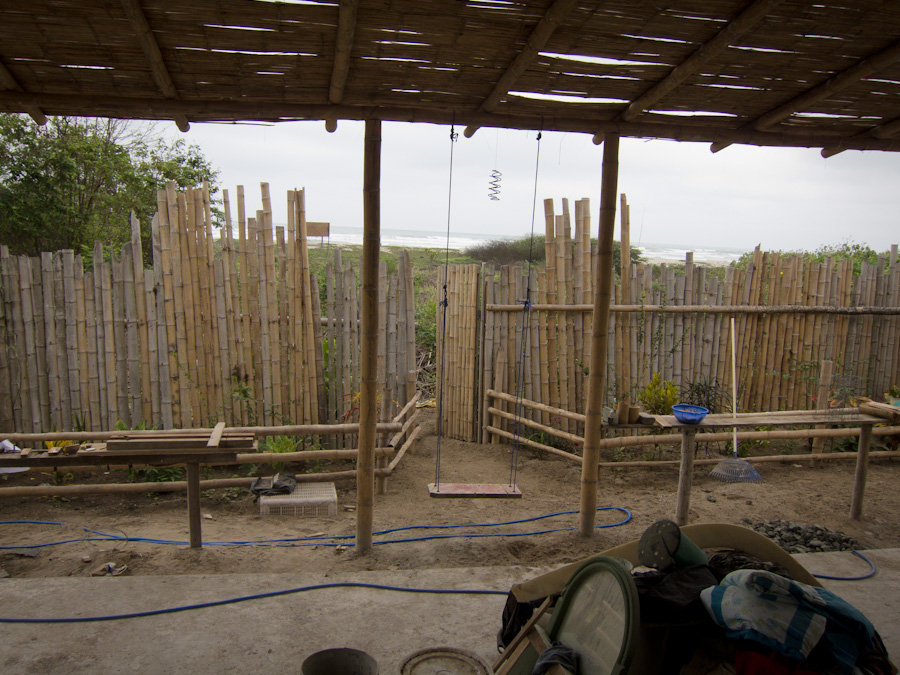
When we met Andy and Leo last Friday night, we hit it off with them immediately.  We had exchanged emails for about 10 days prior and had already established a pretty good rapport.  Andy is a Brit who has settled in Ecuador with Leo, an Ecuadorian from Quito.  Together they are building a house on the ocean about 10 minutes south of Canoa (that’s a half hour walk along the beach).  The two-storey, brick house is designed as two separate units.  Each floor has a kitchen, bathroom, living/dining area and bedroom.  The major work on the house has been done – walls, windows, exterior doors, roof, plumbing, electrical – are all complete.  Now they are left with the finishing details.  And that’s where we came into the picture.  The plan was for Chris to work on cabinetry in the kitchen, and I was to work in the garden.

Constructing kitchen cabinets without the proper tools did not seem to deter Chris.  At his disposal were: a power drill, a circular saw, one hammer, a motely collection of screwdrivers, a dull hand saw, a hand plane, a few used rusted nails, a measuring tape that was almost illegible, glue, and some small pieces of rope.   And he had access to the “wood man” at the sawmill who could apparently cut wood to order and to specification.  The idea was for Chris to design the kitchen cupboards, come up with all the measurements and give these to the “wood man” who would whip everything up on demand.  Then Chris would only have to glue the pieces together and install the finished product.  And so Chris began…..

Once the design was complete, the first order of business was to buy the hardware for the cupboards and drawers as these would impact the final measurements.  Off we went to San Vincente and Bahia – two larger towns within about a 20 minute drive.  The first hardware store had door hinges and 12 screws – yes, 12 individual screws, and hardware for one drawer – yes, one drawer.


This was not Home Depot, let me tell you.  And so began the run-around to try to round up all the hardware required.  Four stores later, Chris had what he needed.


Then it was off to the saw mill to see what type of wood they had and what type of cuts they could do.  They could do some of the cuts but not everything.  Chris then needed to adjust his design to accommodate the hardware and the wood.  We ate ice cream as Chris did his calculations. Then it was back to the sawmill, only to find it closed for lunch.   Killed some time doing errands, returned to the sawmill only to find out they had no electricity for the rest of the day and the wood man would not take any more orders.  So we went to another sawmill down the road.  He too was without electricity but promised to take the order and have it ready for the next morning.  After much discussion and many explanations – Chris explaining to Leo who then translated it to the wood man – the order was given and we headed back home.  The wood was ready the next day, and cut to specification, although they couldn’t do all the cuts needed for the doors; they couldn’t cut the lengths, nor could they cut the “tongue” part of “tongue and groove” – they could only cut the “groove”.

Each subsequent day presented its own challenges; for example, two days we had no power at the house.  Chris took matters into his own hands and went back to the sawmill and arranged to use the saws himself to make the necessary cuts.  Finally all the pieces were cut and ready to be assembled.  In parallel to this, Chris was teaching Andy and Leo basic carpentry skills as he knew there would be plenty of work left for them when we left.  They were willing and appreciative students.  Under Chris’ direction, a frame was built and installed in the cement cupboards to which the doors would eventually be attached.


You might be wondering what I was doing all week long.  Well, I painted the pillars in the front of the house, weeded and cleaned up the back garden and some of the front yard, cooked a few breakfasts, assisted Chris when necessary and did most of the dishes throughout the week.  Unlike Chris, I found it difficult to embrace the tasks at hand.  The front yard was full of construction debris and required some serious machinery to get it cleaned up before you could even consider starting a garden.  The only garden tool at my disposal was a plastic rake with no handle.  Leo attached a flexible piece of plastic to the rake head to create a rather flimsy, bendable rake.

The exterior of the house was still very much a construction zone with materials and tools all over the place.  It seemed rather premature to be focused on the garden, in my opinion.

The inside of the house was also in a state of disorder – the result of months of construction and just making do.  There was no furniture in the house yet except two beds (ours was very comfortable, in fact the most comfortable bed to date), a plastic patio table and two plastic patio chairs.  Their dog, Lucky, was recovering from cancer and had some open wounds.  Their cat, Daggy, also suffered from some mysterious open wounds.  These animals were indeed lucky to have owners like Andy and Leo who were tending to their ailments and sores with a variety of medicines from the vet.

We ended each day with cocktails at sunset.  Andy prepared his house speciality – Tequila Sunrise – with freshly squeeze orange juice.  Chris prepared our summer time favourite – Vodka and Tonic with Lime.  Andy fed us well with home cooked meals each day.  One morning I made my infamous pancakes (that are now being served at CocoLoco I might add), and I made French toast another morning – a little taste of home.

By the end of the week, one cupboard door was completed and installed, another one was glued and drying, and the remaining cupboards were ready to be glued together.  A template for a drawer was also created and was ready to be duplicated for the remaining three drawers.

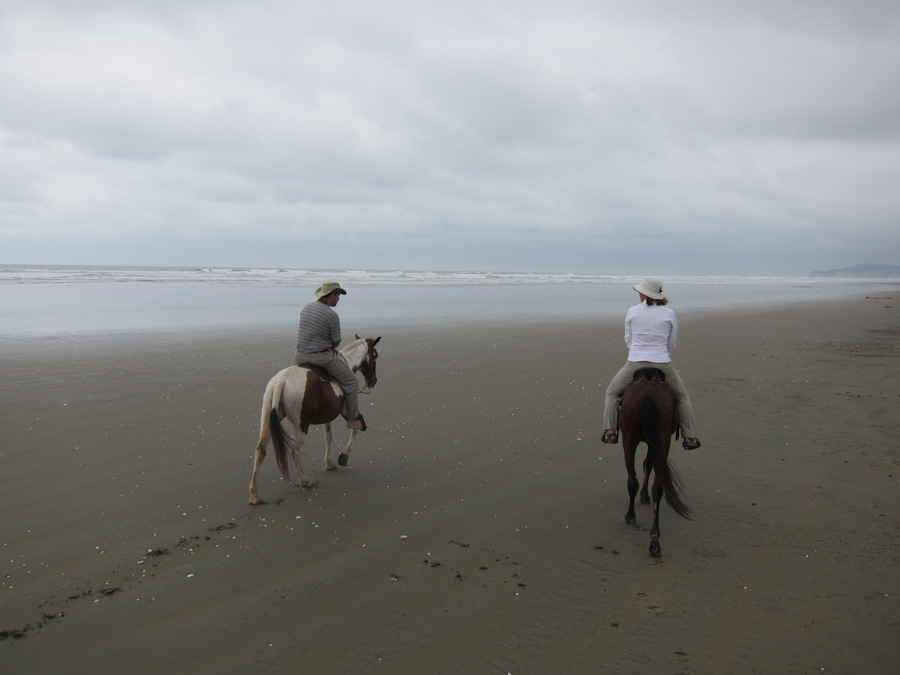
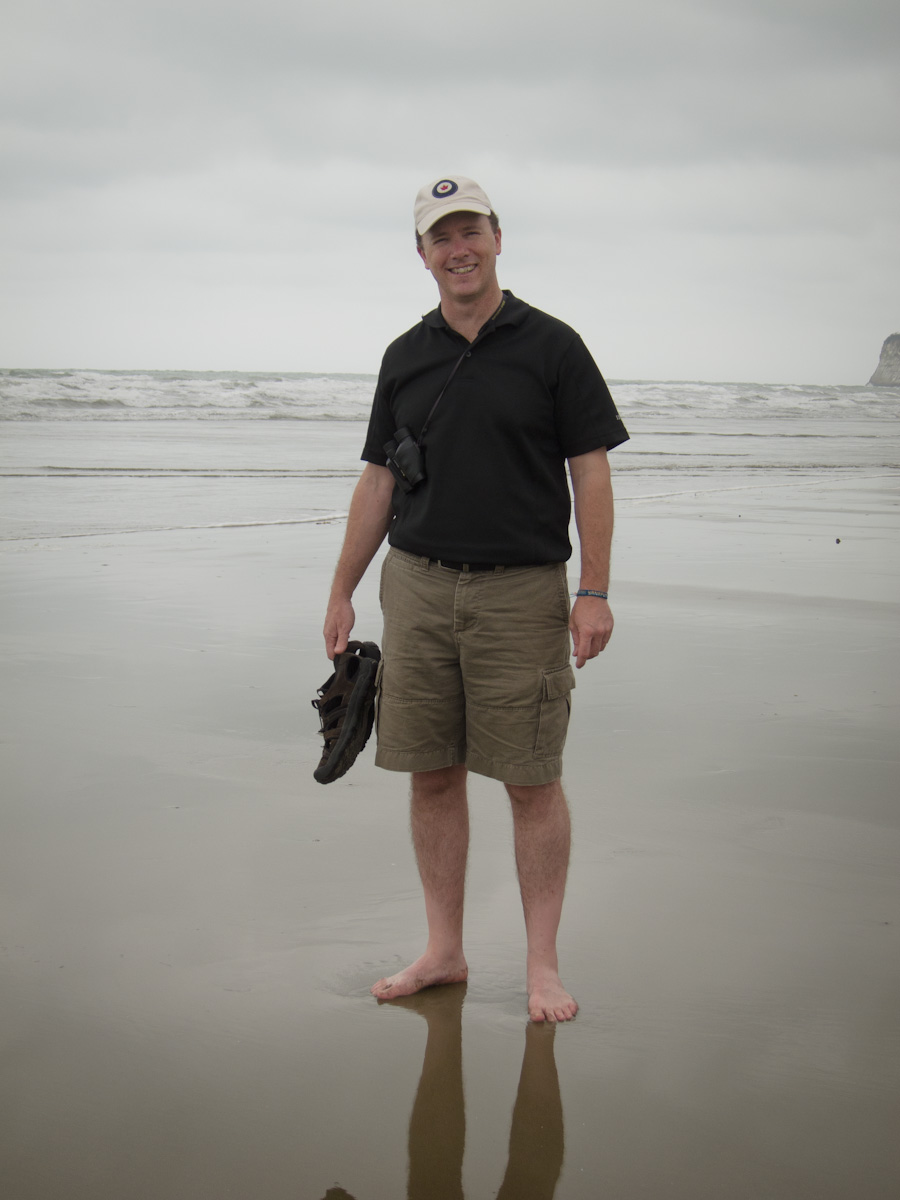
One day we went horse back riding with the owner of the hostel we had stayed in.   Neither of us are comfortable on a horse and it took a while to find our groove and our balance; although we never did quite manage to go faster than a trot.  Chris went barefoot – not by choice, but by necessity because his sandals did not fit into the stirrups.  It was a beautiful ride – two hours traversing hills and valleys of lush, picturesque farmland and then returning along the beach.  Our muscles are still hurting from that ride!

What is the final verdict on our first HelpX experience?  We couldn’t have worked for a nicer couple.  Both Andy and Leo were kind hearted, hospitable, and fun to be around.  They certainly didn’t push us very hard, in fact, we probably pushed them harder than they may have wanted.  We have a deeper appreciation for the challenges of getting anything done in Ecuador and found the experience to be an eye opener.  After working pretty hard for a week, we’ve come to realize that it’s much more fun to stay on vacation and so we aren’t planning any more HelpX jobs for the foreseeable future.

As we travelled on the bus from Canoa to Puerto Lopez I struggled with my feelings.  I was tired of the grunge and dirt and grime that surrounded me and didn’t see any respite from it while we were in South America.  I fantasized of ways we could leave this continent.  Yes, I know, I was feeling pretty negative.  I fully expected Puerto Lopez to be more of the same and so you can imagine my surprise, my delight, my relief when we found our current hostel.  Tucked away on the north edge of town, directly on the ocean, Hostel Mandala is an oasis of serenity, beauty and cleanliness.  We’re going to stay here for a while.

Off to work

Today we are off to Andy and Leo’s place for the next week.  We met them last night and popped over to there house for a few moments before going out for dinner with them.  They don’t have internet access at their house, so we will be off line for the next week.  We’ll try to check our email when we come into town, so that will be the best way to reach us if you need to contact us.

Next stop on our route will be Puerto Lopez which is a little further south, still on the coast.  From there we hope to do some diving at Isla de la Plata, often called the “Poor Man’s Galpagos” since this area is much more accessible (cheaper) and offers a lot of the same natural beauty, birds and sea life.  It is reputed to have great snorkelling and diving so this is where I will do my first dive since getting my certification. This will be a trial run before going to the Galapagos Islands.

So we’re off to do some work for a week and we’ll be sure to tell you all about it once we’re back on line.  Cheers!


Canoa awakens

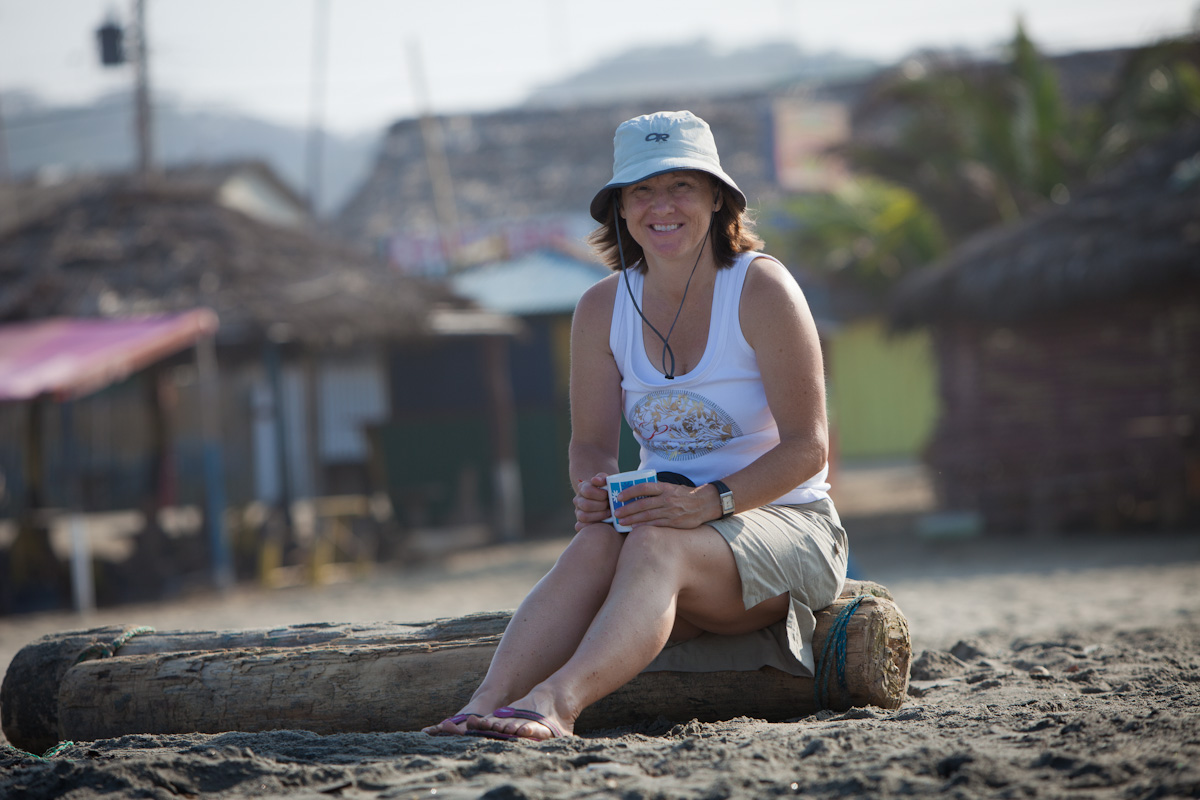
We awoke to a beautiful sunny, cloudless day and a gentle ocean breeze. After an early morning stroll along the beach, Gaby, the girl who helps Elizabeth in the kitchen, prepared coffee and we took our mugs down to the beach to watch the surfers. I know, it was a rough start to the day.


As promised, I showed Elizabeth how I make my pancakes and while they weren’t quite the right texture, they sure did taste like home. I made my usual family sized batch and after Elizabeth, Chris, Gaby and I ate to our satisfaction, the left-over batter was put in the fridge; I noticed it didn’t last long, as Gaby was serving pancakes to guests later in the morning. I promised to make another batch tomorrow morning for Elizabeth’s husband, Mao, and their son Mao junior – also called Mini Mao (how cute is that!) who had already left for school.

We learned today that this hostel is for sale: $560,000 US will buy you a hostel on the beach, complete with living quarters for the owners, and 23 guest beds in both dormitory and private rooms. They’ve also got a ranch that they are developing and hope to sell that next and then with the proceeds of both properties, purchase a larger ranch where they will focus on their horses, offer 4-wheel adventures, and grow organic vegetables to serve the needs of the local restaurants. Ambitious plans for this industrious family.

Today was International Clean a Beach Day; at around 10:00 busloads of school children were deposited on the beach with garbage bags in hand. For many, this looked like a great excuse to get out of school, and yet others seemed to take their task quite seriously, filling their garbage bags to capacity. We strolled along the beach and for about an hour made our contribution by picking up garbage along the way and depositing it into the children’s garbage bags, much to their surprise. Heck, it was a good cause, so why not.

We’re not sure if the good weather brought people out to the beach or if it was because it was Friday; regardless, the beach took on a festive air as proprietors set up their beach chairs and umbrellas, and boogie boards and surf boards lined the shore, ready to be rented out. More buses arrived with more tourists – both Ecuadorians and foreigners alike. By mid-morning, the sand was almost too hot to walk on and the sun’s rays burned intensely – glad I brought #50 sunblock. We are at the equator after all.

It was time for a swim to cool off. The temperature of the water was perfect – not too hot, not too cold. The tide was going out so we walked a few hundred metres along the wet, perfectly fine-grained sand on the ocean floor until we reached the waves. Then like a couple of kids, we frolicked in the waves, along with the hostel’s two dogs who decided to join us. It was idyllic.

Plenty of surf but no sun in Canoa

Yesterday was a long, uneventful travel day, in spite of sleeping in and missing the 6:00 bus (doh!). No worries, we caught the 7:00 bus instead.  It took 9 hours and 3 buses to travel 340 km from Mindo to Canoa, via Santo Domingo and Pedernales at a cost of $10.50 each.  This was 99% bus time as we connected immediately with each bus – with no more than five minutes to spare each time – pure luck on our part I assure you.  Turns out the buses we took were doing the “milk run”, stopping in every single little town along the way.

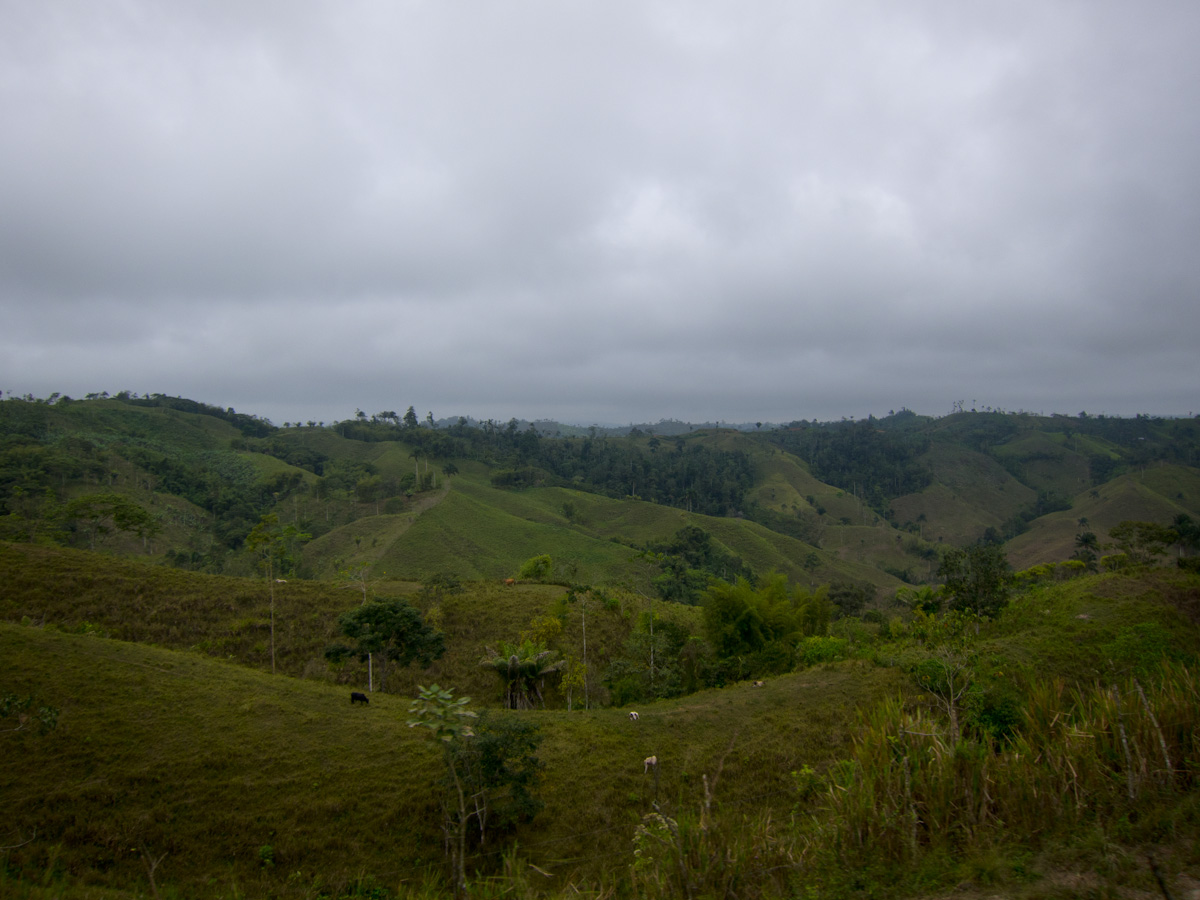
This was a great opportunity to see the landscape change from the tropical cloud forest of the foothills, to flat, fertile farmland as we approached Santo Domingo.  We saw fields of banana trees and other fruit trees that we did not recognize. As we approached the coast, the land became hilly again but was still very lush and tropical.  At the coast, the land transformed to arid terrain.   We passed by forests of bamboo trees and noticed that almost everything is constructed from bamboo in rural areas – houses, fences, and furniture.

We caught a glimpse of life in  the small villages and the rural countryside. The following photos were taken from the bus along the way.  Notice the motorcycle in the second photo below carrying a family of four:  young daughter in the front, father, and mother in the back holding a baby.  This is a common scene everywhere.   After a while, all the towns and villages started to look the same.

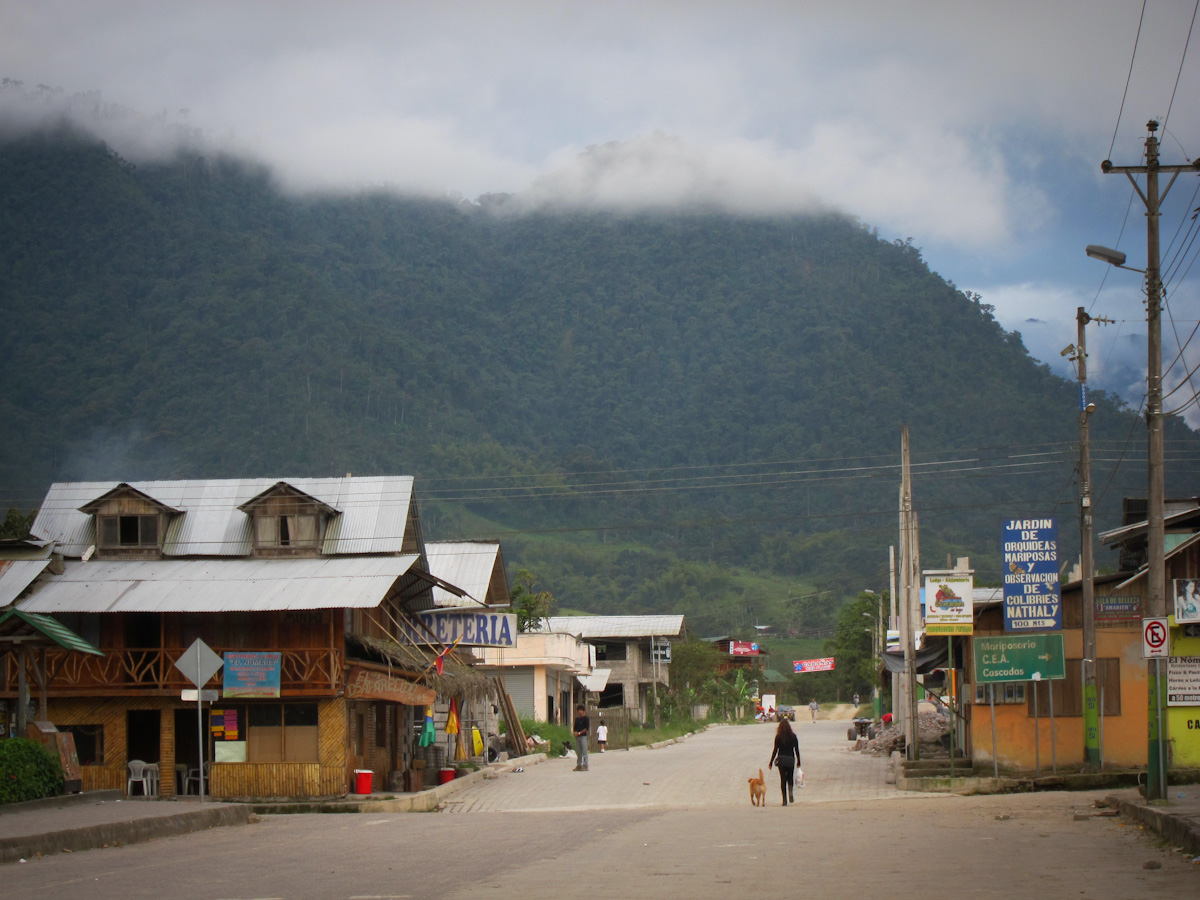
We arrived in Canoa at 4:00 in the afternoon, well before dark.  I must admit that every time we are dropped off in a new town, my reaction is always the same – oh my god, now what?  The photo to the left is one of the main streets of Canoa.

This is a sleepy, laid back town at the best of times; it is now off season and the town is virtually dead.  There’s a handful of gringos in town, but not enough to keep all the businesses open.  Most of the open air shacks on the beach are closed up and won’t open again until November when the holiday season begins.

We didn’t have a hostel reservation this time, although we had researched a few hostels ahead of time.  It would have been helpful if we had written down the names of these places.  As we made our way towards the beach (many hostels were on the beach) we were trying hard to remember the names – was that Baloo or Baboo?  Coco something or other?

Didn’t matter as once we reached the beach, there was an abundance of hostels to choose from.  We looked at a couple – carrying all our gear limited our ability and desire to spend much time looking at different places – and settled on CocoLoco, a hostel that oozed cool but was perhaps a little low on comfort.

The hostel owners were taking advantage of the low season and were doing some renovation work and repairs to the place.  There’s a few other guests – a group from Poland and a few Americans.  The owner, Elizabeth, a native Alaskan, bought this place four years ago and has settled here with her family – husband, eight-year old son and a six-month old baby girl, Sophia .   When we arrived to look at a room, she had just made some yummy hors d’oeuvres and insisted we try them out – I’m sure that was her tactic to lure us into choosing her hostel.  Well it worked!  Elizabeth’s warmth and hospitality won us over, and we didn’t regret our choice for a minute. I’m going to show her how to make my pancakes tomorrow morning – that’s the kind of place this is.

Our room is on the second floor, in the corner.

This is the view from our balcony:

Today we explored the town (took about 10 minutes to walk the whole town) and the beach.  We have eaten seafood fresh from the sea for every meal since we arrived – delicious!

It has been cloudy ever since we arrived, and very windy.  But the temperature is comfortable – probably low 20’s celsius.  We thought it would be warmer, maybe when (if) the sun comes out it will warm up.  The temperature of the ocean is like bathwater.  We’ll have to go for a swim tomorrow, and I’m thinking of taking some surfing lessons.  This beach is reputed to be an excellent location to learn to surf – there is no rip tide, the waves are not too big and are always present.  Tonight the moon is out, so we’re hoping for a sunny day tomorrow.

Saving the best for last

We have decided to leave Mindo tomorrow (Wednesday) a few days earlier than planned.  A week has been long enough in Mindo and we’re ready to move on.  We plan to spend a few nights in a hostel on the beach before we meet up with Andy and Leo, our HelpX hosts who we plan to stay with in a “work for room and board” arrangement.

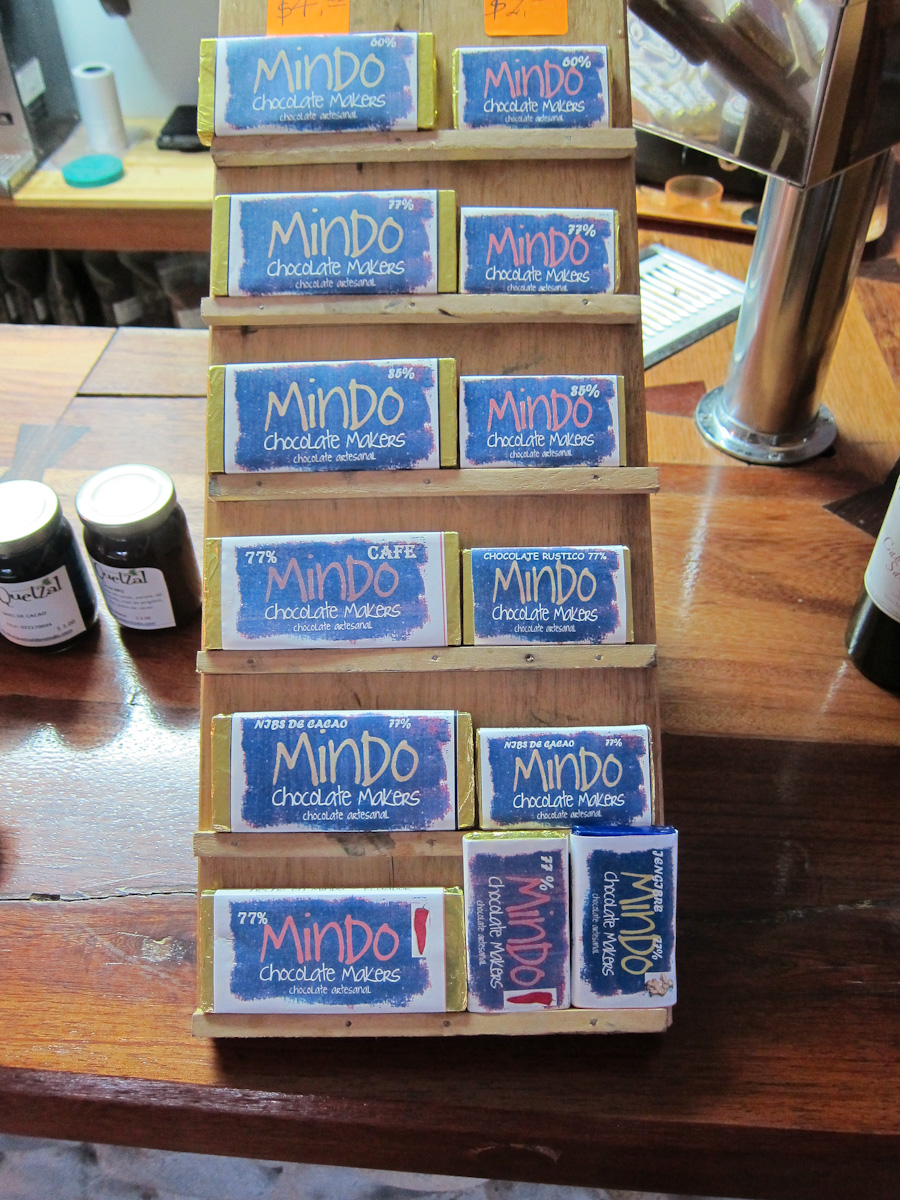
Today we visited one last “attraction” advertised in Mindo – the local chocolate factory, El Quetzal. Every day during the past week we have meant to go to the 4:00 tour and we have missed it every time for one reason or another.  Today was our last chance, so we were determined to do this tour.  Are we ever glad we did it as it was one of the highlights of our visit in Mindo.

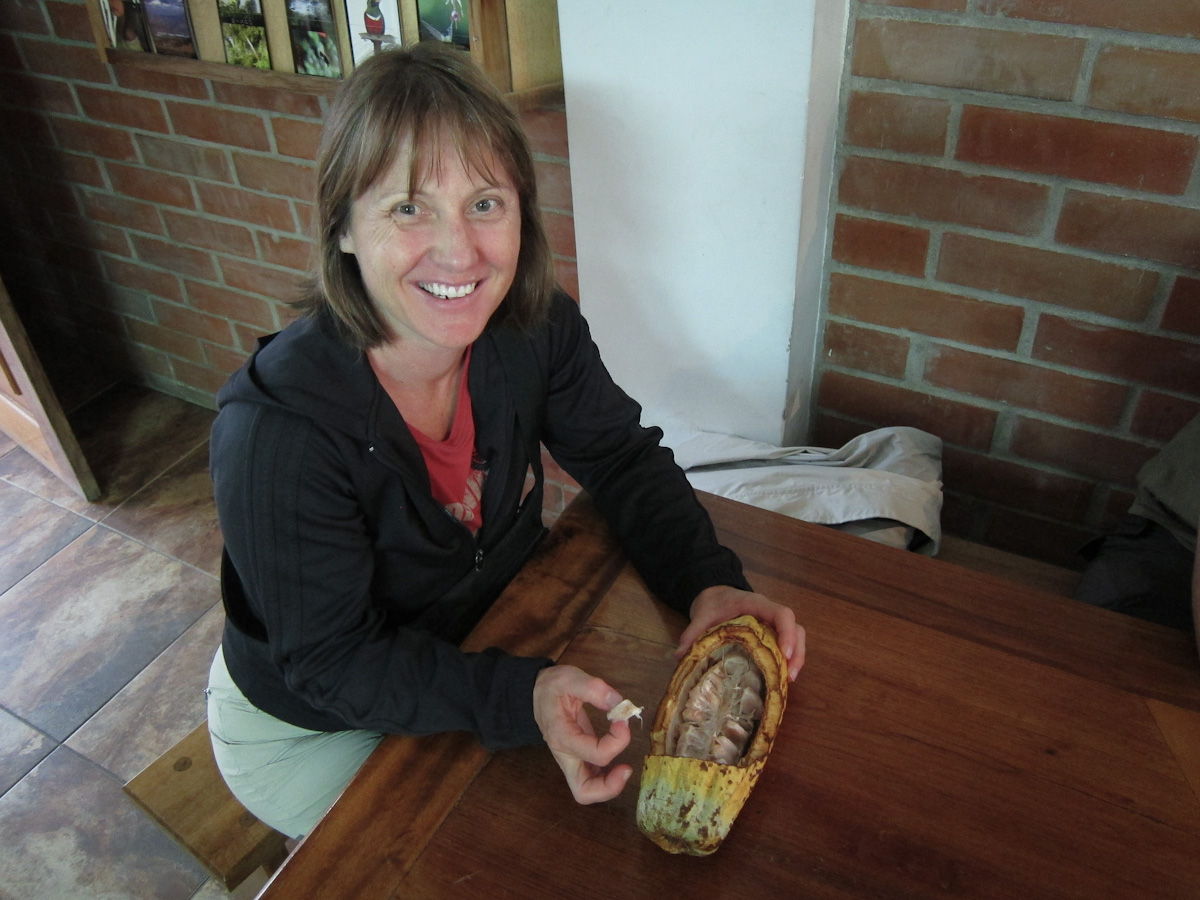
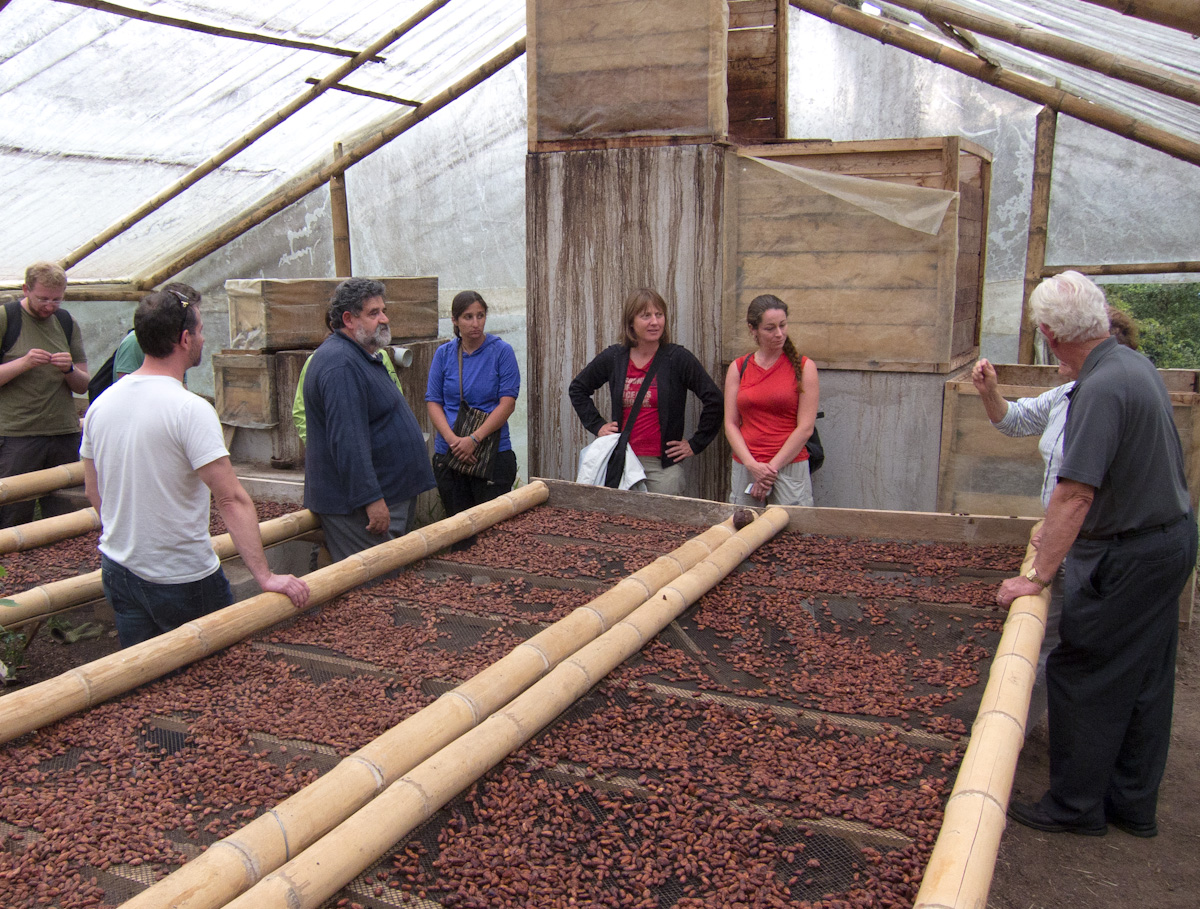
Joseph Meza, the owner, began the tour with a description of the rich history of the cocoa bean.  We had the opportunity to taste the cocoa fruit as well as the cocoa bean in various stages of processing.  We were then taken on a tour of his farm and we were inspired by this man’s creativity as he continuously sought out new and interesting ways to use every part of the cocoa plant.  For example, he had created a barbeque sauce from the juice of the cocoa fruit, a by-product that is usually thrown out.  He had also created a syrup from ginger that he serves on pancakes in his restaurant (instead of maple syrup which is expensive to import).  It passed the Canadian taste test!

We toured his garden and saw some of his other projects: about 25 coffee bean trees,his own cocoa trees, lemon grass, aloe vera plants, variety of fruit trees and vegetables for his restaurant, chickens, and pigs to name just a few.  Everything had a purpose.  All of this on an acre and half plot – it was amazing!  At the end of the tour, we sampled his products and were wowed by the brownies – they certainly lived up to their reputation as the best brownies ever!

The products produced in this little factory are sold locally.  In addition, Joseph who is a Michigan native, exports cocoa nibs (cocoa beans that have been processed to a certain point) back to the US where he also has a chocolate factory.  He splits his time three months in Mindo and three months in Michigan. He has a fascinating story about how he got into this business.

While on the tour, we met a lovely family: the mother, Blanca, an Ecuadorian native,  the father, Richard,and their adult children: Scott, Kelly and Kelly’s husband Kevin.  This family has its roots in Ecuador on the mother’s side.  In fact, her father, who was a civil engineer, had played a pivotal role in the establishment and development of Santo Domingo de los Colorades.  We caught their attention when we shared with them that we were on a 2-year round the world adventure.  When they heard about our plans to go to Canoa to do a work exchange, they mentioned their sister (aunt) who runs a school in Santo Domingo de los Colorades who is always looking for help teaching English to children as well as help for her many projects she has on the go.  They insisted on providing us with her contact information and encouraged us to look her up. They said they would mention us to her as well.  While we’re committed for the next week or so, we’ll see after that.  Who knows, maybe that will be our next gig. Richard also provided his business card along with their address in Pedernales where they are heading next.  He kindly offered to provide us any assistance if we need help or got ourselves into trouble.  I am constantly amazed by the kindness of strangers!

And so that wraps up our visit to Mindo.  Back to practical matters, like how the heck to get to Canoa from here.  We have puzzled over the best way to get to Canoa from Mindo.  The advice we have received is to go back to Quito, and catch a bus from the station south of the city.  This just seems counter intuitive as we are already about a quarter of the way to the coast.  I have looked at the map and scoured the internet for other options.  I have discovered there is a main bus terminal in a town called Santo Domingo de los Colarados which isn’t too far from Mindo.  I’m certain we can catch a bus from there to the coast.  The only question is how to get there.  I read a blog about a guy who went this way to the coast, so I know it can be done, just have to figure out how to do it.  And that is what we did earlier this afternoon.

The bus station in Mindo provides bus service between Mindo and Quito only.  However, I have seen another bus in town that does not use the bus station – this bus just parks itself on the road next to the park.  I figured we should find out where this bus went – who knows, maybe he went straight to Santo Domingo.

I suppose we could have asked someone in town about this bus, but that seemed pretty complicated from a language perspective.  I figured it would be much easier to talk to the bus driver directly.  Only problem was we didn’t know when he would be there.  So the big plan for this afternoon was to hang out around the park waiting for the bus to show up.  Luckily, the bus was sitting there when we went to the park around 1:00.  I had practiced what I was going to say and so dove right in with my questions for the bus driver.  Sure enough, this bus went directly to Santo Domingo at almost hourly intervals in the early morning, then again at 11, 1 and 4.  Problem solved.  That was much easier than anticipated.

We will take the 6:00 am bus tomorrow morning in order to give us plenty of time to get to the coast before dark.  We will have to transfer in Santo Domingo to Pedernales, and then again in Pedernales to a bus heading south down the coast.  Not sure how long this journey will take, but at least we now have a plan.

Is this legal?


Last Sunday we met up with Arya, a fellow student we met at our Spanish School in Quito.  Arya had emailed us last week to let us know she was coming to Mindo and would be staying in our hostel.  We offered to meet her at the bus station to help her get oriented; she gladly accepted our offer.  She arrived at about 9:30 as planned and after getting settled in her room, a quick walk around town, and a coffee, we decided we would hike to the waterfalls.

We would take a “taxi” to the trailhead, rather than walk the five kilometres as we had done earlier in the week (once was enough for that walk). In Mindo, they have a couple of regular taxis (cost is about $6 to go just about anywhere locally), but the normal mode of transport is hitching a ride in the back of a pick-up truck.  Cost is one dollar per person.  We found a truck that was getting ready to leave and climbed into the back, squeezing ourselves into a spot amongst the other six passengers already on board.   There were 6-8 people crammed into the extended truck cab too.

Off we went, groaning with every bump we hit along the pot-holed road – a definite reminder that we’re not 20 years old anymore.  A couple of kilometres out of town, the truck came to a sudden stop.  A man jumped out of the cab and explained, in Spanish, that we were taking a little break, if we didn’t mind, to pick some lemons.  Would we mind helping them?  Arya and I looked at each other and said sure, why not?  Chris on the other hand was rather suspicious of the whole situation, plus he had all his camera equipment with him.  He opted to stay at the truck with our knapsacks.

Arya and I and a few of the other passengers followed this guy towards a field.  I got the feeling this wasn’t his farm, and these weren’t his lemon trees as he directed everyone to crawl under the barbed wire fence.  As Arya scrambled under the barbed wire fence and down a muddy slope, I asked out loud:  Hey, is this legal?  Yes, I know, very astute observation on my part.  Too late to turn back now, Arya was already on her way down the hill, so I quickly followed behind.  This guy was telling us to hurry up as he pulled Arya’s jacket off her and motioned for her to put it on backwards creating an instant basket.  He then proceeded to whack a tree with a stick and as lemons fell to the ground he threw them to us to put in our “basket”.  The other passengers were doing likewise.  It was all very confusing and chaotic as everyone was tossing lemons at us and talking in Spanish.  We were laughing so hard as we tried to catch the lemons – clearly baseball was not our forte! The man pointed to me to get some of the higher lemons – yes, me – let’s face it, Ecuadorian men are not known for their stature.  Within about 10 minutes he was satisfied with the haul and we curtailed it back to the truck, watching out for the cow paddies along the way.

Now that we were accessories to his crime, he decided introductions were in order – names and where we were from.  His name was Colon, as in Christopher Columbus.  He insisted we only speak Spanish to him as he rode with us in the back of the truck.  In fact, he told us he was a Spanish teacher and therefore felt entitled to correct our Spanish and have us repeat our sentences until we spoke them to his satisfaction.  His English was very good but he used it only when necessary.  Arya and I were having a great time with this gregarious fellow.  At one point, I was scratching my feet – I was wearing sandals and something must have bitten me in the field.  Suddenly, Colon grabbed my foot, took my sandal off, squeezed open a lemon and smeared the oils from the skin all over my foot – weird, yes, but boy did it feel good.  I held up my other foot and he did the same.  We learned the lemons were for his restaurant – to serve with the fish dishes – and we were invited to his restaurant in the evening for a party. (Note:  we looked for his restaurant later that night but could not find it….hmmm….a little suspicious perhaps.)

When we got to the trailhead at the waterfalls, he stopped the truck and thanked us for our help, wished us well, and waived the dollar fee for all of us, even though Chris didn’t help (as he pointed out).   I observed to Arya that she probably didn’t expect to have this much fun and excitement with a couple of old folks like us!

The trailhead to the waterfalls begins with a ride across the canyon in a cable car, powered by a Nissan car engine and transmission, as Chris observed.  Someone has taken the guts of a car – dashboard, ignition, gas pedal, clutch and gears – and altered it in order to “drive” the cable car forward to the other side, and then put it in reverse to bring it back.  I had not noticed any of this (which was probably a good thing) as I was too preoccupied with a) how far across we were going (530 m), b) how flimsy the cable car appeared, and c) how high we were above the canyon floor.

As we traversed the canyon, I tried to keep my eyes focused straight ahead as I have a fear of heights.  Occasionally, I glanced down below and my heart almost stopped as I saw the raging river at least 250 meters below.  I tried very hard not to think about what would happen if the little Nissan engine stopped mid-way – I took some comfort knowing it was a foreign engine, although I would have felt better if it was a Honda – either way, we would have been goners for sure if the engine failed. Unbeknownst to me, Chris captured this all on video.

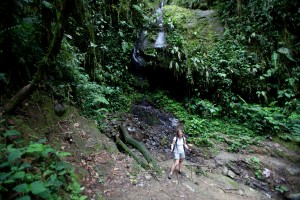
Once safely on the other side, we hiked along a beautiful, if not at times treacherous path that wound its way down to the canyon floor, to the base of a spectacular waterfall.   Often we had to wade through the river to continue the path on the other side, or overcome other obstacles like fallen trees strewn across the path.

The scenery was spectacular as we were engulfed within the cloud forest, surrounded by lush tropical vegetation. In all, there were five waterfalls that we hiked to.

We took our time, pausing to take many pictures along the way, and enjoying the company of our young fellow traveller.  Arya is twenty years old, originally from New York and a third year anthropology student, studying in Portland, Oregon.  She took a break from school for a semester to travel and volunteer in South America – on her own.  Conversation came easily that afternoon.  Arya shared with us her plans, her dreams, her hopes for her future.  We shared with her our story of how we met and our first date.

As we reached the last waterfall, it started to rain.  This was the opportunity I had been waiting for to test out our new rain gear designed to fit easily over our back packs and provide full length coverage – kind of a cross between a poncho and a rain jacket.  When I purchased these last summer, Chris was not entirely convinced we needed this strange looking rain gear, but I persuaded him it was just what we needed when we were carrying our packs in the rain.  Well, we looked ridiculous, confirmed by Arya’s laughter and her observation that she couldn’t decide if I looked more like Little Red Riding Hood or the Hunchback of Notre Dame – thanks Arya.  Oh well, I’ve always let practicality override fashion – maybe this time I went a little too far as I conceded Chris definitely looked like the Hunchback of Notre Dame.  To my credit, I stayed nice and dry, although Chris complained that they weren’t breathable enough so he got just as wet by sweating as he would have in the rain – picky, picky. By the way, I would have posted some pictures of us except all the pictures of our rain gear were taken by Arya on her camera, so we’re out of luck.

We missed out on the last two waterfalls on account of the rain, one of which was the Nambilla waterfall that we had visited earlier in the week and had only seen the top of the waterfall.   Guess that just wasn’t meant to be.

We shared the return cable car with another couple – much to my dismay.  There was seating for four which seemed to indicate (at least to me) it was designed to carry four people, not five.  So I’m wondering – Did we really want to stress the limits of this rickety, hand-made device???  But the operator saw no problem in having the fifth passenger stand up all the way – yes, stand in this flimsy little cable car.  The young guy didn’t seem to mind one bit; and Chris and Ayra who sat opposite to me, kept smiling reassuringly at me; meanwhile, my heart was racing, convinced we were going to plunge to our deaths at any moment.   What can I say? I have an irrational fear of heights.

Luck was with us, as a “bus” was waiting on the other side, and we were spared the five kilometre walk into town.

Mindo – the final verdict

It’s hard to believe that we’ve been in Mindo for almost a week.  Once we got settled, our days quickly fell into a comfortable routine:   We wake up around 7:00 to the sounds of roosters cock-a-doodle-doing and to the sight of exotic birds and hummingbirds just outside our bedroom window. After a substantial breakfast at 7:30 (provided by the hostel), we go for a hike or a walk in the cloud forest (waterfalls, exotic birds and butterflies are the pleasures of each day). This is followed by a big lunch mid-afternoon (our main meal of the day), and then some down time – maybe a siesta or a little reading or writing.  In the early evening, we walk around town and then enjoy a beer or two and a snack on a patio on the main street, watching life unfold in Mindo.  It’s been an easy, relaxed pace in beautiful surroundings that has put us both in a very good place.  We almost feel guilty about enjoying this life without responsibilities.  I heartily recommend it!

The Mindo-Nambillo forest is a protected 22,000 hectare reserve harbouring a great variety of birds as well as orchids and bromeliads.  The area offers activities for the nature enthusiast and thrill seeker alike.   Zip lining and river rafting are very popular attractions – neither of which we did.  As Chris likes to describe us – we are adventurers, not thrill seekers – so we spent most of our time hiking and bird watching (and relaxing and eating) instead.

The following are some of the week’s highlights, in no particular order. There weren’t too many lows in Mindo.  We didn’t see any exotic orchids in the wild – probably just the wrong time of year.  But we did see other beautiful flowers.  Like any town that depends on tourism, we found there were those who tried to take advantage of the tourist with inflated prices, but this was not the norm in our experience.

Waterfalls

Our first hike, last Thursday, took us to the Nambillo Waterfalls.  These falls are located about five kilometres outside of town.  We decided to walk to the falls – a mainly uphill slog along a dusty, pot-filled road.  This gave us an opportunity to bird-watch and offered some pretty spectacular views of Mindo and the surrounding area.  We were amazed at the lush, tropical vegetation of the cloud forest.

At the trailhead to the falls, we were accosted for an “entry fee” of $3.00 each.   We realized we had somehow passed the trailhead to the base of the falls and were now at the tourist attraction that was created at the top of the falls – a water slide, diving ledge, artificial pools, etc.  We figured we would check it out even if it wasn’t where we had intended on going.  It was a difficult hike down (and even more difficult coming back up).  I took out my walking sticks for the first time on this trip (definitely not the last) – and I was glad I had them.

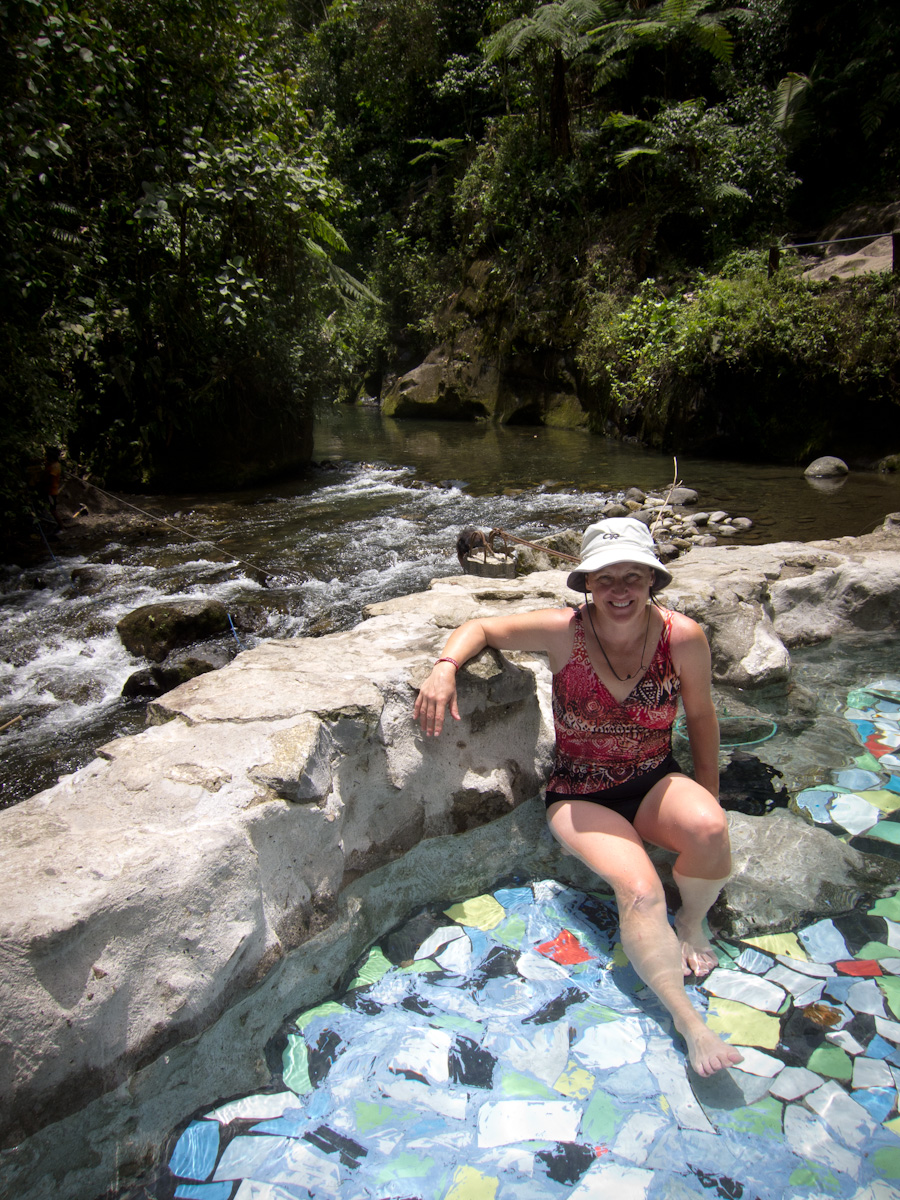
At the bottom, we changed into our swim suits and cooled off in the pools of frigid water, relaxing for a while. We had the place all to ourselves except for a couple of guys who were doing back breaking work hauling sand from one side of the river to the other in order to mix cement for another structure that was being built – all by hand.  While we couldn’t get a good view of the falls from this vantage point as we were above the falls, we could hear the thunderous power of them below.

On Sunday, we spent the day hiking to a group of five waterfalls.  I’ll write a separate post about this excursion.

Butterflies

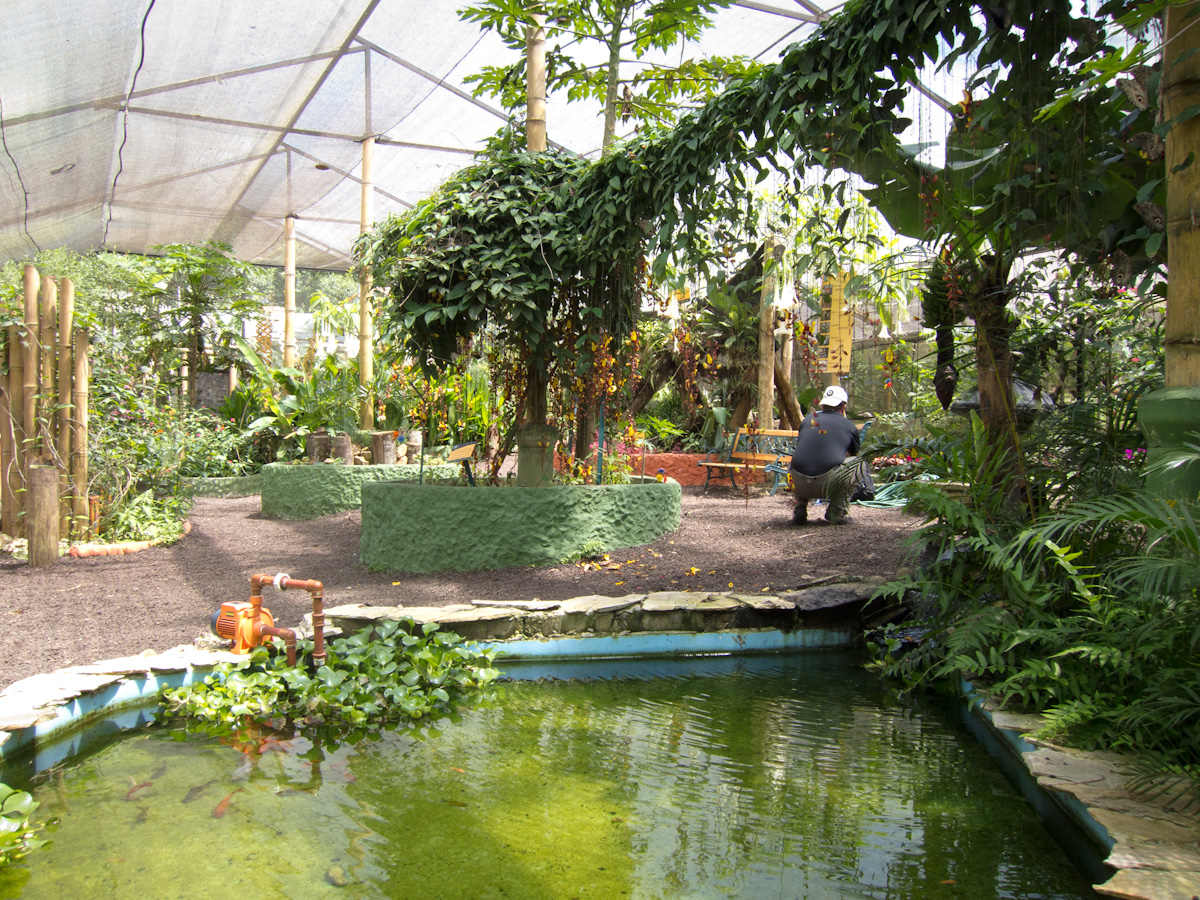
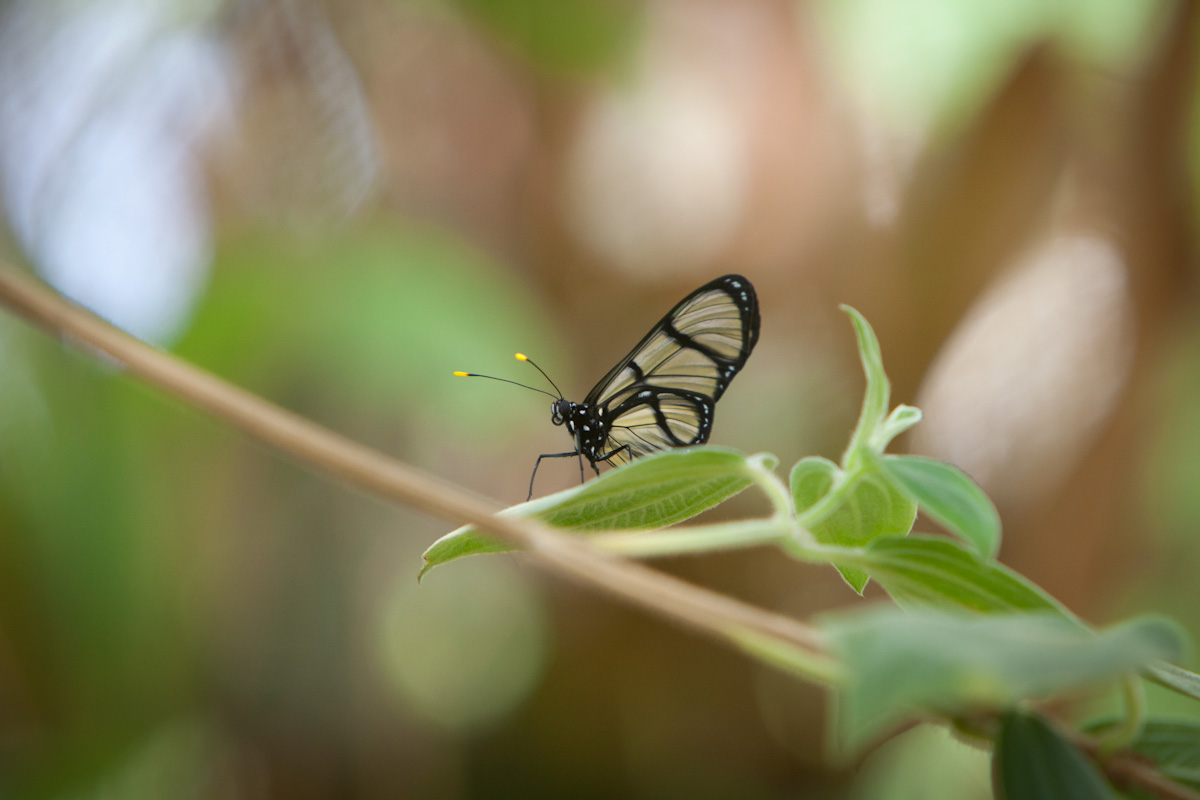
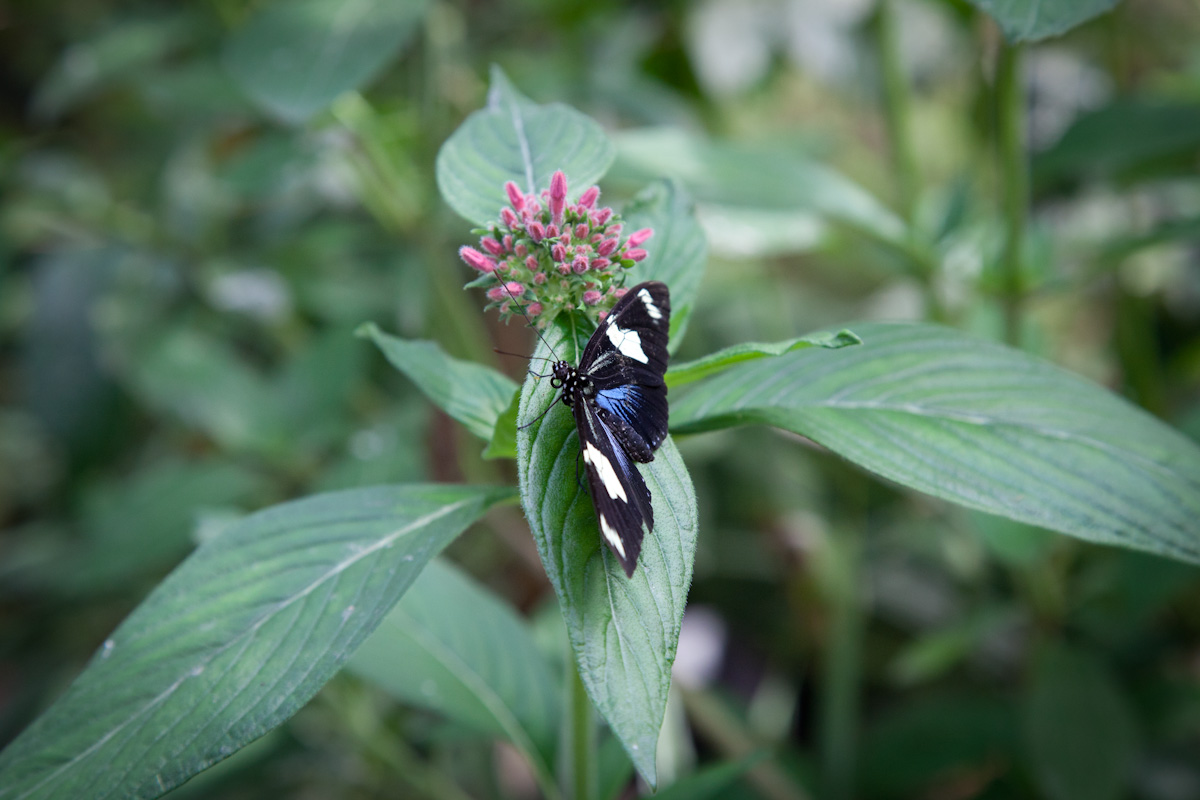
On Friday, we walked to a butterfly “farm” where we had the opportunity to see 25 species of butterflies in a confined setting.  This was a drop in the bucket when you consider the Mindo-Nambillo ecological reserve is home to 350 species of butterflies and there are over 3200 species of butterflies in all of Ecuador!  Still, it was a marvel to be in a greenhouse surrounded by hundreds of beautiful butterflies fluttering all about.  We spent a couple of hours here, taking photographs and just sitting amongst the butterflies, admiring the beauty of these insects.  We took over 300 photographs that morning between the two of us, but don’t worry, we won’t bore you with all of them.

Birds

Serious bird-watchers flock to this region to view the 320 species of birds that make this reserve home.  This area is renowned as one of the best bird watching spots in South America.  The handful of tour operators in town offer a variety of organized bird watching tours, ranging in price from $60 and up.  After a few days hiking, we decided against a guided tour – we were seeing lots of birds on our own, and didn’t really care to go traipsing into the forest at 5:00 am to track down some elusive bird.  Guess we’re just not that into bird watching.

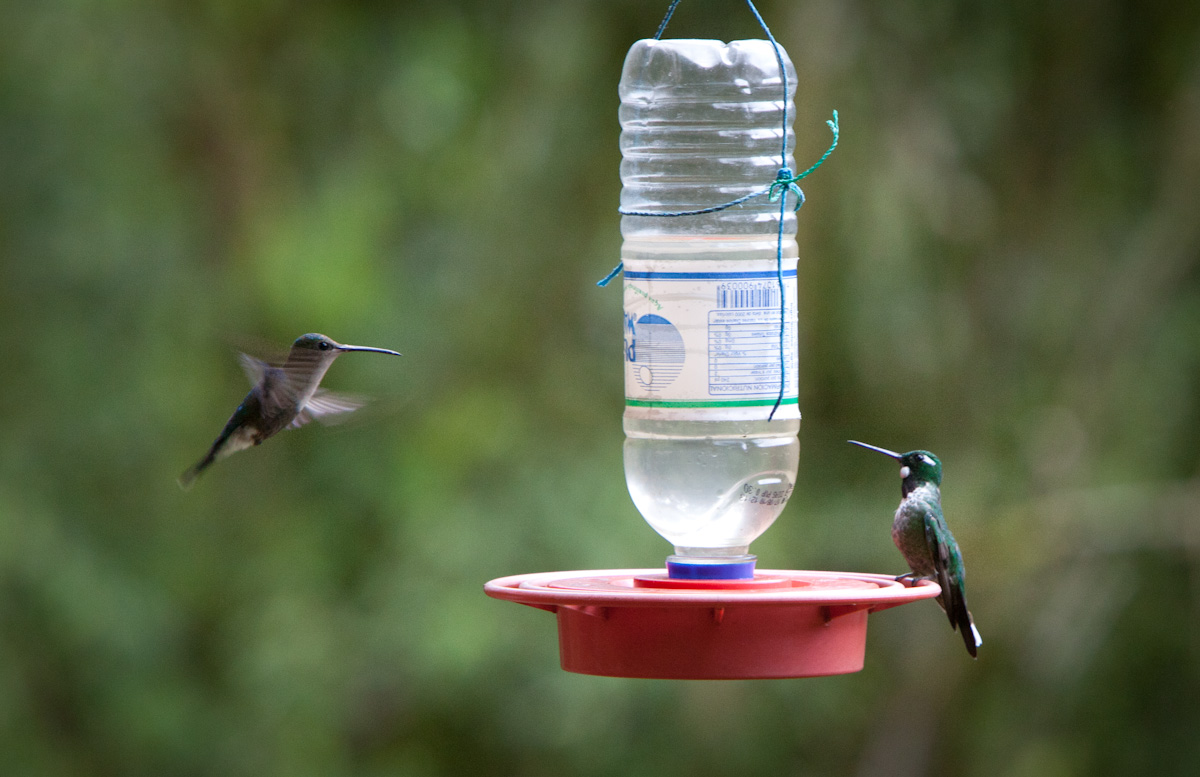
That being said, we could not get enough of the hummingbirds.  They were everywhere and came in all different sizes, shapes and colours.  We awoke to the sight of hummingbirds in the tree outside our bedroom window.  As we ate breakfast each morning, hummingbirds flitted amongst the bushes in clear view and just a stone’s throw away from us. On every hike, we were treated to their magic. Check out the video Chris took of hummingbirds at the Tangaras Reserve.

Throughout the week, Chris was on the hunt for big, colourful birds.  The little birds, as beautiful as they were, were very difficult to photograph as they just wouldn’t sit still long enough to capture them – a source of endless frustration for Chris.

On our last hike, we were treated to a spectacle that took our breath away.  We had just finished hiking to the Tangaras Reserve and realized that we were going to have to walk the three kilometres back to town since it was pretty unlikely a truck would be coming our way on a quiet Monday afternoon.  We were tired, dirty and really hungry. We just wanted to get back to town as quickly as possible so we could get cleaned up and find food.  That was our mindset as we trudged downhill towards town.

Suddenly, we both stopped in our tracks at the sound of loud rustling noises in the trees above.  We searched the tree tops with our binoculars and lo and behold a beautiful toucan was perched high up in a tree.  As he flew to another tree, his powerful wings sounded like the propeller of a helicopter.  We looked at each other in amazement.   Then another toucan whizzed by overhead and parked himself in a tree in clear view.  Chris was desperately trying to capture these beautiful birds but it was a challenge as they didn’t sit in any tree for very long.  Over the next few minutes, half a dozen toucans whirled around us – flying over our heads from one side of the road to another and from tree to tree.  What a show it was!

Hiking

On our first day in Mindo, we met a New Zealander in a restaurant who briefly told us about the Tangaras Reserve which was located adjacent to the Mindo-Nambillo reserve.  It was accessible from a trailhead on the main road – between the zip lining and the waterfalls.  On Monday, we decided to hike to the main cabin in the reserve with plans to visit their Cock of the Rock lek – reputed for offering some spectacular views of up to 18 cocks displaying their mating ritual at any one time.

As we left town, we flagged down a truck, the driver of which was more than happy to give us a lift as far as the zip-lining – no charge.  This saved us two uphill kilometres of effort – effort that would be needed later in the day.

The trail to the research cabin was one of the muddiest trails we have ever navigated.  The trail itself was relatively easy, mainly flat, downhill near the end.  But the mud!  My goodness, it’s a wonder we didn’t lose our boots in the muck.

The Tangaras Reserve is run by Life Net, a non-profit conservation organization.  The purpose of the reserve is to provide habitat and protection for native plants and animals at elevations that are typically deforested for agriculture.  A small research facility is located on the property; it doubles as housing for volunteers and visitors alike.

We arrived at about 10:00 in the morning to an empty cabin.  We rested for a while on the deck and were entertained by a handful of hummingbirds darting back and forth to the feeder.  We headed up a trail – which was very well marked – in search of the lek.  Up and up we went.  This was a tough hike.  Along the way we met Jamie and Bex, the New Zealander volunteers who had been clearing a new trail further ahead.  Unfortunately, this was the quietest time of the day for the birds (best time is at dawn and later in the afternoon) and the likelihood of us seeing anything was next to nil.  Oh well, the hike was amazing just the same.  We found the lek – a little wooden, lean-to structure tucked against the side of the hill, with a clear view of the valley below.  We sat in the lek for about an hour (nice little rest) just enjoying the view, the tranquility and the solitude.

We made our way back to the cabin, just in time for lunch – their lunch, not ours.  No problem, we had some snacks with us that would keep us going for a few more hours.  We took the opportunity to learn a little more about this reserve and the work this young couple were doing.  They had been living in this isolated cabin for two months already, and had another month ahead of them, after which they were planning to travel throughout South America until next May.  Their work was focused on making improvements to the reserve including increasing its visibility and viability as a tourist attraction.  The well posted signs both to the reserve as well as on the trails within the reserve along with the posters we saw around town were all products of their efforts.  To date, they had 16 visitors of which only a couple stayed overnight.  This was definitely off the beaten track.  Jamie has set up a blog for the reserve and is blogging about his experience as a volunteer.  Check it out.

Weather

Every day brings the same weather.  We awake to warm sunshine and partly cloudy skies.  Clouds are always present – guess that’s why this is called a cloud forest. Daytime temperatures are in the low 20’s, but it often feels much hotter because of the humidity, especially when the sun is out in full force.  Night time lows are in the high teens – very comfortable sleeping weather.  By the afternoon, clouds begin to roll in, and it may rain a little late in the day.  One day it rained quite heavily for about an hour, and one night it rained almost the entire night.  The weather is really quite idyllic and something we have just taken for granted each day.

Food

In an effort to spread our tourist dollars around, we have eaten in most of the restaurants along the main road in town and have not had a bad meal yet.  Whether we are eating the fixed plate lunch or choosing from the a la carte menu, food is simple but consistently of high quality and very tasty.  One thing I’ve noticed – vegetables are rarely served.  I can’t figure out why because it’s not like they aren’t available (and they’re cheap).  Vegetables just don’t seem to be very popular – something I am missing a lot.

Accommodations

Despite our original misgivings about our hostel (Bio Hostel), it really hasn’t been bad at all.  In fact, we’ve been downright comfortable.  Most nights we have had the whole place to ourselves.  Breakfasts have been varied, delicious and substantial – they keep us going easily until mid-afternoon.  Internet connection, while slow, has been quite reliable.  The hostel is a little rough around the edges and appears to be a work in progress – for example, there are no windows or doors on the first floor, and the staircase continues to what looks like is going to be the third floor – but for now, it is all open to the outdoors. Regardless, it’s been a good place to kick back and relax.

The Final Verdict

Mindo was a great place to enjoy nature, relax and de-stress.  We would highly recommend it.

In the clouds but not on cloud nine

We arrived in Mindo yesterday without any problems.  The bus station was pretty quiet at 8:00 in the morning and the biggest menace we faced was two women who were Jehovah’s Witnesses who tried to preach their message to us.  This was one time that not knowing the language served us well.  Guess they didn’t receive the memo in Ecuador that I am an ex-JW and should be avoided like the plague!

As the road to Mindo twisted through the Andes, we were fascinated by the scenery as it changed from the arid, brown mountains of the sierra to lush tropical forests in the foothills.  The bus ride took a strong stomach as we went up and down and around the mountains at a speedy pace.  Chris sat in a window seat on the side of the bus that was next to the sheer drop offs.   I opted for the imagined safety of the other side of the bus that hugged the mountainside.

In Mindo, we stepped off the bus into heat and humidity, a distinct contrast to the temperate climate we had enjoyed in Quito.  It was 10:00 in the morning and the dusty main street, lined with rundown buildings was pretty much deserted.  We collected our packs from the bus, brushed the dust off them, loaded them on and started to walk.  I had written down the directions to our hostel which would have been helpful if only the streets had names posted somewhere.  But the locals were friendly and pointed us in the right direction.
Our hostel was a tad rougher than we expected.  I was glad we hadn’t opted for the cheapest accommodations available in town.  You can get a place for seven bucks a night, but we saw a few of these places, and you are definitely getting what you pay for here.  Prices range from $7 to over $100 for a room in a hacienda outside of town.  We had reserved four nights in this hostel for $13.50 a night each (including breakfast), again based on the reviews we read on the internet.  First impressions were less than favorable, but we’ll give this place a chance before we cast our final judgement.

Since we arrived so early, we had to wait a few minutes for the owner to get our room ready.  This gave us a chance to chat with a young lad from Texas who was preparing some food in the kitchen of the hostel.  He had been volunteering in the hostel for the past week and a half and was leaving tomorrow.  He gave us some tips about things to do and things to avoid both in Mindo and in Ecuador in general.  He spoke very highly of the hostel, especially since he had gotten sick and the owners had taken really good care of him.

Once we were settled in our room which was actually quite nice, we went for a walk around town to get the lay of the land.  There isn’t much to Mindo.  The main street is the only paved road and is where the majority of businesses are located – a handful of restaurants, a couple of internet cafes, a few tour operators, a few corner stores, a pharmacy, a school and a few hostels.  A small plaza marks the center of town.  Off the main street are several dirt roads that don’t seem to really go anywhere.  There are more hostels and restaurants and few businesses on these roads.  And that’s pretty much the whole town.

At this point we were getting hungry and had to decide where to eat.  Food is always a challenge.  My primary concern is whether or not the food will make me sick, so I’m looking for signs of cleanliness and good food prep habits (e.g. if the chicken meat is sitting out on the counter, I’m probably not going eat there).  Cost plays a factor too as we don’t want to be gouged as tourists.  And finally taste and familiarity is considered (e.g. do I recognize what I’m eating although I’m flexible on this one as I believe sometimes what you don’t know won’t hurt you).

We settled on a little joint on the main street where another gringo was already eating (guess that’s a criteria too).  We had the daily lunch plate.  The lunch plate, which is very typical in Ecuadorian restaurants, comes with a bowl of soup, a glass of juice, and a plate of food – rice, meat, vegetables, maybe some beans – and sometimes some fruit for dessert.  In Quito, we picked the restaurants frequented by locals, especially those dressed in business attire.  We never had a bad lunch!  So in Mindo, we picked the restaurant with the gringo (who turned out being a friendly fellow from New Zealand volunteering at a research centre close by).  We had a delicious bowl of soup – Ecuadorians really know how to make soup! – and tilapia (fish), rice, salad and beans for our main meal.  It was simple but tasty.  The juice tasted a little like lemonade.  Total bill:  $5.00.

Back to the room for a little siesta (when in Rome….) and a couple of hours later, we were back wandering around town.  We had a beer on a “patio” and watched the locals for a while.  We chose the Mexican restaurant for dinner and ordered nachos with guacamole, and meat tacos, and another large beer.   A little girl, about six or seven, carefully wrote down our order and served us our food including our beer.  The food was quite tasty, but not quite like home.  Total cost:  $6.75 plus the 50 cents tip I gave the little girl – much to her surprise and delight.  The mother thanked us profusely – guess she was surprised too.  We’re thinking service is included in the prices so tips aren’t expected.

By this time it was getting dark, and unlike Quito, we felt very safe.  It’s rather ironic, and perhaps misplaced (time will tell), but I feel safer here than in Quito, even in our hostel that has practically no security in place.  The main floor is completely open to the outdoors, there is usually no one around when we come in (we’re still trying to figure out where the owners live), and we just walk upstairs to our room that is secured by a flimsy door lock.  What a contrast to Fort Knox in Quito.

Adios Quito! Hola Mindo!

Today we finished our Spanish lessons, at least for now.  I completed six days, four hours each day of one-on-one lessons; Chris completed three days.  We learned the basics and we both feel we havet a good foundation from these lessons.  Now we will continue to practice on our own as well as continue our self-study using Rosetta Stone software that we installed on our computers before we left (thanks Andre!).  We’re quite exhausted from these lessons – it was a lot of work!

Tomorrow we are leaving Quito for Mindo, a small town in the Andean foothills of Ecuador, about two hours north west of Quito.   This town was founded in 1861 and the current population is around 3000 inhabitants. Mindo is surrounded by the Mindo-Nambillo Cloud Forest (about 35,000 acres in size). The forest is home to hundreds of species of birds many of them are in danger of extinction. The natural Reserve Mindo-Nambillo is one of the most visited cloud forests in Ecuador.  It’s a popular spot for both tourists and Ecuadorians alike.  Its close proximity to Quito makes it a popular day trip or weekend getaway.   We plan to be there for about ten days.  We’re looking forward to getting out of the noisy city and back to nature.  We’ll go hiking, bird-watching, maybe zip-lining if I can work up the nerve.  Basically it will be a time to just chill and relax in a beautiful, natural setting.  Not sure if we’ll have internet access while we’re there, so don’t worry if you don’t hear from us over the next week or so.  I’ll keep writing and post whenever possible.

After Mindo we are heading to the coast to Canoa, for our first HelpX gig.  HelpX is an on-line service that brings people together who require helpers and people who are interested in working in exchange for room and board.  Same concept as WWOOF (Worldwide Opportunities on Organic Farms) except it is not limited to farm work.  We will be staying with Andy and Leo who have just finished building their house right on the beach in Canoa and who need some help with some of the finishing work inside, as well as some help designing and planting the garden outside.  It sounds like a match made in heaven as Chris and I have these exact skills.   We’ll be sure to share our experience with you.

A final word about travel.  Chris and I are feeling rather stressed about travelling by bus in Ecuador now that we have a few bus trips on the horizon.  We will travel from Quito to Mindo by bus (2 hrs), then on October 1st, we will travel back to Quito, take a taxi from the bus station in the north end to the bus station in the south end, and then take a separate bus to Canoa (5-6 hrs). We have heard so many stories about the dangers of inter-city buses and all the various scams that are used to steal from unsuspecting tourists.  It’s downright scary.  It’s hard enough figuring out where the bus stations are, and how to buy the tickets to go to the right location, without having to worry about being robbed the second you take your eyes off your bags.  Oh well, it’s a necessary evil.  Here’s keeping my fingers crossed that all goes well over the next couple of weeks.