christina

Update from Quito

It’s hard to believe we’ve been in Quito for more than a week already.  Last Friday we got the results for the stool tests: negative for bacterial infection, negative for parasites, but positive for blood. Bottom line is that we still don’t know why there is blood in the stool.  The doctor from the Emergency visit has advised that if the bloody stools persist, I should have a colonoscopy done. The tricky part is that there can be blood in the stool that is not visible to the naked eye -which was the case with the sample I submitted.  So while I don’t seem to be passing any visible blood in the past few days, who knows if it is persisting.

Our friends from Quito, Paola and Eduardo, arranged an appointment for me yesterday with a gastro/intestinal specialist who is a personal friend of their family.  The doctor was very thorough in taking my medical history and doing a physical exam.  He believes my problems stem from either a bacterial infection or parasites, regardless of the lab results. He also recommended a colonoscopy to confirm this diagnoses.  It is now scheduled for Thursday morning.  It’s incredible how quickly you can get treated here in Quito.  And the costs for medical procedures is a fraction of the cost back home.  We have been given an estimate of about $400 for all costs associated with the colonoscopy.

In the meantime, we’re sitting tight in Quito and taking advantage of this down time to just relax and rest. After more than two months of travelling, we were experiencing some travel fatigue so this forced rest is doing us both a world of good.  That being said, anybody who knows me well will know that I get antsy pretty quickly so we did a couple of excursions last week to help pass the time.
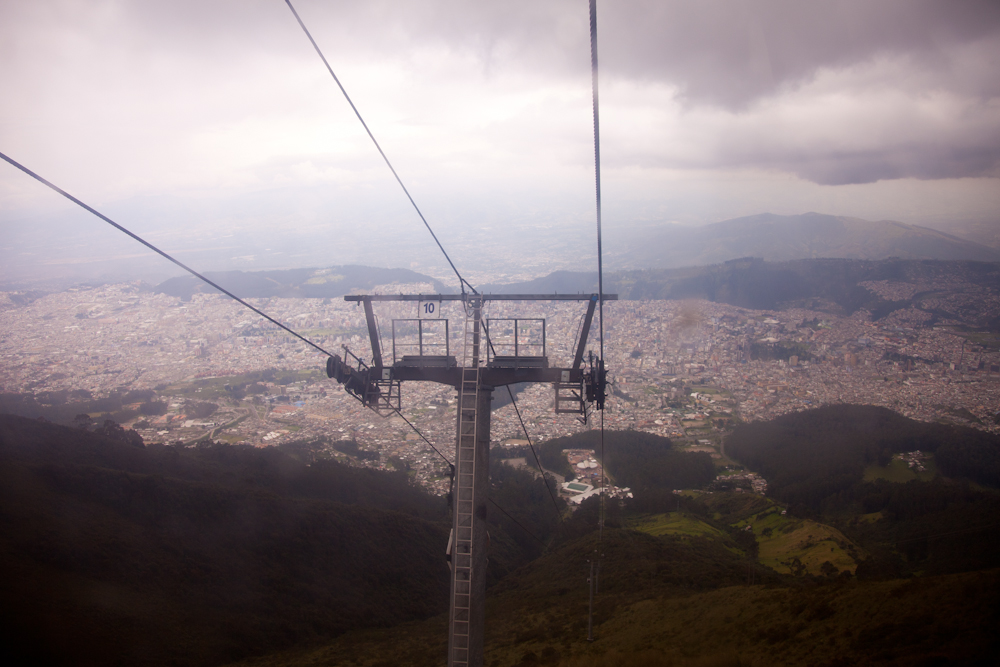
One day, we went on the Teleferico which is a cable car that ascends from 2,950 meters up to 4,050 meters to the summit of Cruz Loma offering a spectacular view of the city and its surroundings including more than 14 peaks of the Andes that is known as Volcano Avenue.  The route takes 8-10 minutes and covers a distance of 2500 meters. Once at the top, you can simply enjoy the views or you can hike 4 kilometers to the peak of Pinchincha Volcano.

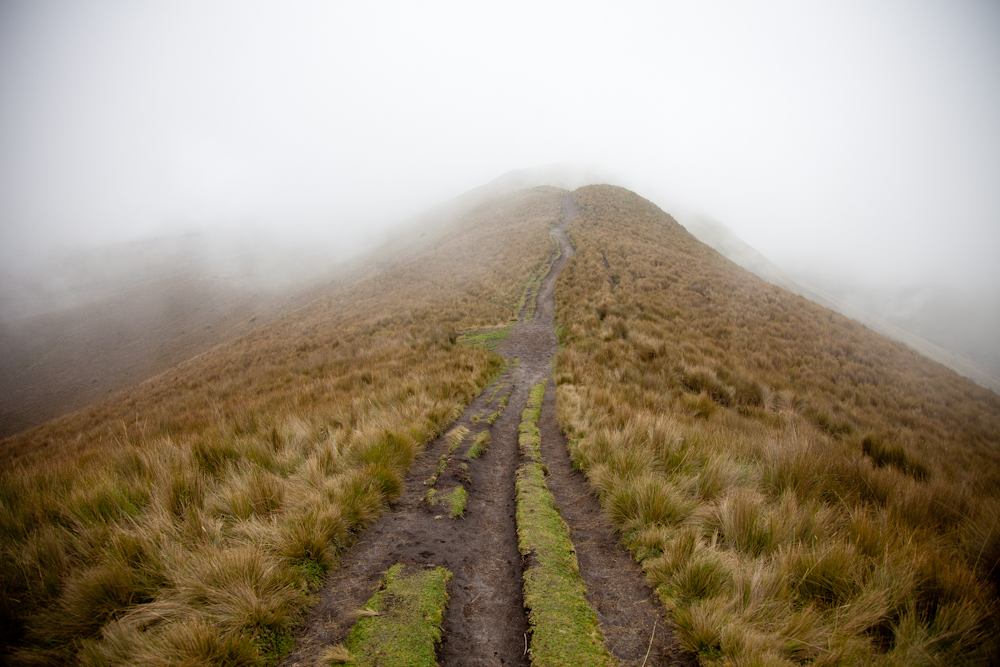
Normally we would have done the 4 kilometer hike, but the day we went, I still wasn’t feeling well and had pretty low energy, not to mention the high altitude that can tire you out easily.  So we hiked for about a kilometer, had a little picnic lunch on the side of the mountain, and then made our way back.  It was really cloudy by then so the views were obscured anyways.
On the ride down, just after proudly announcing to Chris that I was not one bit afraid of this cable ride as compared to the one we took when we were in Mindo, our cable car jolted to a stop, leaving us swinging wildly in the air hundreds of feet above the mountain slope.  I was terrified of course and when I looked over at Chris, I could see he was scared too – something I don’t see too often in Chris.   We just sat there for a few minutes wondering what was going on.   Then just as suddenly, the cable car started moving again.  We made some nervous jokes about what could have happened, and then when we were just starting to relax, the cable car stopped again!  This happened 4 times until we finally reached the bottom where we learned that there was an electrical storm on the mountain top and the safety protocol requires the Teleferico to be stopped every time lightening is seen.

Last Saturday, we joined two Swiss girls, Rahel and Amanda on a day trip to Otavalo and the surrounding area.  The day was spent visiting small towns on the way to Otavalo to observe the handiwork and customs of local indigenous people.  We spent a couple of hours at the Otavalo market and then made our way to Cotocachi which is renowned for it’s handmade leather products.  It was a very touristy day, but we had fun with the Swiss girls and made the best of having a guide who only spoke Spanish.  Rahel served as our primary translator – impressing me with her ability to translate from her third language (Spanish) to her second language (English). It also gave me a chance to practice my Spanish.

When we stopped for lunch in Cotacachi, we discussed whether or not we wanted to try the Ecuadorian delicacy, Cuy, or guinea pig.  At $15 a plate, we considered ordering one plate to share amongst ourselves so we could all have a little taste of this special dish. But when we saw the plate of Cuy brought to a neighbouring table, we unanimously decided against it.  What can I say, I’m not the most adventurous eater at the best of times, and when I’m coping with gastro issues, I’d rather play it safe than be sorry.

During this past week we have had some challenges with our accommodations.  We stayed 5 comfortable nights at the Traveller’s Inn but they were booked solid last weekend, so we had to find another hostel.  On the recommendation of a fellow traveller, we made our way to Casa Helbling.  They too were booked solid, but could give us a room each night – a different room that is.  So for three days, we switched rooms each day. What a pain that was!

While staying at these hostels, we were trying to arrange to stay at an apartment we saw advertised online.  The owner was out of the country until Saturday, but on Sunday we were finally able to see it. It is a 3 bedroom apartment, with 2 bathrooms, full kitchen, and living/dining room.  The building is only 18 months old so everything is new. The apartment is rather sparsely furnished, but has all the necessities, including a washing machine.  There is a view of the mountains from every window.  We moved into the apartment yesterday and will stay here for a week for a mere $20 a night – hopefully by then we can be on our way south towards Peru.


Best laid plans go awry

Let me begin this post with this: First, I am fine so nobody needs to worry about me (details are below). Second, I debated whether or not to write this post.  So far, our journey has been a pleasant, adventurous tale that I think our friends and family are enjoying. On Sunday, things didn’t go quite as we planned and it hasn’t been very fun since then.  But this too is part of our journey.  So here’s what happened.

We went to Latacunga last Thursday with plans to hike Cotopaxi and possibly the Quilotoa Loop.  We had booked a guided tour for Cotopaxi immediately upon arrival for Friday, but had to push it out to Sunday because I became sick with what I thought was altitude sickness.  By Saturday, I was feeling much better and even went to the festival. But by Saturday night I was sick again, really sick.  I had diarrhea and was passing a fair bit of blood in my stool.  I was up several times during the night.  I felt lousy. Finally, I popped a couple of tylenol, and took a Cipro as I have been taking Immodium for the past couple of days without improvement.  I had already had an occurrence with blood in my stool three weeks ago, but after a round of Cipro, it looked like everything was OK. You can imagine my concern to see blood in my stool again.  Something was definitely wrong.

When I got up on Sunday, I was still passing blood in my stool and everything passed through me like water.  I felt nauseous, weak, and had no appetite.  I couldn’t imagine hiking a mountain.  With these symptoms I knew I had to see a doctor.  I was pretty upset with this realization as I dreaded the idea of dealing with a foreign medical system in a foreign language.  Chris and I weighed our options and decided we would cancel our hike and go to Quito immediately as it was only two hours away.  Chris arranged for a private taxi to take us there as I couldn’t even think about carrying my pack and dealing with buses.  He also contacted Paola and Eduardo, our diving friends we met in Puerto Lopez who live in Quito.  They recommended the best private hospital in Quito (Hospital Metropolitano) and assured us we would find English-speaking doctors there. Unfortunately, they were out of town so that was the extent of help they could offer at that moment. They later emailed us when they were back in the city asking for updates and offering to help in any way necessary. It was very comforting knowing that there was someone close by if we needed help.

Next, we were in communication with our Health Plan to advise them of the situation. We had to provide a lot of detailed information in order for them to ascertain whether or not this was deemed an emergency.  Either way, we were going to Quito to see a doctor. Their prompt response to proceed to the hospital left me with mixed feelings:  relief that my Plan would cover this coupled with alarm that this was indeed deemed an emergency, even by stringent insurance standards.

Back to Quito we went, back to the same hostel we stayed in when we first arrived.  Talk about coming full circle.  It felt strange to be back in Quito, yet very familiar in a comforting sort of way.  We dropped our bags off at the hostel and then took another taxi directly to the hospital which was only a few minutes away.

The hospital is large and modern, like any hospital in Canada.  We went to Emergency, filled out a form as soon as we arrived, and within minutes I was in a bed talking to an English speaking physician. I was hooked up to an I.V. of saline solution as I was dehydrated, and a nurse took my blood for tests. An hour and half later, the results came back – everything looked fine.  Next step was to be examined by the gastrointestinal specialist who arrived about 45 minutes later.  During this time a urine sample was taken and also sent for tests.  The specialist checked me over and ordered another bag of saline solution, and then said a stool sample was necessary to check for bacterial infection, parasites, etc. These tests would take 1-3 days.  He prescribed three medications that I was to start immediately (total cost: $54.55).  He gave us his business card so we could contact him directly to enquire about my test results. He said blood in my stool was serious and we needed to find out the cause, but since I looked healthy (I had already perked up after the first bag of saline) and the amount of blood I was passing was small, he was comfortable for me to go back to the hostel rather than stay in the hospital overnight.  However, he made it very clear, if the amount of blood increased, I was to go back to the hospital immediately.

We were in the emergency room for a total of six hours during which time I spoke to two doctors, had 2 bags of saline injected into my veins along with a shot of medicine that had something to do with protecting my stomach from an ulcer (I didn’t really understand what it was for to tell you the truth). Blood was taken and tested and urine was collected for testing.  Total cost:  $308.81 payable before leaving the hospital.  So at the end of the day Sunday, I still didn’t know what was wrong with me, but many serious problems had been ruled out based on the blood tests.  And I was now hydrated and already feeling better.  The overall experience was very positive – aside from the language barrier, this could have been any Canadian hospital, except of course we were treated immediately with no wait times whatsoever, and we had to pay the bill when we left.

This morning we submitted my stool sample to the lab at the hospital (another $55.38 charge).  And now we wait for the results.  We are very comfortable in the Traveller’s Inn hostel, especially now that we know we have access to their very clean and very well equipped kitchen.  We are just taking it easy, laying low in the hostel.

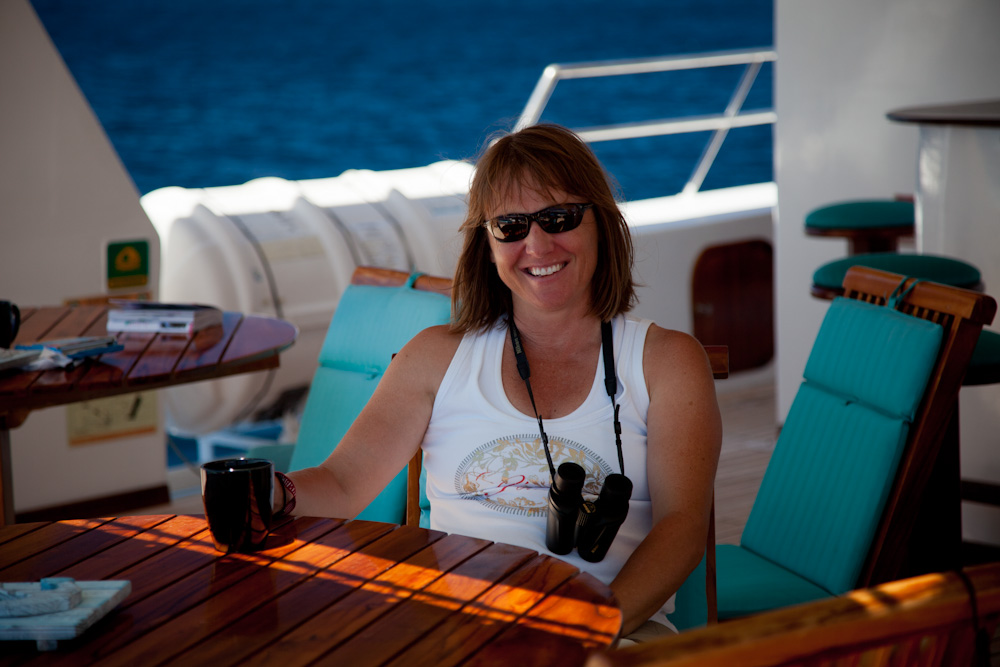
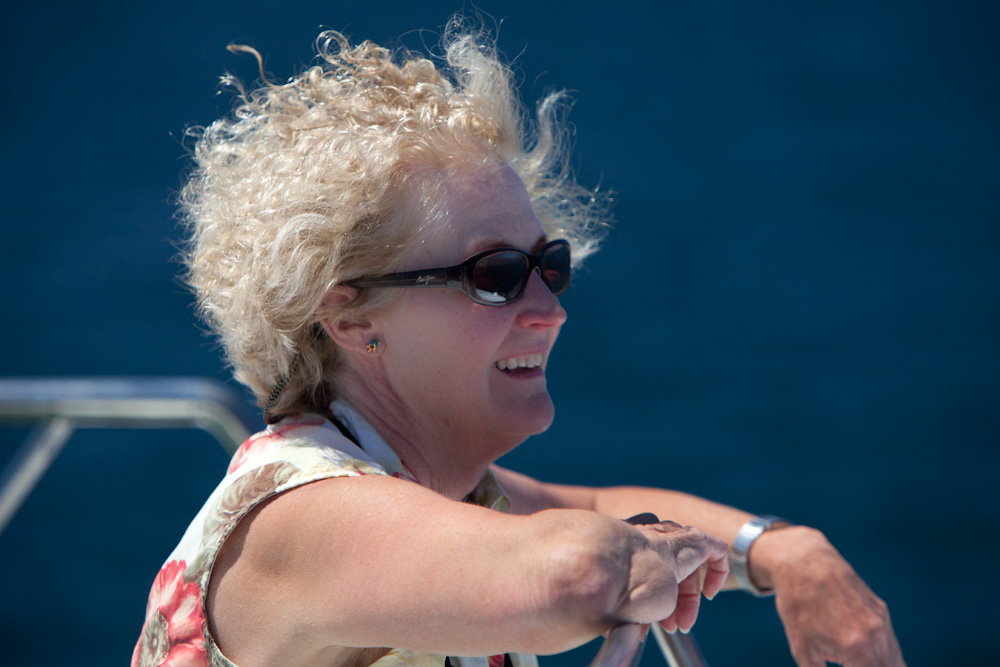
The picture below was taken this morning after we dropped of the sample at the lab.  We walked the 3.5 km back to our hostel (all downhill) in order to get some fresh air and a little exercise.  As you can see, it’s not like I’m dying or anything. In fact, I’m already feeling a lot better so I’m certain this is nothing serious, after all, nothing serious ever happens to me.  We just need to get to the root of this issue and resolve it…..and then our journey can continue.

Trapped in a fiesta

“La Fiesta de la Mama Negra” is described by Wikipedia as “a well known traditional festival in Latacunga. It is a mixture of indigenous, Spanish and African influences. It takes place twice a year. The first one was organized in September by the people from the markets “La Merced y Del Salto” in honor of the “Virgen de la Merced”. The Virgin is venerated because she stopped the Cotopaxi Volcano eruption in 1742. That is the reason why Latacunga’s inhabitants call her “Abogada y patrona del volcan” meaning (lawyer and boss of the volcano).

The second celebration is a party which all Latacunga’s inhabitants celebrate every year on Independence Day. It is a parade with the participation of well-known people, the army, clergy and others.

Both of these fiestas include a lengthy parade of various cultural characters, all dressed-up in various colors. The ‘mama negra’ is the last person to pass through, which is the culmination of each parade. It is a person with their face painted in black, riding a horse, and spraying the crowd with milk. Homemade strong alcoholic drinks are freely passed between one another along the parade route, which can be quite chaotic, closing the road at times and making the route unpassable.”

The second celebration took place this past Saturday in Latacunga and we were there to experience it first hand.  In fact, we got a lot more than we bargained for.  On the advice of the hostel owner, we headed towards the parade site around 8:30; the parade was supposed to start at 9:00.  It was easy to find the main parade route which passed through several blocks as the roads were barricaded on both sides, and police presence was strong.  People were lining up plastic chairs and stools along both sides of the route, renting them out for two bucks a piece.  You could buy your own stool from any one of the dozens of stool vendors for $2.50 each.  Or you could just find a spot to stand. We walked along the route for a few blocks and found a good vantage point on a concrete step about a foot above street level. We parked ourselves there and waited.  As time passed, the area started to fill up with spectators and vendors selling knock-off Nike caps, sun hats, beer, snacks, and drinks.  Right in front of us, the Australian couple we met at the reserve in Mindo set up camp with their friends. They were equally surprised to see us, although I’m not too sure if they really remembered us.

Just before the parade began, our friends from the Galapagos cruise, Dafne and Jasper, walked right in front of us.  We couldn’t believe it.  We all had a good laugh about who was stalking who, because these were the friends we couldn’t seem to shake in Santa Cruz and ended up spending a lot of time with them.  When we said our goodbyes at the Baltra Airport, we believed that was the absolute final goodbye.  And here they were in Latacunga.  They were leaving in the afternoon to start the Quilotoa Loop, a 200 km route of rough and rugged roads that pass through beautiful, isolated mountain villages and hamlets, many of whose inhabitants cling to their ancient indigenous heritage and ways. There are several popular hiking trails along this route.

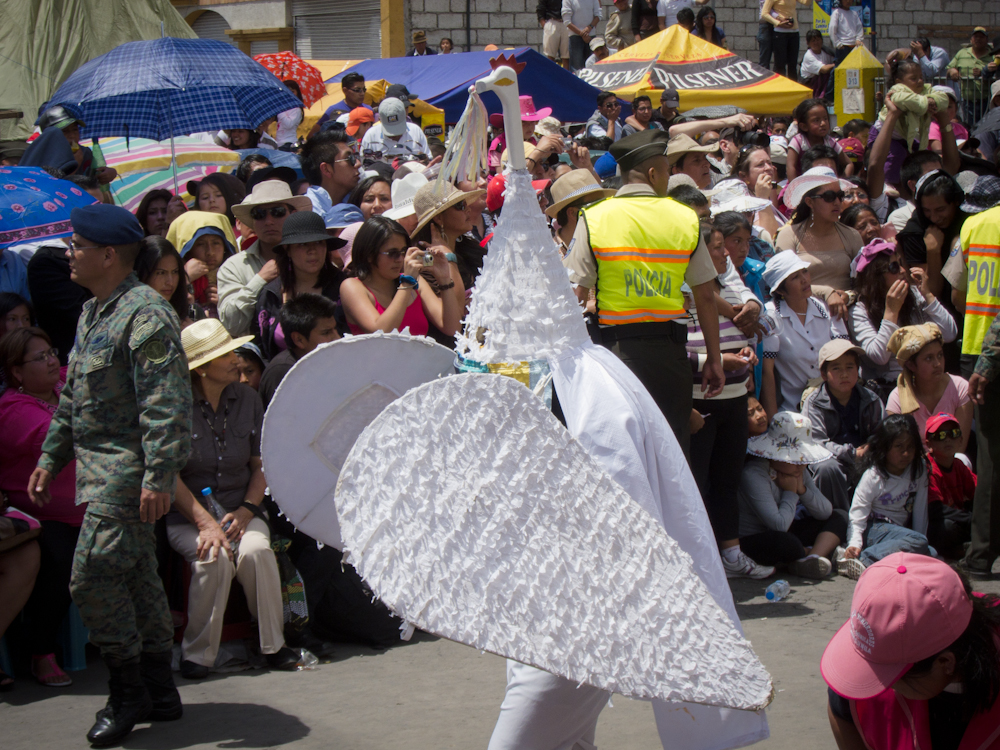
Finally, at about 11:30, the first characters in the parade passed by.  Over the next hour and a half, we saw marching bands, musicians, colorful dancers, a host of bizarre characters such as the Angel of the Stars, the Moorish King, as well as Los Huacos, who represent Latacunga’s pre-Colombian heritage, and the Camisonas, colorful transvestites.  Apparently the parade culminates in the arrival, on horseback, of the Mama Negra, the Black Mother, a combination of the Virgin with African deities. The Mama Negra, bearing dolls representing her “children,” is elaborately costumed and from a container sprays milk and water on the parade goers.  We didn’t stick around long enough to see the grand finale.

The parade characters tossed candy to the crowds, and shots of booze were handed out as well. Others didn’t bother with shot glasses and just poured booze down the throats of anyone willing.  After awhile, I observed a pattern to the parade:  First, there was a group of colourfully dressed dancers, followed by a marching band or other musicians, and then the highlight would be a guy carrying a full pig on his back. Men dressed as women would intermingle amongst these main characters along with those dressed in white doing cleansing rituals to unsuspecting spectators along the way.  Once this entourage passed,  it would be repeated again and again with new groups of dancers, musicians, etc.  Each group seemed to represent an association, a store or some other entity.

I was intrigued by the guy carrying the pig. Clearly it was heavy as he would walk only a few steps, twirling around a few times, and then he would stop and rest the pig on a table that was carried behind him by his entourage for this purpose. As he walked, his legs buckled under the weight of his load and his face strained from exhertion. When he rested, he swallowed copious amounts of water (at least I think it was water), smiled for photos, and then mustered up his strength again for another few steps and twirls. This was repeated for the entire length of the parade – a distance of over 2 km.


Restaurateurs set up stalls on the streets, and served Latacunga’s most famous contribution to Ecuadorian cuisine, Chugchucaras; deep fried pork, pork rinds, popcorn potatoes, maize, and plantain.  I practically gagged at the smell of the grease from these vendors!  And of course, beer vendors were everywhere.


By 1:00, we decided to head back to the hostel; we had no idea how long the parade would go on, and we were sweltering under the mid-day sun.  We navigated our way through the crowds trying to find our way to the other side of town, but on every turn our passage was blocked.  After about a half hour of walking pretty much in circles we ran into a group from our hostel, Peace Corps workers that we met at breakfast who assured us they knew their way around town.  They too were trying to get back to the hostel and suggested we join them.  They backtracked towards the parade and before we knew it we were right back to where we had been standing except now we were on the street in the middle of the parade!  Crowds of people lined both sides of the street on both sides of the barricades – and there was no apparent way to exit.  We pushed our way through the sea of bodies; blindly following our Peace Corps buddies, hoping they knew where they were going.

When we ducked into a little restaurant for a reprise, we discovered only two of the Peace Corps group remained; they had lost the rest of their friends in the confusion. Daniel and Hannah suggested we all stop for a bathroom break and a snack before facing the mob again.  We tried a local favourite, chochos – a bowl of small white beans topped with toasted kernels of corn, slivers of red onion and soaked in a vinegar based sauce. Delicious.

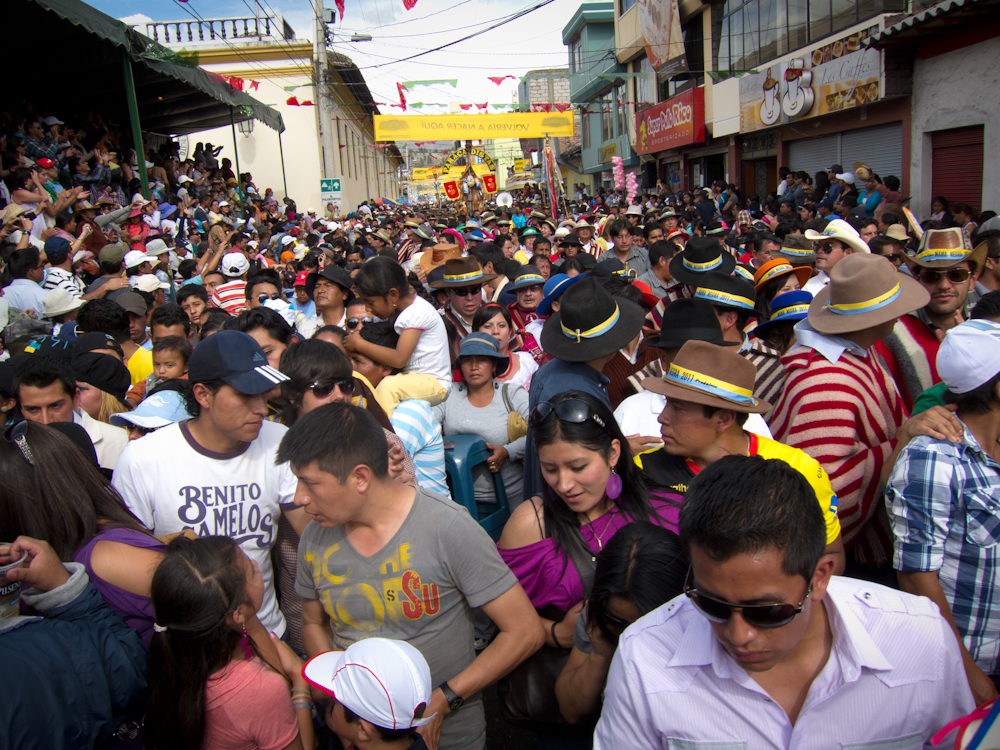
Once fortified, we made our way back onto the street and tried once again to find an exit.  It was unbelievable that the parade route had been configured in such a way as to not allow anyone to exit. This was a disaster waiting to happen.  There were thousands of people throughout the parade route, many drinking excessively, and some getting aggressive when their passage was blocked for any reason.  The large police force seemed incapable of controlling the crowds. There were many families with young children and babies in their arms caught in this mix too. Every possible exit point – side streets off the main parade route – were impenetrable as you can see from the photo below.

As we pushed our way through the crowds, we kept getting pulled into the parade. As gringos, we were easy targets – Hannah was nabbed for a “cleansing ritual”, then it was Chris’ turn.  This was all in good fun.

Every few steps, people were trying to pour booze down your mouth or offered shot glasses of who knows what to drink. I had a few sips but gagged at the taste. Chris was grabbed by one of the guys dressed as a woman who was yelling Viva Latacunga, Viva Latacunga. Chris was a good sport about it all.

After two hours of pushing through the crowds, trying to find a way out, there was still no exit in sight.   The parade just kept on coming – more muscians, bands, dancers and strange looking characters. And more rowdy spectators.  It was no longer fun.  We were exhausted fighting the crowds, and I was feeling faint in the heat.  We just wanted to get away from the craziness.

Finally, we saw a few people pass through a barricade to freedom.  We weren’t the only ones trying to get out and all of a sudden we found ourselves caught in a mob forcing their way to this almost imperceptible exit.  The power of this mob was frightening and made me understand how people get trampled to death when crowds lose control. Chris took this shot of the crowds just before the surge began.

And then, we were out.  What a relief.  Nobody was hurt (that we knew of), although Daniel was pick pocketed during this final surge of bodies but he only lost a few dollars. We were all exhausted and made our way back to the peace and quiet of our hostel where we stayed for the rest of the afternoon.


Hostel or maybe hostile cooking

We landed in Guayaquil late Tuesday afternoon and had plans to travel to Cuenca the next day.  There has been a national holiday this week and it seems like the entire nation has taken the week off for holidays.  As a result, it was impossible to find a room in Cuenca this week.  Even the buses were overloaded and not running their regular schedules.  So we had to decide what to do next.  The options were:

  1. Go to Cuenca without a reservation and take our chances.
  2. Stay in Guayaquil until Sunday and then go to Cuenca.
  3. Go somewhere else – Latacunga was our next choice.
  4. Head to Peru.

After weighing the pros and cons of each option, we decided to go to Latacunga.  We had hoped to visit this city when we were in Quito, but because Chris was sick, we never made it.  Latacunga is an hour and a half from Quito.  It is 2,760 m above sea level (similar to Quito).  Its climate is normally cold and windy, due to the neighbouring snowclad heights, and the barren, pumice-covered tableland on which it stands. The active volcano Cotopaxi is only 25 kilometres away, and the town has suffered repeatedly from eruptions. Founded in 1534, it was four times destroyed by earthquakes between 1698 and 1798. People use Latacunga as a base to access the Parque National Cotopaxi, the infamous Saquisili market, and the Quilatoa Loop, an isolated route that passes through the mountains, and small villages with colourful markets.  Our plan was to hike Cotopaxi from which the views are supposed to be spectacular.
On Wednesday, we took the city bus to the bus station to figure out which bus we needed to take and hopefully buy our tickets for Thursday.  You may recall that the bus station in Guayaquil is huge, with almost 200 bus companies represented.  We thought it would be easier to figure out the tickets without our heavy packs on our backs.  Good decision on our part.  At the bus station, there were hundreds of people, lined up at every kiosk.  It was absolute chaos.  We found two companies that had buses to Latacunga – neither were selling tickets in advance.    So much for that idea.  At least we knew where to go the next day.

I decided to cook on Wednesday, the first time since leaving Canada.  The hostel we were staying at, DreamKapture, was very comfortable and had a little kitchen that was reasonably clean although not very well equipped.  Chris was less enthusiastic when I announced I would be cooking meals today – lunch and dinner, but I talked him into it anyways.  We shopped at a grocery store that reminded us of a Walmart where they sold everything from tires to milk.  Food was cheap especially vegetables.  We had tuna sandwiches for lunch and I made a spaghetti-like pasta dish with salad for dinner.  Everything turned out great, except there was way too much food at dinner time.  I invited other guests at the hostel to join us, and before you knew it, all the food was gone.  It was a very homey atmosphere that night.

Thursday we awoke early to get to the bus station for 6:30 but unfortunately, I was in no condition to travel.  Yup, my stomach was off and I only had my cooking to blame!  Chris’ stomach was also off, but not as bad as mine.  I was horrified to think I may have made half the hostel sick too.  At breakfast, nobody else complained of stomach problems, so I hoped maybe it wasn’t my food.  I really didn’t want to stick around to find out either, so we headed out to catch the 10:00 bus.

The 6.5 hour bus trip took us north back through the Andes mountains. The scenery was stunning.  We arrived in Latacunga amidst a downpour – the first hard rain we’ve been caught in, and of course, our rain gear was at the bottom of our packs.  It was impossible to get a taxi in the rain so we trudged in the pouring rain 1.5 kilometres to our hostel loaded down with our packs.  We were now at a high altitude and I was huffing and puffing, feeling almost light headed under the weight of my pack.

Thankfully, we made reservations in advance at Hostel Tiana.  There is a big festival on Saturday (Mama Negra), and the town is booked solid.  A few people have camped out in their sleeping bags on the sofas in the outdoor lounge area – a little frosty with night time temperatures around 10C.    We had a private room the first night, but the next two nights we would be sharing our room with two German girls.   This would be our first experience at dormitory style accommodations. And our first local festival.

Thursday night I succumbed to altitude sickness – nausea, fatigue, body aches.  Add this to my still upset stomach and I was not in good shape.  By mid-afternoon Friday, I was starting to come around. I’m sure I’ll be good as new for the festival tomorrow.

Hammerhead sharks and more

Diving in the Galapagos Islands is a dream for most divers and was one of the main reasons I worked so hard to get my Open Water Certification before we left Canada. Diving here can be very challenging with the strong currents and cold temperatures.  As new divers, we are keenly aware of our limitations and it was with this in mind that we decided to sign up for the Advanced Certification course.

The course involves 5 dives, each of which develops new skills.  Two dives are mandatory: deep dive and navigation dive.  The remaining three dives can be selected from several specialities.  We chose:  multilevel diving, drift diving and buoyancy control.  The main benefit of taking the course from our perspective would be the one-on-one attention with the instructor.  I figured this was a good insurance policy for staying safe and out of harm’s way.

The dive shop we selected, Academy Bay, offered a competitive rate for the course and making arrangements in English with the Australian shop owner, Alice was straightforward.  Our instructor, Freddie, spoke English quite well (as his second language) and we felt confident that at least communication would not be an issue.   However, I did observe that this dive shop was rather disorganized in the way they handled the equipment (for example, they brought the wrong size wet suit for Chris) and lax when it came to following PADI procedures.  For instance, we were assigned our home work which we did, but only reviewed it with the instructor after the dive, not before.  We presented our PADI certification after the dive, and we never did get around to signing any medical or legal release forms.  They seemed content to take our word at face value.

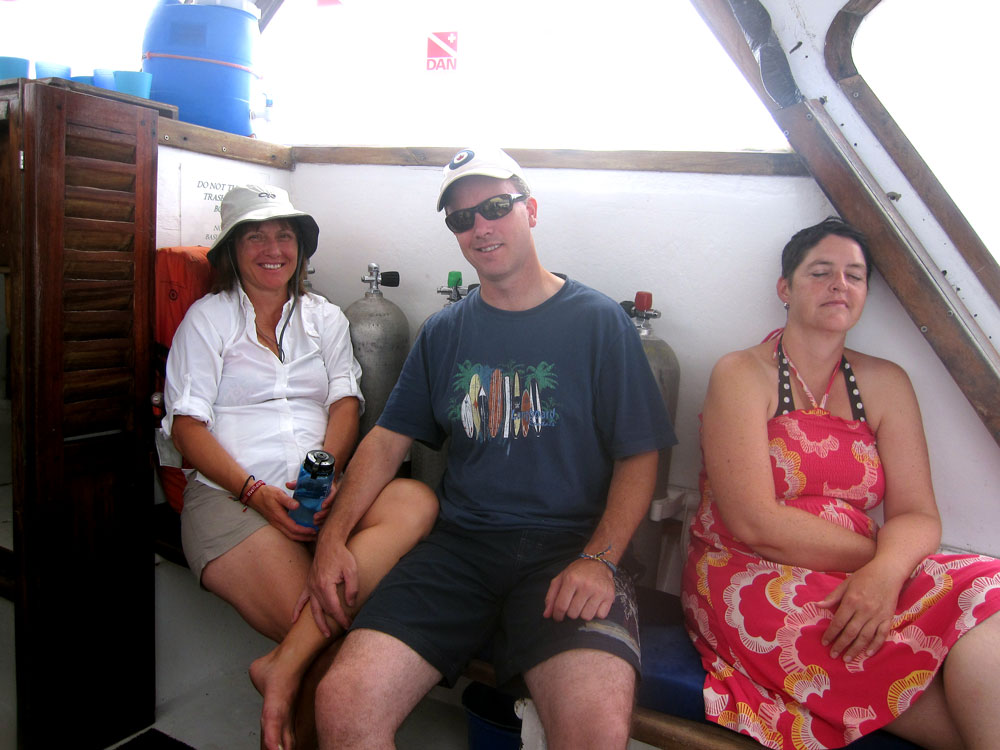
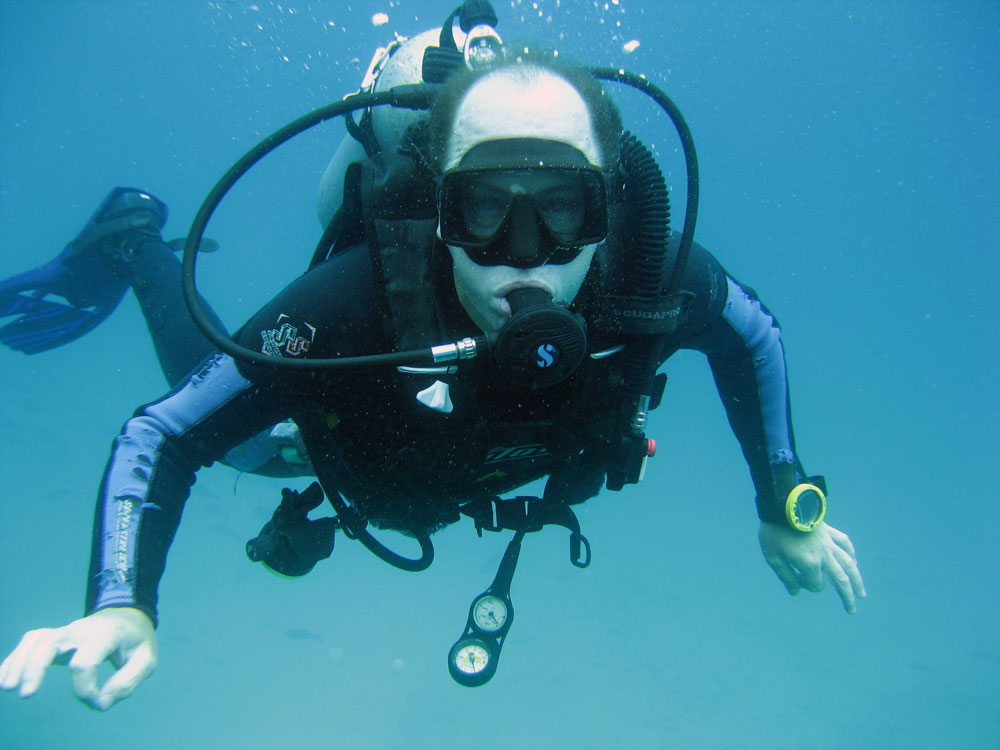
Before our cruise, we did our first two dives.  The destination was Gordon Rocks which is reputed to be one of the most difficult dive sites in the Galapagos.  Frankly, I was terrified at the thought of diving here as I had read many, many warnings online about the dangers of this particular site. However, both Alice and Freddie assured us that conditions could be very safe (no current) or hazardous (strong current) and we would only know when we got there.  They would not let us go in the water if the current was strong.  And there was an alternate site close by if we needed it, Las Plazas. To help calm my fears, Alice decided to dive with our group that day, offering to accompany us if we dove at Gordon Rocks, a gesture I greatly appreciated.  In the picture below, I look surprisingly calm – I think at this point I had resigned myself to my fate.  I just hoped that this day, which happened to be our 9th wedding anniversary, would not end in calamity.

It turned out to be a very calm day at Gordon Rocks, but I was still not confident to do our first dive at that location, so we let the other divers go ahead as we snorkelled with sea lions. When they came up, the other divers confirmed there was very little current and they had an amazing dive where they saw hammerhead sharks, the Bola Bola Sunfish, and lots of rays.  The photo below is the Sunfish they saw.

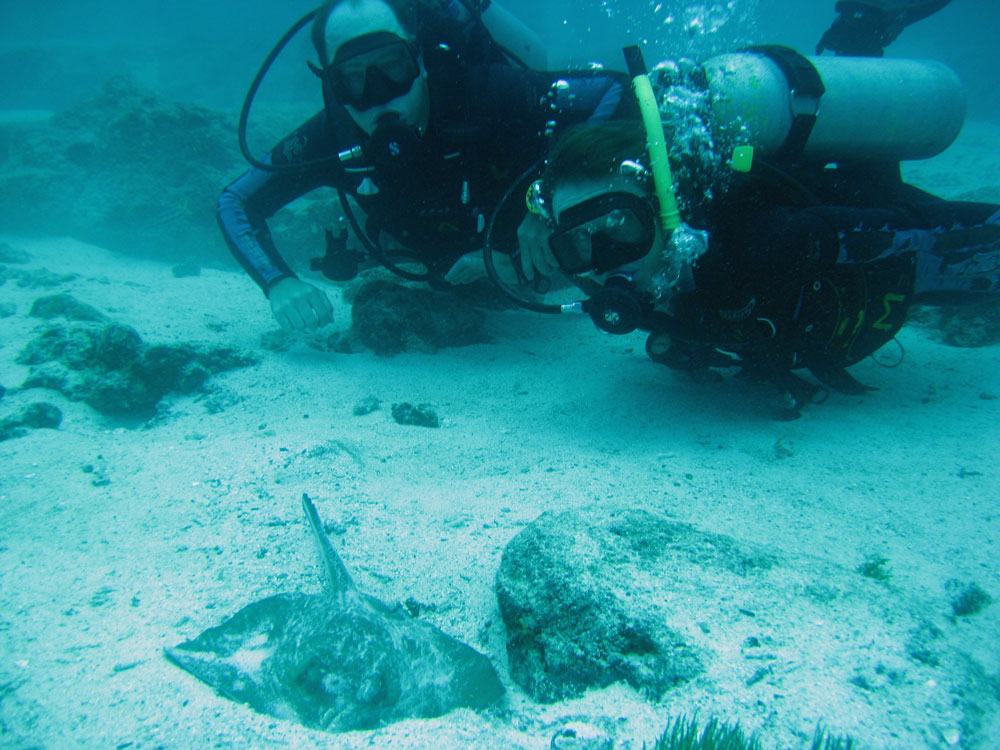
At Las Plazas, the current was quite strong – stronger than Gordon Rocks today – go figure.  The plan was to just let the current take us along and when we were out of air, we would surface and the boat would pick us up.  At times we hung on to the rocks to slow us down a bit.  This was supposed to be our multi-level dive so we went down to about 24 m for ten minutes, up to 16 m for ten minutes, and then did the rest of the dive at about 12 m.  This could easily have been our drift dive.  We saw our first hammerhead shark on this dive!


Our second dive was at Gordon Rocks.  By now the water had become quite choppy, and there was a small current, but nothing we couldn’t handle.  I was still a little nervous so Alice joined us to give Freddie a hand in case he needed it; this helped calm my nerves.  This was supposed to be the drift dive so again we just let the current take us, grabbing onto rocks to slow us down a bit.

On this dive we saw a huge school of barracudas directly in front of us – it was awesome.  When we ended the dive, the sea was really rough.  It tossed us about as we were getting our gear off before climbing back into the boat.  It was too much for my stomach – as soon as I got on board I proceeded to feed the fish as I vomited over the side of the boat.  I was fine once the boat started moving, but until then, all I can say is that the fish were well fed that morning.

All in all, the first dive day was a resounding success.  First, we survived. Second, we accomplished our skills, and finally, we saw some pretty cool things underwater.  I don’t think I’d go so far as to say I had fun – I still find diving to be an exercise of determination to conquer my anxieties and fears.  But I was happy after the dive and enjoyed a feeling of accomplishment.

We did our second dive day after we ended our cruise.  Jasper and Dafne, our new friends from the cruise, also came along for this dive.  The dive was planned off the coast of Floreanna, an island about a 1.5 hr boat ride from Santa Cruz.  We had three dives planned:  deep dive, navigation dive, and buoyancy dive.

Right from the start, things went wrong.  First, we were told our instructor was ill and was not going to come with us. We later learned the real story: the dive master on this boat (Luis) refused to allow our instructor on board.  As far as he was concerned, if anyone was going to do any teaching, it was going to be him.  We were assured he was competent and could speak English.  Again there was some disorganization with the gear – scrambling to find the compasses for our navigation dive, and tossing in two dive computers and the underwater camera at the last minute (only after we observed they were missing).

As soon as we left the harbour, the engine started to make strange noises – not something you want to hear as you’re heading out to open seas.  The captain ignored the engines and kept going full throttle ahead for about a half hour until the engines started to sputter.  He took a look at the engines and decided to keep going at a much slower speed.  The 1.5 hour trip took us 3.5 hours!  Poor Dafne – it took all her concentration not to throw up as the boat rocked in the high waves.   I was fine as long as we kept moving forward.

Finally, we got to our dive site.  Luis gave us the dive briefing and seemed to ignore the fact that we were doing the Advanced Course today.  After orientation, we took him aside and reminded him.  He tried to brush us off saying we would all dive as a group.  We insisted that we had paid for the course and we expected to dive exclusively with our instructor and to do the exercises as outlined in PADI.  He grudgingly conceded and assigned the group to the other dive master and the instructor-in-training who were on board. We also pointed out that we were supposed to be doing our deep dive first not our buoyancy (this is directly from PADI), and again he minimized this and said it was only a guideline.

So off we went on our first dive.  To his credit, Luis did teach us some good buoyancy skills and took the time to make sure we were properly weighted.  I did the entire dive without needing to adjust the air in my BCD, just using my breath to go higher or lower.  It was great.  Luis knew the site well and found all kinds of interesting things for us to see, including lots of sharks, turtles, and mantas.  It was a good dive.

I was a little curious as to the logistics of our third dive since the other divers were only doing two. So once on board, I asked Luis how it was going to work.  He explained we would go back into the water immediately, and do our navigation exercises at 5 m depth.  It would take ten minutes to complete.  This was not what we expected – we were told we would have three dives with three tanks.  Well they didn’t have enough tanks for us to do a third dive.  So we did the navigation exercise – but only after we discovered one of the compasses did not work.  Chris and I did the exercise together with the one working compass.  We did a straight line out and back, followed by a square and then a triangle.  It was all very rushed.

The third dive was our deep dive.  The plan was to go to 30 m and then Luis would do a couple of tests with each of us to check our cognitive ability at that depth.  Didn’t quite turn out that way.  We descended to 34.4 m with Luis casually looking behind at us now and then giving us the OK gesture to which we responded OK.  We stayed at that depth briefly – not more than ten minutes – and then ascended to about 18m where we stayed until we ran out of air.  That was our deep dive – he explained later that he could see we were fine and didn’t think we needed to do the exercises.  This guy was just too much!

There was a lot of current on this dive, so at one point we hung on to some rocks to slow us down.  Here we stayed for about ten minutes fascinated by the sea life passing us by – all swimming against the current.  We saw our first Galapagos Shark while perched on these rocks.  And then another, and another, and another.  They were within a couple of feet of us.  I saw Chris madly snapping pictures.  There were turtles, and huge schools of fish, all around.  It felt like we were watching an underwater movie – except we were in it!  Absolutely amazing!  Chris even took some video of us hanging onto the rocks watching the sharks swim by.


While we were diving, the captain took apart the engines to clean and repair them – a rather unsettling sight to see knowing we had a long trip back to Santa Cruz.  By the time we finished our dives it was about 3:30 – we had been out since 7:00 in the morning and had been given nothing but water and an apple.  We expected to be given lunch at some point, but because we were so delayed, the captain decided to go back as soon as we had finished our dives.  We pulled into Santa Cruz at 5:00 pm at which time the crew prepared our lunch – just a little late!  We were famished.

The two dives we did this day were absolutely fantastic in terms of the conditions (excellent visibility) and the sea life we saw. From the course perspective, it was pretty half-assed.  We studied all the required course material in advance and we were ready and confident to do all three dives.  While we did accomplish the necessary skills for certification, we felt we were gypped out of a full dive and we were appalled to see the lackadaisical teaching approach by this instructor.  Add to that the poor condition of the boat and the lack of refreshments on board, and I can tell you, we were not happy customers.

Back on dry land, after hearing our miserable tale, Alice was sympathetic and empathetic and compensated us for the way things turned out.  In the end, we got our certification and had a few great dives.  All’s well that ends well.

Galapagos Islands Cruise Day 8: Birds, Birds, Birds

Our final stop was at North Seymour which is a small islet north of Baltra with typical arid vegetation including prickly pear cactus, palo santos trees and salt bushes. The visitor trail on North Seymour is approximately 2 km in length crossing the inland of the island and exploring the rocky coast. Along the way the trail passes colonies of blue-footed boobies and magnificent frigate birds.

We landed for our walk very early (6:00 am) because we had to be back in Baltra and off the boat before 9:00 am.  By now I think we were all a little bit tired as the schedule each of the past 7 days has been packed full of activities.  Regardless, this stop was well worthwhile as we were able to see so many birds up close.

In spite of the early start, there were groups already on the trail – ahead and behind us.  Our guide kept us moving at a good pace so as not to collide with the other groups.

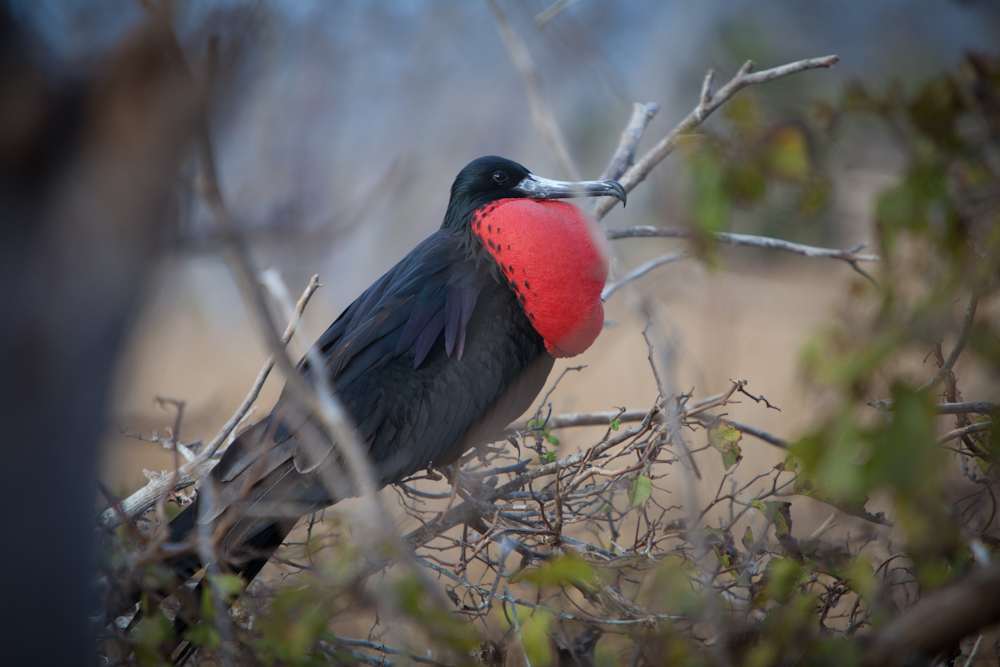
We had the opportunity to see the inflated red pouch of the magnificent frigate bird, a large black bird with a long wingspan, and a hooked beak; it is extremely fast and has excellent vision.  We had seen these birds throughout our voyage but this was the first time we saw them with thier large red pouches on their necks fully inflated. During mating season the males throw back their heads, inflate the pouch (sometimes to the size of a soccer ball), and shake trying to capture the attention of female frigates.

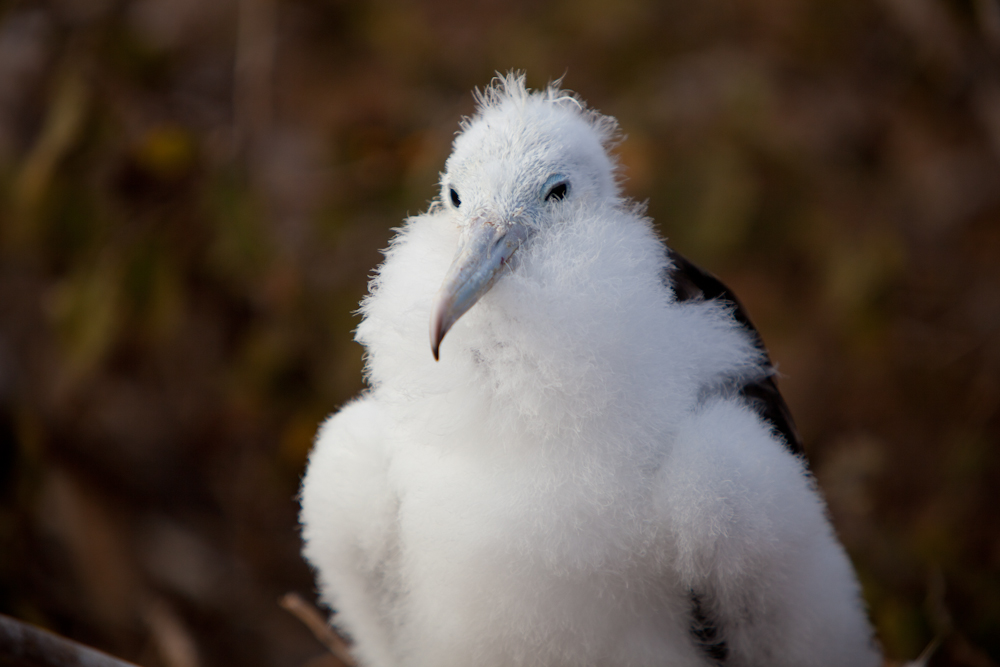
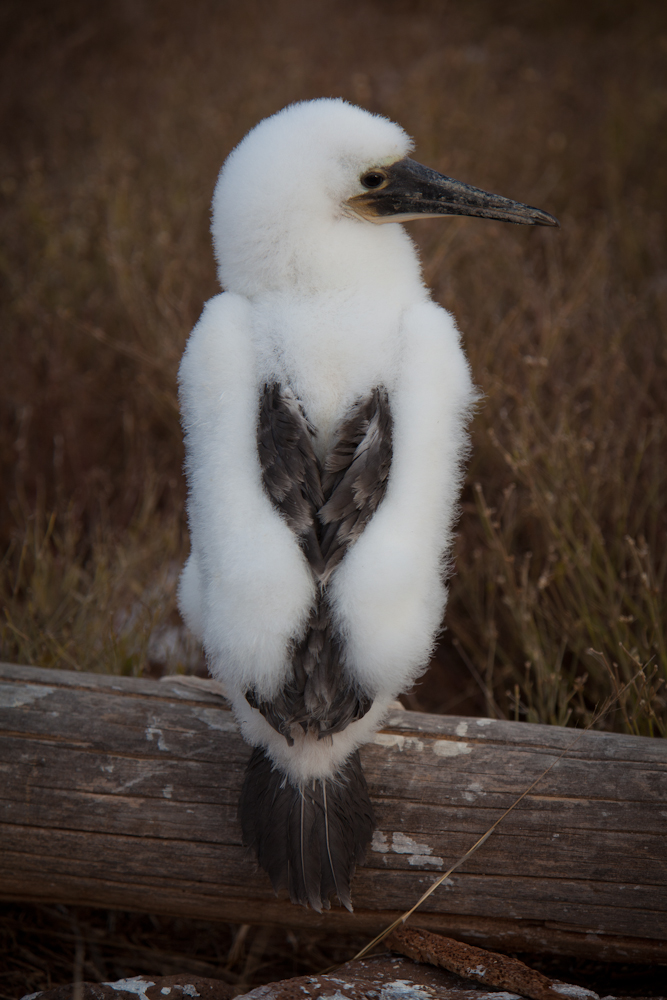
Boobies and frigates have an interesting relationship. Sharing the same nesting area on North Seymour, blue-footed boobies nest on the ground making their nests from the twigs of the palo santos trees, while the magnificent frigate bird nests just above them in the salt bushes.  We saw several baby blue-footed boobies which are fluffy, white puffs of feathers – absolutely adorable.  Sadly, we saw a few dead ones as well, victims of nature – the mother sometimes lays two eggs but only nurtures one baby leaving the other one to die.

Blue-footed boobies are great at fishing. Hunting off-shore, the boobies dive from mid air into the sea in order to catch fish. Successful, they return to the island with their prize to feed their young. Frigate birds named for the warships once used by pirates are the pirates of Galapagos birds. In contrast to the booby, frigates are poor fishers.  Their bodies produce very little oil for their wings and they are not waterproof. Unable to spend time in the water fishing they must rely on food stolen from other birds to feed themselves and their young.

Unable to spend time in the water fishing they must rely on food stolen from other birds to feed themselves and their young. When a booby or red-billed tropicbird returns from a successful fishing trip the frigatebird will swoop down and molest the bird until it drops its catch. The frigate then plucks the food from the air, feeding itself and its young from the stolen loot. Frigatebirds on North Seymour rely on the fishing success of the blue-footed booby for their survival.

Of course, any walk on an island in the Galapagos would not be complete without sea lions, and North Seymour was no exception.  To our left, the sea lions basked on the lava rocks along the ocean edge, and to our right, the birds were nesting in the low lying vegetation.

Once we were back on board, we enjoyed our final breakfast as the boat travelled to our final destination, Baltra. We were dropped off on Baltra Island which is where the airport is located.  It is typical for people to fly into the Galapagos Islands, board their cruise ship, and then head home directly after their cruise.  Only four in our group were flying out this morning; the rest of us made our way back together to Puerto Ayora where we were all spending a few more days.  We would bump into each other many times over the following days.  In fact, it became a joke between us and Dafne and Jasper as we kept running into them, eating most meals together, and after each one, saying good-bye as if it would be the last.  It was the longest good bye ever.  We even travelled to the airport on Tuesday with them and then said a final good-bye.  We hope they will visit us in Canada one day as we really had a lot of fun with them.

And so came to an end our wonderful 8 day cruise in the Galapagos Islands.  Hope you enjoyed the trip!


Galapagos Islands Cruise Day 7: Snorkelling with Sharks!

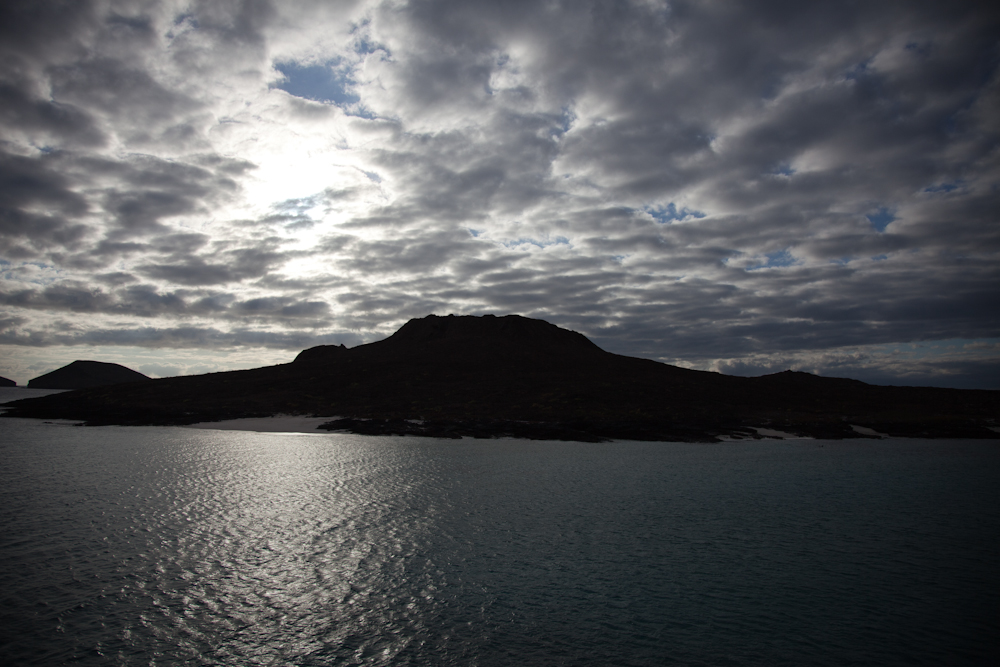
The clouds have overtaken us.  I awoke this morning surprised to see we were still anchored in the bay at Rabida Island and disappointed by the overcast, gloomy sky.  Considering this is our final full day at sea and every day thus far has given us perfect weather, one can hardly complain.  As I enjoyed my morning coffee perched high on the top deck, the boat headed off to Chinese Hat Island, so named because it looks like a Chinese hat. This tiny island just off the south eastern tip of Santiago Island is less than a quarter of 1 sq km in size.

As the anchor was dropped, the sun came out as if on cue and the rest of the day remained warm and sunny.   After breakfast we headed to the island for a walk, the first group to land today.  Enrique was well organized and very knowledgeable about the other boats at each island and did a great job insulating our small group from the crowds that sometimes overwhelmed an island.  A welcoming committee of several sea lions greeted our boats as we made a wet landing.

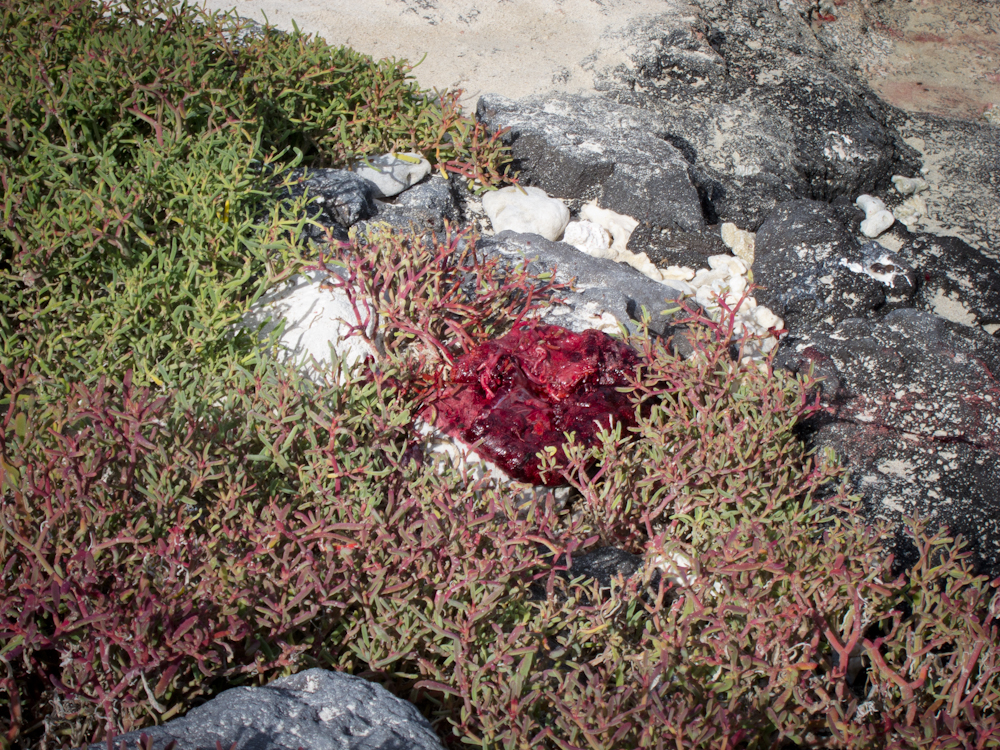
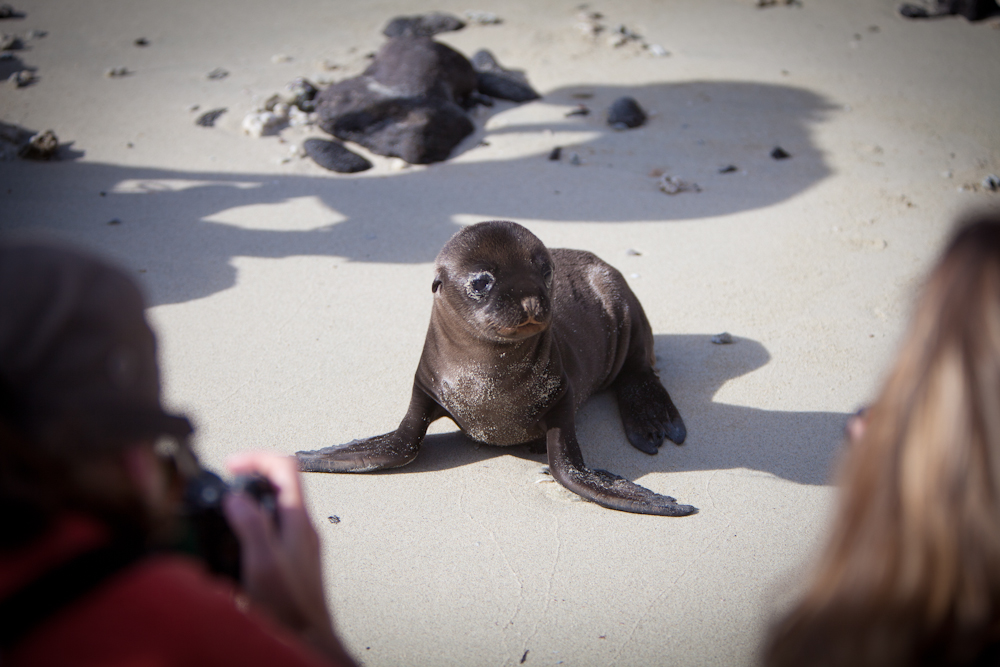
The highlight this morning was a sea lion with her newborn pup, estimated to be only a few hours old.  The blood on the rocks where the birth took place was still fresh, as was the bloody trail from the birth site to her present resting place.

A hawk watched from a close distance, its bill and talons stained red from the blood of the placenta he had been feasting on only a few feet away.

We marvelled at the miracle of birth, at how this mother sea lion had carried her pup for an eleven month gestation period, had carefully selected this birthing location, and was now resting with her newborn. When we returned from our walk, both mom and pup were awake and moving slowly along the sand.  Another pup, perhaps a week old, was checking out the new kid in town and we were told that within a week both would be playing together.

While travelling in the dinghies, we again witnessed thievery on the high seas.  A Blue Footed Booby dove powerfully into the water and resurfaced with a good sized fish in its mouth.  This was by now a common sight, except this time a frigate swooned in unexpectedly, snatched the fish right from the Booby’s mouth and then swallowed it whole without hestitation.  A few feet away, a pelican took careful note of the commotion.   Suddenly, the frigate spit out the fish (probably because it was too large) which was still intact and swoosh, the pelican dove in, snatched the fish and flew away victorious.    This was the second time we saw the cunning and calculated manoeuvers of the pelican and the frigate’s cleptomanic tendencies.

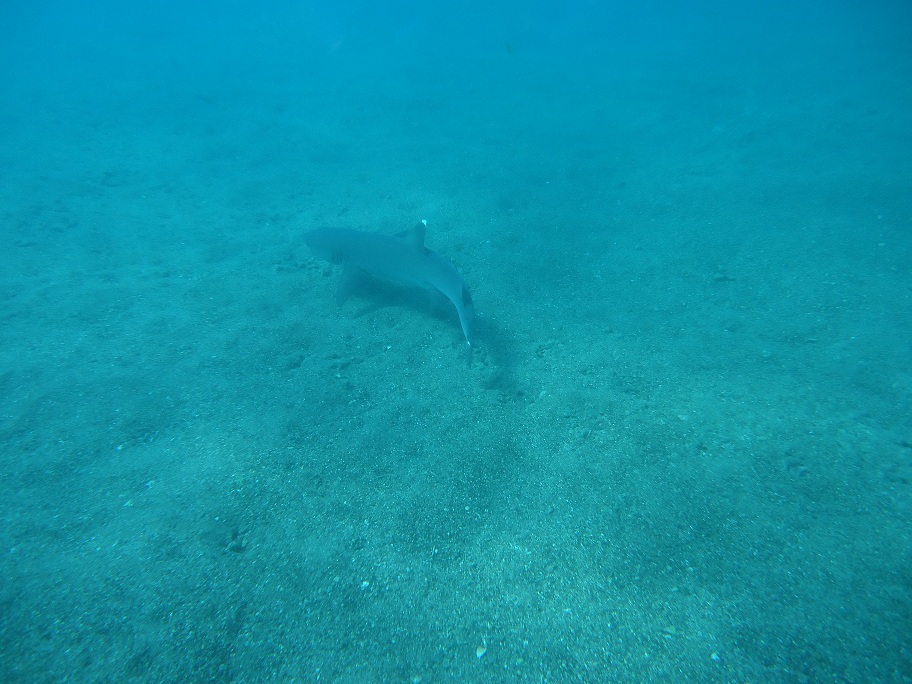
Snorkeling in this location was great.  As we drifted along the rocky edge of this island, we were amazed to see a white tipped shark!  Visibility was excellent and there were many large schools of colorful fish.  Chris and I decided to go kayaking for a while – once Chris recovered from overturning the kayak that is.  I wisely let Chris get on the kayak first so he was the only one to go under.  I had learned from previous canoeing experience with Chris (nothing more needs to be said on the subject).  There wasn’t much to see from the kayak; the fast moving current gave us a good upper body workout as we cut across the channel to the yacht.  That was our first and last kayaking experience in the Galapagos Islands.  Later we learned that some sea lions decided to play with Dafne and Jasper, even blowing bubbles in their faces.

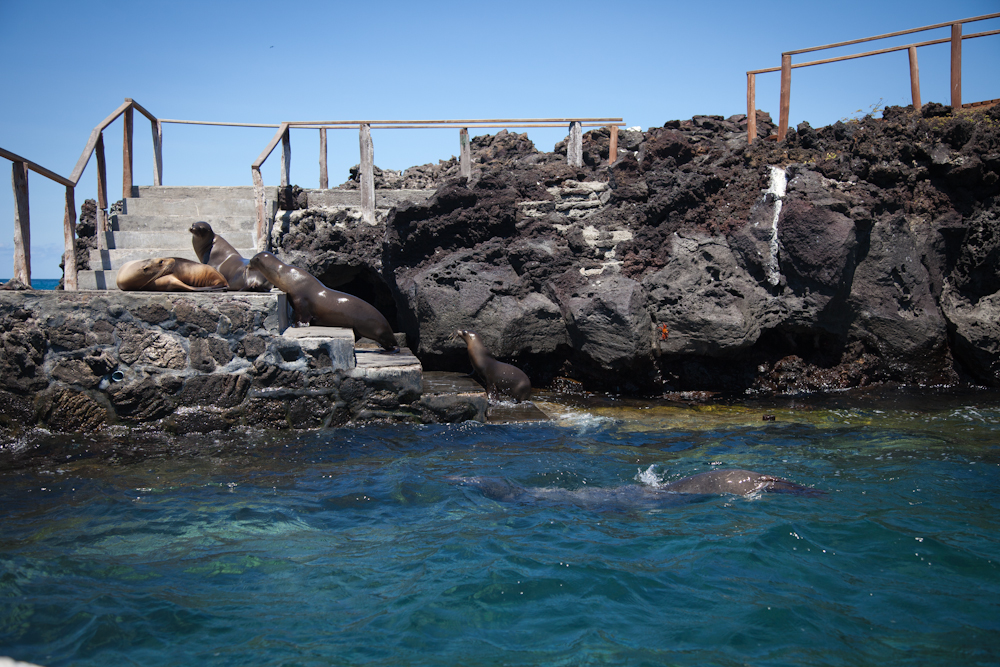
Bartolome Island was our next destination.  To stay ahead of the crowds, we ate lunch as we travelled to the island.  This island is a popular day-trip destination and so it was not surprising to find several boats already in the bay.  There is a spectacular lookout point, accessed by a man-made boardwalk and steep set of stairs. But of course, before reaching the stairs, we had to make it past yet another welcoming committee of friendly, playful sea lions.  In this case, we were refused passage on the stairs and had to walk on the rocks to get around them.  They must think they own the place or something!

Did I mention the stairs to the lookout?  There were a lot of them – a couple of folks with bad knees or backs wisely opted out of this excursion.  It was a long climb to the top in blistering heat.

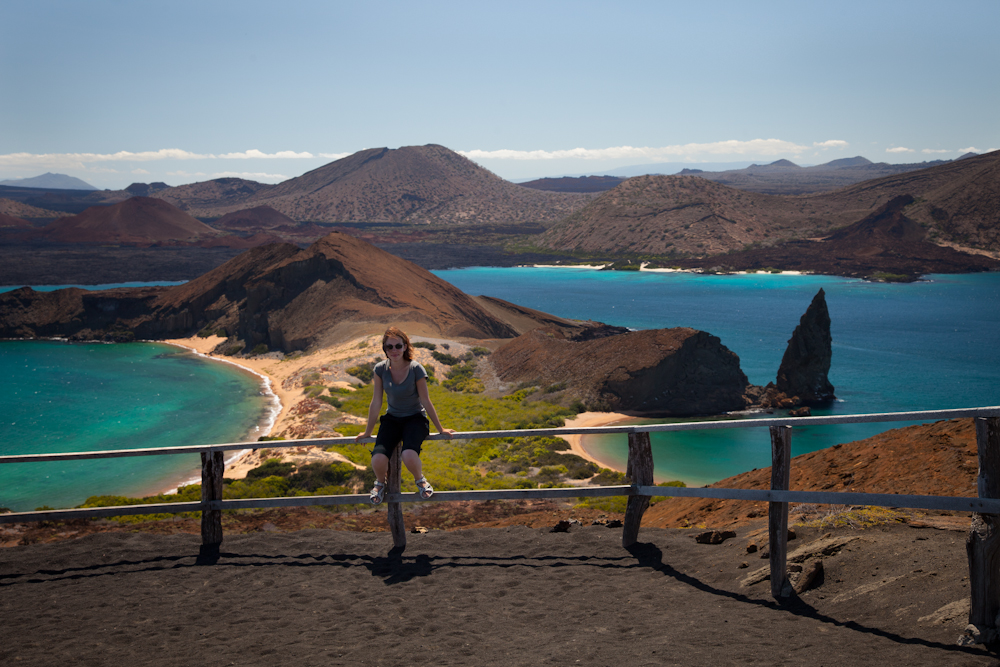
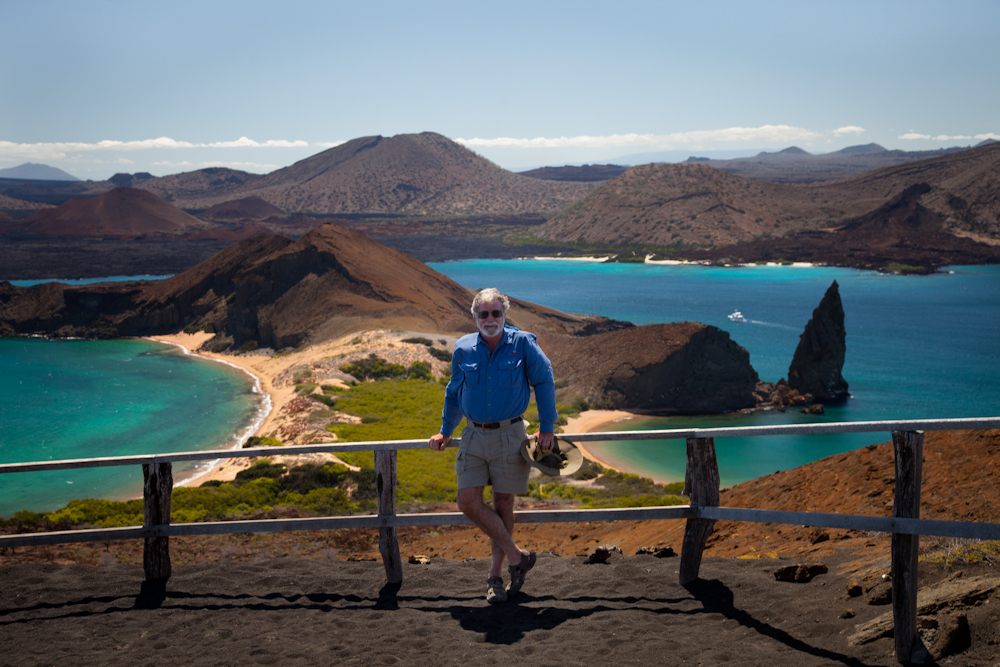
We were rewarded with a postcard worthy view from the top.  And of course, everybody wanted their picture taken. If this view looks familiar, it’s because this scene is commonly used to advertise Ecuador and the Galapagos Islands. (Sorry Babs, but the picture with you and Enrique was too blurry to include in the collection below.)

We snorkeled from the beach along the rocky shoreline at the base of the infamous Pinnacle Rock.  The schools of fish seemed much larger here; at times we were surrounded by hundreds of fish, often finding ourselves in the middle of a school swaying back and forth harmoniously in the surge.  As we explored the rock formations we searched for new and interesting marine life; a water snake was the only new discovery this time.  On the other side of the Pinnacle Rock, we saw our second White Tipped Shark of the day and several from our group dashed off after it.  Again the sea lions were out to play.

A short walk to the other side of the island ended our visit to Bartolome.  We now travelled to North Seymour amidst the choppiest waters so far.  A few of us perched ourselves on the cushioned seats at the back of the middle deck, swaying back and forth as our boat plowed through the swells.  It was difficult to walk as the boat tipped precariously from side to side.  A flock of about eight frigates decided to join us and flew directly overhead for quite a while giving us an excellent view of their undersides.  It reminded us of the dolphins swimming alongside the boat a few days ago.  Apparently frigates can fly for up to two days straight!

By now, we all knew, word for word, Enrique’s announcements before each excursion:  “Ladies and Gentleman……..we will be going in the dinghies for a walk in 10 minutes.   Please bring nice shoes or sandals, water, sun screen, hat, insect repellant, and a rain jacket.  Thank you.”

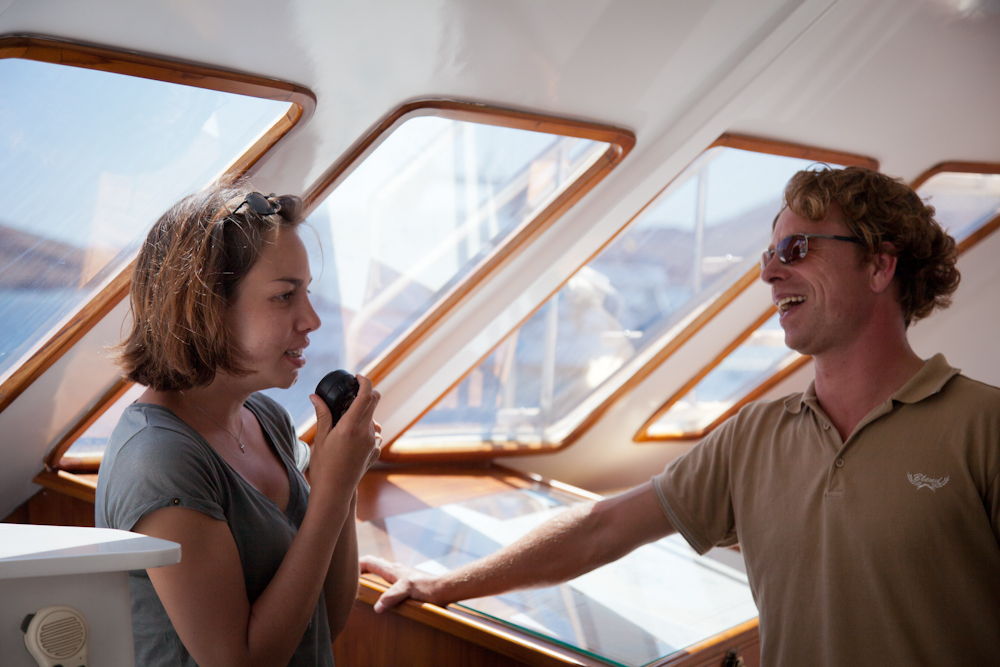
To our amusement, Stephanie decided to take over the microphone and make an announcement on Enrique’s behalf.

Before dinner we watched a slide show compiled by Enrique with both his photos and those contributed by some of the passengers, Chris included.  It was a great opportunity to reflect and relive some of the more special moments of the trip.  After dinner, we exchanged email addresses and compared notes, filling in some of the gaps or missing details in my story.  Invitations were extended by our new American friends to visit them in Spokane or to join them at their ski condo in the mountains if we ever found ourselves in their neck of the woods.  It’s great incentive to learn how to ski!

The night concluded with a farewell cocktail shared with the crew and passengers.  We expressed our thanks and appreciation for all the work the crew did to make this voyage so enjoyable and memorable.

Galapagos Islands Cruise Day 6: Playful Dolphins!

James Bay, also known as Point Egas on the island of Santiago was downright crowded as we shared the small bay with five other boats (none as nice as ours was our collective assessment).  The plan today was to let all the other boats go ahead of us, a strategy that served us well.  This meant a later breakfast and a more leisurely start to the day – no one complained on this point.

In the dinghy, we saw the first sighting of a Nazca Booby which is similar to the Blue Footed Booby except, you guessed it, his feet are not blue.

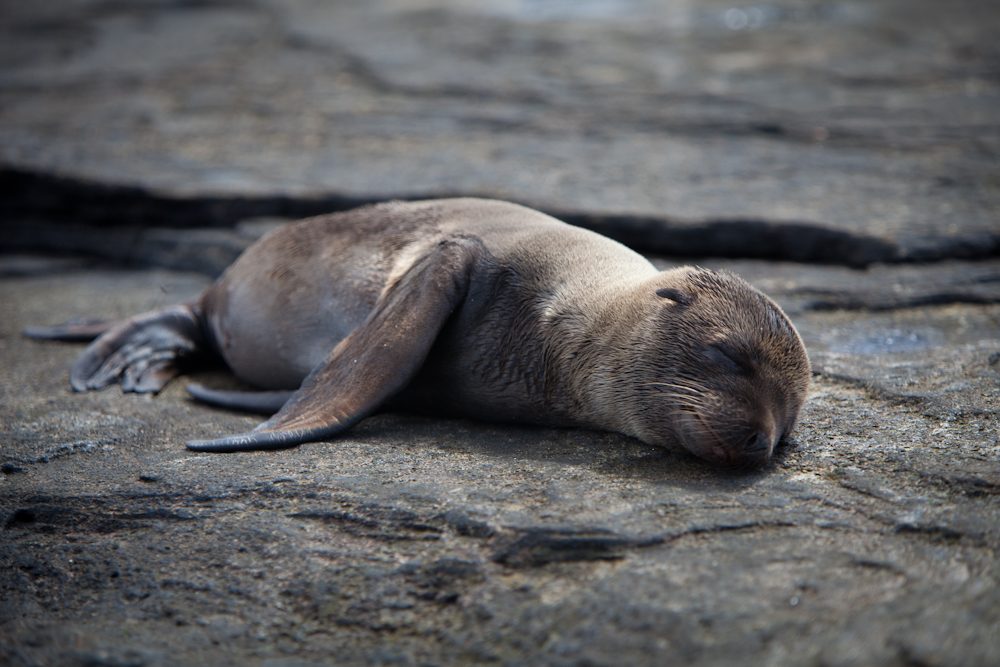
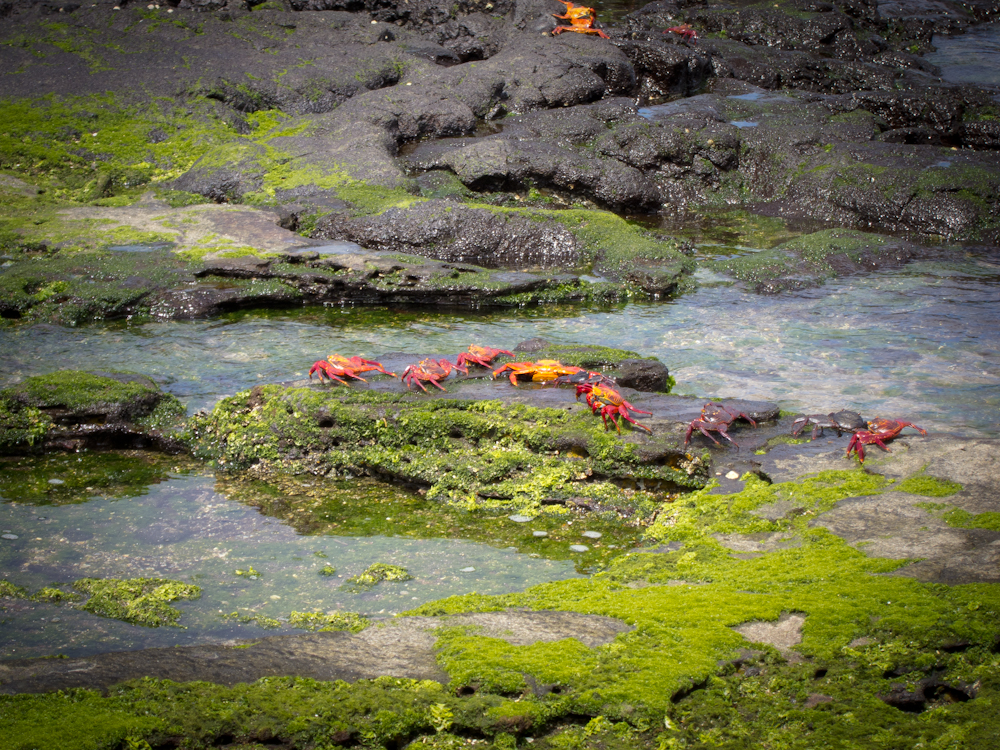
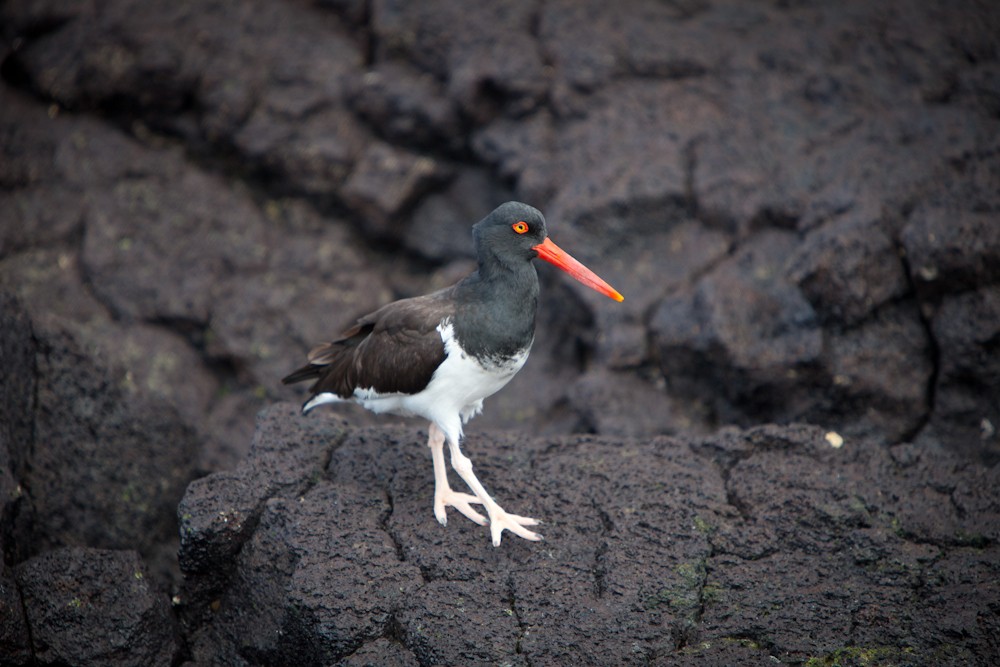
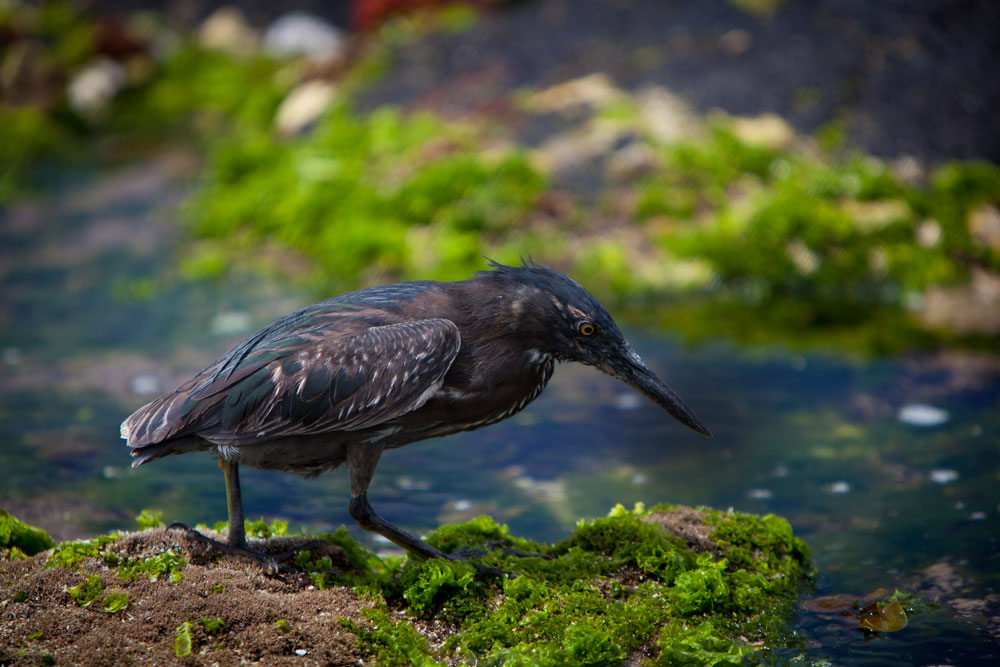
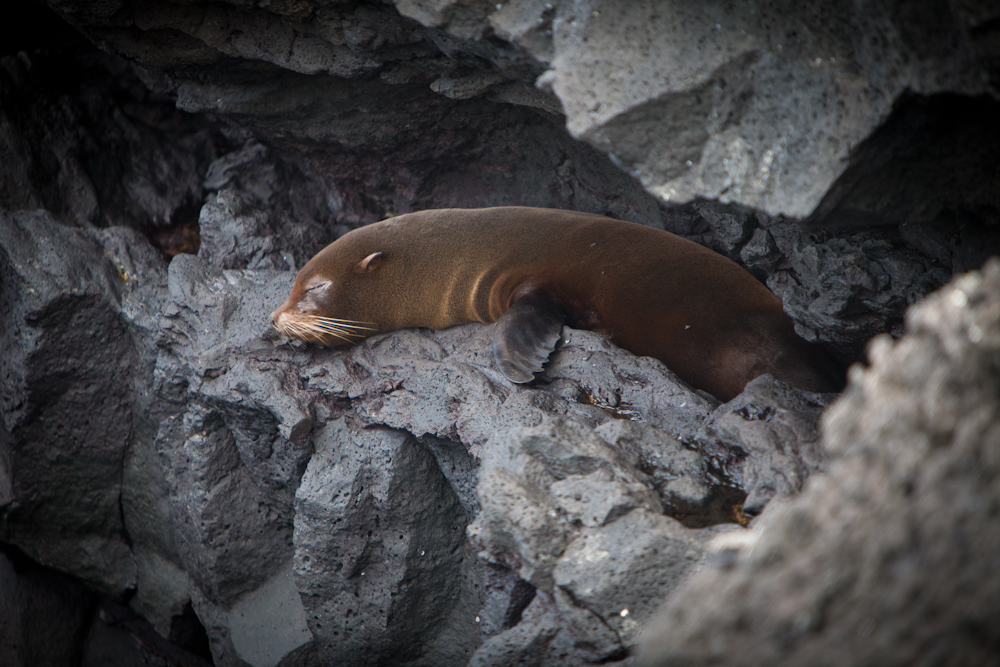
After a dry landing, we explored the tidal area like children on a school trip.  The highlight for me was watching three pups playing in a shallow pool of water.  This was also our first sighting of the Galapagos Fur Seal which is really a sea lion in spite of its name.  We also saw plenty of marine iguanas, sea lions, crabs, and sea turtles.  By now, our group was quite adept at naming birds: look, there’s another oyster catcher, oh and look at that great blue heron.  A few new birds were sighted: the lava heron, the plover, and the white crowned heron.  A few in the group saw two sea lions mating but Chris and I missed most of the show as we were distracted a distance away.


One of the few Fur Seals we saw on this island.

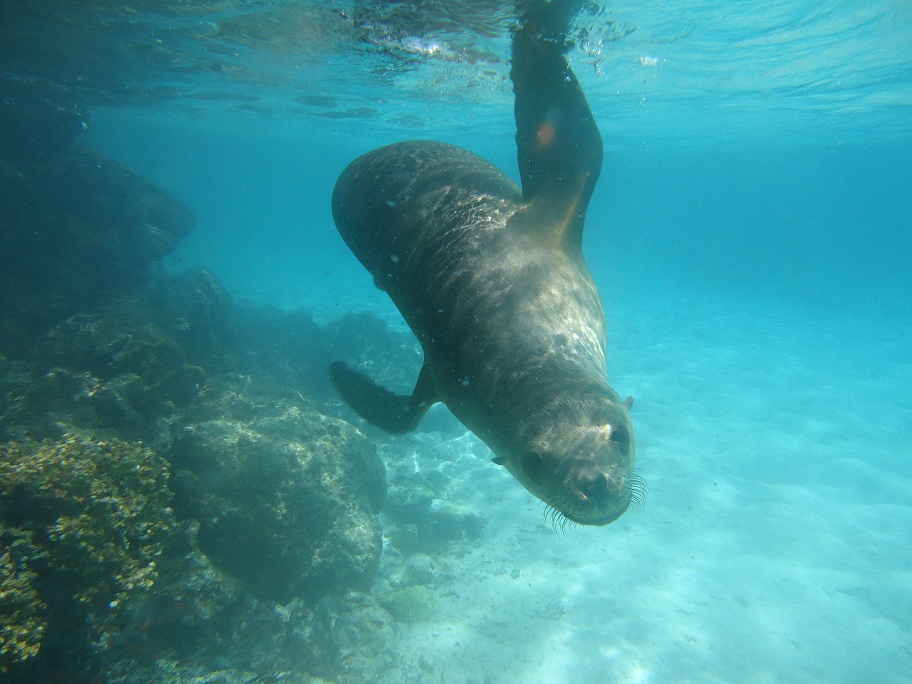
Back at the beach, I was happy to see most of the groups had already departed and the remaining stragglers were wrapping things up.  This meant we had the snorkel site just off the beach to ourselves.  The water was much warmer here and the fish more colorful.  Several sea lions decided to take a swim while we snorkeled.  When one passed by a group of us, Laura, the youngest in our group and a very strong, powerful swimmer took off as fast as she could but there was no competition, the sea lion disappeared out of sight leaving Laura, breathless, in its wake.

I was once again impressed to see Wim, the four year old, swimming side by side with his parents, fearlessly dipping his masked face into the waters.  This little fellow has been a real trouper on this trip.  He has participated in every activity and has shown an interest and curiosity in his surroundings that seems beyond his years.  Not once have I heard him complain or whine, even when the heat has been unbearable and the walks have been strenuous.

The same could be said about all the passengers.  Consider this:  we came together as a group of international strangers, from diverse backgrounds, of varying ages ranging from 4 to 60ish confined to a small boat for eight days.  What are the odds that we would all get along?  I am always curious about group dynamics and this has been no exception.  While some patterns of behaviour were predictable – we all started to sit at the same place at the dining table after day 2, other interactions surprised me.  While two couples were already friends, they did not isolate themselves from the group or limit their contact with others.  To the contrary, they seemed to embrace the opportunity to extend their circle.  Seven of the thirteen passengers spoke English as their second language (very well I might add); yet I never found language to be a barrier, except perhaps with Wim who could only speak German.  He quickly attached himself to Laura, who also spoke German.

As the days passed and we became more familiar and comfortable with each other, the laughter and fun increased.  Here it was day 6 and there were no signs of people getting on each other’s nerves at least none that I could see.  Mind you, if Stephanie mentions her incessant craving for French chocolate one more time, I think someone might be tempted to toss her overboard.  Chris on the other hand has managed to avoid the wrath of the group as he consistently lags behind trying to get that perfect photo by promising everyone copies of the best of his photos.  This was a great group to be with.

After lunch we headed to Rabida, a small island south of Santiago, and most of us retired to our respective cabins for a little siesta time.  Suddenly the emergency bell rang out and we all rushed out of our cabins to see what was up.  Dolphins!  We hurried to the middle deck, binoculars in hand to get a better look.  The captain circled back to where they were first spotted, and after a few minutes the dolphins were back swimming playfully at the front of the boat. 12-15 large dolphins danced in the waves in front of each of the catamaran’s keels.  They switched from side to side, sometimes jumping out of the water in the middle.  They kept just in front of the boat, as if in a race.  Whenever a dolphin jumped – sometimes as high as six feet in the air – we all clapped and cheered in appreciation.  There was one white dolphin that stood out in the crowd – turns out he was an albino dolphin, very rare, in fact the crew had never seen one before!  And then, they were gone as quickly as they had appeared.

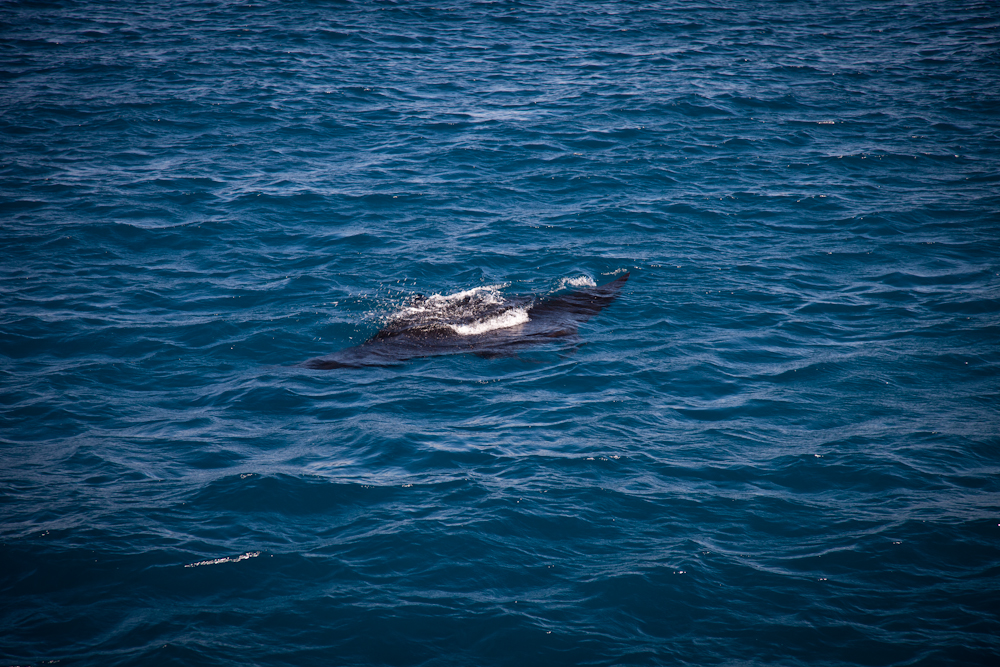
As we scanned the horizon looking for more dolphins, we spotted the manta rays.  These huge creatures floated near the surface and occasionally lifted a fin, appearing almost like a shark.  You could see the dark shape from quite a distance and occasionally a manta would get quite close to the boat.  We joked that we could just skip Rabida and hang out in the open seas as there seemed to be a lot to entertain us.

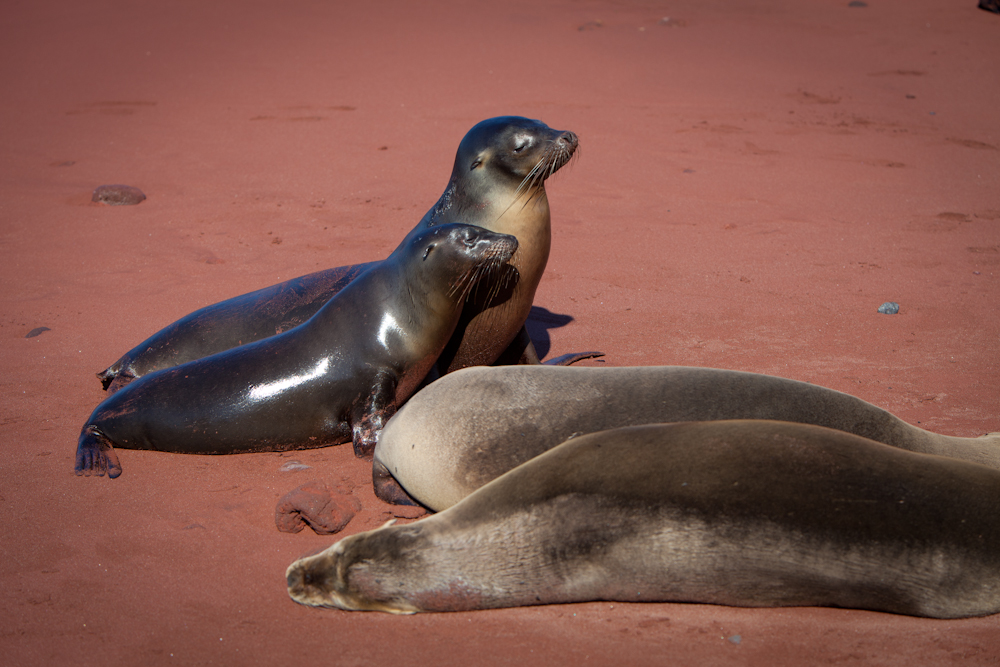
Rabida is a red island formed millions of years ago by a volcanic explosion that reached the mantle of the earth.  It reminded us of Prince Edward Island.  We were greeted by more sea lions as we made a wet landing on the beach.   Again, a lot of people were already on this island, so we kept our distance and let the other groups stay ahead of us.  During a short walk, we challenged ourselves to find new birds and were rewarded for our efforts.  Tim, with his eagle-like eyes, spotted a grey cuckoo (pictured below), a rare sighting even for our guide.

Snorkeling in Rabida was from the beach, similar to the morning excursion in James Bay.  The water was very murky from the red silt being churned up by the waves and visibility was almost zero for about fifty feet.  We swam along the rocky edge and as we got further out, visibility improved and we began to see much of the same sea life as was saw in the morning.  The water was warm and the fish were colorful and plentiful.   Although we didn’t see anything new this time, there was still a lot to look at.

Another great dinner, an after dinner briefing and then off to our cabins.  Chris and I have been trying to get our studying done for the next three dives of our Advanced Certification course.  It’s a challenge as we’d rather be doing other things, like writing the blog, editing photos or just relaxing or sleeping.  Ah well, it’s a necessary evil. I’ve done two chapters, just one more to go.

Galapagos Islands Cruise Day 5: Swimming with penguins!

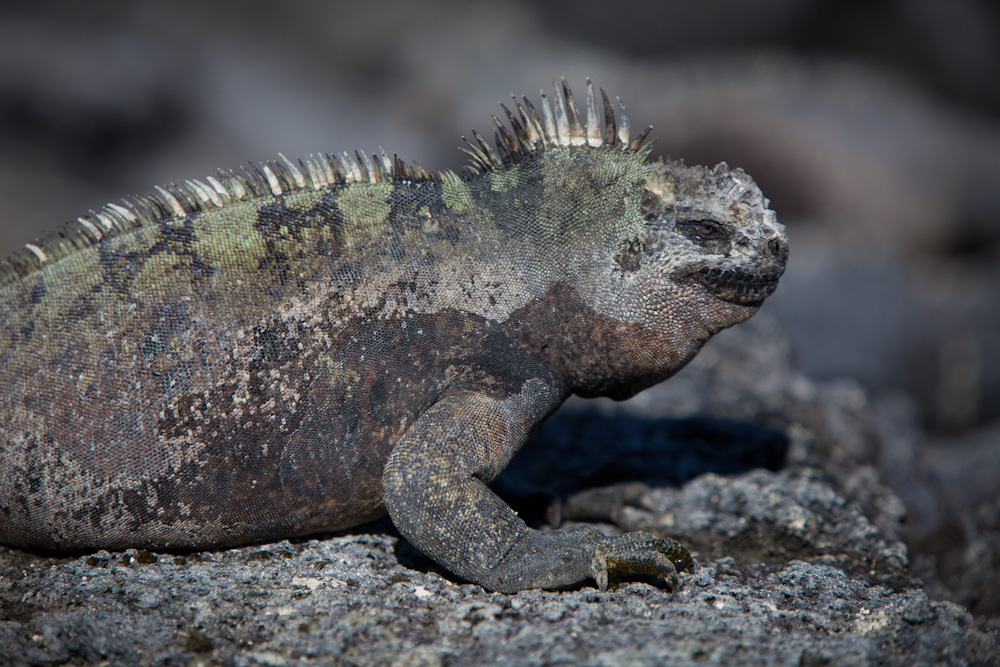
As the first group of several to land this morning on Punta Espinoza which is on the youngest island, Fernandina, our guide Enrique did his best to keep a good distance between us and the other groups.  On this island we saw so many marine iguanas that they were becoming commonplace to us – yeah, yeah, another marine iguana.  But we had to be careful as these creatures blended into the rocks so well that it was easy to step on one if you weren’t careful.

Sea lions stole the show on this excursion, especially the mother with her young nursing pup.


It was remarkable to see a majestic hawk swoop down onto a branch within ten feet of our group and remain there as we snapped pictures and took video.   He was within twenty feet of the mother sea lion and her pup and we all hoped he wasn’t sizing up his next meal.

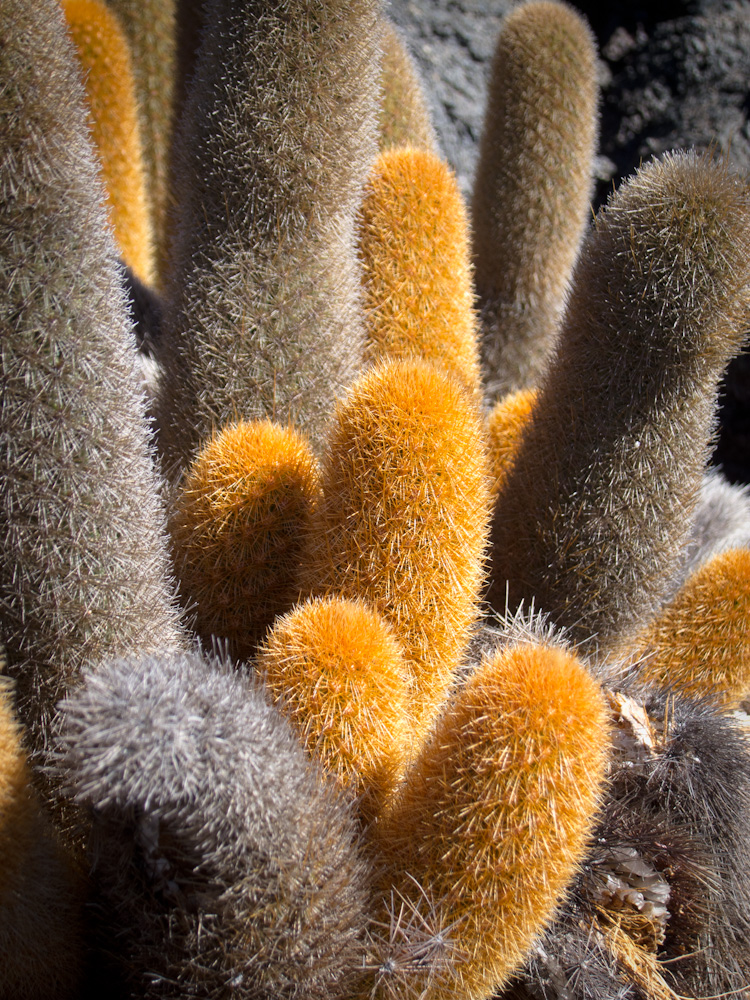
 A gentle breeze cooled us as we continued to walk along the lava rock towards the volcano, making this walk much more enjoyable compared to yesterday’s blistering heat.  Mangrove trees lined the edge of the ocean.  As we moved inland, the Lava Cactus seemed to be the only vegetation to thrive.  In fact, the lack of life both vegetation and animals, at least to our untrained eyes, was noteworthy.

Next stop was Punta Vincente Roca on the northern tip of Isabella Island where we joined three other boats, two of which were dive boats.  As the boat travelled to the next location, we enjoyed some down time on board.

Barb and Tim, a pharmacist, relaxing on board.

Punta Vincente Roca was our next snorkeling site and I am so glad I didn’t miss this one.  On this trip, Chris and I have gotten into the habit of using our diving skills and signals while snorkeling such as maintaining close contact with your buddy (in fact we hold hands).  I have also noticed that I am a much more confident snorkeler now that I also dive.  I apply with ease the skills that I learned through diving like clearing my mask and snorkel.  Snorkeling is part of our daily routine on board, so I am glad I am enjoying it.

We were in the basin of a crater that had collapsed into the sea millions of years ago and which now formed a sheltered bay, close to a stony beach, and surrounded by walls of rock.  Our guide directed us to stay close to the shore and to simply float effortlessly in the surge.  This area was renowned for sea turtles and today was no exception.

At one point, we found ourselves surrounded by twelve large sea turtles, all of us floating in unison with the surge.  We were at one with the turtles!  It’s no wonder there is so much sea life as food is plentiful; hundreds if not thousands of tiny fish engulfed us.

Suddenly, a penguin torpedoed past us.  He was so fast he was gone before we fully realized we had just seen our first penguin in the water.  More penguins shot out of nowhere and darted around us.  We watched one little fellow feeding directly below us only to have him suddenly shoot vertically to the surface directly in front of our faces.  We watched a couple of penguins playing on the surface.  Dafne, the only person with an underwater camera, was desperately trying to capture them on film – and she succeeded!

To top it off, a sea lion caught a fish on land and then dove in right in front of us, eating his fish as he swam by us.  Incredible!  Now this was what I was hoping for in the Galapagos Islands!

Next we toured the bay from the dinghies, exploring a deep cave, and discovering all the birds clinging to the cliffs above.  We saw many blue footed boobies, bobby tern, pelicans, penguins and flightless cormorants.  A group of about eight or ten Galapagos penguins decided to swim alongside our boat, bobbing to the surface every now and then so we could track them.  I tried to capture them on video but they were so fast it was next to impossible.  Still, it was a thrill to travel alongside them.

It was here that I saw a Mola Mola Sunfish for the first time.  In fact, I saw three of them.   They were swimming close to the surface letting us catch a glimpse of them.    Mola Mola is the heaviest known bony fish in the world. It has an average adult weight of 1,000 kg (2,200 lb). The species is native to tropical and temperate waters around the globe. It resembles a fish head with a tail, and its main body is flattened laterally. Sunfish can be as tall as they are long when their dorsal and ventral fins are extended.

Photo courtesy of oceansunfish.org

We had a lot of distance to cover as we were travelling around the northern tip of Isabela and onto the eastern side of the island.  We celebrated as we passed the equator, by gathering in the captain’s bridge to take photos and enjoy a complimentary cocktail.  Our time in the Northern Hemisphere would be limited to a few hours before we returned to the Southern Hemisphere without fanfare.  We were warned that this passage was going to be long (6 hours) and rough.  As a precaution, we had our briefing before an early dinner that night.

The sea did indeed get a little rough, but nothing we couldn’t sleep through.  Not one of the passengers has been sea sick so far, probably in part due to the relatively calm waters as well as the fact that our yacht is a catamaran which makes it more stable.


Galapagos Islands Cruise Day 4: Whales!

Chris and I awoke before dawn at 4:30 and headed to the top deck to see the crescent moon on the horizon and the star filled sky.   The yacht was still anchored in Elizabeth Bay and would be setting off again at 5:00 am.  By the time we lifted anchor, the clear sky had clouded over with dark, ominous clouds.  We thought perhaps our luck had run out  the seemingly endless sunshine enjoyed thus far was now over.  As the yacht sailed north to Urvina Bay at a steady pace of 10 knots per hour, the sky ahead brightened and by breakfast we were enjoying full sunshine again.


We did our first wet landing this morning, where the dinghy lands on a beach and we all get out in knee or hip deep water and make our way to shore.  Theoretically, this is a rather straight forward process.  Today, however, the waves were quite high and timing was everything.  After several failed attempts, we made it to shore and everyone jumped out as quickly as possible fearing the waves would pull us back to sea.

Once we were secure on land, a hawk surprised us with a sudden visit on the beach and provided an excellent photo opportunity as he hopped about in front of us.

The search for land iguanas began.  At first we noted the holes dug by the iguanas and soon enough we met our first one on the path.  It is remarkable that we can get so close to animals and they don’t appear to be fearful whatsoever.  Even the birds come close and stick around for a while allowing everybody to take pictures.


Back on the beach, the plan was to go snorkeling but our guide recommended against it.  Not only was it dangerous as the waves crashed into the rocky shore, the visibility would be poor as well.  A few in the group went for a swim instead.  Chris and I opted to stay on shore and walked along the beach.  The coarse, black and white sand was so different from the fine powder we had seen on other beaches. Chris took advantage of this time to take some photos of our group.

Enrique, our capable and knowledgeable guide.

Dafne and Jasper from Holland.  Dafne is a web designer and Jasper introduced himself as a fireman but we later learned his work involves a lot more.  For instance, he is also a rescue diver and paramedic.

Laura, the 18 year old student from Germany.  She is enjoying her “gap” year travelling and volunteering before she goes to medical school next year.

Jasper kindly took many pictures of Chris and I together – I think he liked playing with Chris’ camera!

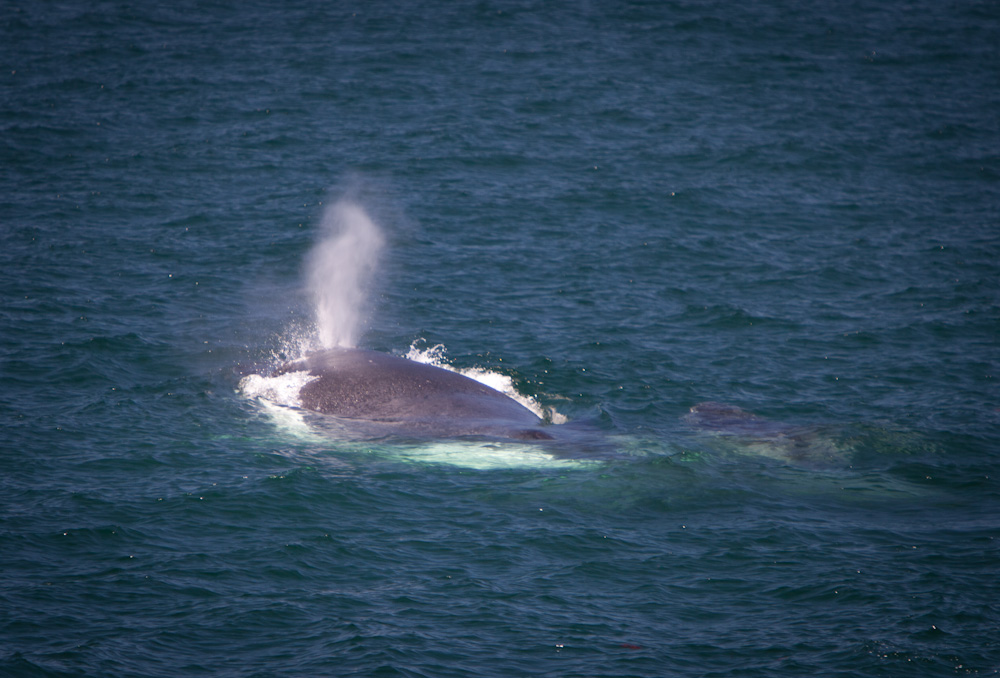
We were once again on the move, continuing north to Tagus Cove where we would eat lunch and spend the afternoon snorkeling and kayaking.  Along the way we spotted a humpback whale and her calf in the distance.  We tracked her for a while but then lost sight of her as we headed into the protected cove.  After lunch, she was spotted again and the captain and crew obliged us with a whale chase, taking up anchor and pursuing the whale, much to everyone’s delight.  All the guests were on the upper two decks, cameras and binoculars in hand.  We tracked the mother and calf  as they swam in unison, coming up now and then to the surface, but unfortunately not breaching.  On board, there was a steady play by play – here she comes, there she goes as we all tried to get a good look and an equally good picture. She treated us a few times with a great view of her fluke (tail fin) as she slapped it down into the water.  This was better than a siesta any day.

This candid shot of Rick (with his wife Babs in the background) seemed to capture the essence of Rick in all his exuberance and expressiveness.  His friends confirmed that this was classic Rick, who, by the way is a financial advisor.

Babs, a retired occupational therapist who worked with special needs children, was captured enjoying the moment and the view in this candid shot.

Finally, we turned around and headed back for the cove to resume our scheduled activities: lunch, snorkeling and kayaking.  Chris and I decided to stay on board; I was feeling pretty lousy from my cold and I think Chris just felt like relaxing.   We shared the middle deck with Barb who, like us, decided to spend the afternoon reading and relaxing.  Enjoying a drink on deck surrounded by beauty was not the worse way to spend an afternoon.

Barb, a property manager, enjoys the middle deck and a good book while the others are off snorkelling and kayaking.

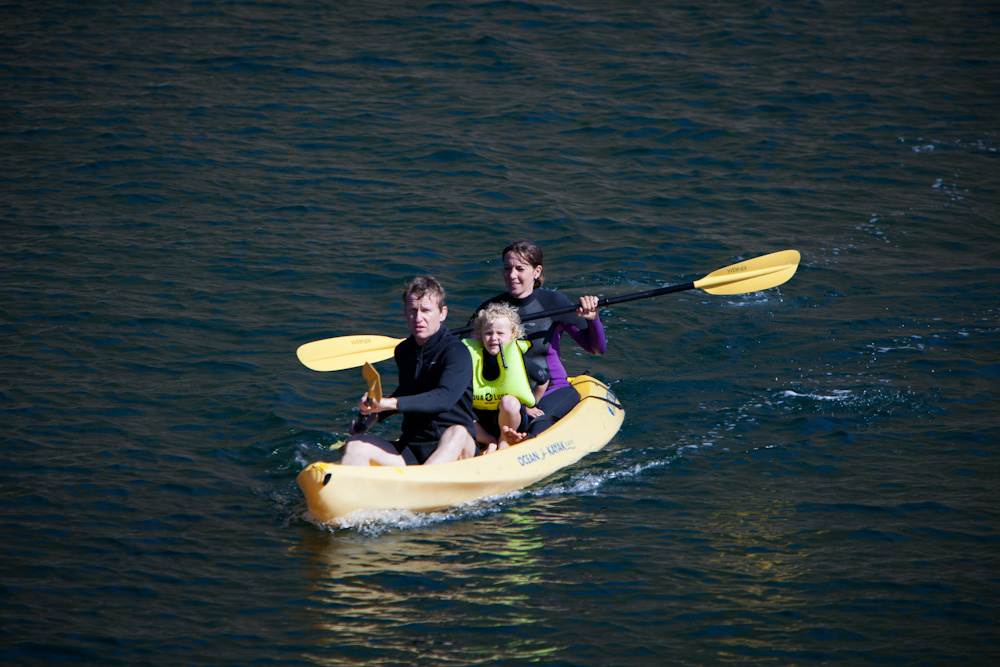
Olof, Christiana and Wim, the family from Germany, explored the bay in the kayak.

Later in the afternoon, we once again loaded into the dinghies for a hike to the edge of Darwin Lake.  As we left the yacht, a sea lion decided to check out our catamaran and jumped up onto the first step, and then continued up the stairs to the lower deck at the encouragement of the crew.

It was a dry landing along the rocky shore and a steep walk to the beginning of the trail with several sea lions sunning in our path.  We were on the hunt for four birds:  the Darwin Finch, Vermillion Fly Catcher, Large Billed Fly Catcher and the Carpenter Finch.  We ascended slowly under the glaring sun surprised at the intensity of its rays this late in the day. Several lookouts offered spectacular views of Darwin Lake and the ocean beyond.

We spotted many Darwin Finches and a few Mockingbirds but the other birds eluded us.  The final lookout gave us a spectacular view of Wolf Volcano, the highest peak in the archipelago at a height of 1,707 m (5,600 ft).

We descended as the sun was setting and in the dusk we caught a fleeting glimpse of a Large Billed Fly Catcher, but this little bird was too fast for us to capture in a photo.  Now that the heat of the day had passed, there was a lot more birds flitting about along our path, but the Vermilion Fly Catcher and Carpenter Finch remained elusive.

As we made our way back to the dinghies, we had to manoeuver around a very large sea lion who was laid out along the stairs directly in our path.  It took some coaxing, but we finally convinced him to let us pass.  A couple of more sea lions tried to intercept us as we walked down the rocky slope.


Back on board we followed the now very familiar routine: rest and clean up before dinner followed by a briefing by Enrique for the next day.   After dinner, a few stayed up to play cards or read, but Chris and I retired early to our room.  I was feeling pretty lousy today because of my cold and it was for the first time since leaving Canada I yearned for home, not necessarily my home, but the comforts of a home where I could just lie in bed and recuperate.  I figured a good night’s sleep would be the best cure.