Let me begin this post with this: First, I am fine so nobody needs to worry about me (details are below). Second, I debated whether or not to write this post. So far, our journey has been a pleasant, adventurous tale that I think our friends and family are enjoying. On Sunday, things didn’t go quite as we planned and it hasn’t been very fun since then. But this too is part of our journey. So here’s what happened.
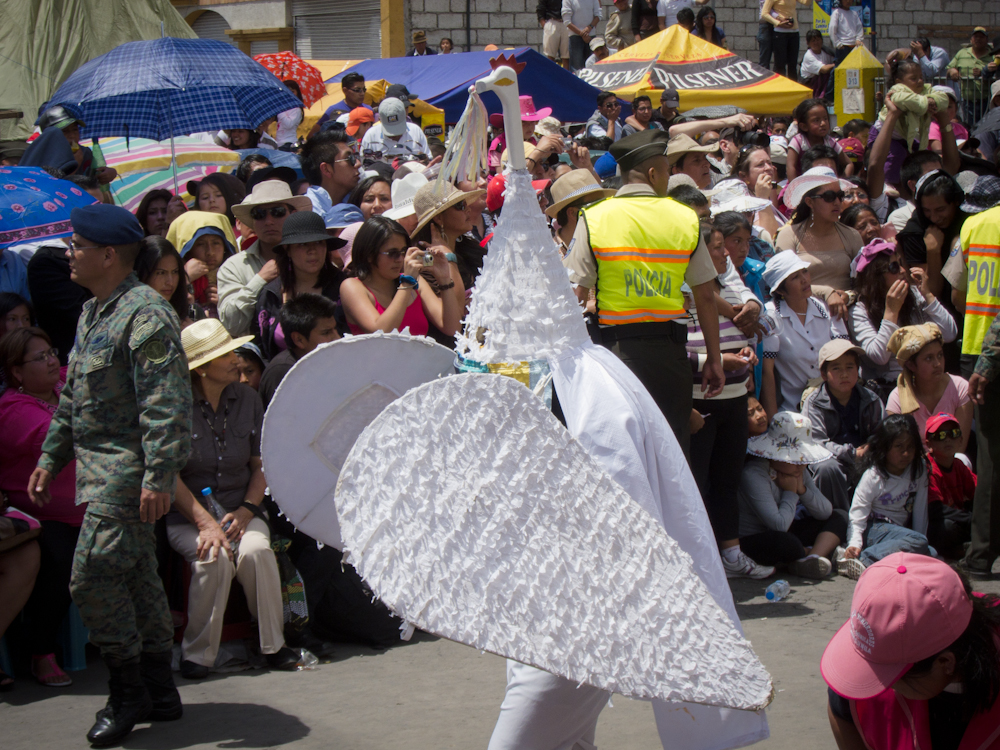
We went to Latacunga last Thursday with plans to hike Cotopaxi and possibly the Quilotoa Loop. We had booked a guided tour for Cotopaxi immediately upon arrival for Friday, but had to push it out to Sunday because I became sick with what I thought was altitude sickness. By Saturday, I was feeling much better and even went to the festival. But by Saturday night I was sick again, really sick. I had diarrhea and was passing a fair bit of blood in my stool. I was up several times during the night. I felt lousy. Finally, I popped a couple of tylenol, and took a Cipro as I have been taking Immodium for the past couple of days without improvement. I had already had an occurrence with blood in my stool three weeks ago, but after a round of Cipro, it looked like everything was OK. You can imagine my concern to see blood in my stool again. Something was definitely wrong.
When I got up on Sunday, I was still passing blood in my stool and everything passed through me like water. I felt nauseous, weak, and had no appetite. I couldn’t imagine hiking a mountain. With these symptoms I knew I had to see a doctor. I was pretty upset with this realization as I dreaded the idea of dealing with a foreign medical system in a foreign language. Chris and I weighed our options and decided we would cancel our hike and go to Quito immediately as it was only two hours away. Chris arranged for a private taxi to take us there as I couldn’t even think about carrying my pack and dealing with buses. He also contacted Paola and Eduardo, our diving friends we met in Puerto Lopez who live in Quito. They recommended the best private hospital in Quito (Hospital Metropolitano) and assured us we would find English-speaking doctors there. Unfortunately, they were out of town so that was the extent of help they could offer at that moment. They later emailed us when they were back in the city asking for updates and offering to help in any way necessary. It was very comforting knowing that there was someone close by if we needed help.
Next, we were in communication with our Health Plan to advise them of the situation. We had to provide a lot of detailed information in order for them to ascertain whether or not this was deemed an emergency. Either way, we were going to Quito to see a doctor. Their prompt response to proceed to the hospital left me with mixed feelings: relief that my Plan would cover this coupled with alarm that this was indeed deemed an emergency, even by stringent insurance standards.
Back to Quito we went, back to the same hostel we stayed in when we first arrived. Talk about coming full circle. It felt strange to be back in Quito, yet very familiar in a comforting sort of way. We dropped our bags off at the hostel and then took another taxi directly to the hospital which was only a few minutes away.
 The hospital is large and modern, like any hospital in Canada. We went to Emergency, filled out a form as soon as we arrived, and within minutes I was in a bed talking to an English speaking physician. I was hooked up to an I.V. of saline solution as I was dehydrated, and a nurse took my blood for tests. An hour and half later, the results came back – everything looked fine. Next step was to be examined by the gastrointestinal specialist who arrived about 45 minutes later. During this time a urine sample was taken and also sent for tests. The specialist checked me over and ordered another bag of saline solution, and then said a stool sample was necessary to check for bacterial infection, parasites, etc. These tests would take 1-3 days. He prescribed three medications that I was to start immediately (total cost: $54.55). He gave us his business card so we could contact him directly to enquire about my test results. He said blood in my stool was serious and we needed to find out the cause, but since I looked healthy (I had already perked up after the first bag of saline) and the amount of blood I was passing was small, he was comfortable for me to go back to the hostel rather than stay in the hospital overnight. However, he made it very clear, if the amount of blood increased, I was to go back to the hospital immediately.
We were in the emergency room for a total of six hours during which time I spoke to two doctors, had 2 bags of saline injected into my veins along with a shot of medicine that had something to do with protecting my stomach from an ulcer (I didn’t really understand what it was for to tell you the truth). Blood was taken and tested and urine was collected for testing. Total cost: $308.81 payable before leaving the hospital. So at the end of the day Sunday, I still didn’t know what was wrong with me, but many serious problems had been ruled out based on the blood tests. And I was now hydrated and already feeling better. The overall experience was very positive – aside from the language barrier, this could have been any Canadian hospital, except of course we were treated immediately with no wait times whatsoever, and we had to pay the bill when we left.
This morning we submitted my stool sample to the lab at the hospital (another $55.38 charge). And now we wait for the results. We are very comfortable in the Traveller’s Inn hostel, especially now that we know we have access to their very clean and very well equipped kitchen. We are just taking it easy, laying low in the hostel.
The picture below was taken this morning after we dropped of the sample at the lab. We walked the 3.5 km back to our hostel (all downhill) in order to get some fresh air and a little exercise. As you can see, it’s not like I’m dying or anything. In fact, I’m already feeling a lot better so I’m certain this is nothing serious, after all, nothing serious ever happens to me. We just need to get to the root of this issue and resolve it…..and then our journey can continue.