It’s hard to believe that we’ve been in Mindo for almost a week. Once we got settled, our days quickly fell into a comfortable routine: We wake up around 7:00 to the sounds of roosters cock-a-doodle-doing and to the sight of exotic birds and hummingbirds just outside our bedroom window. After a substantial breakfast at 7:30 (provided by the hostel), we go for a hike or a walk in the cloud forest (waterfalls, exotic birds and butterflies are the pleasures of each day). This is followed by a big lunch mid-afternoon (our main meal of the day), and then some down time – maybe a siesta or a little reading or writing. In the early evening, we walk around town and then enjoy a beer or two and a snack on a patio on the main street, watching life unfold in Mindo. It’s been an easy, relaxed pace in beautiful surroundings that has put us both in a very good place. We almost feel guilty about enjoying this life without responsibilities. I heartily recommend it!
The Mindo-Nambillo forest is a protected 22,000 hectare reserve harbouring a great variety of birds as well as orchids and bromeliads. The area offers activities for the nature enthusiast and thrill seeker alike. Zip lining and river rafting are very popular attractions – neither of which we did. As Chris likes to describe us – we are adventurers, not thrill seekers – so we spent most of our time hiking and bird watching (and relaxing and eating) instead.
The following are some of the week’s highlights, in no particular order. There weren’t too many lows in Mindo. We didn’t see any exotic orchids in the wild – probably just the wrong time of year. But we did see other beautiful flowers. Like any town that depends on tourism, we found there were those who tried to take advantage of the tourist with inflated prices, but this was not the norm in our experience.
Waterfalls
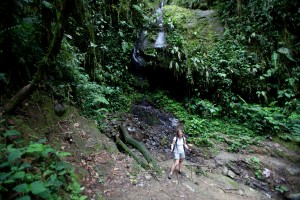
 Our first hike, last Thursday, took us to the Nambillo Waterfalls. These falls are located about five kilometres outside of town. We decided to walk to the falls – a mainly uphill slog along a dusty, pot-filled road. This gave us an opportunity to bird-watch and offered some pretty spectacular views of Mindo and the surrounding area. We were amazed at the lush, tropical vegetation of the cloud forest.
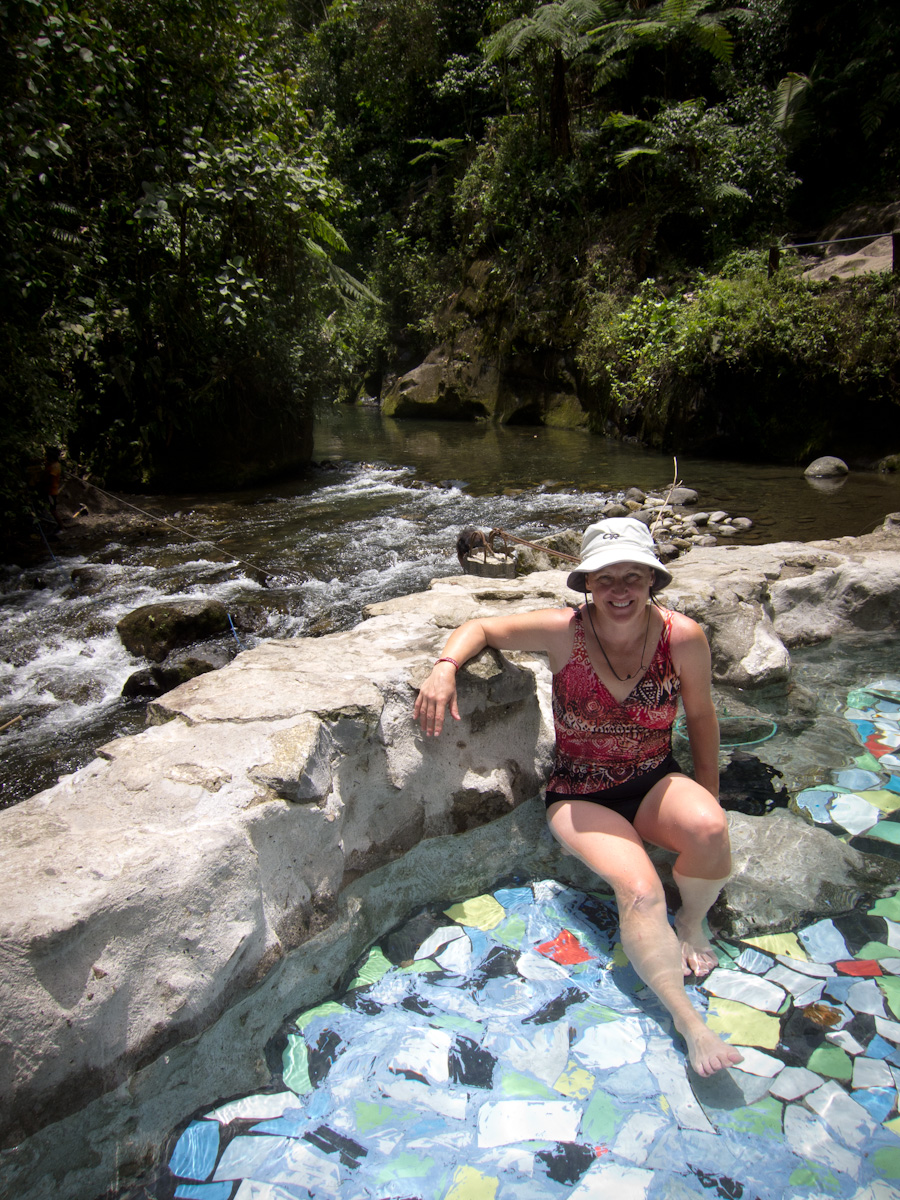
At the trailhead to the falls, we were accosted for an “entry fee” of $3.00 each. We realized we had somehow passed the trailhead to the base of the falls and were now at the tourist attraction that was created at the top of the falls – a water slide, diving ledge, artificial pools, etc. We figured we would check it out even if it wasn’t where we had intended on going. It was a difficult hike down (and even more difficult coming back up). I took out my walking sticks for the first time on this trip (definitely not the last) – and I was glad I had them.

At the bottom, we changed into our swim suits and cooled off in the pools of frigid water, relaxing for a while. We had the place all to ourselves except for a couple of guys who were doing back breaking work hauling sand from one side of the river to the other in order to mix cement for another structure that was being built – all by hand. While we couldn’t get a good view of the falls from this vantage point as we were above the falls, we could hear the thunderous power of them below.

On Sunday, we spent the day hiking to a group of five waterfalls. I’ll write a separate post about this excursion.
Butterflies
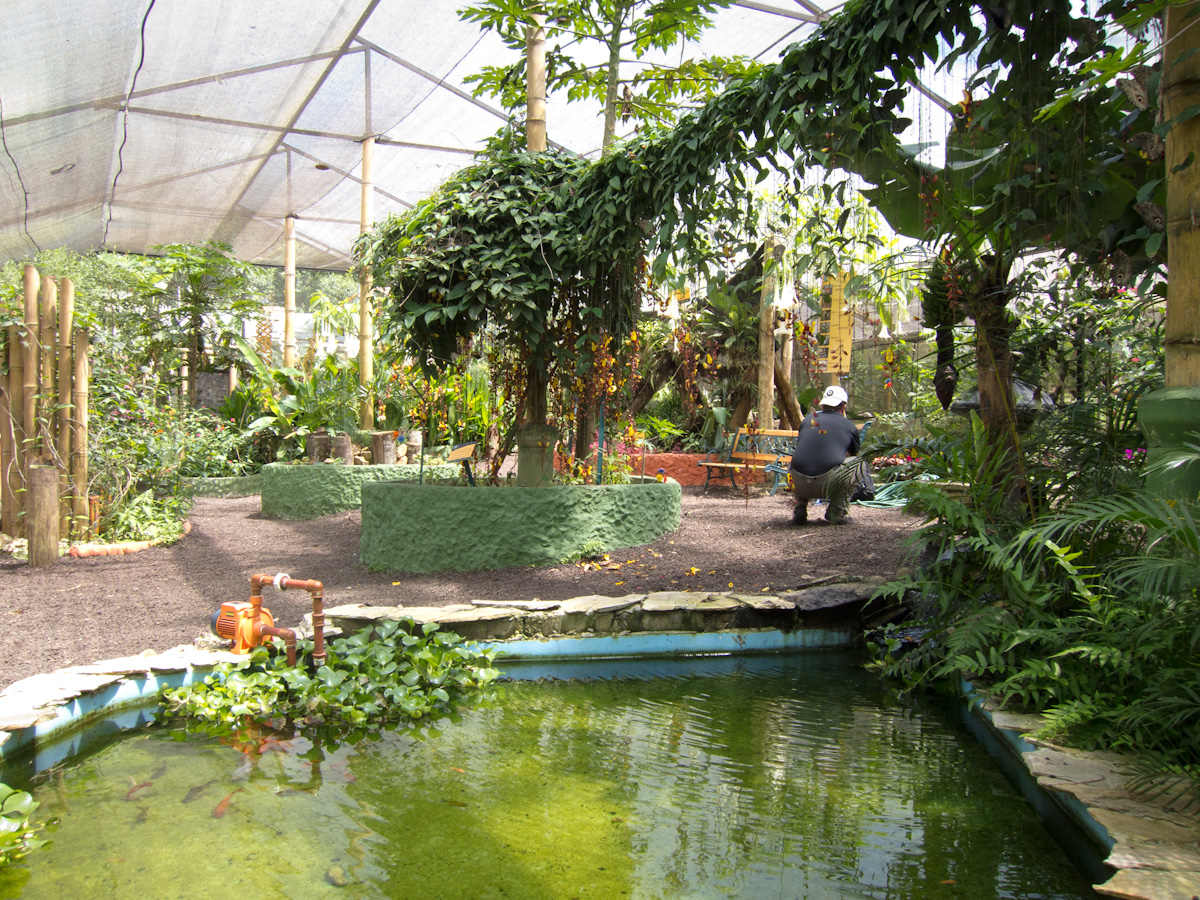
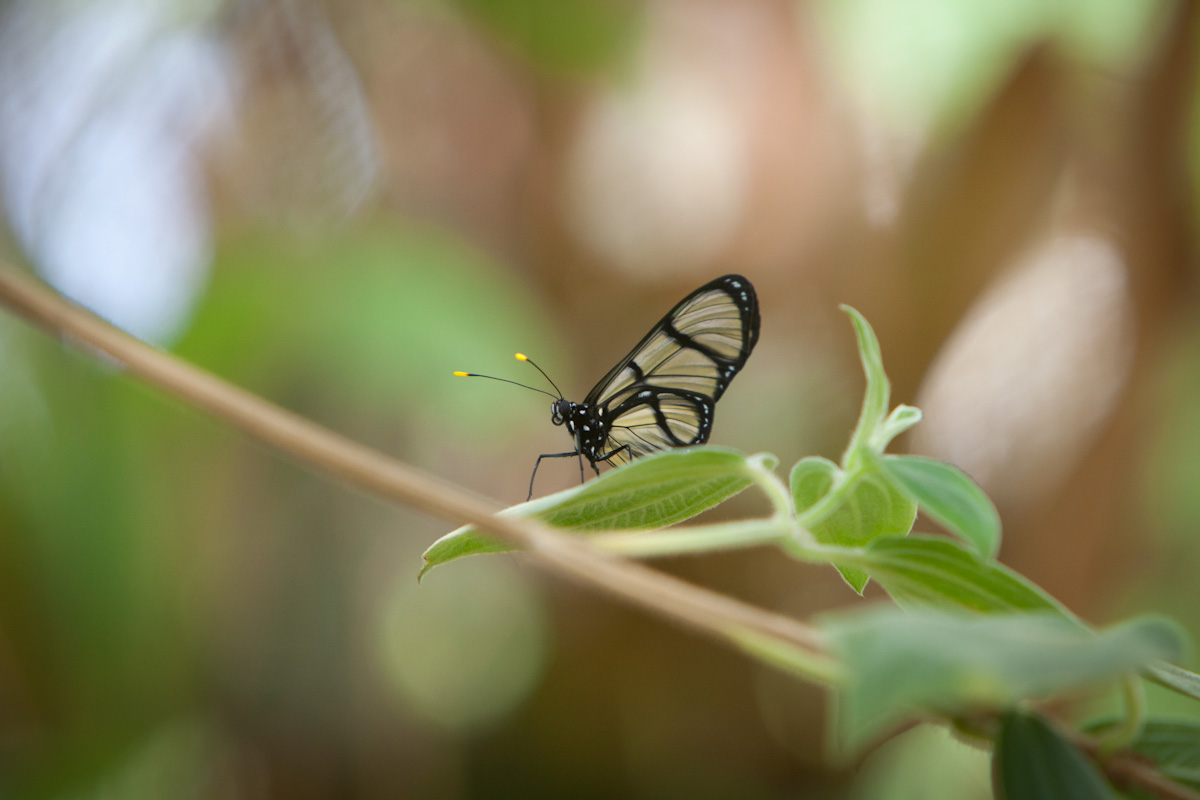
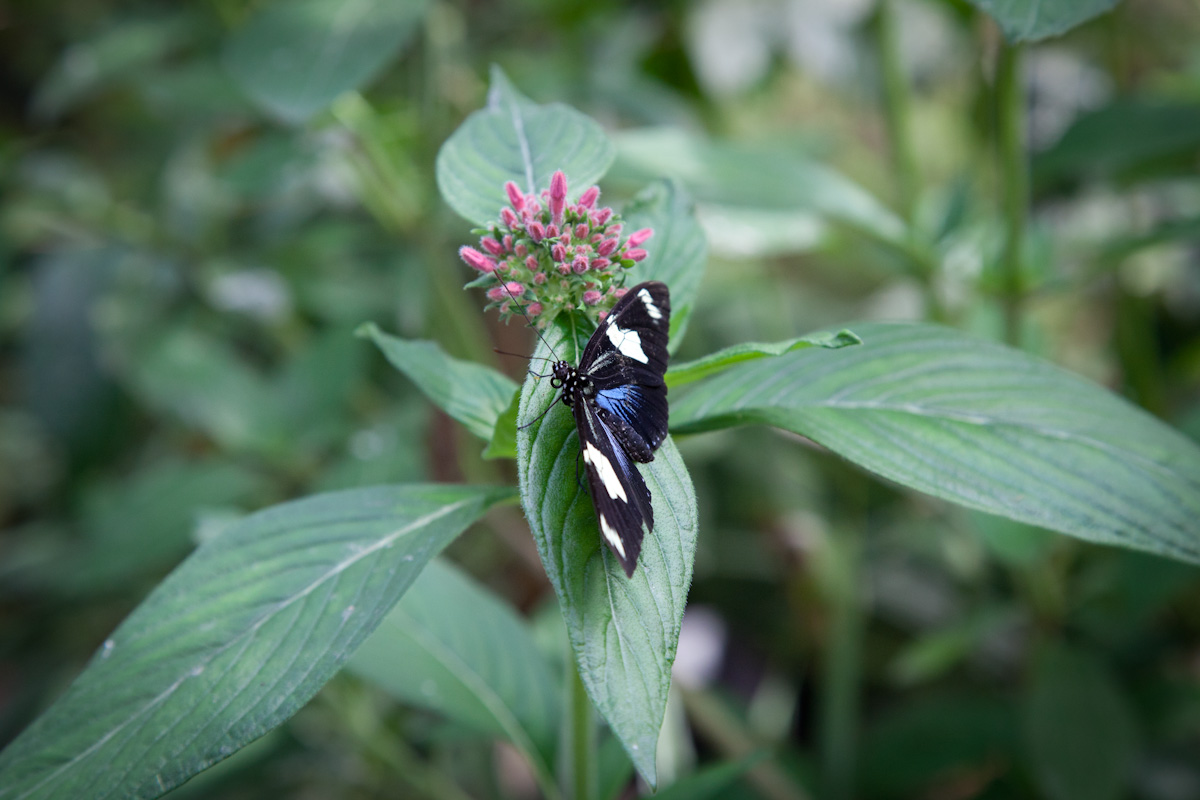
 On Friday, we walked to a butterfly “farm” where we had the opportunity to see 25 species of butterflies in a confined setting. This was a drop in the bucket when you consider the Mindo-Nambillo ecological reserve is home to 350 species of butterflies and there are over 3200 species of butterflies in all of Ecuador! Still, it was a marvel to be in a greenhouse surrounded by hundreds of beautiful butterflies fluttering all about. We spent a couple of hours here, taking photographs and just sitting amongst the butterflies, admiring the beauty of these insects. We took over 300 photographs that morning between the two of us, but don’t worry, we won’t bore you with all of them.


Birds
Serious bird-watchers flock to this region to view the 320 species of birds that make this reserve home. This area is renowned as one of the best bird watching spots in South America. The handful of tour operators in town offer a variety of organized bird watching tours, ranging in price from $60 and up. After a few days hiking, we decided against a guided tour – we were seeing lots of birds on our own, and didn’t really care to go traipsing into the forest at 5:00 am to track down some elusive bird. Guess we’re just not that into bird watching.
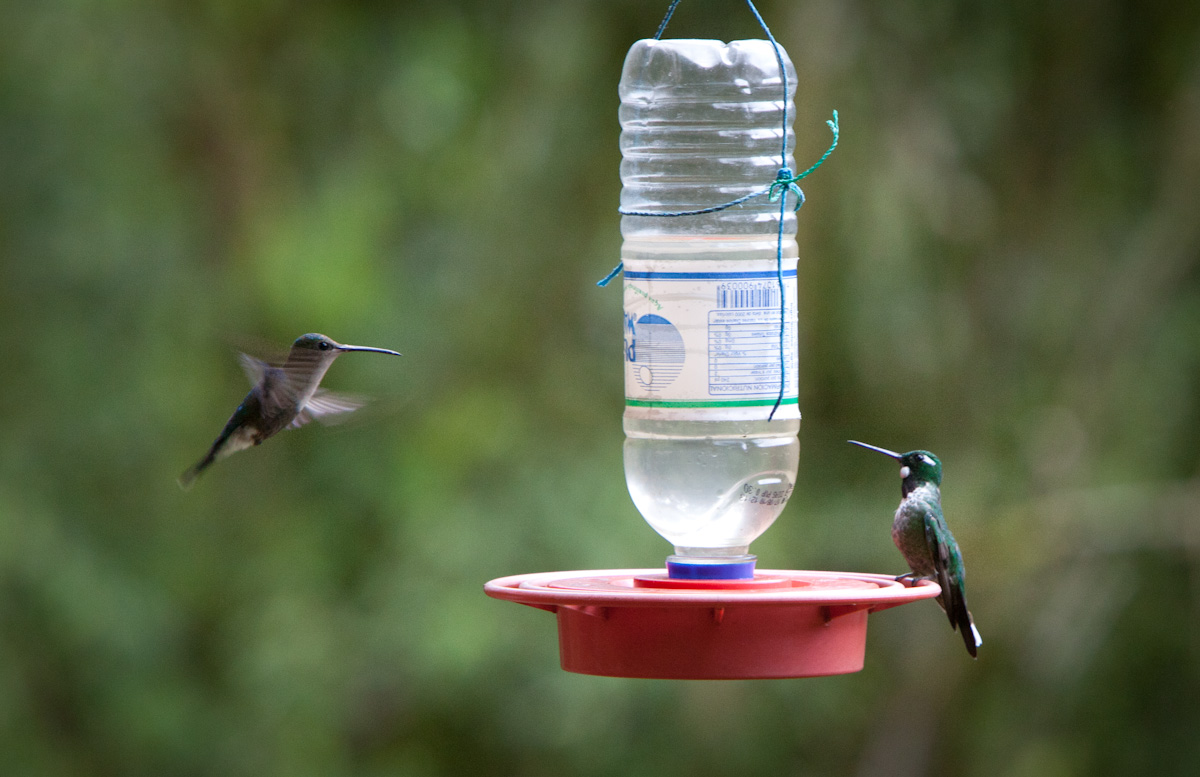
 That being said, we could not get enough of the hummingbirds. They were everywhere and came in all different sizes, shapes and colours. We awoke to the sight of hummingbirds in the tree outside our bedroom window. As we ate breakfast each morning, hummingbirds flitted amongst the bushes in clear view and just a stone’s throw away from us. On every hike, we were treated to their magic. Check out the video Chris took of hummingbirds at the Tangaras Reserve.
Throughout the week, Chris was on the hunt for big, colourful birds. The little birds, as beautiful as they were, were very difficult to photograph as they just wouldn’t sit still long enough to capture them – a source of endless frustration for Chris.

On our last hike, we were treated to a spectacle that took our breath away. We had just finished hiking to the Tangaras Reserve and realized that we were going to have to walk the three kilometres back to town since it was pretty unlikely a truck would be coming our way on a quiet Monday afternoon. We were tired, dirty and really hungry. We just wanted to get back to town as quickly as possible so we could get cleaned up and find food. That was our mindset as we trudged downhill towards town.

Suddenly, we both stopped in our tracks at the sound of loud rustling noises in the trees above. We searched the tree tops with our binoculars and lo and behold a beautiful toucan was perched high up in a tree. As he flew to another tree, his powerful wings sounded like the propeller of a helicopter. We looked at each other in amazement. Then another toucan whizzed by overhead and parked himself in a tree in clear view. Chris was desperately trying to capture these beautiful birds but it was a challenge as they didn’t sit in any tree for very long. Over the next few minutes, half a dozen toucans whirled around us – flying over our heads from one side of the road to another and from tree to tree. What a show it was!

Hiking
 On our first day in Mindo, we met a New Zealander in a restaurant who briefly told us about the Tangaras Reserve which was located adjacent to the Mindo-Nambillo reserve. It was accessible from a trailhead on the main road – between the zip lining and the waterfalls. On Monday, we decided to hike to the main cabin in the reserve with plans to visit their Cock of the Rock lek – reputed for offering some spectacular views of up to 18 cocks displaying their mating ritual at any one time.
As we left town, we flagged down a truck, the driver of which was more than happy to give us a lift as far as the zip-lining – no charge. This saved us two uphill kilometres of effort – effort that would be needed later in the day.
 The trail to the research cabin was one of the muddiest trails we have ever navigated. The trail itself was relatively easy, mainly flat, downhill near the end. But the mud! My goodness, it’s a wonder we didn’t lose our boots in the muck.
The Tangaras Reserve is run by Life Net, a non-profit conservation organization. The purpose of the reserve is to provide habitat and protection for native plants and animals at elevations that are typically deforested for agriculture. A small research facility is located on the property; it doubles as housing for volunteers and visitors alike.
 We arrived at about 10:00 in the morning to an empty cabin. We rested for a while on the deck and were entertained by a handful of hummingbirds darting back and forth to the feeder. We headed up a trail – which was very well marked – in search of the lek. Up and up we went. This was a tough hike. Along the way we met Jamie and Bex, the New Zealander volunteers who had been clearing a new trail further ahead. Unfortunately, this was the quietest time of the day for the birds (best time is at dawn and later in the afternoon) and the likelihood of us seeing anything was next to nil. Oh well, the hike was amazing just the same. We found the lek – a little wooden, lean-to structure tucked against the side of the hill, with a clear view of the valley below. We sat in the lek for about an hour (nice little rest) just enjoying the view, the tranquility and the solitude.

We made our way back to the cabin, just in time for lunch – their lunch, not ours. No problem, we had some snacks with us that would keep us going for a few more hours. We took the opportunity to learn a little more about this reserve and the work this young couple were doing. They had been living in this isolated cabin for two months already, and had another month ahead of them, after which they were planning to travel throughout South America until next May. Their work was focused on making improvements to the reserve including increasing its visibility and viability as a tourist attraction. The well posted signs both to the reserve as well as on the trails within the reserve along with the posters we saw around town were all products of their efforts. To date, they had 16 visitors of which only a couple stayed overnight. This was definitely off the beaten track. Jamie has set up a blog for the reserve and is blogging about his experience as a volunteer. Check it out.
Weather
Every day brings the same weather. We awake to warm sunshine and partly cloudy skies. Clouds are always present – guess that’s why this is called a cloud forest. Daytime temperatures are in the low 20’s, but it often feels much hotter because of the humidity, especially when the sun is out in full force. Night time lows are in the high teens – very comfortable sleeping weather. By the afternoon, clouds begin to roll in, and it may rain a little late in the day. One day it rained quite heavily for about an hour, and one night it rained almost the entire night. The weather is really quite idyllic and something we have just taken for granted each day.
Food
 In an effort to spread our tourist dollars around, we have eaten in most of the restaurants along the main road in town and have not had a bad meal yet. Whether we are eating the fixed plate lunch or choosing from the a la carte menu, food is simple but consistently of high quality and very tasty. One thing I’ve noticed – vegetables are rarely served. I can’t figure out why because it’s not like they aren’t available (and they’re cheap). Vegetables just don’t seem to be very popular – something I am missing a lot.
Accommodations
Despite our original misgivings about our hostel (Bio Hostel), it really hasn’t been bad at all. In fact, we’ve been downright comfortable. Most nights we have had the whole place to ourselves. Breakfasts have been varied, delicious and substantial – they keep us going easily until mid-afternoon. Internet connection, while slow, has been quite reliable. The hostel is a little rough around the edges and appears to be a work in progress – for example, there are no windows or doors on the first floor, and the staircase continues to what looks like is going to be the third floor – but for now, it is all open to the outdoors. Regardless, it’s been a good place to kick back and relax.
The Final Verdict
Mindo was a great place to enjoy nature, relax and de-stress. We would highly recommend it.
 We have decided to leave Mindo tomorrow (Wednesday) a few days earlier than planned. A week has been long enough in Mindo and we’re ready to move on. We plan to spend a few nights in a hostel on the beach before we meet up with Andy and Leo, our HelpX hosts who we plan to stay with in a “work for room and board” arrangement.
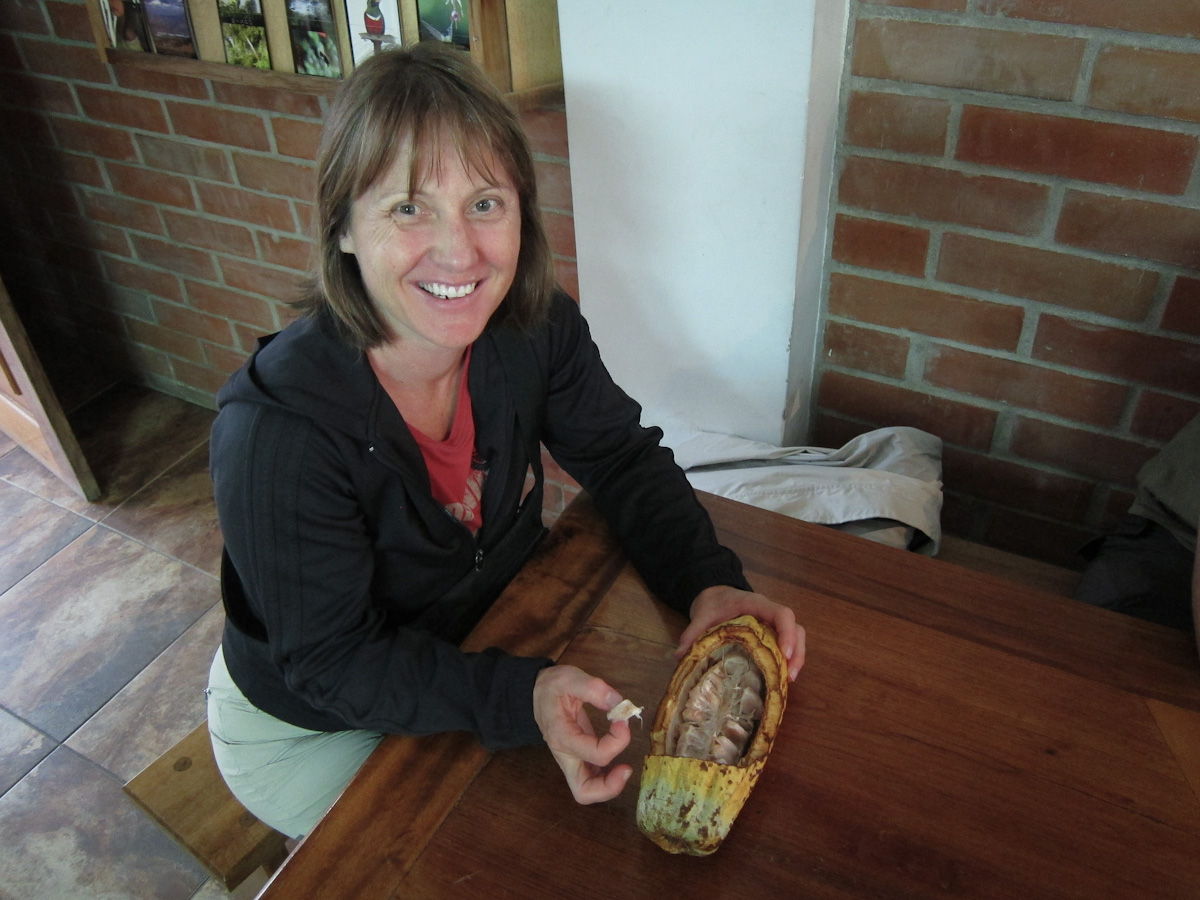 Joseph Meza, the owner, began the tour with a description of the rich history of the cocoa bean. We had the opportunity to taste the cocoa fruit as well as the cocoa bean in various stages of processing. We were then taken on a tour of his farm and we were inspired by this man’s creativity as he continuously sought out new and interesting ways to use every part of the cocoa plant. For example, he had created a barbeque sauce from the juice of the cocoa fruit, a by-product that is usually thrown out. He had also created a syrup from ginger that he serves on pancakes in his restaurant (instead of maple syrup which is expensive to import). It passed the Canadian taste test!
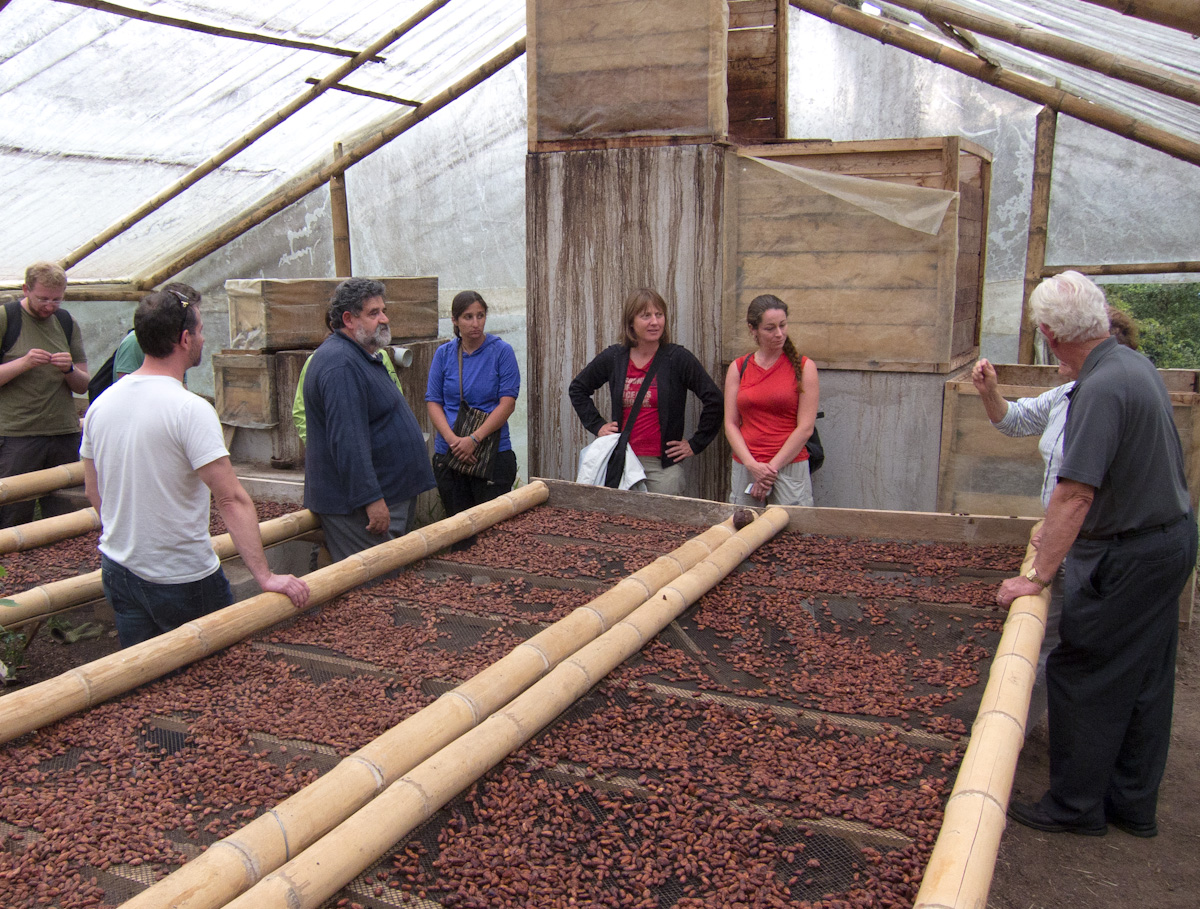 We toured his garden and saw some of his other projects: about 25 coffee bean trees,his own cocoa trees, lemon grass, aloe vera plants, variety of fruit trees and vegetables for his restaurant, chickens, and pigs to name just a few. Everything had a purpose. All of this on an acre and half plot – it was amazing! At the end of the tour, we sampled his products and were wowed by the brownies – they certainly lived up to their reputation as the best brownies ever!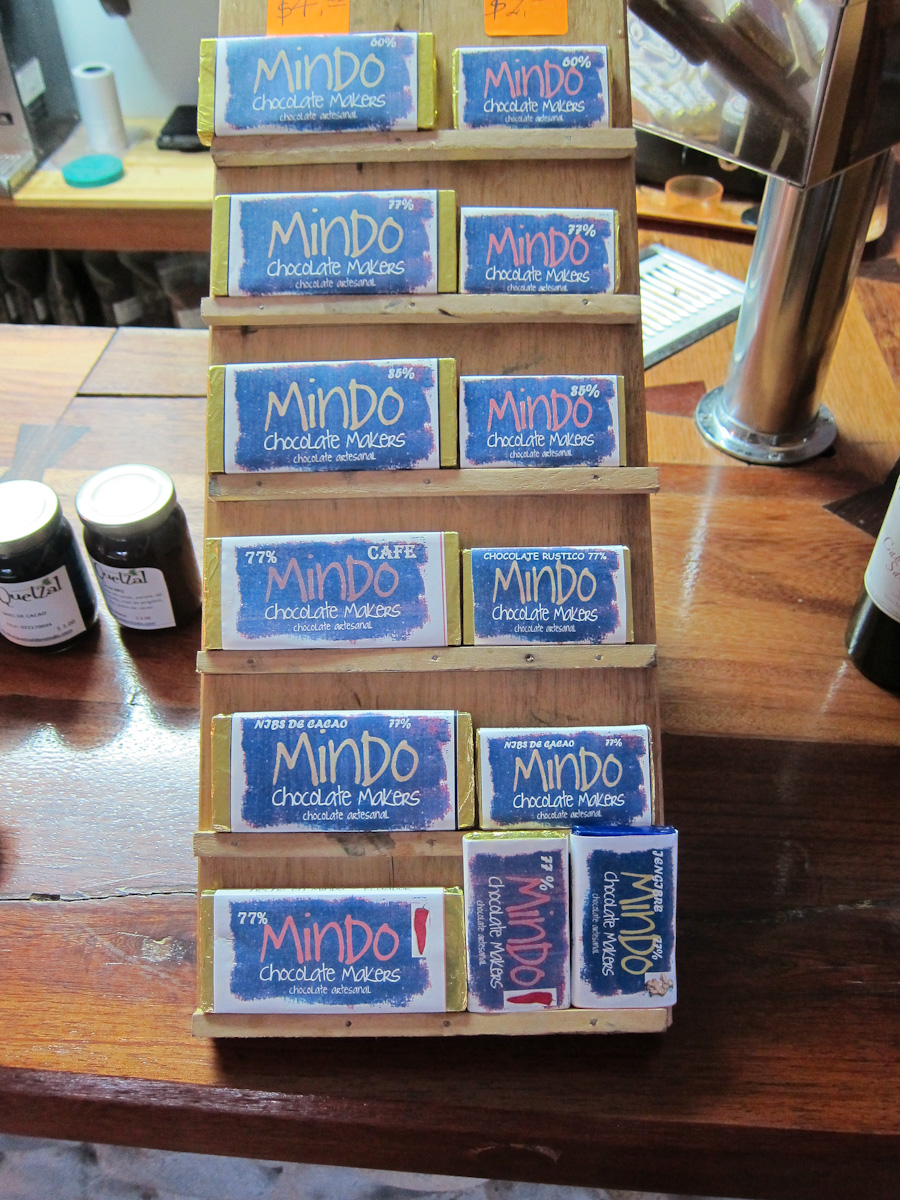


 Once safely on the other side, we hiked along a beautiful, if not at times treacherous path that wound its way down to the canyon floor, to the base of a spectacular waterfall. Often we had to wade through the river to continue the path on the other side, or overcome other obstacles like fallen trees strewn across the path.