South America

Hostel or maybe hostile cooking

We landed in Guayaquil late Tuesday afternoon and had plans to travel to Cuenca the next day.  There has been a national holiday this week and it seems like the entire nation has taken the week off for holidays.  As a result, it was impossible to find a room in Cuenca this week.  Even the buses were overloaded and not running their regular schedules.  So we had to decide what to do next.  The options were:

  1. Go to Cuenca without a reservation and take our chances.
  2. Stay in Guayaquil until Sunday and then go to Cuenca.
  3. Go somewhere else – Latacunga was our next choice.
  4. Head to Peru.

After weighing the pros and cons of each option, we decided to go to Latacunga.  We had hoped to visit this city when we were in Quito, but because Chris was sick, we never made it.  Latacunga is an hour and a half from Quito.  It is 2,760 m above sea level (similar to Quito).  Its climate is normally cold and windy, due to the neighbouring snowclad heights, and the barren, pumice-covered tableland on which it stands. The active volcano Cotopaxi is only 25 kilometres away, and the town has suffered repeatedly from eruptions. Founded in 1534, it was four times destroyed by earthquakes between 1698 and 1798. People use Latacunga as a base to access the Parque National Cotopaxi, the infamous Saquisili market, and the Quilatoa Loop, an isolated route that passes through the mountains, and small villages with colourful markets.  Our plan was to hike Cotopaxi from which the views are supposed to be spectacular.

On Wednesday, we took the city bus to the bus station to figure out which bus we needed to take and hopefully buy our tickets for Thursday.  You may recall that the bus station in Guayaquil is huge, with almost 200 bus companies represented.  We thought it would be easier to figure out the tickets without our heavy packs on our backs.  Good decision on our part.  At the bus station, there were hundreds of people, lined up at every kiosk.  It was absolute chaos.  We found two companies that had buses to Latacunga – neither were selling tickets in advance.    So much for that idea.  At least we knew where to go the next day.

I decided to cook on Wednesday, the first time since leaving Canada.  The hostel we were staying at, DreamKapture, was very comfortable and had a little kitchen that was reasonably clean although not very well equipped.  Chris was less enthusiastic when I announced I would be cooking meals today – lunch and dinner, but I talked him into it anyways.  We shopped at a grocery store that reminded us of a Walmart where they sold everything from tires to milk.  Food was cheap especially vegetables.  We had tuna sandwiches for lunch and I made a spaghetti-like pasta dish with salad for dinner.  Everything turned out great, except there was way too much food at dinner time.  I invited other guests at the hostel to join us, and before you knew it, all the food was gone.  It was a very homey atmosphere that night.

Thursday we awoke early to get to the bus station for 6:30 but unfortunately, I was in no condition to travel.  Yup, my stomach was off and I only had my cooking to blame!  Chris’ stomach was also off, but not as bad as mine.  I was horrified to think I may have made half the hostel sick too.  At breakfast, nobody else complained of stomach problems, so I hoped maybe it wasn’t my food.  I really didn’t want to stick around to find out either, so we headed out to catch the 10:00 bus.

The 6.5 hour bus trip took us north back through the Andes mountains. The scenery was stunning.  We arrived in Latacunga amidst a downpour – the first hard rain we’ve been caught in, and of course, our rain gear was at the bottom of our packs.  It was impossible to get a taxi in the rain so we trudged in the pouring rain 1.5 kilometres to our hostel loaded down with our packs.  We were now at a high altitude and I was huffing and puffing, feeling almost light headed under the weight of my pack.

Thankfully, we made reservations in advance at Hostel Tiana.  There is a big festival on Saturday (Mama Negra), and the town is booked solid.  A few people have camped out in their sleeping bags on the sofas in the outdoor lounge area – a little frosty with night time temperatures around 10C.    We had a private room the first night, but the next two nights we would be sharing our room with two German girls.   This would be our first experience at dormitory style accommodations. And our first local festival.

Thursday night I succumbed to altitude sickness – nausea, fatigue, body aches.  Add this to my still upset stomach and I was not in good shape.  By mid-afternoon Friday, I was starting to come around. I’m sure I’ll be good as new for the festival tomorrow.

Hammerhead sharks and more

Diving in the Galapagos Islands is a dream for most divers and was one of the main reasons I worked so hard to get my Open Water Certification before we left Canada. Diving here can be very challenging with the strong currents and cold temperatures.  As new divers, we are keenly aware of our limitations and it was with this in mind that we decided to sign up for the Advanced Certification course.

The course involves 5 dives, each of which develops new skills.  Two dives are mandatory: deep dive and navigation dive.  The remaining three dives can be selected from several specialities.  We chose:  multilevel diving, drift diving and buoyancy control.  The main benefit of taking the course from our perspective would be the one-on-one attention with the instructor.  I figured this was a good insurance policy for staying safe and out of harm’s way.

The dive shop we selected, Academy Bay, offered a competitive rate for the course and making arrangements in English with the Australian shop owner, Alice was straightforward.  Our instructor, Freddie, spoke English quite well (as his second language) and we felt confident that at least communication would not be an issue.   However, I did observe that this dive shop was rather disorganized in the way they handled the equipment (for example, they brought the wrong size wet suit for Chris) and lax when it came to following PADI procedures.  For instance, we were assigned our home work which we did, but only reviewed it with the instructor after the dive, not before.  We presented our PADI certification after the dive, and we never did get around to signing any medical or legal release forms.  They seemed content to take our word at face value.

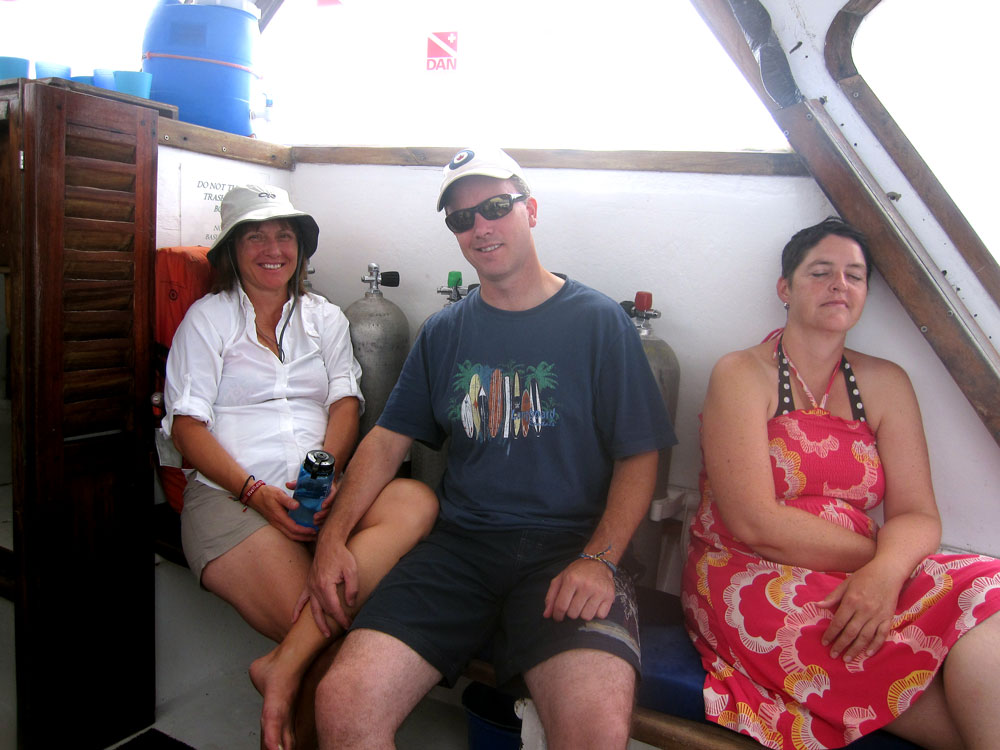
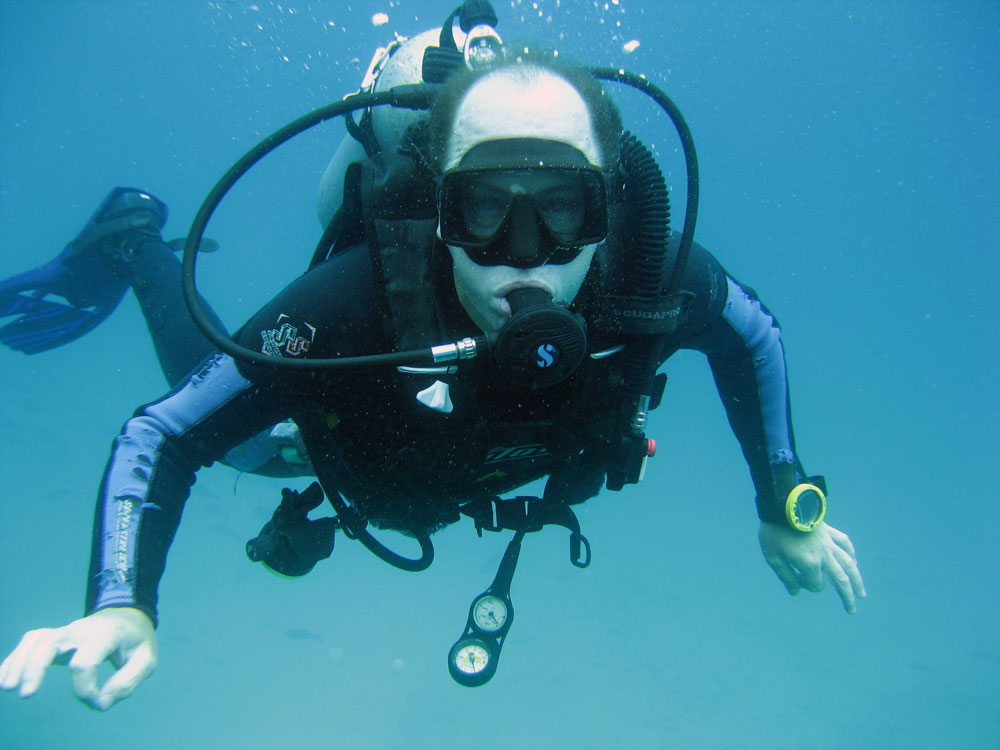
Before our cruise, we did our first two dives.  The destination was Gordon Rocks which is reputed to be one of the most difficult dive sites in the Galapagos.  Frankly, I was terrified at the thought of diving here as I had read many, many warnings online about the dangers of this particular site. However, both Alice and Freddie assured us that conditions could be very safe (no current) or hazardous (strong current) and we would only know when we got there.  They would not let us go in the water if the current was strong.  And there was an alternate site close by if we needed it, Las Plazas. To help calm my fears, Alice decided to dive with our group that day, offering to accompany us if we dove at Gordon Rocks, a gesture I greatly appreciated.  In the picture below, I look surprisingly calm – I think at this point I had resigned myself to my fate.  I just hoped that this day, which happened to be our 9th wedding anniversary, would not end in calamity.

It turned out to be a very calm day at Gordon Rocks, but I was still not confident to do our first dive at that location, so we let the other divers go ahead as we snorkelled with sea lions. When they came up, the other divers confirmed there was very little current and they had an amazing dive where they saw hammerhead sharks, the Bola Bola Sunfish, and lots of rays.  The photo below is the Sunfish they saw.

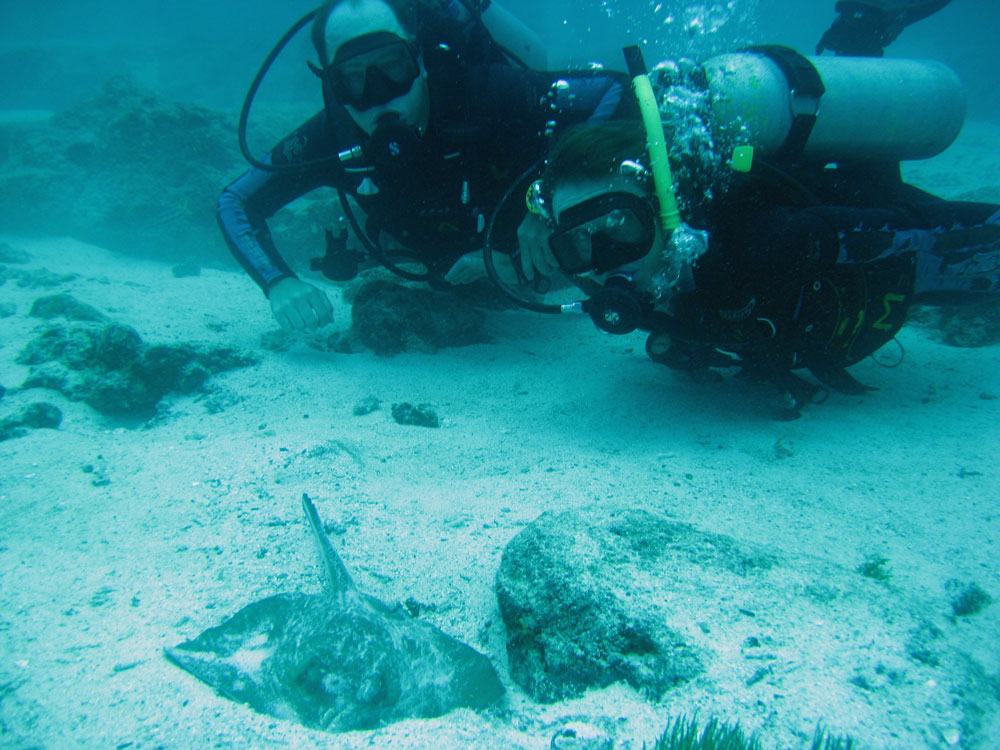
At Las Plazas, the current was quite strong – stronger than Gordon Rocks today – go figure.  The plan was to just let the current take us along and when we were out of air, we would surface and the boat would pick us up.  At times we hung on to the rocks to slow us down a bit.  This was supposed to be our multi-level dive so we went down to about 24 m for ten minutes, up to 16 m for ten minutes, and then did the rest of the dive at about 12 m.  This could easily have been our drift dive.  We saw our first hammerhead shark on this dive!


Our second dive was at Gordon Rocks.  By now the water had become quite choppy, and there was a small current, but nothing we couldn’t handle.  I was still a little nervous so Alice joined us to give Freddie a hand in case he needed it; this helped calm my nerves.  This was supposed to be the drift dive so again we just let the current take us, grabbing onto rocks to slow us down a bit.

On this dive we saw a huge school of barracudas directly in front of us – it was awesome.  When we ended the dive, the sea was really rough.  It tossed us about as we were getting our gear off before climbing back into the boat.  It was too much for my stomach – as soon as I got on board I proceeded to feed the fish as I vomited over the side of the boat.  I was fine once the boat started moving, but until then, all I can say is that the fish were well fed that morning.

All in all, the first dive day was a resounding success.  First, we survived. Second, we accomplished our skills, and finally, we saw some pretty cool things underwater.  I don’t think I’d go so far as to say I had fun – I still find diving to be an exercise of determination to conquer my anxieties and fears.  But I was happy after the dive and enjoyed a feeling of accomplishment.

We did our second dive day after we ended our cruise.  Jasper and Dafne, our new friends from the cruise, also came along for this dive.  The dive was planned off the coast of Floreanna, an island about a 1.5 hr boat ride from Santa Cruz.  We had three dives planned:  deep dive, navigation dive, and buoyancy dive.

Right from the start, things went wrong.  First, we were told our instructor was ill and was not going to come with us. We later learned the real story: the dive master on this boat (Luis) refused to allow our instructor on board.  As far as he was concerned, if anyone was going to do any teaching, it was going to be him.  We were assured he was competent and could speak English.  Again there was some disorganization with the gear – scrambling to find the compasses for our navigation dive, and tossing in two dive computers and the underwater camera at the last minute (only after we observed they were missing).

As soon as we left the harbour, the engine started to make strange noises – not something you want to hear as you’re heading out to open seas.  The captain ignored the engines and kept going full throttle ahead for about a half hour until the engines started to sputter.  He took a look at the engines and decided to keep going at a much slower speed.  The 1.5 hour trip took us 3.5 hours!  Poor Dafne – it took all her concentration not to throw up as the boat rocked in the high waves.   I was fine as long as we kept moving forward.

Finally, we got to our dive site.  Luis gave us the dive briefing and seemed to ignore the fact that we were doing the Advanced Course today.  After orientation, we took him aside and reminded him.  He tried to brush us off saying we would all dive as a group.  We insisted that we had paid for the course and we expected to dive exclusively with our instructor and to do the exercises as outlined in PADI.  He grudgingly conceded and assigned the group to the other dive master and the instructor-in-training who were on board. We also pointed out that we were supposed to be doing our deep dive first not our buoyancy (this is directly from PADI), and again he minimized this and said it was only a guideline.

So off we went on our first dive.  To his credit, Luis did teach us some good buoyancy skills and took the time to make sure we were properly weighted.  I did the entire dive without needing to adjust the air in my BCD, just using my breath to go higher or lower.  It was great.  Luis knew the site well and found all kinds of interesting things for us to see, including lots of sharks, turtles, and mantas.  It was a good dive.

I was a little curious as to the logistics of our third dive since the other divers were only doing two. So once on board, I asked Luis how it was going to work.  He explained we would go back into the water immediately, and do our navigation exercises at 5 m depth.  It would take ten minutes to complete.  This was not what we expected – we were told we would have three dives with three tanks.  Well they didn’t have enough tanks for us to do a third dive.  So we did the navigation exercise – but only after we discovered one of the compasses did not work.  Chris and I did the exercise together with the one working compass.  We did a straight line out and back, followed by a square and then a triangle.  It was all very rushed.

The third dive was our deep dive.  The plan was to go to 30 m and then Luis would do a couple of tests with each of us to check our cognitive ability at that depth.  Didn’t quite turn out that way.  We descended to 34.4 m with Luis casually looking behind at us now and then giving us the OK gesture to which we responded OK.  We stayed at that depth briefly – not more than ten minutes – and then ascended to about 18m where we stayed until we ran out of air.  That was our deep dive – he explained later that he could see we were fine and didn’t think we needed to do the exercises.  This guy was just too much!

There was a lot of current on this dive, so at one point we hung on to some rocks to slow us down.  Here we stayed for about ten minutes fascinated by the sea life passing us by – all swimming against the current.  We saw our first Galapagos Shark while perched on these rocks.  And then another, and another, and another.  They were within a couple of feet of us.  I saw Chris madly snapping pictures.  There were turtles, and huge schools of fish, all around.  It felt like we were watching an underwater movie – except we were in it!  Absolutely amazing!  Chris even took some video of us hanging onto the rocks watching the sharks swim by.


While we were diving, the captain took apart the engines to clean and repair them – a rather unsettling sight to see knowing we had a long trip back to Santa Cruz.  By the time we finished our dives it was about 3:30 – we had been out since 7:00 in the morning and had been given nothing but water and an apple.  We expected to be given lunch at some point, but because we were so delayed, the captain decided to go back as soon as we had finished our dives.  We pulled into Santa Cruz at 5:00 pm at which time the crew prepared our lunch – just a little late!  We were famished.

The two dives we did this day were absolutely fantastic in terms of the conditions (excellent visibility) and the sea life we saw. From the course perspective, it was pretty half-assed.  We studied all the required course material in advance and we were ready and confident to do all three dives.  While we did accomplish the necessary skills for certification, we felt we were gypped out of a full dive and we were appalled to see the lackadaisical teaching approach by this instructor.  Add to that the poor condition of the boat and the lack of refreshments on board, and I can tell you, we were not happy customers.

Back on dry land, after hearing our miserable tale, Alice was sympathetic and empathetic and compensated us for the way things turned out.  In the end, we got our certification and had a few great dives.  All’s well that ends well.

Galapagos Islands Cruise Day 8: Birds, Birds, Birds

Our final stop was at North Seymour which is a small islet north of Baltra with typical arid vegetation including prickly pear cactus, palo santos trees and salt bushes. The visitor trail on North Seymour is approximately 2 km in length crossing the inland of the island and exploring the rocky coast. Along the way the trail passes colonies of blue-footed boobies and magnificent frigate birds.

We landed for our walk very early (6:00 am) because we had to be back in Baltra and off the boat before 9:00 am.  By now I think we were all a little bit tired as the schedule each of the past 7 days has been packed full of activities.  Regardless, this stop was well worthwhile as we were able to see so many birds up close.

In spite of the early start, there were groups already on the trail – ahead and behind us.  Our guide kept us moving at a good pace so as not to collide with the other groups.

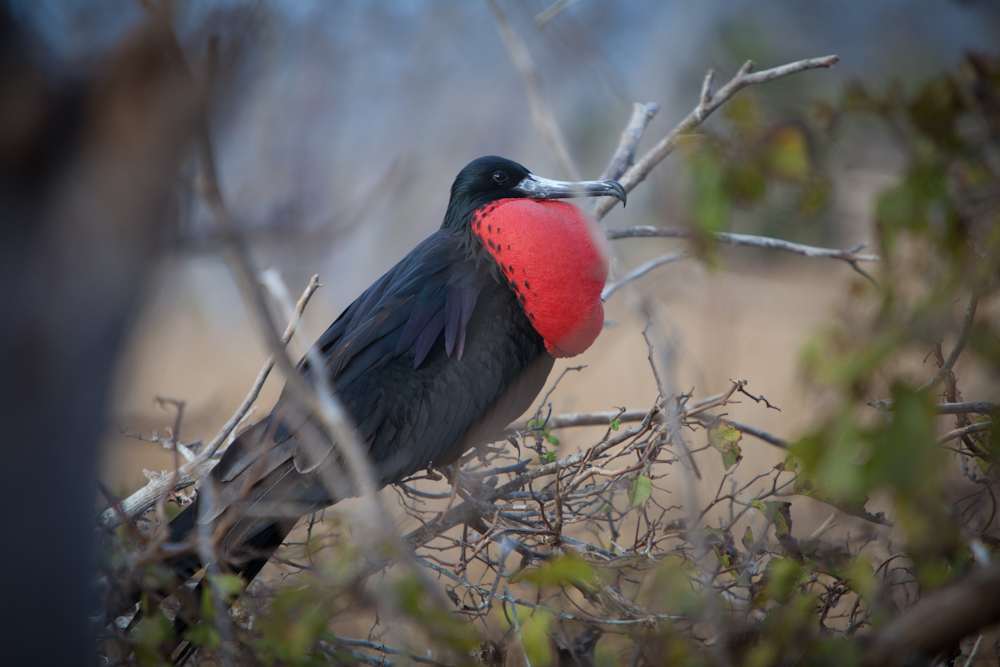
We had the opportunity to see the inflated red pouch of the magnificent frigate bird, a large black bird with a long wingspan, and a hooked beak; it is extremely fast and has excellent vision.  We had seen these birds throughout our voyage but this was the first time we saw them with thier large red pouches on their necks fully inflated. During mating season the males throw back their heads, inflate the pouch (sometimes to the size of a soccer ball), and shake trying to capture the attention of female frigates.

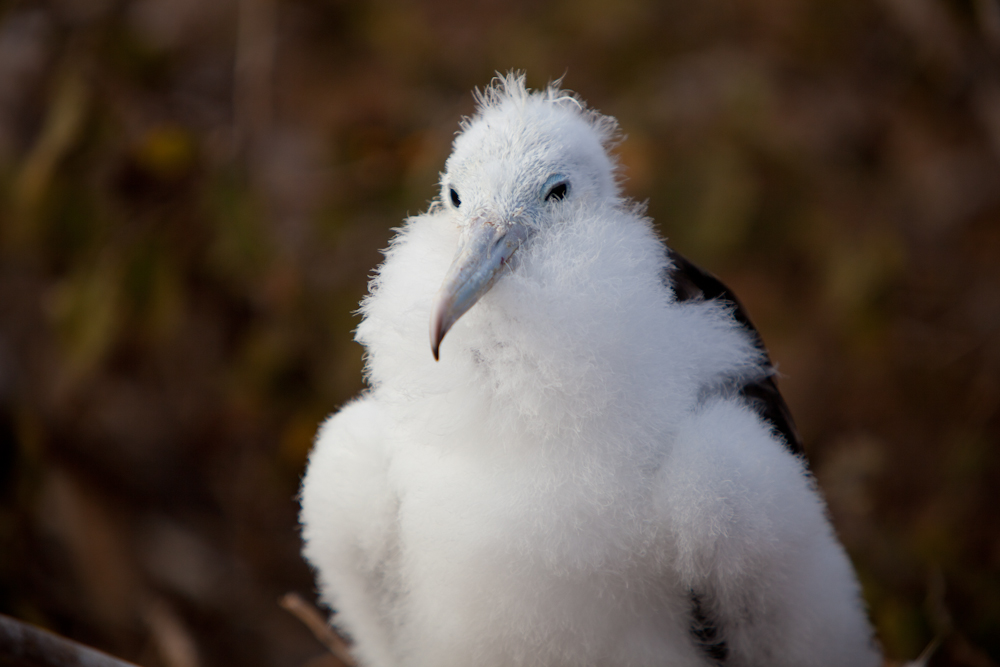
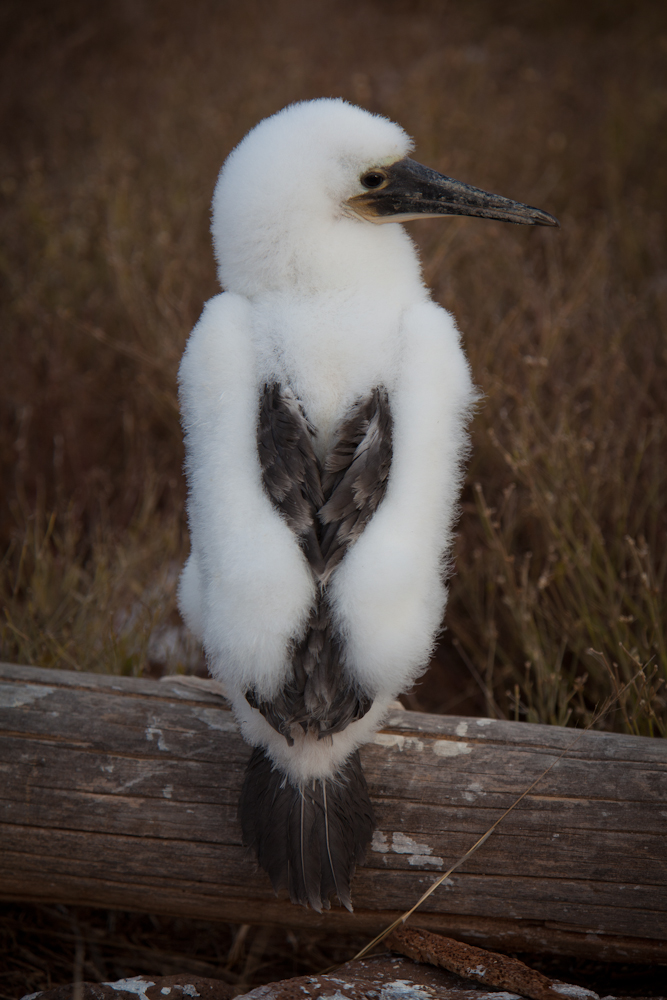
Boobies and frigates have an interesting relationship. Sharing the same nesting area on North Seymour, blue-footed boobies nest on the ground making their nests from the twigs of the palo santos trees, while the magnificent frigate bird nests just above them in the salt bushes.  We saw several baby blue-footed boobies which are fluffy, white puffs of feathers – absolutely adorable.  Sadly, we saw a few dead ones as well, victims of nature – the mother sometimes lays two eggs but only nurtures one baby leaving the other one to die.

Blue-footed boobies are great at fishing. Hunting off-shore, the boobies dive from mid air into the sea in order to catch fish. Successful, they return to the island with their prize to feed their young. Frigate birds named for the warships once used by pirates are the pirates of Galapagos birds. In contrast to the booby, frigates are poor fishers.  Their bodies produce very little oil for their wings and they are not waterproof. Unable to spend time in the water fishing they must rely on food stolen from other birds to feed themselves and their young.

Unable to spend time in the water fishing they must rely on food stolen from other birds to feed themselves and their young. When a booby or red-billed tropicbird returns from a successful fishing trip the frigatebird will swoop down and molest the bird until it drops its catch. The frigate then plucks the food from the air, feeding itself and its young from the stolen loot. Frigatebirds on North Seymour rely on the fishing success of the blue-footed booby for their survival.

Of course, any walk on an island in the Galapagos would not be complete without sea lions, and North Seymour was no exception.  To our left, the sea lions basked on the lava rocks along the ocean edge, and to our right, the birds were nesting in the low lying vegetation.

Once we were back on board, we enjoyed our final breakfast as the boat travelled to our final destination, Baltra. We were dropped off on Baltra Island which is where the airport is located.  It is typical for people to fly into the Galapagos Islands, board their cruise ship, and then head home directly after their cruise.  Only four in our group were flying out this morning; the rest of us made our way back together to Puerto Ayora where we were all spending a few more days.  We would bump into each other many times over the following days.  In fact, it became a joke between us and Dafne and Jasper as we kept running into them, eating most meals together, and after each one, saying good-bye as if it would be the last.  It was the longest good bye ever.  We even travelled to the airport on Tuesday with them and then said a final good-bye.  We hope they will visit us in Canada one day as we really had a lot of fun with them.

And so came to an end our wonderful 8 day cruise in the Galapagos Islands.  Hope you enjoyed the trip!


Galapagos Islands Cruise Day 7: Snorkelling with Sharks!

The clouds have overtaken us.  I awoke this morning surprised to see we were still anchored in the bay at Rabida Island and disappointed by the overcast, gloomy sky.  Considering this is our final full day at sea and every day thus far has given us perfect weather, one can hardly complain.  As I enjoyed my morning coffee perched high on the top deck, the boat headed off to Chinese Hat Island, so named because it looks like a Chinese hat. This tiny island just off the south eastern tip of Santiago Island is less than a quarter of 1 sq km in size.

As the anchor was dropped, the sun came out as if on cue and the rest of the day remained warm and sunny.   After breakfast we headed to the island for a walk, the first group to land today.  Enrique was well organized and very knowledgeable about the other boats at each island and did a great job insulating our small group from the crowds that sometimes overwhelmed an island.  A welcoming committee of several sea lions greeted our boats as we made a wet landing.

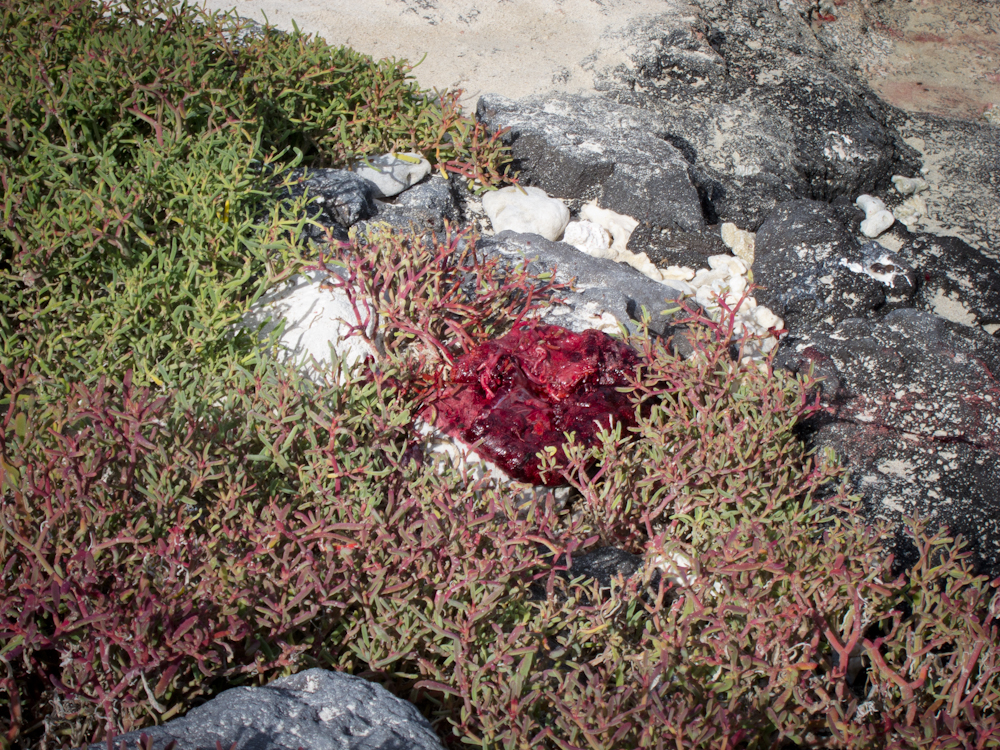
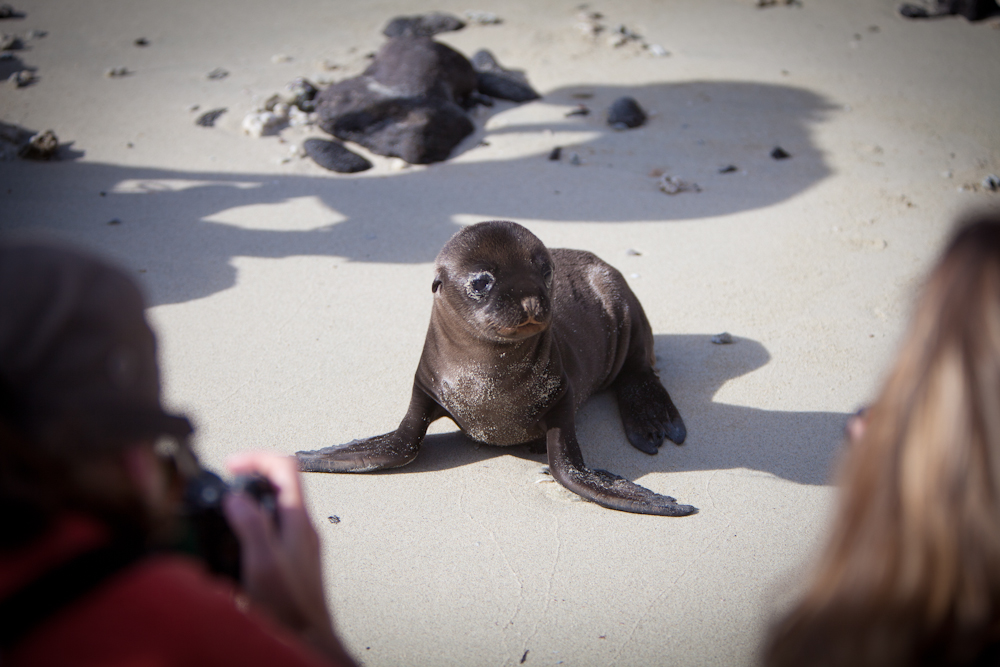
The highlight this morning was a sea lion with her newborn pup, estimated to be only a few hours old.  The blood on the rocks where the birth took place was still fresh, as was the bloody trail from the birth site to her present resting place.

A hawk watched from a close distance, its bill and talons stained red from the blood of the placenta he had been feasting on only a few feet away.

We marvelled at the miracle of birth, at how this mother sea lion had carried her pup for an eleven month gestation period, had carefully selected this birthing location, and was now resting with her newborn. When we returned from our walk, both mom and pup were awake and moving slowly along the sand.  Another pup, perhaps a week old, was checking out the new kid in town and we were told that within a week both would be playing together.

While travelling in the dinghies, we again witnessed thievery on the high seas.  A Blue Footed Booby dove powerfully into the water and resurfaced with a good sized fish in its mouth.  This was by now a common sight, except this time a frigate swooned in unexpectedly, snatched the fish right from the Booby’s mouth and then swallowed it whole without hestitation.  A few feet away, a pelican took careful note of the commotion.   Suddenly, the frigate spit out the fish (probably because it was too large) which was still intact and swoosh, the pelican dove in, snatched the fish and flew away victorious.    This was the second time we saw the cunning and calculated manoeuvers of the pelican and the frigate’s cleptomanic tendencies.

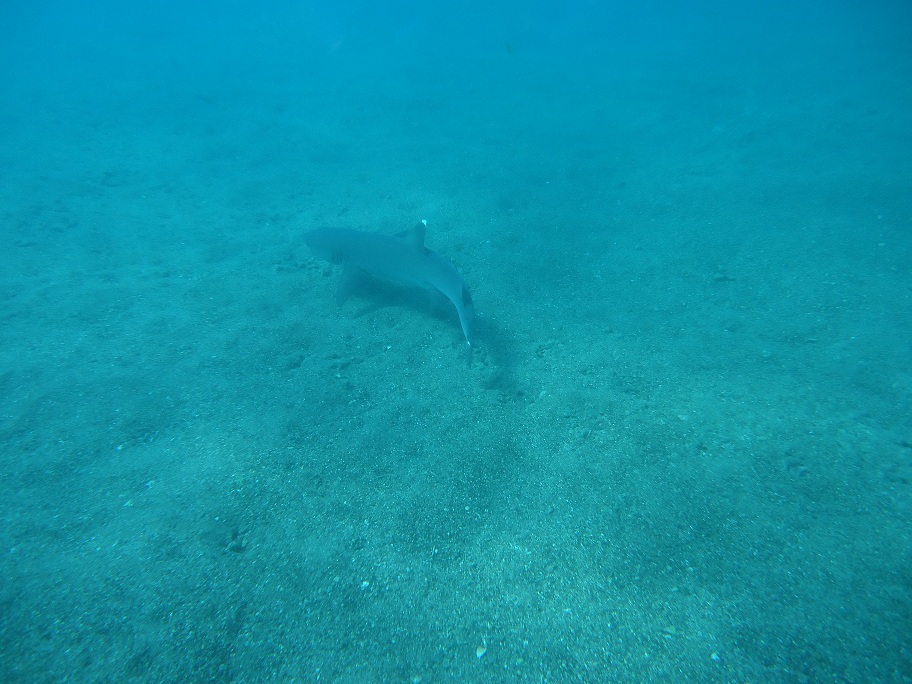
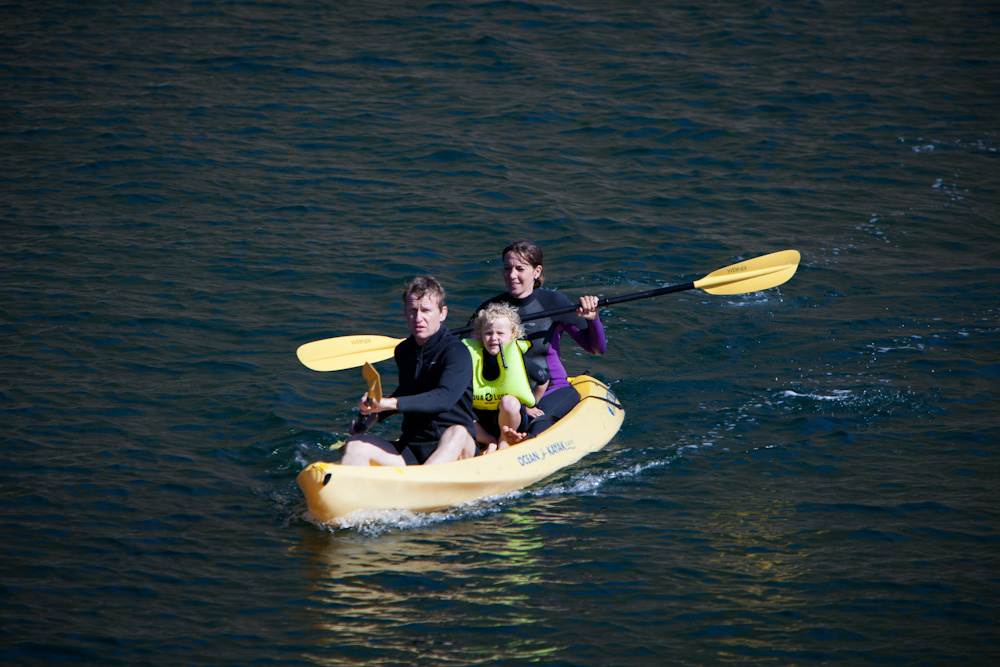
Snorkeling in this location was great.  As we drifted along the rocky edge of this island, we were amazed to see a white tipped shark!  Visibility was excellent and there were many large schools of colorful fish.  Chris and I decided to go kayaking for a while – once Chris recovered from overturning the kayak that is.  I wisely let Chris get on the kayak first so he was the only one to go under.  I had learned from previous canoeing experience with Chris (nothing more needs to be said on the subject).  There wasn’t much to see from the kayak; the fast moving current gave us a good upper body workout as we cut across the channel to the yacht.  That was our first and last kayaking experience in the Galapagos Islands.  Later we learned that some sea lions decided to play with Dafne and Jasper, even blowing bubbles in their faces.

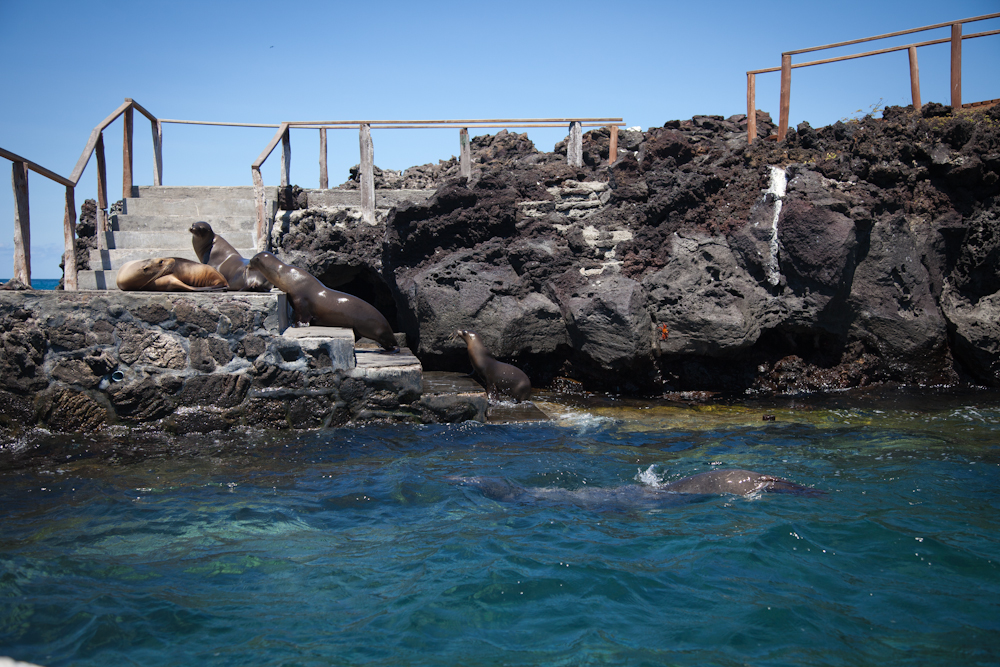
Bartolome Island was our next destination.  To stay ahead of the crowds, we ate lunch as we travelled to the island.  This island is a popular day-trip destination and so it was not surprising to find several boats already in the bay.  There is a spectacular lookout point, accessed by a man-made boardwalk and steep set of stairs. But of course, before reaching the stairs, we had to make it past yet another welcoming committee of friendly, playful sea lions.  In this case, we were refused passage on the stairs and had to walk on the rocks to get around them.  They must think they own the place or something!

Did I mention the stairs to the lookout?  There were a lot of them – a couple of folks with bad knees or backs wisely opted out of this excursion.  It was a long climb to the top in blistering heat.

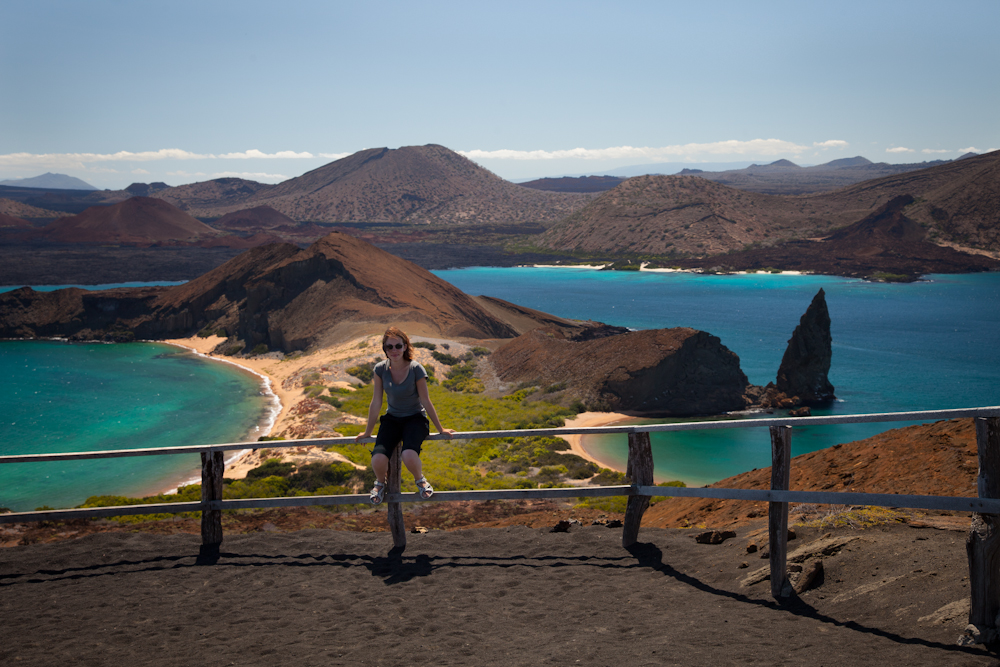
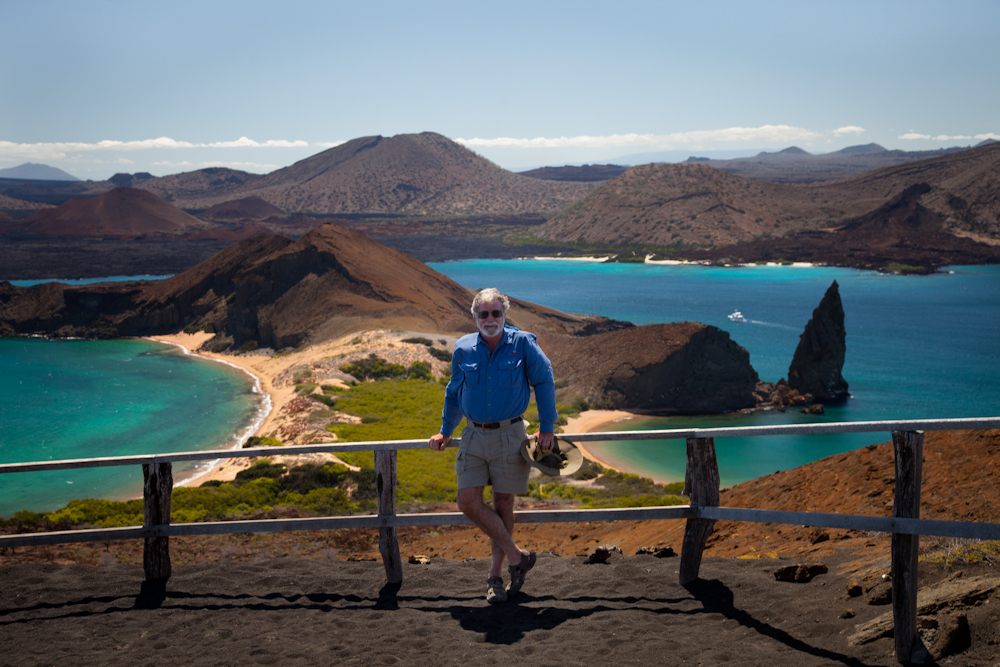
We were rewarded with a postcard worthy view from the top.  And of course, everybody wanted their picture taken. If this view looks familiar, it’s because this scene is commonly used to advertise Ecuador and the Galapagos Islands. (Sorry Babs, but the picture with you and Enrique was too blurry to include in the collection below.)

We snorkeled from the beach along the rocky shoreline at the base of the infamous Pinnacle Rock.  The schools of fish seemed much larger here; at times we were surrounded by hundreds of fish, often finding ourselves in the middle of a school swaying back and forth harmoniously in the surge.  As we explored the rock formations we searched for new and interesting marine life; a water snake was the only new discovery this time.  On the other side of the Pinnacle Rock, we saw our second White Tipped Shark of the day and several from our group dashed off after it.  Again the sea lions were out to play.

A short walk to the other side of the island ended our visit to Bartolome.  We now travelled to North Seymour amidst the choppiest waters so far.  A few of us perched ourselves on the cushioned seats at the back of the middle deck, swaying back and forth as our boat plowed through the swells.  It was difficult to walk as the boat tipped precariously from side to side.  A flock of about eight frigates decided to join us and flew directly overhead for quite a while giving us an excellent view of their undersides.  It reminded us of the dolphins swimming alongside the boat a few days ago.  Apparently frigates can fly for up to two days straight!

By now, we all knew, word for word, Enrique’s announcements before each excursion:  “Ladies and Gentleman……..we will be going in the dinghies for a walk in 10 minutes.   Please bring nice shoes or sandals, water, sun screen, hat, insect repellant, and a rain jacket.  Thank you.”

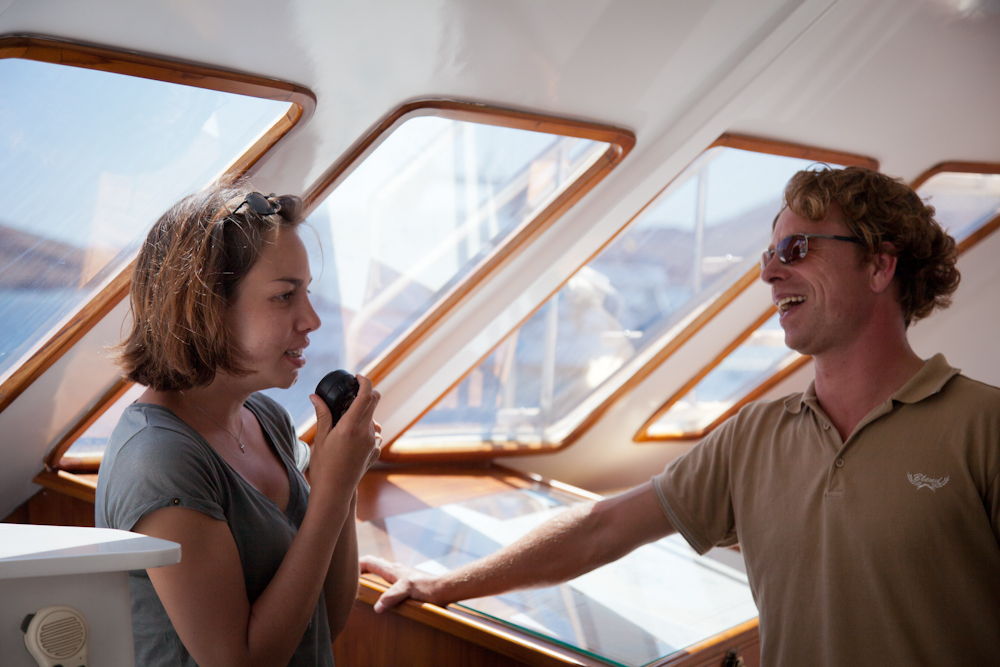
To our amusement, Stephanie decided to take over the microphone and make an announcement on Enrique’s behalf.

Before dinner we watched a slide show compiled by Enrique with both his photos and those contributed by some of the passengers, Chris included.  It was a great opportunity to reflect and relive some of the more special moments of the trip.  After dinner, we exchanged email addresses and compared notes, filling in some of the gaps or missing details in my story.  Invitations were extended by our new American friends to visit them in Spokane or to join them at their ski condo in the mountains if we ever found ourselves in their neck of the woods.  It’s great incentive to learn how to ski!

The night concluded with a farewell cocktail shared with the crew and passengers.  We expressed our thanks and appreciation for all the work the crew did to make this voyage so enjoyable and memorable.

Galapagos Islands Cruise Day 6: Playful Dolphins!

James Bay, also known as Point Egas on the island of Santiago was downright crowded as we shared the small bay with five other boats (none as nice as ours was our collective assessment).  The plan today was to let all the other boats go ahead of us, a strategy that served us well.  This meant a later breakfast and a more leisurely start to the day – no one complained on this point.

In the dinghy, we saw the first sighting of a Nazca Booby which is similar to the Blue Footed Booby except, you guessed it, his feet are not blue.

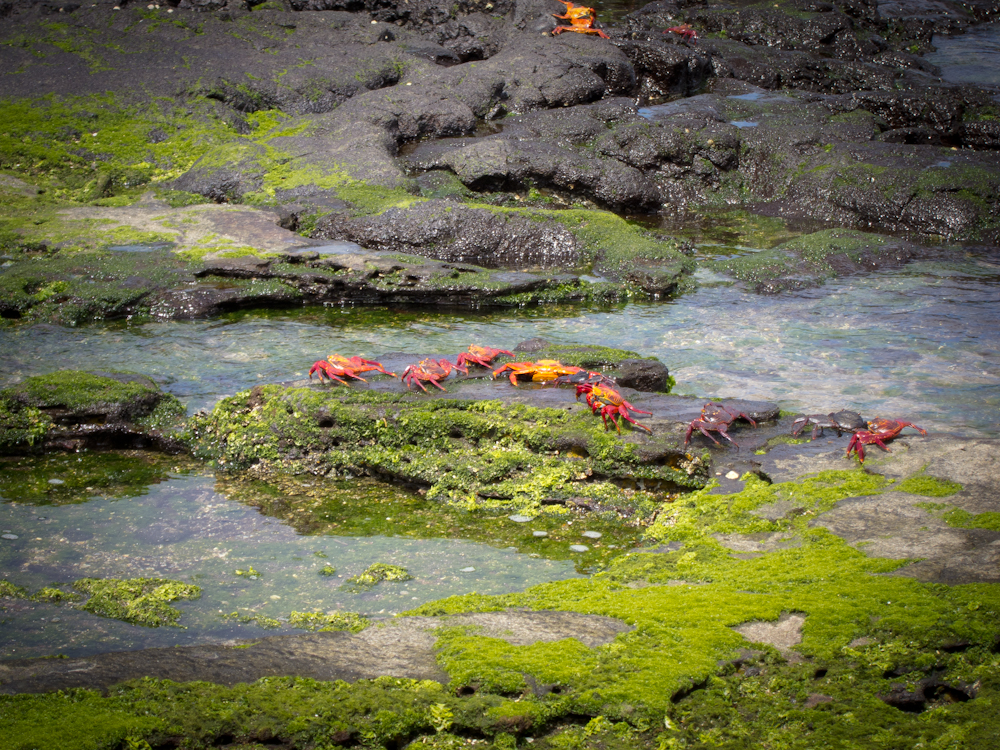
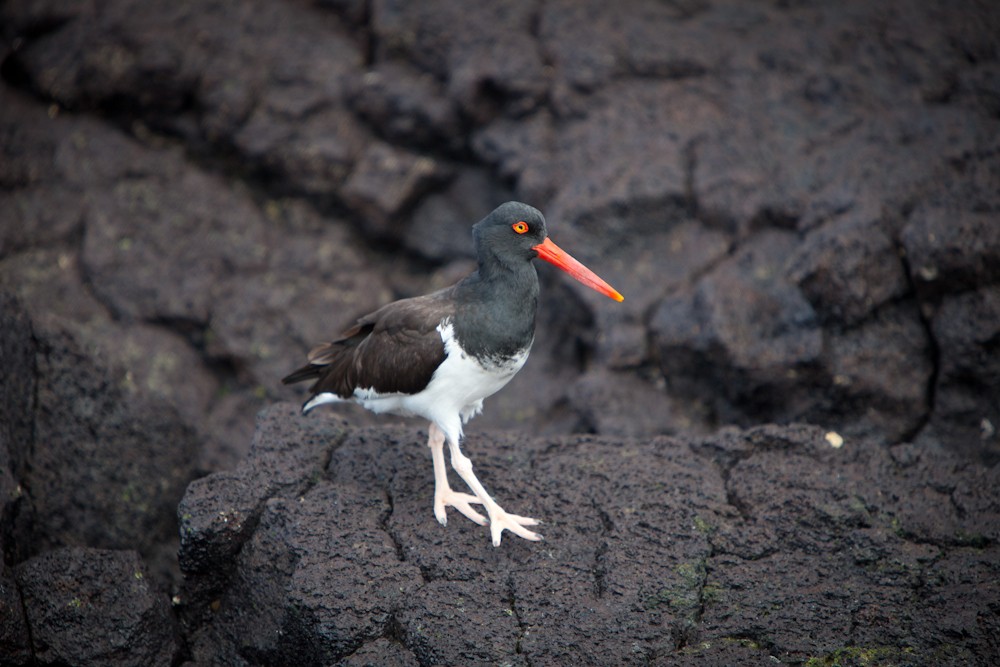
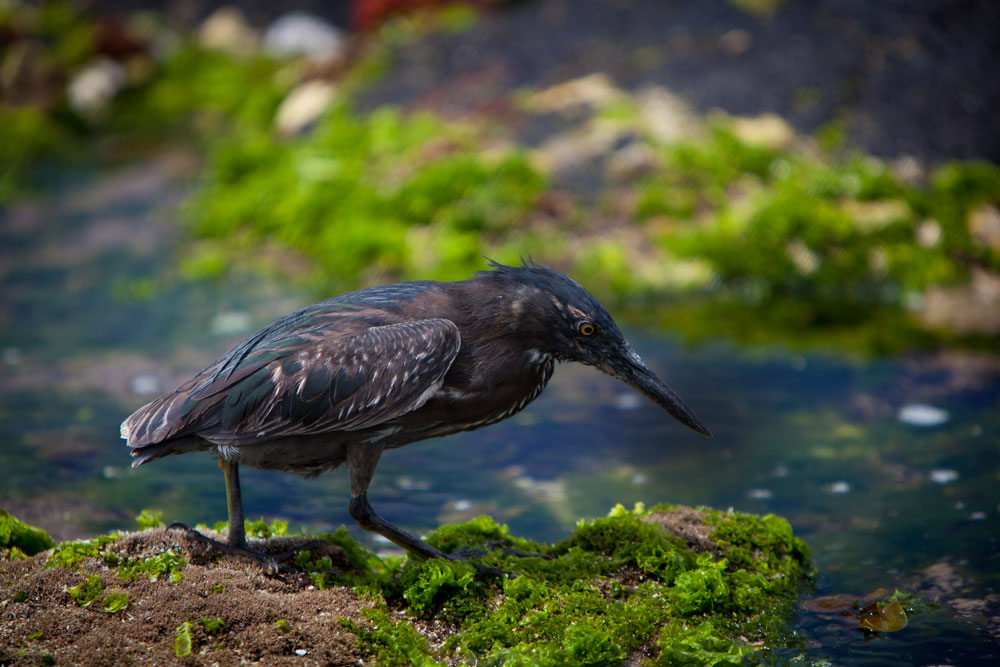
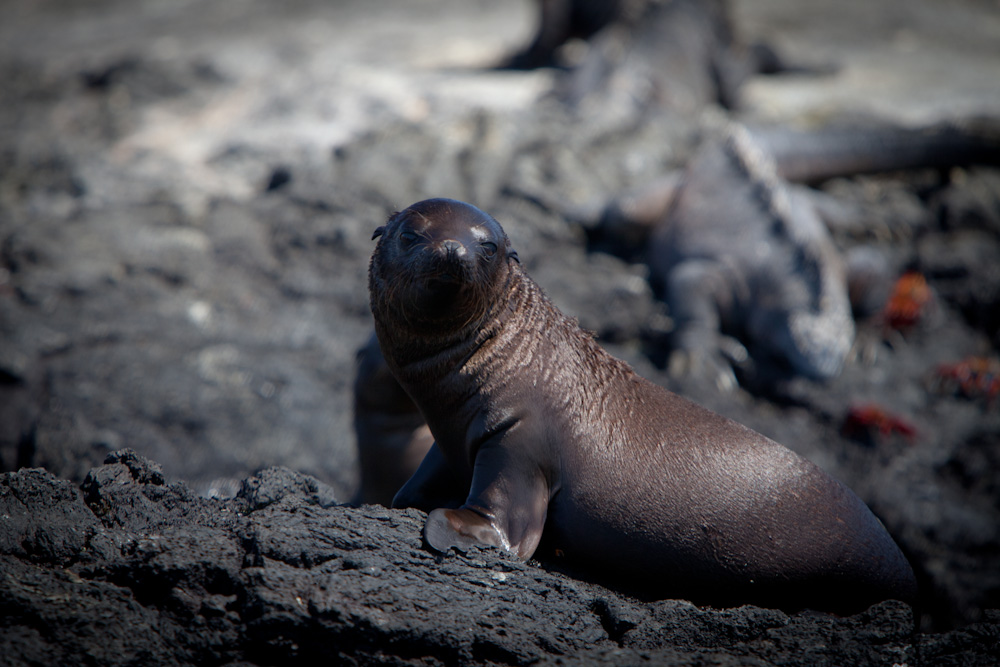
After a dry landing, we explored the tidal area like children on a school trip.  The highlight for me was watching three pups playing in a shallow pool of water.  This was also our first sighting of the Galapagos Fur Seal which is really a sea lion in spite of its name.  We also saw plenty of marine iguanas, sea lions, crabs, and sea turtles.  By now, our group was quite adept at naming birds: look, there’s another oyster catcher, oh and look at that great blue heron.  A few new birds were sighted: the lava heron, the plover, and the white crowned heron.  A few in the group saw two sea lions mating but Chris and I missed most of the show as we were distracted a distance away.


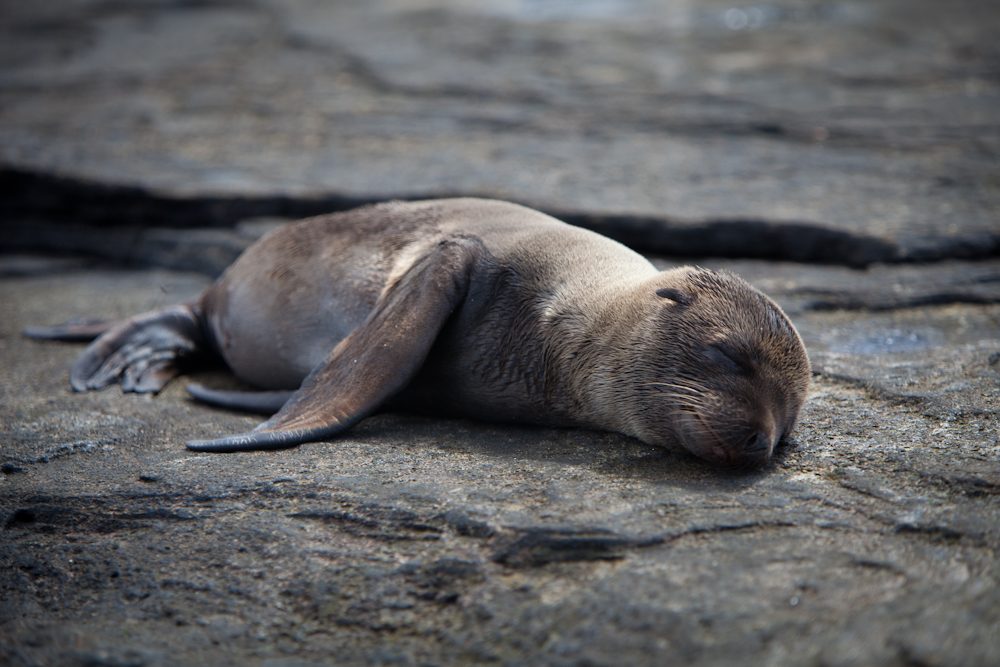
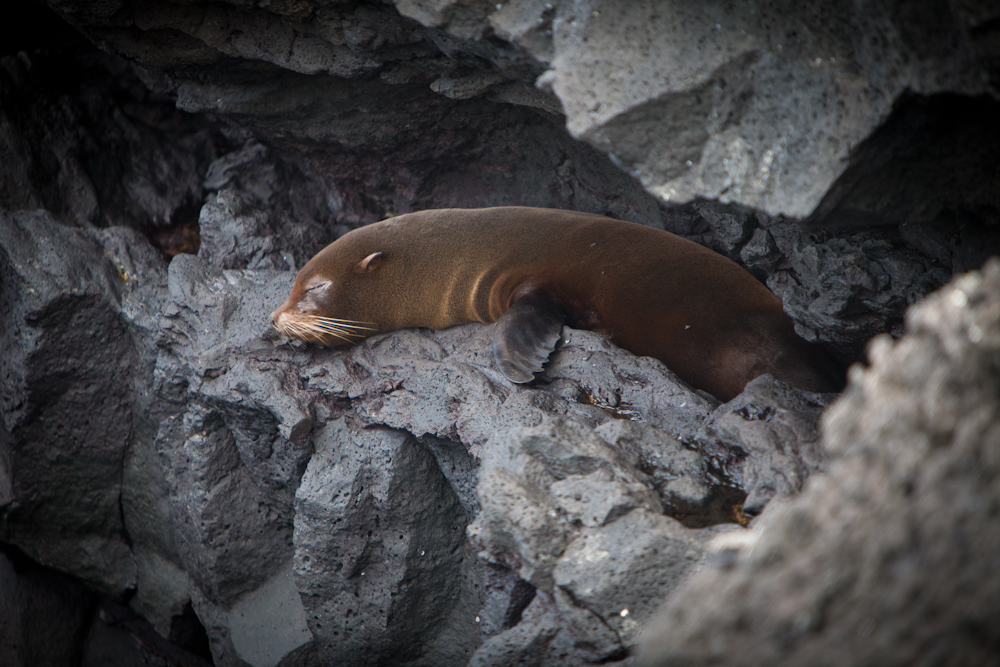
One of the few Fur Seals we saw on this island.

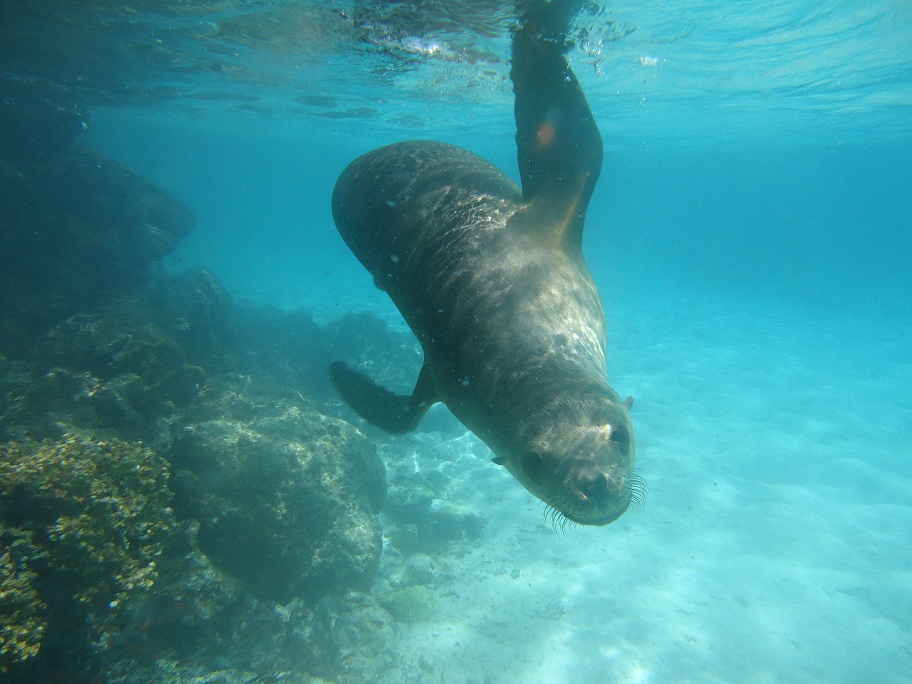
Back at the beach, I was happy to see most of the groups had already departed and the remaining stragglers were wrapping things up.  This meant we had the snorkel site just off the beach to ourselves.  The water was much warmer here and the fish more colorful.  Several sea lions decided to take a swim while we snorkeled.  When one passed by a group of us, Laura, the youngest in our group and a very strong, powerful swimmer took off as fast as she could but there was no competition, the sea lion disappeared out of sight leaving Laura, breathless, in its wake.

I was once again impressed to see Wim, the four year old, swimming side by side with his parents, fearlessly dipping his masked face into the waters.  This little fellow has been a real trouper on this trip.  He has participated in every activity and has shown an interest and curiosity in his surroundings that seems beyond his years.  Not once have I heard him complain or whine, even when the heat has been unbearable and the walks have been strenuous.

The same could be said about all the passengers.  Consider this:  we came together as a group of international strangers, from diverse backgrounds, of varying ages ranging from 4 to 60ish confined to a small boat for eight days.  What are the odds that we would all get along?  I am always curious about group dynamics and this has been no exception.  While some patterns of behaviour were predictable – we all started to sit at the same place at the dining table after day 2, other interactions surprised me.  While two couples were already friends, they did not isolate themselves from the group or limit their contact with others.  To the contrary, they seemed to embrace the opportunity to extend their circle.  Seven of the thirteen passengers spoke English as their second language (very well I might add); yet I never found language to be a barrier, except perhaps with Wim who could only speak German.  He quickly attached himself to Laura, who also spoke German.

As the days passed and we became more familiar and comfortable with each other, the laughter and fun increased.  Here it was day 6 and there were no signs of people getting on each other’s nerves at least none that I could see.  Mind you, if Stephanie mentions her incessant craving for French chocolate one more time, I think someone might be tempted to toss her overboard.  Chris on the other hand has managed to avoid the wrath of the group as he consistently lags behind trying to get that perfect photo by promising everyone copies of the best of his photos.  This was a great group to be with.

After lunch we headed to Rabida, a small island south of Santiago, and most of us retired to our respective cabins for a little siesta time.  Suddenly the emergency bell rang out and we all rushed out of our cabins to see what was up.  Dolphins!  We hurried to the middle deck, binoculars in hand to get a better look.  The captain circled back to where they were first spotted, and after a few minutes the dolphins were back swimming playfully at the front of the boat. 12-15 large dolphins danced in the waves in front of each of the catamaran’s keels.  They switched from side to side, sometimes jumping out of the water in the middle.  They kept just in front of the boat, as if in a race.  Whenever a dolphin jumped – sometimes as high as six feet in the air – we all clapped and cheered in appreciation.  There was one white dolphin that stood out in the crowd – turns out he was an albino dolphin, very rare, in fact the crew had never seen one before!  And then, they were gone as quickly as they had appeared.

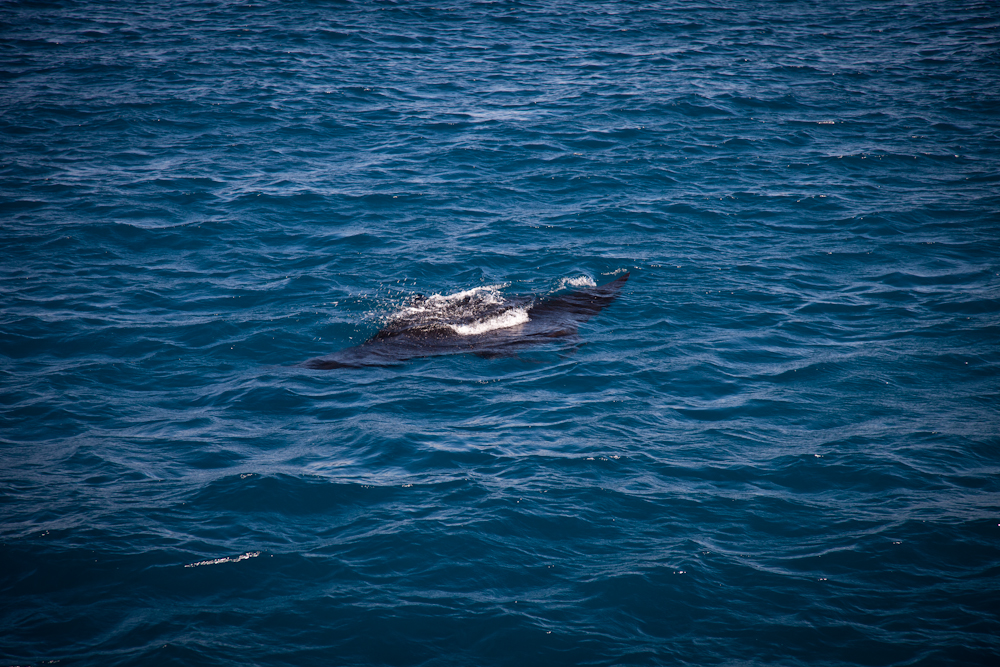
As we scanned the horizon looking for more dolphins, we spotted the manta rays.  These huge creatures floated near the surface and occasionally lifted a fin, appearing almost like a shark.  You could see the dark shape from quite a distance and occasionally a manta would get quite close to the boat.  We joked that we could just skip Rabida and hang out in the open seas as there seemed to be a lot to entertain us.

Rabida is a red island formed millions of years ago by a volcanic explosion that reached the mantle of the earth.  It reminded us of Prince Edward Island.  We were greeted by more sea lions as we made a wet landing on the beach.   Again, a lot of people were already on this island, so we kept our distance and let the other groups stay ahead of us.  During a short walk, we challenged ourselves to find new birds and were rewarded for our efforts.  Tim, with his eagle-like eyes, spotted a grey cuckoo (pictured below), a rare sighting even for our guide.

Snorkeling in Rabida was from the beach, similar to the morning excursion in James Bay.  The water was very murky from the red silt being churned up by the waves and visibility was almost zero for about fifty feet.  We swam along the rocky edge and as we got further out, visibility improved and we began to see much of the same sea life as was saw in the morning.  The water was warm and the fish were colorful and plentiful.   Although we didn’t see anything new this time, there was still a lot to look at.

Another great dinner, an after dinner briefing and then off to our cabins.  Chris and I have been trying to get our studying done for the next three dives of our Advanced Certification course.  It’s a challenge as we’d rather be doing other things, like writing the blog, editing photos or just relaxing or sleeping.  Ah well, it’s a necessary evil. I’ve done two chapters, just one more to go.

Galapagos Islands Cruise Day 5: Swimming with penguins!

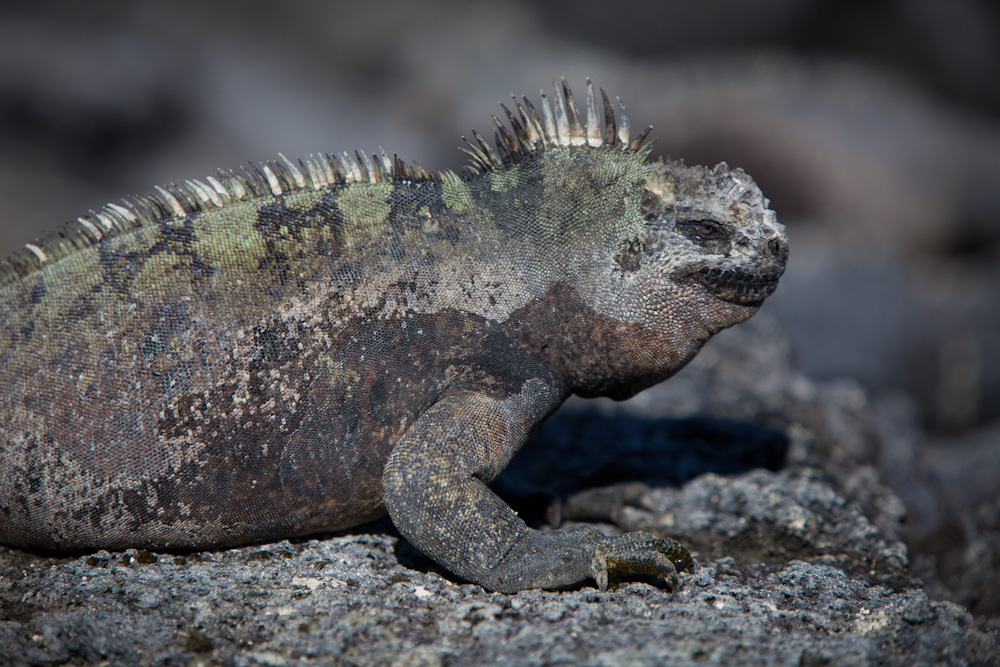
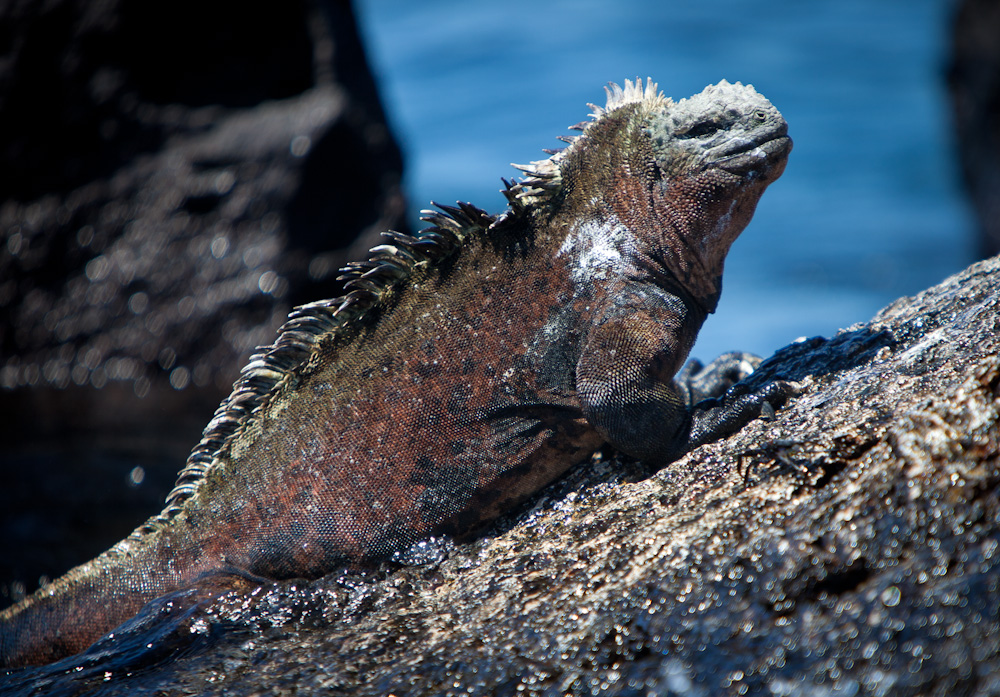
As the first group of several to land this morning on Punta Espinoza which is on the youngest island, Fernandina, our guide Enrique did his best to keep a good distance between us and the other groups.  On this island we saw so many marine iguanas that they were becoming commonplace to us – yeah, yeah, another marine iguana.  But we had to be careful as these creatures blended into the rocks so well that it was easy to step on one if you weren’t careful.

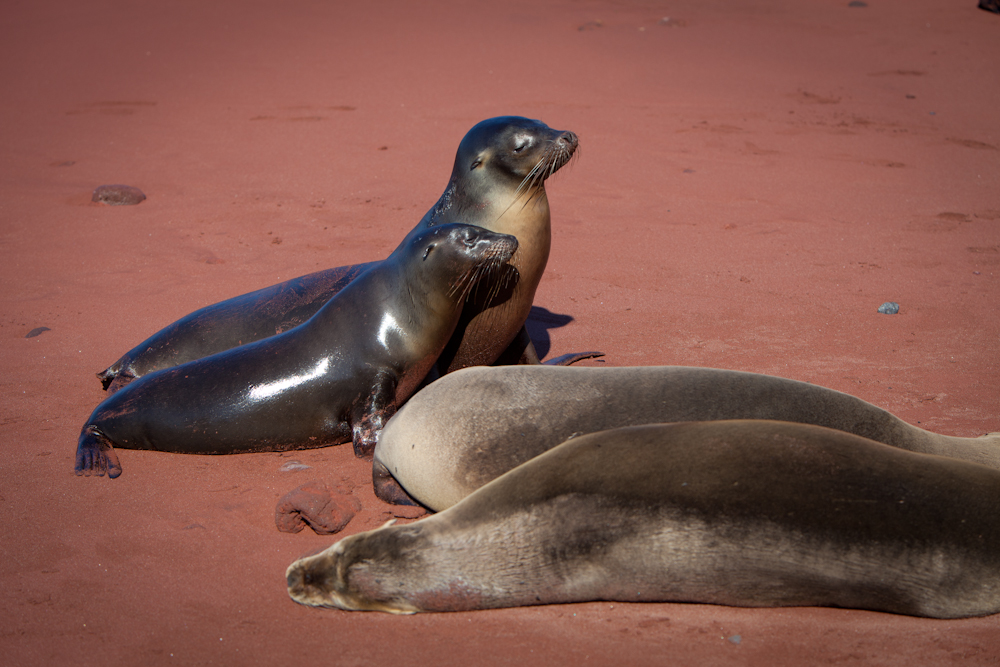
Sea lions stole the show on this excursion, especially the mother with her young nursing pup.


It was remarkable to see a majestic hawk swoop down onto a branch within ten feet of our group and remain there as we snapped pictures and took video.   He was within twenty feet of the mother sea lion and her pup and we all hoped he wasn’t sizing up his next meal.

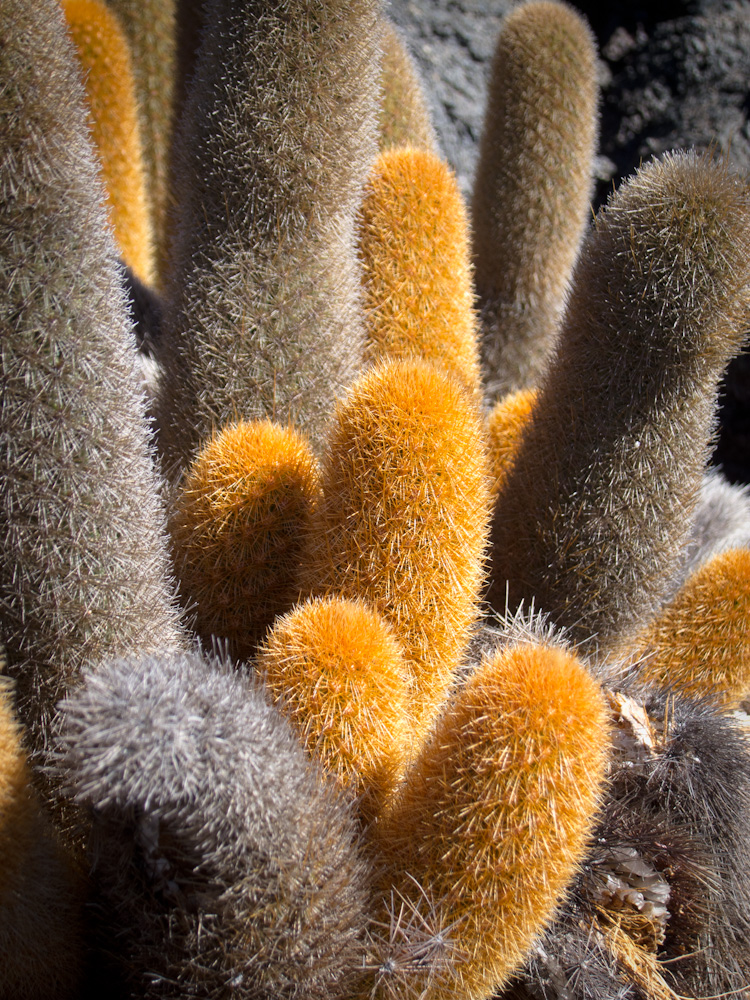
 A gentle breeze cooled us as we continued to walk along the lava rock towards the volcano, making this walk much more enjoyable compared to yesterday’s blistering heat.  Mangrove trees lined the edge of the ocean.  As we moved inland, the Lava Cactus seemed to be the only vegetation to thrive.  In fact, the lack of life both vegetation and animals, at least to our untrained eyes, was noteworthy.

Next stop was Punta Vincente Roca on the northern tip of Isabella Island where we joined three other boats, two of which were dive boats.  As the boat travelled to the next location, we enjoyed some down time on board.

Barb and Tim, a pharmacist, relaxing on board.

Punta Vincente Roca was our next snorkeling site and I am so glad I didn’t miss this one.  On this trip, Chris and I have gotten into the habit of using our diving skills and signals while snorkeling such as maintaining close contact with your buddy (in fact we hold hands).  I have also noticed that I am a much more confident snorkeler now that I also dive.  I apply with ease the skills that I learned through diving like clearing my mask and snorkel.  Snorkeling is part of our daily routine on board, so I am glad I am enjoying it.

We were in the basin of a crater that had collapsed into the sea millions of years ago and which now formed a sheltered bay, close to a stony beach, and surrounded by walls of rock.  Our guide directed us to stay close to the shore and to simply float effortlessly in the surge.  This area was renowned for sea turtles and today was no exception.

At one point, we found ourselves surrounded by twelve large sea turtles, all of us floating in unison with the surge.  We were at one with the turtles!  It’s no wonder there is so much sea life as food is plentiful; hundreds if not thousands of tiny fish engulfed us.

Suddenly, a penguin torpedoed past us.  He was so fast he was gone before we fully realized we had just seen our first penguin in the water.  More penguins shot out of nowhere and darted around us.  We watched one little fellow feeding directly below us only to have him suddenly shoot vertically to the surface directly in front of our faces.  We watched a couple of penguins playing on the surface.  Dafne, the only person with an underwater camera, was desperately trying to capture them on film – and she succeeded!

To top it off, a sea lion caught a fish on land and then dove in right in front of us, eating his fish as he swam by us.  Incredible!  Now this was what I was hoping for in the Galapagos Islands!

Next we toured the bay from the dinghies, exploring a deep cave, and discovering all the birds clinging to the cliffs above.  We saw many blue footed boobies, bobby tern, pelicans, penguins and flightless cormorants.  A group of about eight or ten Galapagos penguins decided to swim alongside our boat, bobbing to the surface every now and then so we could track them.  I tried to capture them on video but they were so fast it was next to impossible.  Still, it was a thrill to travel alongside them.

It was here that I saw a Mola Mola Sunfish for the first time.  In fact, I saw three of them.   They were swimming close to the surface letting us catch a glimpse of them.    Mola Mola is the heaviest known bony fish in the world. It has an average adult weight of 1,000 kg (2,200 lb). The species is native to tropical and temperate waters around the globe. It resembles a fish head with a tail, and its main body is flattened laterally. Sunfish can be as tall as they are long when their dorsal and ventral fins are extended.

Photo courtesy of oceansunfish.org

We had a lot of distance to cover as we were travelling around the northern tip of Isabela and onto the eastern side of the island.  We celebrated as we passed the equator, by gathering in the captain’s bridge to take photos and enjoy a complimentary cocktail.  Our time in the Northern Hemisphere would be limited to a few hours before we returned to the Southern Hemisphere without fanfare.  We were warned that this passage was going to be long (6 hours) and rough.  As a precaution, we had our briefing before an early dinner that night.

The sea did indeed get a little rough, but nothing we couldn’t sleep through.  Not one of the passengers has been sea sick so far, probably in part due to the relatively calm waters as well as the fact that our yacht is a catamaran which makes it more stable.


Galapagos Islands Cruise Day 4: Whales!

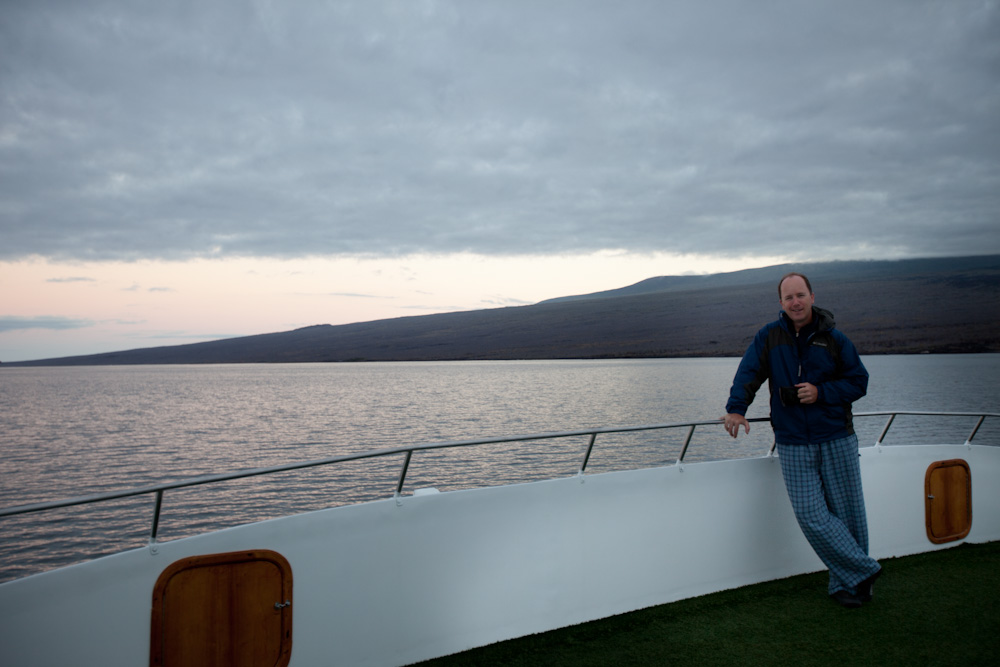
Chris and I awoke before dawn at 4:30 and headed to the top deck to see the crescent moon on the horizon and the star filled sky.   The yacht was still anchored in Elizabeth Bay and would be setting off again at 5:00 am.  By the time we lifted anchor, the clear sky had clouded over with dark, ominous clouds.  We thought perhaps our luck had run out  the seemingly endless sunshine enjoyed thus far was now over.  As the yacht sailed north to Urvina Bay at a steady pace of 10 knots per hour, the sky ahead brightened and by breakfast we were enjoying full sunshine again.


We did our first wet landing this morning, where the dinghy lands on a beach and we all get out in knee or hip deep water and make our way to shore.  Theoretically, this is a rather straight forward process.  Today, however, the waves were quite high and timing was everything.  After several failed attempts, we made it to shore and everyone jumped out as quickly as possible fearing the waves would pull us back to sea.

Once we were secure on land, a hawk surprised us with a sudden visit on the beach and provided an excellent photo opportunity as he hopped about in front of us.

The search for land iguanas began.  At first we noted the holes dug by the iguanas and soon enough we met our first one on the path.  It is remarkable that we can get so close to animals and they don’t appear to be fearful whatsoever.  Even the birds come close and stick around for a while allowing everybody to take pictures.


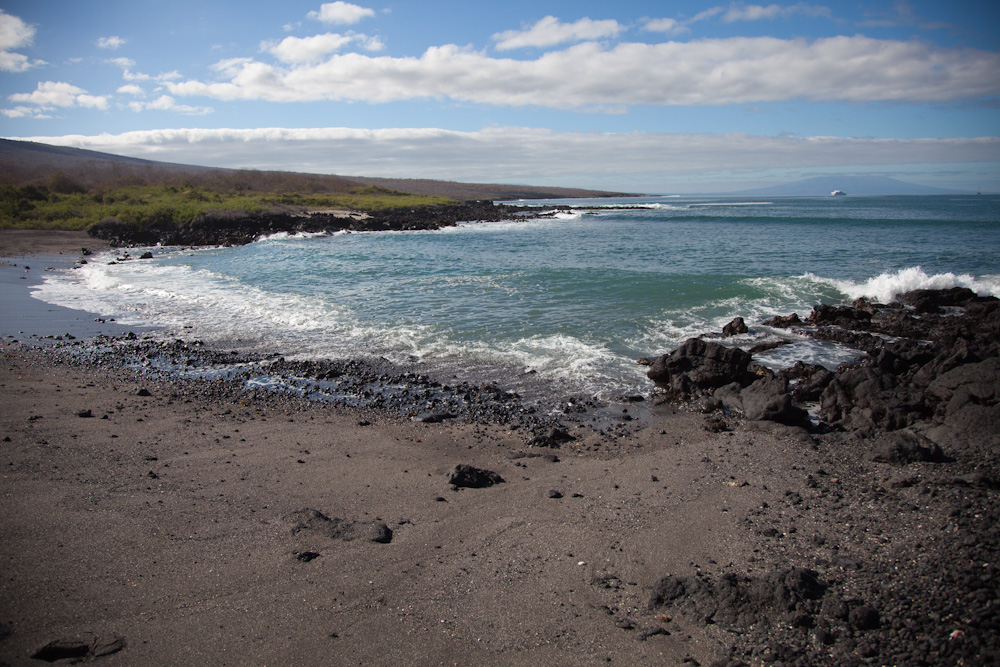
Back on the beach, the plan was to go snorkeling but our guide recommended against it.  Not only was it dangerous as the waves crashed into the rocky shore, the visibility would be poor as well.  A few in the group went for a swim instead.  Chris and I opted to stay on shore and walked along the beach.  The coarse, black and white sand was so different from the fine powder we had seen on other beaches. Chris took advantage of this time to take some photos of our group.

Enrique, our capable and knowledgeable guide.

Dafne and Jasper from Holland.  Dafne is a web designer and Jasper introduced himself as a fireman but we later learned his work involves a lot more.  For instance, he is also a rescue diver and paramedic.

Laura, the 18 year old student from Germany.  She is enjoying her “gap” year travelling and volunteering before she goes to medical school next year.

Jasper kindly took many pictures of Chris and I together – I think he liked playing with Chris’ camera!

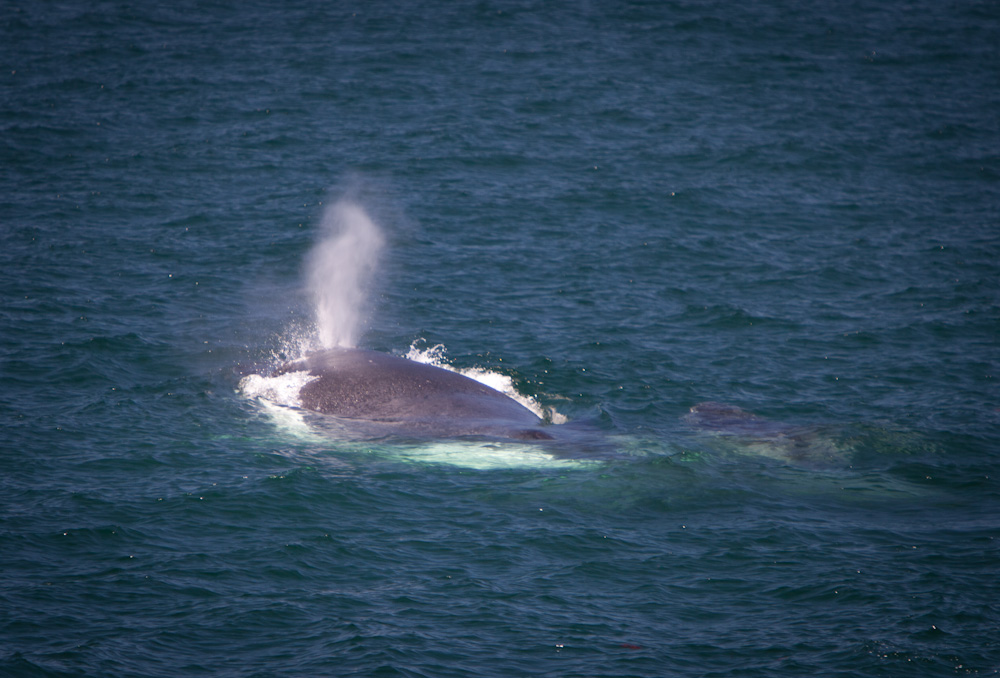
We were once again on the move, continuing north to Tagus Cove where we would eat lunch and spend the afternoon snorkeling and kayaking.  Along the way we spotted a humpback whale and her calf in the distance.  We tracked her for a while but then lost sight of her as we headed into the protected cove.  After lunch, she was spotted again and the captain and crew obliged us with a whale chase, taking up anchor and pursuing the whale, much to everyone’s delight.  All the guests were on the upper two decks, cameras and binoculars in hand.  We tracked the mother and calf  as they swam in unison, coming up now and then to the surface, but unfortunately not breaching.  On board, there was a steady play by play – here she comes, there she goes as we all tried to get a good look and an equally good picture. She treated us a few times with a great view of her fluke (tail fin) as she slapped it down into the water.  This was better than a siesta any day.

This candid shot of Rick (with his wife Babs in the background) seemed to capture the essence of Rick in all his exuberance and expressiveness.  His friends confirmed that this was classic Rick, who, by the way is a financial advisor.

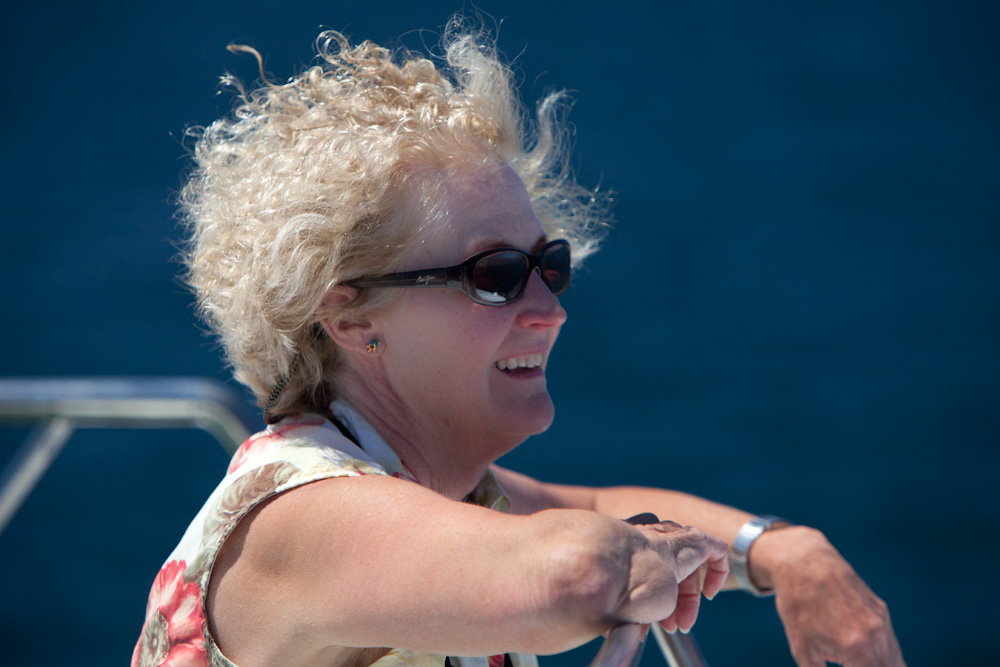
Babs, a retired occupational therapist who worked with special needs children, was captured enjoying the moment and the view in this candid shot.

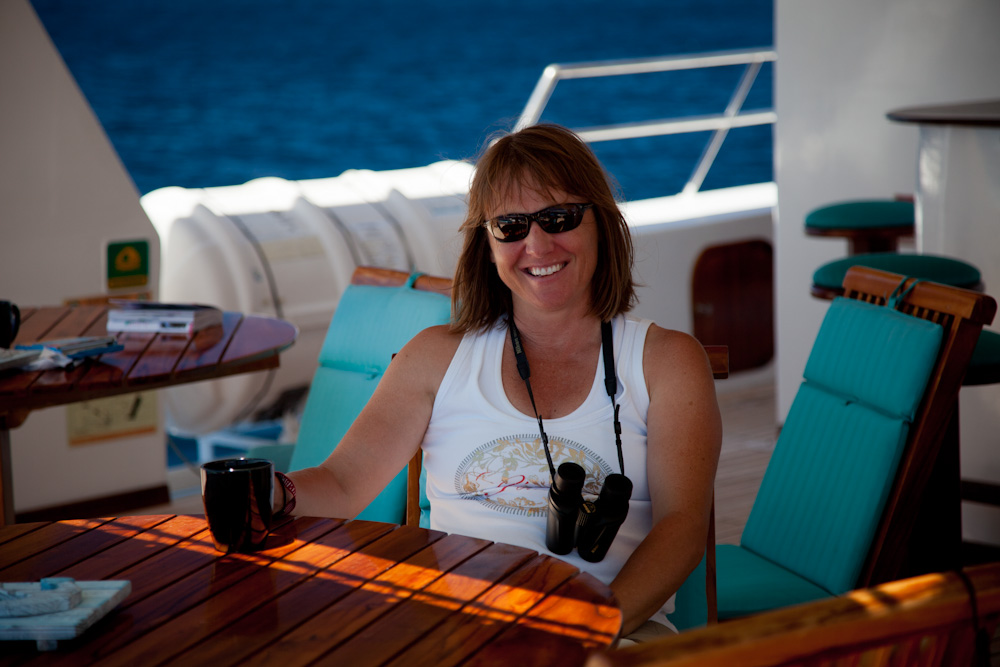
Finally, we turned around and headed back for the cove to resume our scheduled activities: lunch, snorkeling and kayaking.  Chris and I decided to stay on board; I was feeling pretty lousy from my cold and I think Chris just felt like relaxing.   We shared the middle deck with Barb who, like us, decided to spend the afternoon reading and relaxing.  Enjoying a drink on deck surrounded by beauty was not the worse way to spend an afternoon.

Barb, a property manager, enjoys the middle deck and a good book while the others are off snorkelling and kayaking.

Olof, Christiana and Wim, the family from Germany, explored the bay in the kayak.

Later in the afternoon, we once again loaded into the dinghies for a hike to the edge of Darwin Lake.  As we left the yacht, a sea lion decided to check out our catamaran and jumped up onto the first step, and then continued up the stairs to the lower deck at the encouragement of the crew.

It was a dry landing along the rocky shore and a steep walk to the beginning of the trail with several sea lions sunning in our path.  We were on the hunt for four birds:  the Darwin Finch, Vermillion Fly Catcher, Large Billed Fly Catcher and the Carpenter Finch.  We ascended slowly under the glaring sun surprised at the intensity of its rays this late in the day. Several lookouts offered spectacular views of Darwin Lake and the ocean beyond.

We spotted many Darwin Finches and a few Mockingbirds but the other birds eluded us.  The final lookout gave us a spectacular view of Wolf Volcano, the highest peak in the archipelago at a height of 1,707 m (5,600 ft).

We descended as the sun was setting and in the dusk we caught a fleeting glimpse of a Large Billed Fly Catcher, but this little bird was too fast for us to capture in a photo.  Now that the heat of the day had passed, there was a lot more birds flitting about along our path, but the Vermilion Fly Catcher and Carpenter Finch remained elusive.

As we made our way back to the dinghies, we had to manoeuver around a very large sea lion who was laid out along the stairs directly in our path.  It took some coaxing, but we finally convinced him to let us pass.  A couple of more sea lions tried to intercept us as we walked down the rocky slope.


Back on board we followed the now very familiar routine: rest and clean up before dinner followed by a briefing by Enrique for the next day.   After dinner, a few stayed up to play cards or read, but Chris and I retired early to our room.  I was feeling pretty lousy today because of my cold and it was for the first time since leaving Canada I yearned for home, not necessarily my home, but the comforts of a home where I could just lie in bed and recuperate.  I figured a good night’s sleep would be the best cure.


Galapagos Islands Cruise Day 3: Penguins!

Our yacht travelled for six hours during the night and we awoke on the western side of Isabela at Punta Moreno.  There were five volcanos in plain view sharing a common barren topography.

Breakfast was served at 7:00 am after which we headed out for our first excursion.  On our way to Punta Moreno we observed the Flightless Cormorant (a bird that cannot fly as its name implies), sea lions, sea turtles, Blue Footed Boobies, and to my personal delight, penguins.  The penguins were swimming so we only saw their little heads as they bobbed to the surface now and then.

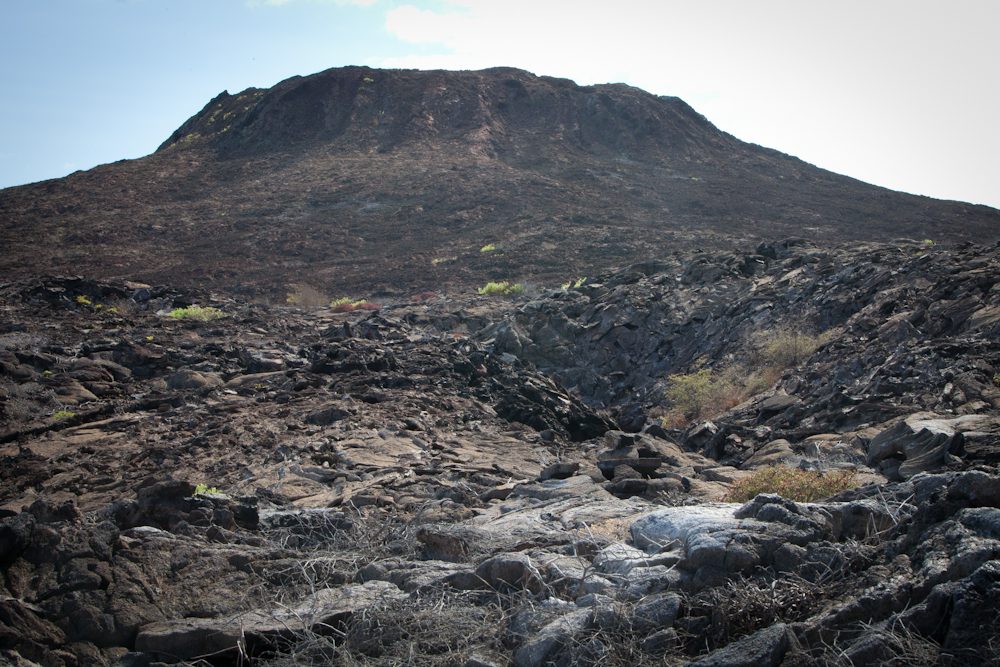
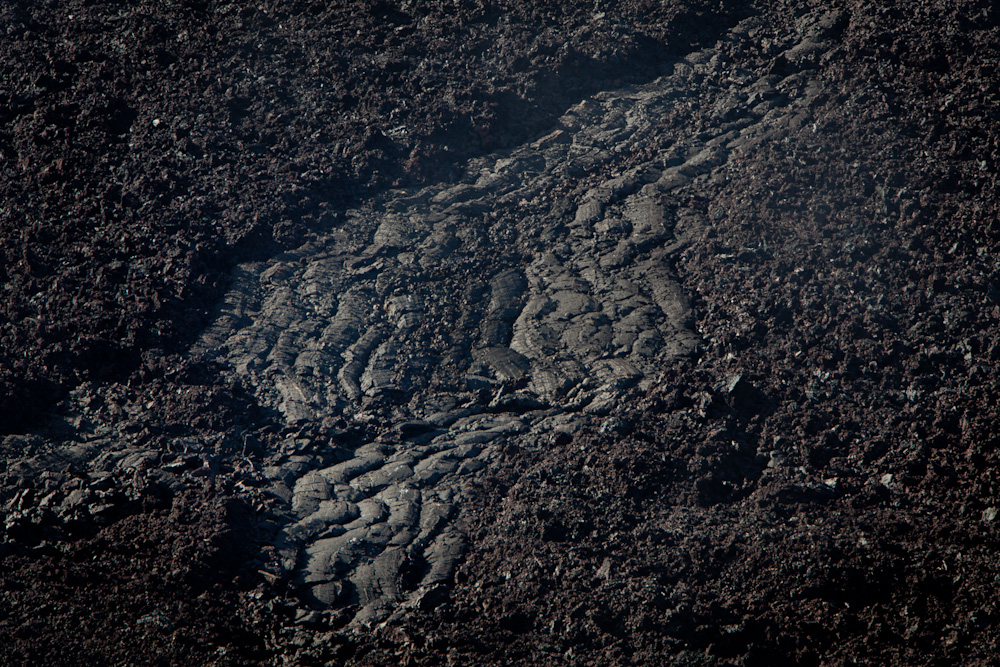
We landed on volcanic rock and went for a walk.  The sun beat down on us and the lava rock heated us from below – it was sweltering and it was only 8:15 in the morning.  As we traversed the swirling black lava flow, our footsteps crunched loudly over the brittle rocks as if we were walking on broken porcelain dishes.  The landscape was beautiful in its desolate starkness.


Three sea turtles were swimming in a natural pond fed by sea water that flowed through volcanic tunnels below us. A few in our group were lucky enough to observe a white tipped shark in the same pond.


Near the end of our walk we came across a smaller pond that was a sanctuary for birds.  It was a beautiful oasis of vibrant green reeds of grass, contrasting sharply against the barren, blackish brown volcanic rock.  Stephanie and Laura got down to the water edge for a closer look.


While waiting for the dinghies to arrive, nature entertained us as a sea lion wrestled with a large fish it had caught.  A pelican swam close by, perhaps hoping to get a free lunch.  Overhead, a frigate swooned back and forth until suddenly he dove towards the sea lion and tried to grab the fish.  The sea lion was not prepared to give up his lunch so easily.  There was some commotion and splashing and in the end, the frigate left empty handed and the sea lion continued to play with his catch.  Undeterred, the tenacious frigate came swooping down, again and again trying to steal the fish, but the equally stubborn sea lion would not let go.  The pelican, perhaps wisely, stayed out of the way and watched the competition from a safe distance.
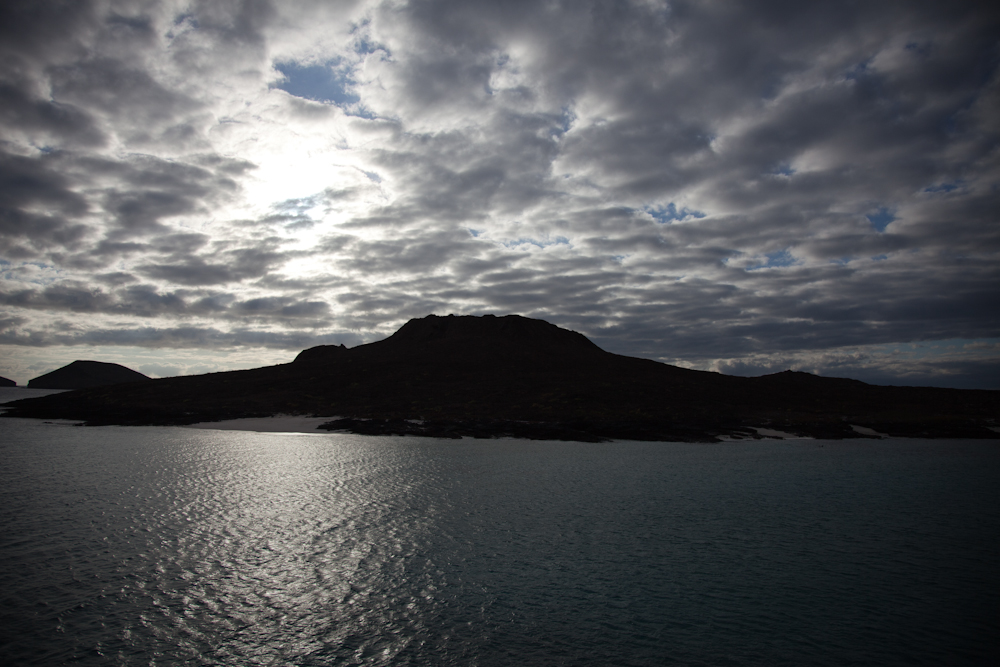
From the dinghy, we toured an outcropping of volcanic rock where penguins, huge marine iguanas (the biggest in the Galapagos Islands),  many Blue Footed Boobies, baby seals, and sea lions sun bathed in peaceful harmony.  I fell in love with penguins when I first saw their charming antics at the Biodome in Montreal many years ago.  The Galapagos Penguin is the only penguin that lives north of the equator in the wild; it can survive due to the cool temperatures resulting from the Humboldt Current and cool waters from great depths brought up by the Cromwell Current.

The average size for the penguins is 49 centimetres (19 in) and 2.5 kilograms (5.5 lb). They have a black head with a white border running from behind the eye, around the black ear-coverts and chin, to join on the throat. They have blackish-grey upper parts and whitish underparts, with two black bands across the breast, the lower band extending down the flanks to the thigh. Juveniles differ in having a wholly dark head, greyer on side and chin, and no breast-band. The female penguins are smaller than the males, but are otherwise quite similar.  The Galapagos Penguin is the third smallest species of penguin.

I was thrilled to see penguins in the wild – and felt enormously blessed for having this chance to witness the beauty of nature first hand.  Others in our group expressed similar sentiments; I think we all recognized the special place we were in.

We snorkeled today from the dinghy along a string of rocks.  The surge was strong, the visibility was low and the water a little cool, but we still saw lots of sea turtles and myriads of schools of fish.  Some even saw a penguin swimming in the water, and a commerant diving in to catch a fish.

We had spaghetti for lunch with two salads – our first spaghetti since Canada.  The pasta was served with two types of sauces: carbonera and tomato with meat along with freshly grated parmesan cheese. Dessert was a creamy strawberry mousse.  The food is plentiful, nourishing and tasty.  It is such a treat to have everything taken care of – no decisions to make, no worries if the food is safe to eat, no wondering if the water has been purified.

I feel we are quite pampered on this yacht beyond just the food.  For example, when we come back from snorkeling, we put our fins and masks into our designated bags, and our wet suits get dropped into a messy pile on deck.  The crew takes care of rinsing them and hanging them to dry as we go off to relax.  When we go out snorkeling, clean towels are at our disposal.  Every time we leave the boat, the cabin crew pass through our cabins and freshen them up, making beds, opening windows, replacing towels, removing garbage.  There is nothing for us to do but eat, follow the excursion schedule, relax, and sleep.  This is a life I could easily get used to!

After lunch, we had a few hours to relax as the boat lifted anchor and headed north to Elizabeth Bay which is located at the most narrow point of Isabela Island.  Once we reached the bay there was time to swim from the boat and then we were off to explore the coastline in the dinghies.  We began at an outcropping of rocks and were treated to myriads of Blue Footed Boobies, a few more penguins, masses of marine iguanas and a multitude of diverse birds.  We then traversed the open waters towards the coast.

It was surprising to see the coast open up into a mangrove of small waterways.  Out of the wind, this protected area was a haven for sea turtles, sea lions and many birds.  We spent a couple of hours, paddling quietly through these streams, listening to our guide tell us all about the animals and vegetation.  I was impressed with the depth of his knowledge and his versatility to switch from one subject to the next as we peppered him with questions.  He graciously split his time between the two dinghies so all could benefit from his expertise.

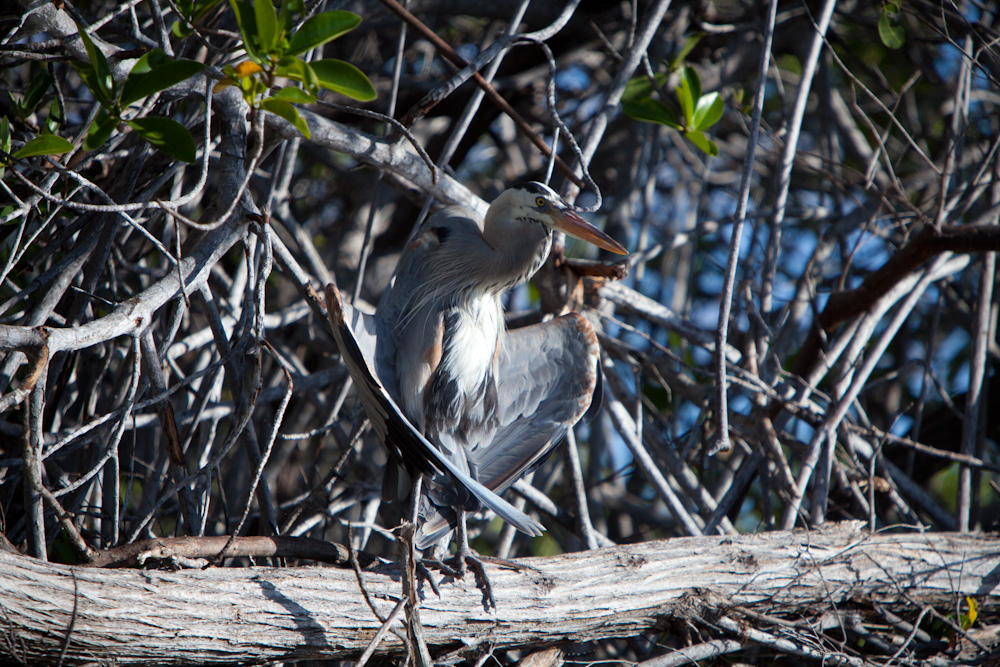
We saw many sea turtles in these shallow waters as well as a variety of birds – finches, warblers, herons, and pelicans.

A gorgeous sunset rewarded us as we returned to the yacht.

We were greeted with juice and snacks to tide us over until dinner which was again served promptly at 7:00.  After dinner, we were briefed about our activities planned for the next day and the route that the boat would take while we slept.  Such post-dinner briefings were now part of our daily routine.

Galapagos Islands Cruise Day 2: White Tipped Sharks!

We awoke under calm, sunny skies to find ourselves anchored at Puerto Vilamil, the main town on Isabela Island.  The wake-up call sounded at the crack of dawn (5:45) in order to allow us to visit Los Tintoreras, a small island next to Isabela Island upon which cruise ship passengers are only permitted to land between 6:00 and 8:00 in the morning.  Thankfully, coffee and biscuits were served before loading into the dinghies, making the early start a little more bearable.

I couldn’t believe that I awoke with a head cold – how’s that for timing?  I’ve been healthy as a horse ever since leaving Canada, and now I get sick.  Within minutes of getting up, Chris moved his head in such a way that caused something in his shoulder to misalign, causing shooting, stabbing pains that forced him to lie down immediately.   This has happened before and we knew it would take days to heal.   Great!  There was nothing we could do but rely on our trusty little pharmacy bag to manage the symptoms so that we wouldn’t miss a minute of the day’s activities.

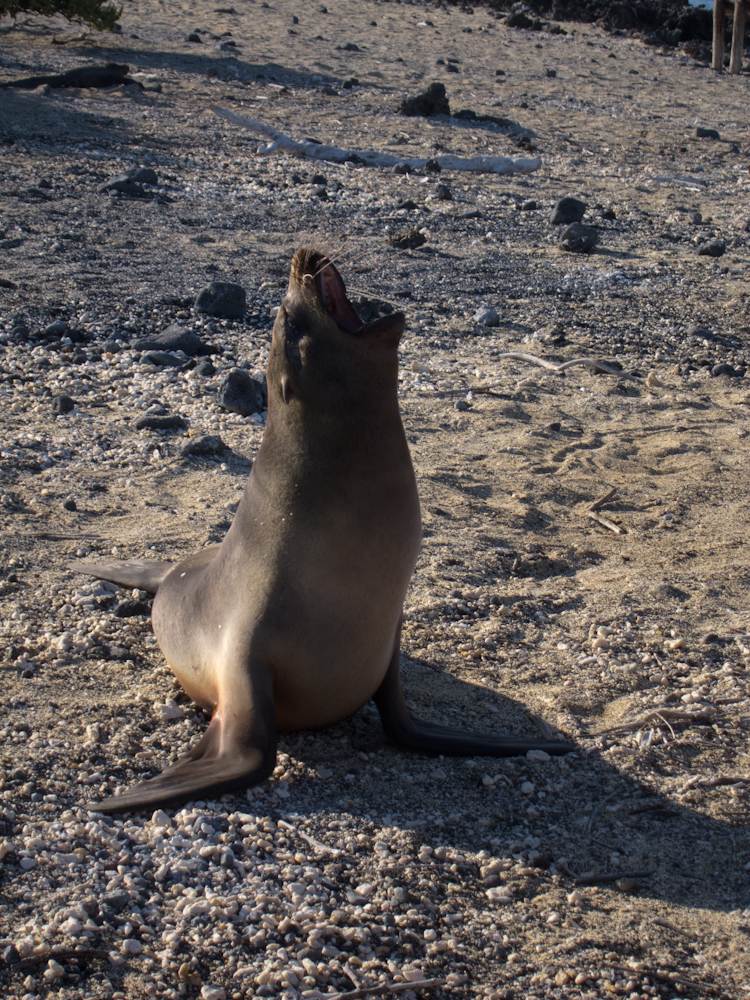
At the boat landing, we were greeted by a sea lion who was lounging on the bench meant for visitors. Undeterred, Laura made herself comfortable, and offered a great photo opp next to the sea lion.  Sea lions are plentiful through the Galapagos Islands and are not fearful of humans whatsoever; this would be the first of many encounters.  There are two species of sea lions on the Galapagos: Galapagos Sea Lion and Galapagos Fur Seal.  “Fur Seal” is rather misleading because these are also sea lions, although this species is less commonly seen.

Los Tintoreras offers a unique and safe way to see white tipped sharks as they congregate in the shallow waters of a crevice. The white tipped shark is so named because of a distinct white tip on their dorsal fin and tail.  There were dozens of sharks sleeping on the bottom of this shallow pool of water and a few were swimming gracefully back and forth from one end of the crevice to the other.  The sharks come to this protected area to rest and sleep.


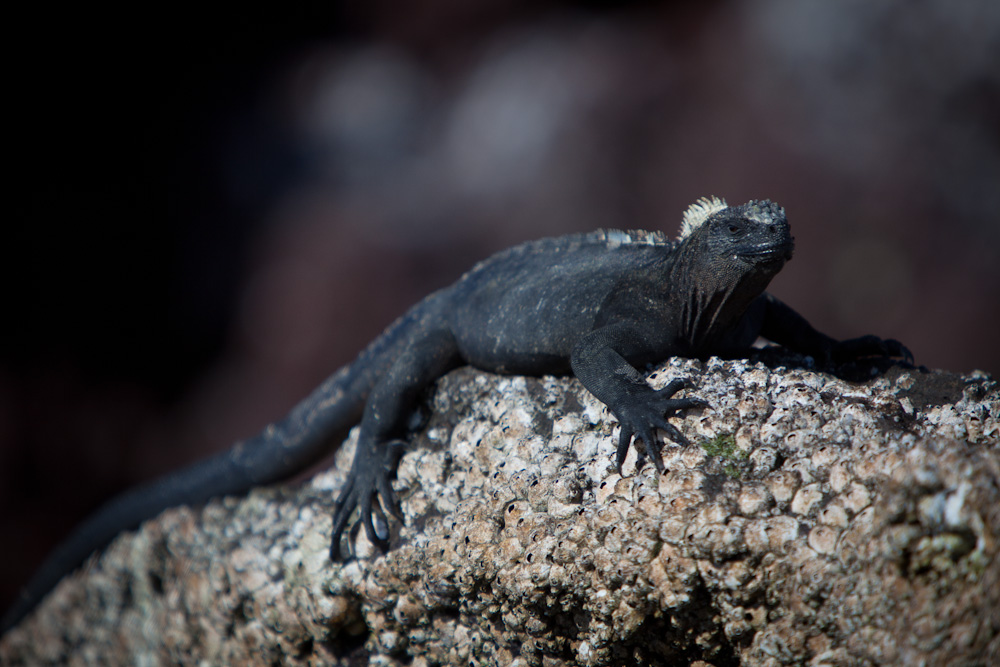
Marine iguanas similar to the ones we saw at Tortuga beach in Puerto Ayora were sun bathing along the walls of the crevice.


A small path wove through volcanic rock washed white with bird poop, leading to a beach area where we saw several more sea lions.


On our return, we saw our first Blue Footed Booby – a large sized bird that has, not surprisingly, baby blue feet.

Back to the yacht for breakfast and then a briefing as to the next activities:  a visit to the Wall of Tears, a stop at the lagoon to see flamingoes followed by snorkelling.  After another dry landing, we boarded an awaiting bus.  The bus that would provide our transportation for the day was nothing more than a truck with open air, wooden benches padded with very inadequate cushions.  As we bounced along the bumpy roads, our backs complained vigorously, louder for some than others.  Those with back issues (Chris included) soon made their way to the first row of seats and those of us with more spinal resilience remained in the back taking one hit after another for the team! Thanks to Enrique, our guide, for the photo of our bus.

The Wall of Tears was built by prisoners of a penal colony that was established in 1946 to house Ecuadorian criminals.  The wall served no useful purpose other than to give the prisoners something to do – a task that required carrying heavy lava rocks from the beach to the wall, a distance of over one kilometre.  This was where “the strong cry and the weak die”, a common saying amongst islanders.  The penal colony was built on the remains of a US Naval base that had previously been established in this location during the second world war.


The Galapagos Mocking Bird was a common sight throughout the Galapagos Islands.


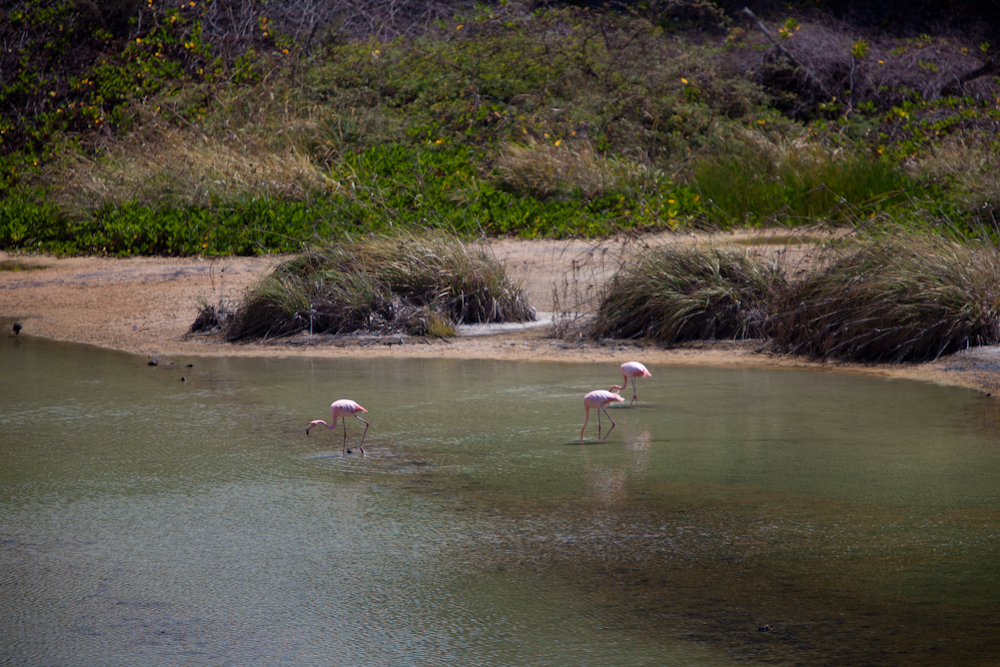
At the lagoon, there were five flaming pink flamingoes.  We could not get very close as we were on a cliff overlooking the lagoon.  These were beautiful, graceful creatures – my only wish was that there were more of them!


We had to walk through a mangrove to the snorkeling site.  Mangroves are dense and quite impenetrable so it was an interesting walk along a man-made boardwalk that felt like we were in the middle of the mangrove.  Mangroves are a common site along the edge of water areas.

Snorkeling was good but not fantastic.  The bay was very calm, visibility was good but the water was rather fresh – good thing we all had wetsuits. We saw three sea turtles and three sting rays along with lots of little, colorful fish.

Lunch was served on the middle deck and was quite delicious.  It felt so indulgent and luxurious to be eating lunch in such serene and beautiful surroundings.  The first two meals were somewhat of a disappointment – mediocre at best – but perhaps this lunch was a sign of better food to come.  After lunch we had a couple of hours to relax.  Most guests retired to their rooms for a siesta.  We lounged in the sun for a while on the top deck and then also made our way back to our cabin for a brief power nap.  As I was lying on the top deck I tried to articulate the experience and the best I could come up with was that it felt as though I was sitting within a postcard.  Laura and Stephanie heartily agreed with that description.  The photo below captures the view from the top deck.

In the afternoon, we again did a dry landing, piled into our back-breaking bus and headed to the highlands for a hike to the Volcano Sierra Negra, the largest volcano in the archipelago and one that is still active – the most recent eruption was in 2006.  It was a 30 minute hike to the edge of the crater.  At the top, the clouds danced along the edge, descended into the basin below and then dissipated as they reached the other side.  One minute the entire area was obscured by clouds and then suddenly the view would open up again.

 When we returned to the boat, we were greeted by two new passengers: Dafne and Jasper, a young couple from Holland.  They had just arrived in the Galapagos Islands that morning and had enquired about available tours in the early afternoon in Puerto Ayora.  There were still five seats available on our boat.  But in order to join us, they had to take a boat taxi which departs daily from Puerto Ayora at 2:00 pm to Isabela Island in order to intercept our boat which would be leaving at midnight.  They quickly made arrangements and arrived on our boat shortly after 4:00 pm.  Now that’s what I call flying by the seat of your pants!

By dinner time, everyone was feeling pretty tired; after all, it had been a long, full day of activities. On top of that, both Chris and I were not feeling well.  After dinner, Chris and I headed to bed and slept for almost 10 hours straight.  Some choppy seas woke me during the night but I found the rocking motion to be soothing and was soon rocked back to sleep.


Galapagos Islands Cruise Day 1: Tortoises!

Preamble and Disclaimer:  This is the first of eight posts that I composed while Chris and I sailed the Galapagos Islands on a luxury catamaran yacht. At the end of each day, I wrote about that day’s excursions and highlights.  I have not listed every single bird or animal we saw but have tried to be as accurate as possible with the descriptions I do provide.  I’m sure each of the other eleven passengers on board have their own story to tell; this is my perspective of our voyage.  I invite any fellow passengers who read this blog to share their thoughts about our trip – and offer any additions, corrections or just plain commentary they may wish to make.  Of course, photography credit goes for the most part to Chris, although I did manage to take the odd decent pic that may make it into the blog.  Underwater photos were taken by one of the passengers, Dafne (thank you for sharing).   Hope you enjoy our voyage!

The route we followed was the primary reason we picked this cruise in addition to the fact that it still had seats available at the last minute, and we got a reasonable price for the trip. The map below illustrates our voyage and can be used with the text to track where we are each day.

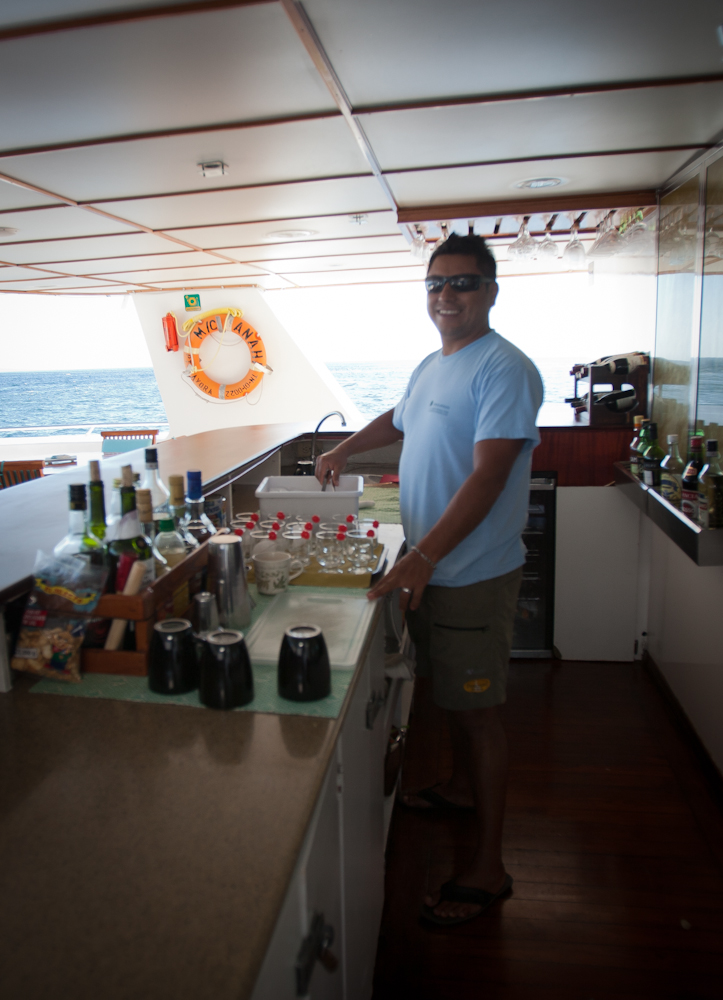
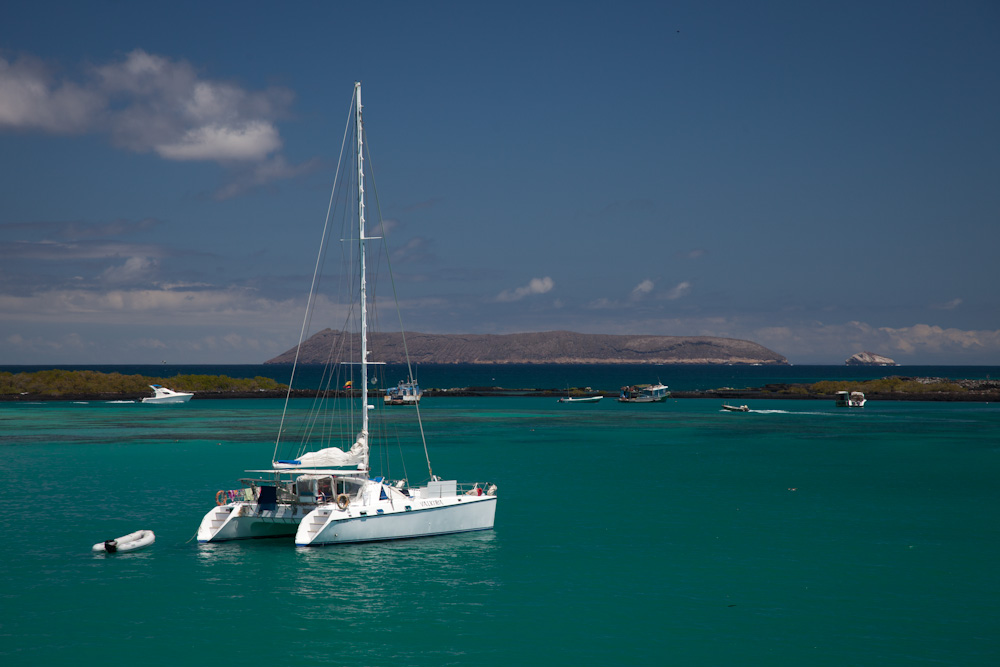
We sailed on the Anahi, also known as Journey 1.  Click here for the specs of the catamaran if you’d like to know more about our sailing vessel. Note that we have no affiliation with this website – I have provided this link merely to provide info about the ship.

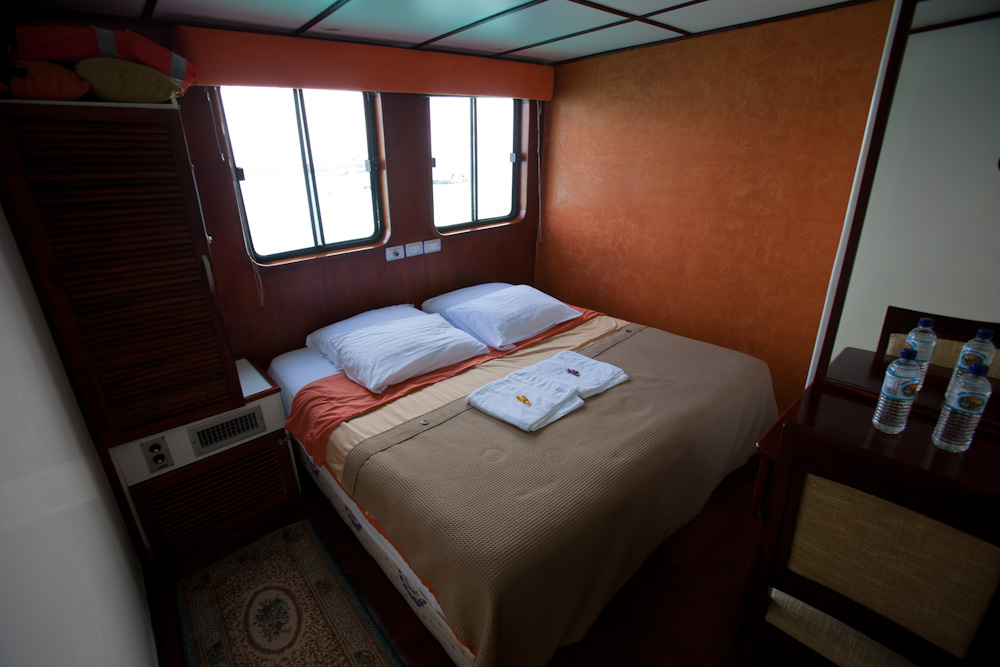
Our cruise officially began when a private dinghy picked us up from the port in Puerto Ayora and whisked us to our yacht anchored in the bay.  As the first passengers to arrive, we had time to unpack and settle into our lovely and surprisingly spacious room (with king size bed I might add) and explore our new “home”.

Within a half hour our fellow voyagers boarded and introductions were made:  Rick and Babs and their friends Tim and Barbara from Washington State, USA; Laura an 18-year old from Germany; Stephanie a 28-year old from France; and Olof, Christiana and their 4-year old son Wim (short for William and pronounced “Vim”) from Germany.

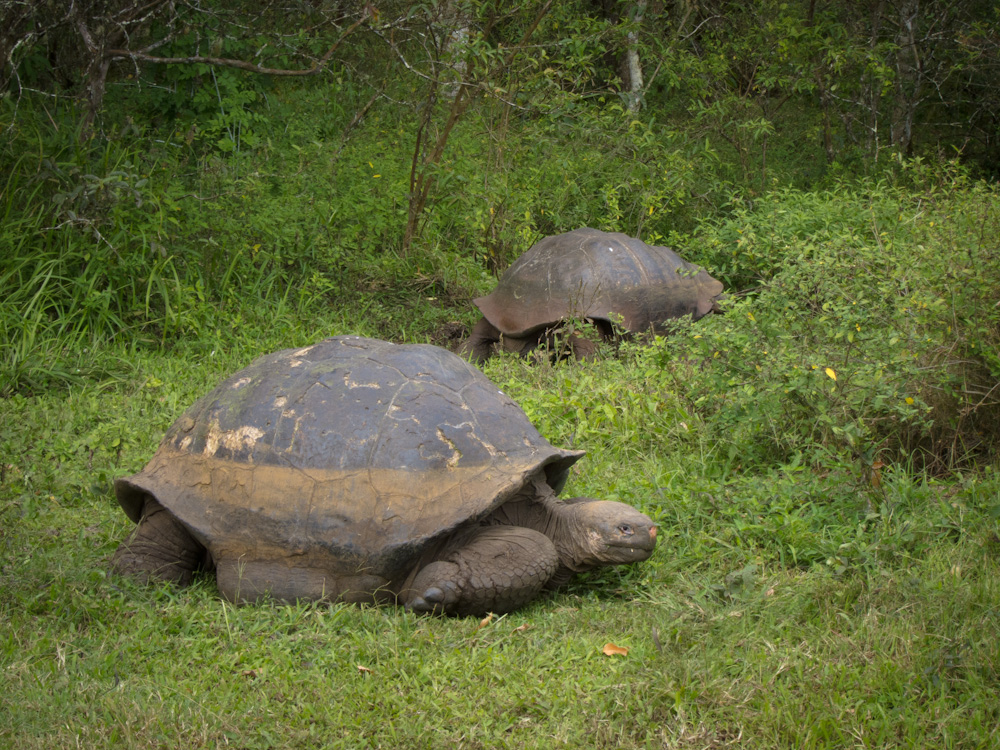
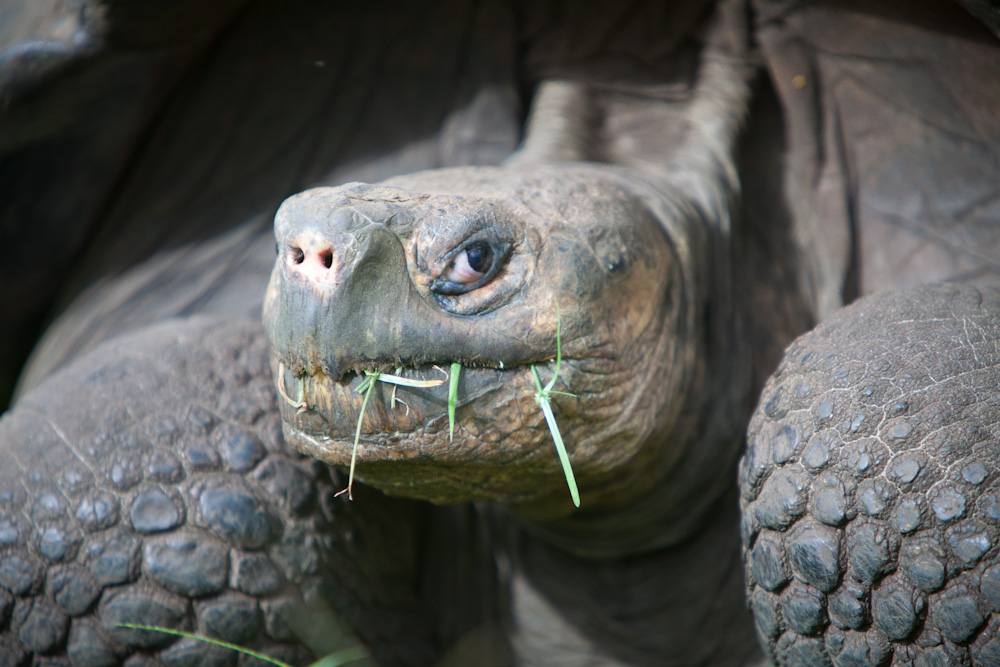
After our first meal on board, served buffet style, we were taxied back to shore for a dry landing in Puerto Ayora.  This became a daily routine.  Back on land, we boarded an awaiting bus and headed to the highlands where we saw huge turtoises at the Rancho Primicias, a private farm where wild tortoises roam free.  The guy who bought this piece of land in the 60’s had no idea at that time when tourism was non-existent that he was sitting on a future goldmine.  Now, there is an agreement between the ranch owner and the National Park to permit tourists to visit the farm (for a fee of course).  There were dozens of tortoises scattered throughout the farm; everywhere you looked, there was one or more.  It was possible to get very close to these remarkable creatures, although they let you know if you were too close by ducking their heads back into their shells with a warning grunt.  Nobody knows how old these creatures are but they are known to live up to 200 years.

Next we made a brief stop at a lava tube tunnel that was formed millions of years ago; as lava flowed, the outer part of the stream got cold and hardened, but the liquid magma within continued flowing. When the flow ceased, empty tubes were left behind. I was surprised at how large this natural tunnel was. Chris remarked that it reminded him of a mine.

Throughout the afternoon, our guide Enrique shared his wealth of knowledge with us about everything from the history of the Galapagos Islands to the flora and animal species that live here.  Tim and Rick, the Americans, seemed very knowledgeable about birds and were constantly trying to identify the birds they saw.

We had about a half hour to spend on our own in the town which for some of the other passengers would be the only time spent in Puerto Ayora so this was their time to pick up souvenirs.  Our private dinghies were waiting for us right on cue when it was time to go back to the yacht where we had a few moments to relax before a complimentary cocktail and an introduction of the crew members.  There are eight crew members, one guide and eleven passengers on board.

Dinner was served promptly at 7:00 and then to our surprise all the guests retired to their rooms. Most had travelled from the mainland today and so understandably were quite tired.  We lounged around in the sitting area enjoying the comfortable leather couches and within an hour we headed to bed too.  We were still anchored in port and would be leaving at midnight.  Sure enough, the engines roared to life on schedule, waking us both up.  We peered out our window into a cloudless, starry night and were enticed to go to the top deck to star gaze from the comfortable lounge chairs.  The brilliant stars of the Southern Hemisphere formed constellations unknown to us.

First impressions of our first day:  pinch me, this must be a dream!  I have never been on a boat this size before and have virtually no boating experience whatsoever – I don’t think large cruise ships count.  I can now understand the lure of the open seas – it is a wonderful experience to be gently rocked to sleep by the motion of the boat and equally exciting to wake up in a new location each morning.  And this yacht is spectacular.  Is this a dream?