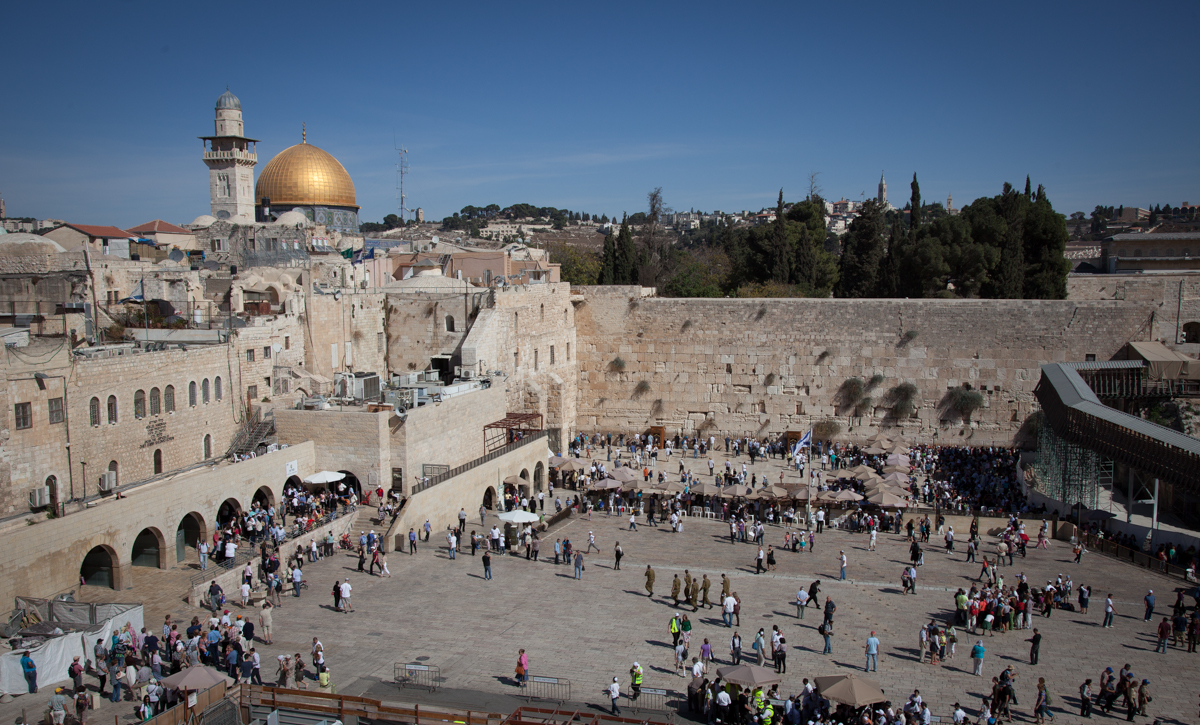
During our week in Jerusalem, we squeezed in a couple of day trips that we organized ourselves using public transportation which is very easy to use, affordable, reliable and comfortable. We spent half a day exploring the ruins of Masada which is Israel’s most popular paid tourist attraction, we indulged in an afternoon floating 423 metres below sea level in the Dead Sea, and we ventured over the border to Palestine to spend a few hours exploring Bethlehem.
Masada is an ancient fortification on top of an isolated rock plateau on the eastern edge of the Judaean Desert, overlooking the Dead Sea. This is the place where 960 Jewish extremists known as the Sicarii committed mass suicide after being holed up here for months under seige by the troops of the Roman Empire. This all happened shortly after the Second Temple was destroyed in 70 CE.
 When we arrived at about 9:30 in the morning, it was already close to 40C making the decision to walk up the mountain or take the cable car an easy one to make. The air-conditioned cable car whisked us to the top in just five minutes giving us lots of time to explore this impressive archaeological site on the mountain top. The audio guide that we purchased in addition to our entrance fee tickets was one of the best we have ever heard and well worth the extra cost. As we walked through the ruins, the narrator explained what each area was, as well as provided a captivating history lesson.
 Aside from the infamous seige and mass suicide, I knew very little about this site. According to the 1st century Jewish Roman historian, Josephus Flavius, Masada was fortified by Herod the Great between 37 and 31 BCE as a refuge for himself in the event of a revolt. We saw the remains of the two grand palaces at opposite ends of the hill top, Roman bath houses, the synogogue built by the rebels, the elaborate water system including huge cisterns, and many storerooms. There was enough water and food stored on this hill top fortress to support an army for many months, even years. So why did the Jews commit suicide?
 In 72 CE, the Roman army established camps at the base of Masada (the remains of which are clearly visible to this day), laid siege to it and built a circumvallation wall. They then constructed a rampart of thousands of tons of stones and beaten earth against the western approaches of the fortress and, in the spring of the year 74 CE, moved a battering ram up the ramp and breached the wall of the fortress. On the eve of their capture after a 3 year siege, Josephus dramatically recounts the story told to him by two surviving women. The zealots – almost one thousand men, women and children – led by Eleazar ben Ya’ir, decided to burn the fortress and end their own lives, rather than be taken alive by the Romans.
 View from the East side where the cliffs are 400 m high.
 Dead Sea in the distance.
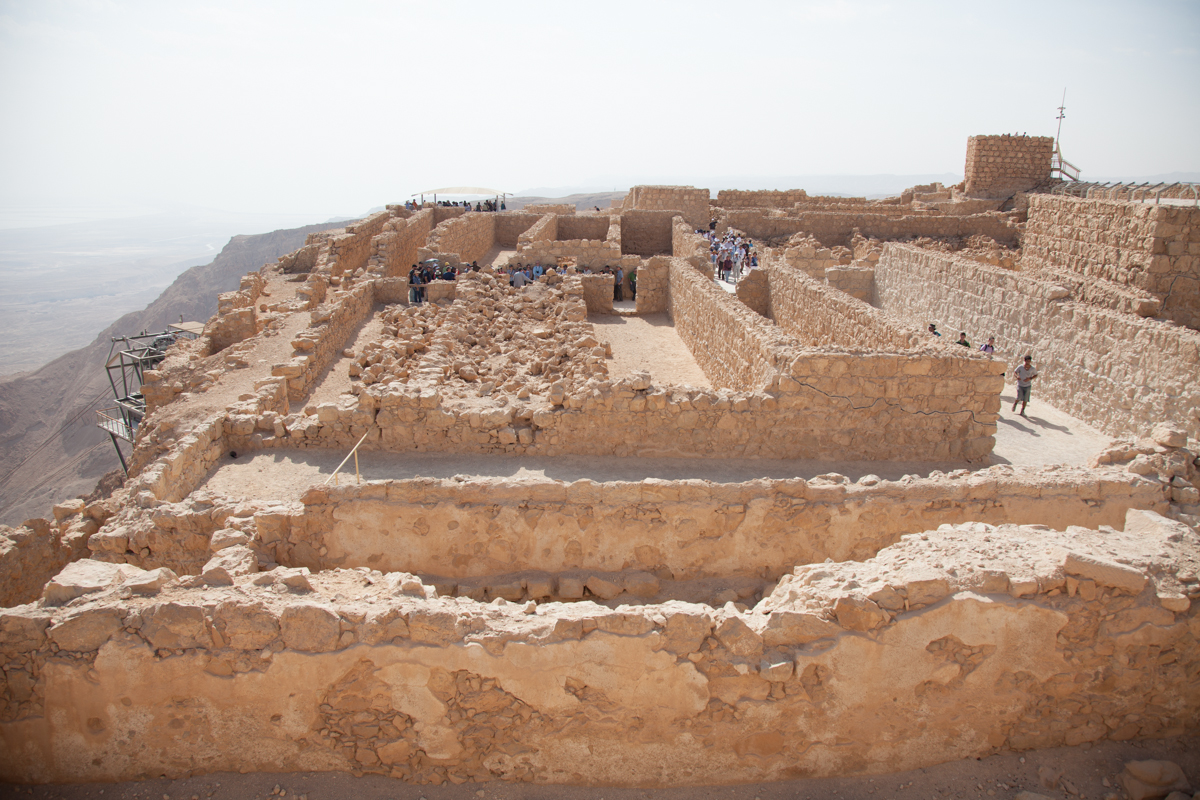 Massive store houses held years’ worth of provisions.
 Ramp on the Western side built by the Romans.
 Remains of one of the Roman camps where thousands of
soldiers lived while the city lay under siege.

At the base of the mountain there is also a museum, admission to which is included with the audio guide. Although the museum is rather unique in that it provides a theatrical re-enactment of the siege of Masada along with a few artefacts, I didn’t find it offered much value. If you’re short on time, it could easily be skipped.
 View of cable car from the top. We decided to walk down – a thirty minute
descent that wasn’t too hard but it was extremely hot.
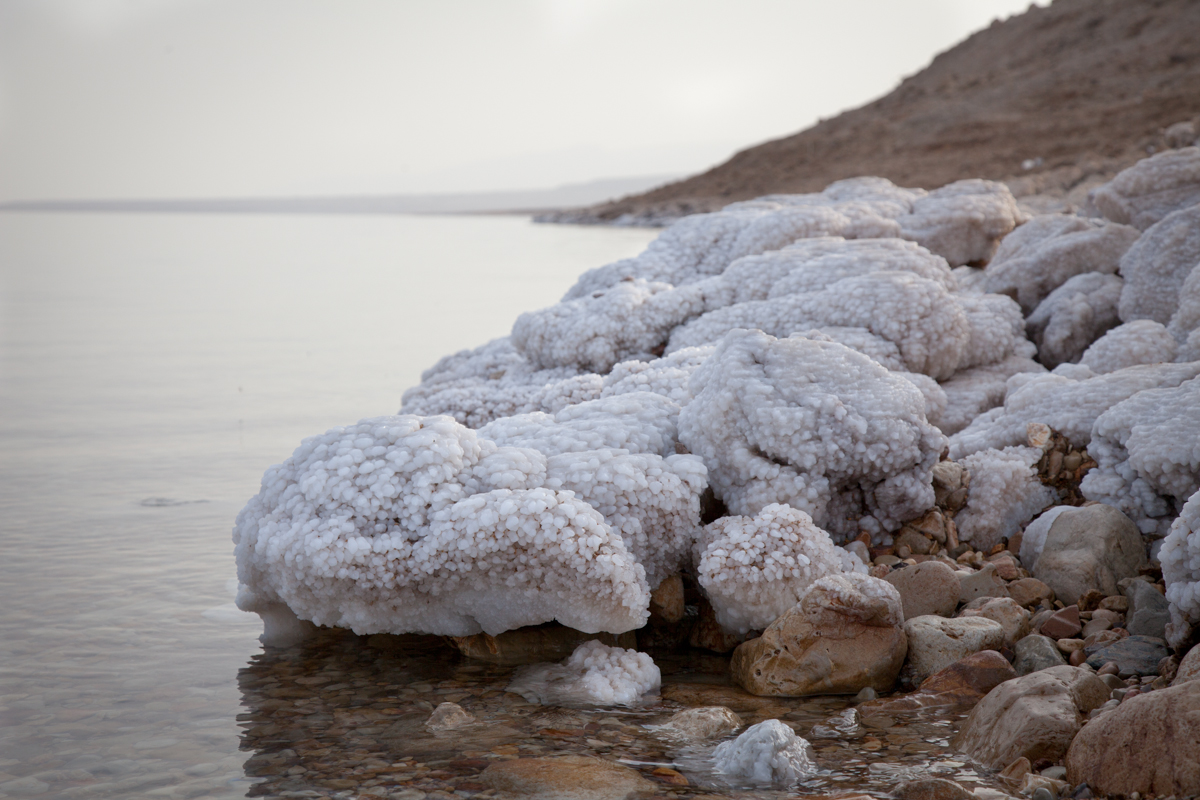 After a full morning at Masada, our next stop was the Dead Sea, earth’s lowest elevation on land, and thus our “new low” in Israel. People have been coming to the Dead Sea for millennia to avail themselves of the therapeutic effects of the water and air in this region. There are many beautiful resorts all along the Dead Sea, but we decided to visit it on a budget and go to a public beach instead. Besides, we thought we’d just have a quick dip to see what all the fuss was about, and then head back to Jerusalem. Little did we know that we would float in the Sea for several hours, even luxuriating in a natural mud bath which left our skin feeling as soft as a baby (although rather stinky I might add), before returning to Jerusalem at sundown.
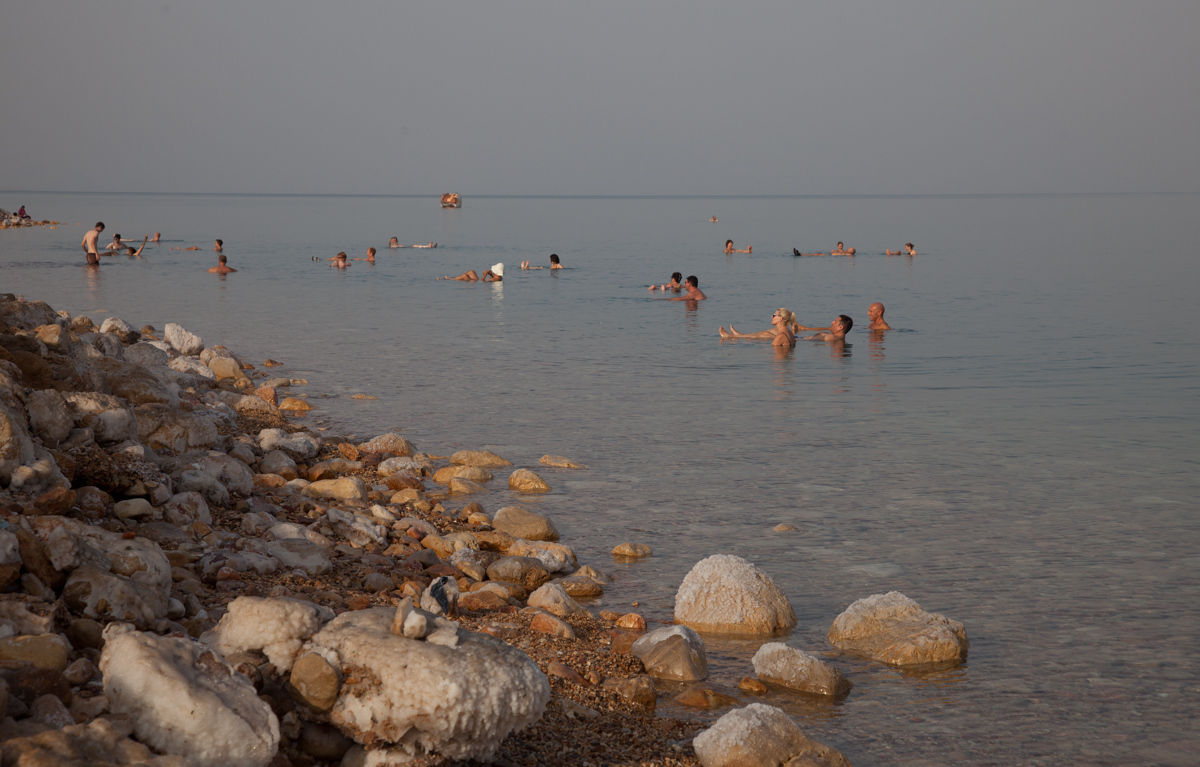


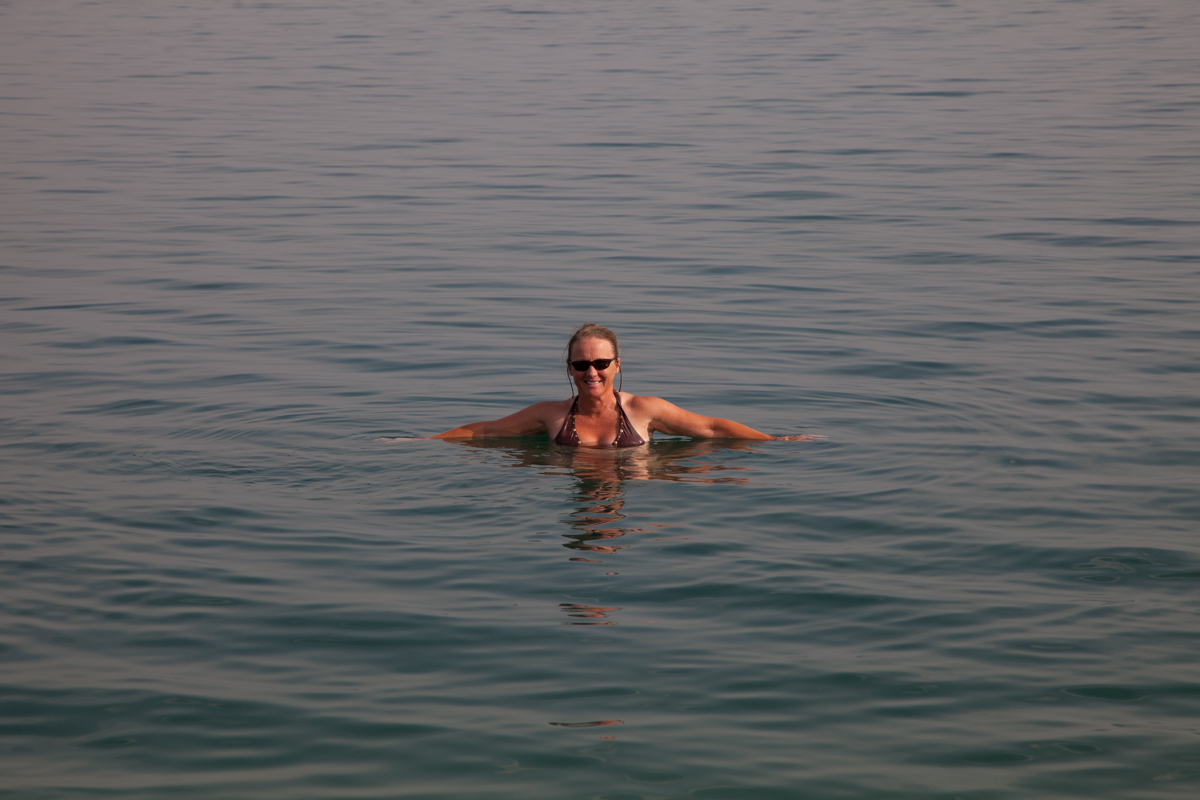
So, do you really float in the Dead Sea? Yes, like a cork! It felt like you had a life preserver on making it very difficult to swim properly. The water is so salty (8.6 times saltier than the ocean) that you must use extreme caution not to get any water in your eyes. After losing my balance, I splashed a mere drop or two of water into my eyes causing extreme pain, and forcing me to seek relief with a rinse of fresh water. Floating around effortlessly in the calm water was so relaxing, we could have spent many more hours there.
Video: Floating in the Dead Sea
 Our final excursion was a visit to Bethlehem, the birthplace of Jesus. In my fertile imagination, I had conjured up a place that looked like a country village with sandy streets where donkeys and oxen were still used for transport. Instead, we were dropped off on a busy thoroughfare in the middle of this city with a population of about 25,000 people, of whom the majority are Muslim, but it also has one of the largest Palestinian Christian communities. Located on the central West Bank, just south of Jerusalem, it has been governed by the Palestinian National Authority since 1995.

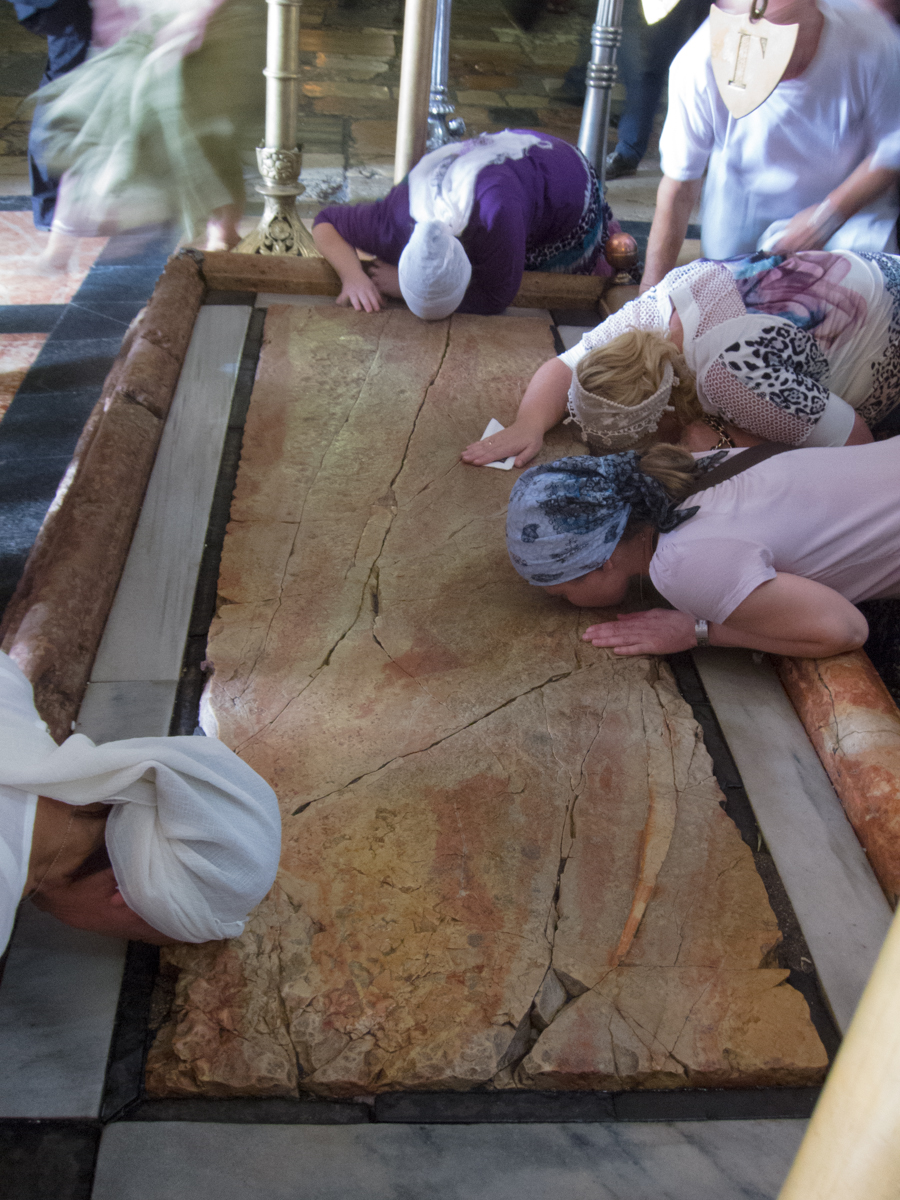
 Bethlehem’s economy is tourist driven, and the main attraction that brings in throngs of tourists each year, peaking during the Christmas season, is of course the place where Jesus was born. The Church of the Nativity stands in the center of the city — a part of the Manger Square — over a grotto or cave called the Holy Crypt, where Jesus supposedly was born. We had been duly warned that there would be hordes of tourists and long lines to enter the Holy Crypt, and sure enough, the tour groups were out in full force. Luckily, people who were not in tours were allowed to avoid the long lines altogether and enter through the exit, two at a time. We again saw people venerating this site by kneeling down and kissing the stone upon which the manger supposedly laid.

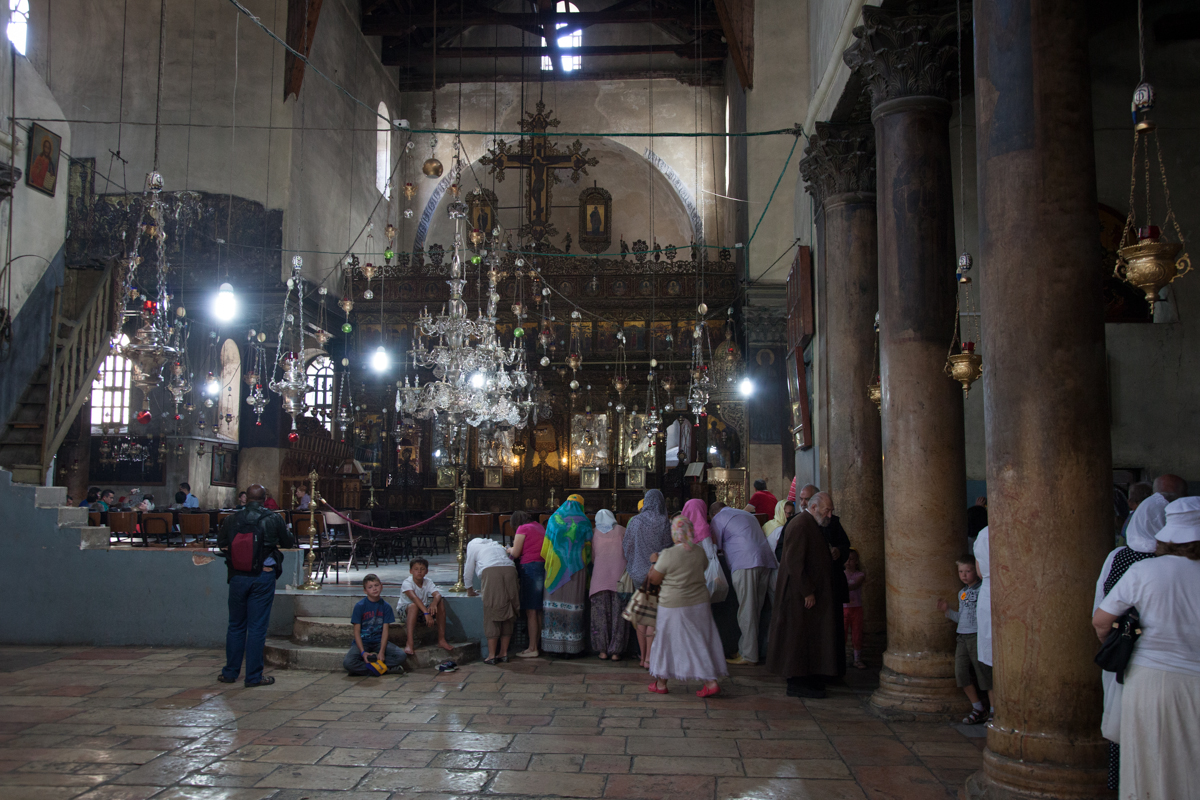
 Manger Square
Around the corner from the church on a street of the same name, is the Milk Grotto where the Holy Family took refuge on their flight to Egypt. Legend has it that Mary stopped to breastfeed Jesus here, and when she spilt some milk it turned the stone of this cave a “white stone” color.

We had our own little miracle on the road from Bethlehem when we stumbled upon a Starbucks. Our mouths salivated at the thought of a good cup of coffee, something we haven’t had for months, but our hopes were dashed when we realized the coffee shop we were staring at was called Stars and Bucks. They still made a damn fine cup of coffee, quite possibly the best we’ve had in the Middle East, and a delicious milk shake concoction of ice cream, fresh fruit, nuts and dried fruits which we thoroughly enjoyed after our coffee.

While we were in Bethlehem, we walked to the wall that divides Israel and Palestine. At 8 metres in height, the concrete, graffiti painted wall is a formidable presence.


When returning by bus from Palestine to Jerusalem (Israel), we passed through one check point where our passports were examined carefully. The Palestinian woman who sat beside me on the bus expressed clear disdain for the guards manning the checkpoint. She told me in her limited English that I should tell all my friends at home what trouble the Israelis were causing the Palestinian people as exemplified by the border crossing we were passing through.


I must admit that I am quite ignorant about the complex political situation in this region and it is something I will research more fully as our short visit to Israel has certainly piqued my interest. My one regret during our visit was that we did not take a guided tour that may have given us some insight into both the Israeli and Palestinian perspectives of the complex issues that impact their daily lives.
 Print Friendly