 I wanted to be wowed, and Isla Magdalena delivered with its breeding colony of more than 120,000 Magellanic penguins. This small, uninhabited island lies inside the infamous and important Magellan Strait at the southern end of South America, at the tail end of Patagonia and just north of Antarctica. Not only was I impressed by the sight and sounds of this magnificent penguin colony, I felt humbled by the rugged beauty surrounding me and very privileged to be a spectator to mother nature’s wonders. The rawness of the landscape, the sweep of the sea, the softly undulating hills, and the thousands of penguins made it a wonderous sight.
The Magellanic penguin is named after the 16th-century Portuguese explorer, Ferdinand Magellan who circumnavigated the world. These penguins are found only in southern South America and the Falkland Islands. It’s a medium-size penguin with a black back, a white stomach, and two distinctive black bands between the head and chest. Click here to learn more about this amazing bird.
In 1983, Isla Magdalena was declared a protected national monument, Los Pingüinos Natural Monument, and its only occupants are park rangers there to protect and monitor the penguin population, as well as educate the human visitors who drop in.
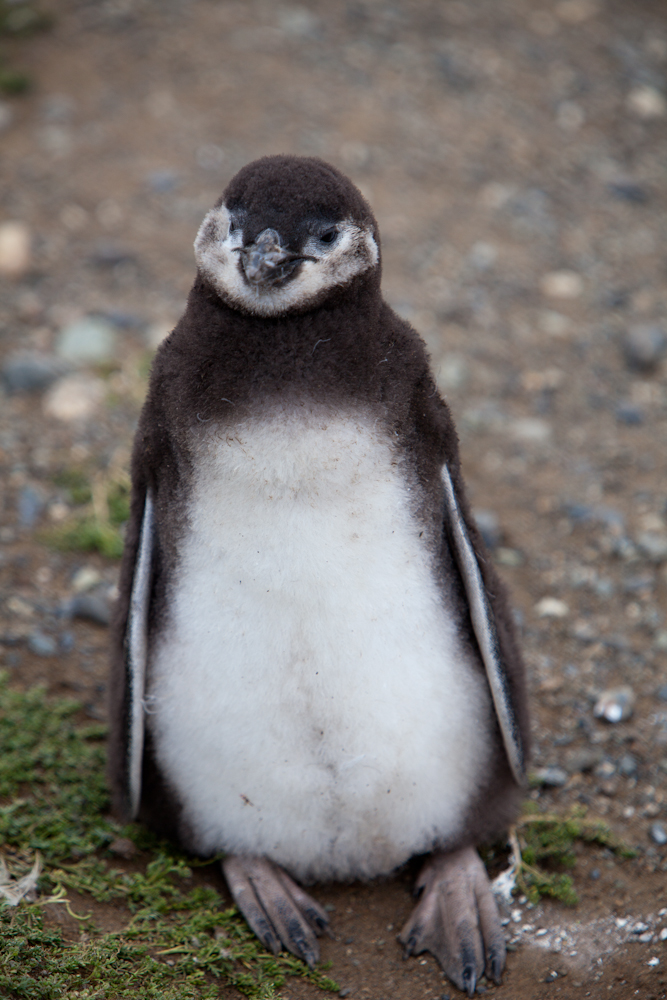
 As we reached the island late in the afternoon, after 2 hours at sea, we were astonished by the sheer number of penguins on this island. Everywhere you looked, there were penguins. At this time of year, the eggs have all hatched and the chicks are about 6 weeks old – cute, cuddly fur balls that you just wanted to pet and take home with you. Each adult pair had two chicks. Nests were dug into the side of the sandy hills and offered safe refuge and shelter for these little families. Penguins are quite territorial and possessive about their nest, shooing away any non-family member who dared to venture too close, including us humans. I even had my ankles pecked as I inadvertently got too close to a nest taking a picture of another family close by.
The cacophony on the hills was deafening but we learned that all this noisy barking served a purpose: penguins identified each other audibly which makes sense when you think about it since they all look alike. How else are they going to find their family when they come home after a day of fishing if not to yell out, Mary, where are you? Turns out, they recognize each other by their bark!
Lots of penguins (slide show)
%%wppa%%
%%slide=8%%
%%size=400%%
As we walked along the marked pathway, penguins were everywhere. They waddled in front of us, behind us, beside us, quite indifferent to our human presence. We were enthralled by their antics including hillside brawls, personal grooming, and open displays of affection. Now this is an island worthy of a top ten rating for places to see before you die…at least in my humble opinion.
Come for a walk through the penguin colony (video)